Executive Overview
The landscape of short-form video advertising is undergoing a profound structural evolution. For years, small-to-medium-sized businesses (SMBs) and independent creators have faced a steep learning curve when attempting to scale campaigns on TikTok. Complex user interfaces, intricate Ads Manager dashboards, and the hefty resource requirements of traditional video production have historically served as gatekeepers, restricting high-performing digital advertising primarily to enterprise-level brands with dedicated marketing agencies.
Today, that paradigm is shifting. Driven by a wave of advanced artificial intelligence integrations—spearheaded by TikTok’s Agentic Hub, Symphony Creative Studio, and Content Suite—the platform is steadily dismantling these technical barriers. By embedding Model Context Protocol (MCP) standards and deploying specialized, downloadable AI “skills,” TikTok is allowing everyday marketers to manage, analyze, and optimize ad campaigns using plain, conversational language.
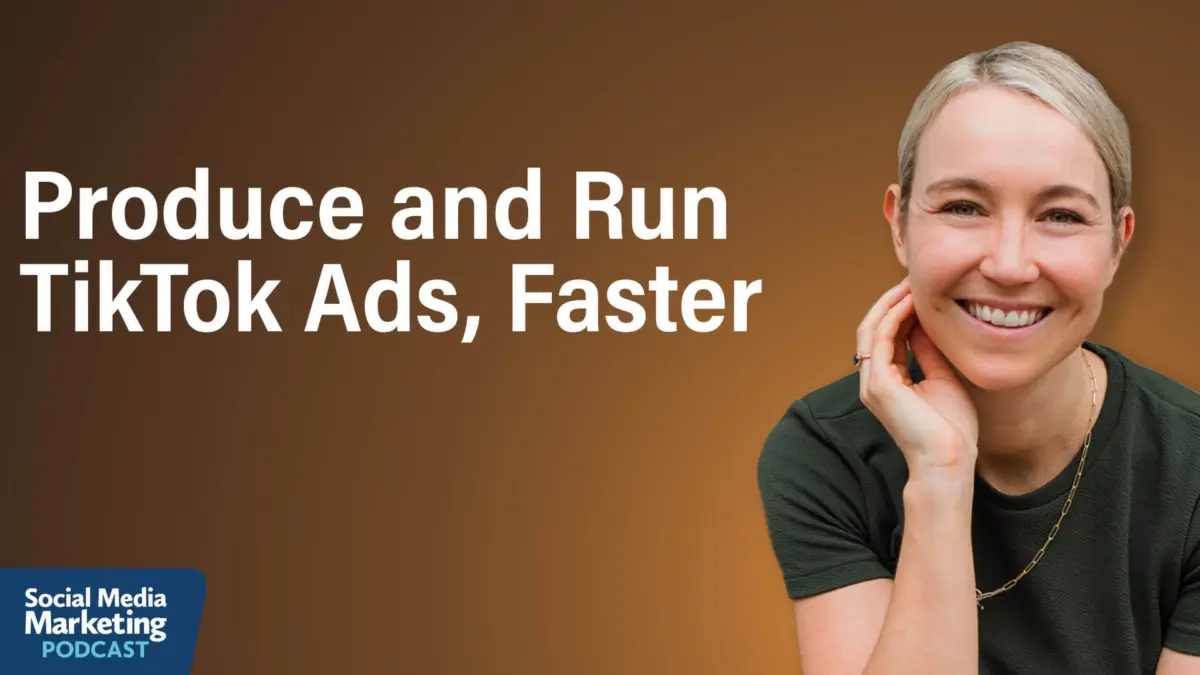
Co-created by short-form video expert Melissa Laurie alongside Michael Stelzner and Jerry Potter, recent insights reveal that while these tools offer unprecedented accessibility and creative scaling, human oversight remains non-negotiable. This report investigates how modern AI ecosystems are transforming TikTok advertising, the technical framework powering these changes, the limits of automated video generation, and the exact content strategies required to outperform the rising tide of generic digital ads.
Detailed Chronology & Technological Evolution
To understand how TikTok has arrived at this juncture of AI-driven accessibility, it is essential to trace the integration timeline of automation and platform interoperability over recent years.
The Pre-MCP Era: Siloed Infrastructure and High Friction
Historically, connecting external artificial intelligence assistants—such as OpenAI’s ChatGPT or Anthropic’s Claude—to advertising dashboards required custom-built Application Programming Interface (API) integrations. Marketers were forced to hire software developers or rely on rigid, pre-packaged software connectors. Communication was largely one-directional or severely limited, forcing users to manually export performance CSVs, paste them into chat prompts, and interpret complex data sets without real-time platform feedback. Navigating TikTok Ads Manager required granular platform expertise, leaving little room for error or exploratory learning.
The Rise of the Agentic Hub and MCP Integration
The introduction of TikTok’s Agentic Hub and the adoption of the Model Context Protocol (MCP) mark a watershed moment in ad tech infrastructure. MCP acts as a secure translator and bridge, connecting AI agents directly to TikTok Ads Manager without the need for API credentials or manual coding.
Using Melissa Laurie’s restaurant analogy to break down the architecture:
- TikTok Ads Manager is the restaurant (the destination holding all the data and tools).
- The MCP is the waiter (facilitating two-way communication and relaying requests securely).
- The AI Tool (Claude or ChatGPT) is the menu (the interface where the user makes choices and interacts).
Once this connection is established, the interaction model shifts from graphical user interface (GUI) navigation to natural language processing. Marketers can ask plain-language questions regarding campaign performance, dynamically pull diagnostic reports, and brainstorm strategies directly within their preferred AI environment. Crucially, MCP supports both read-only operations (such as auditing metrics) and read-and-write capabilities (such as drafting campaigns or adjusting configurations), transforming AI models from static chatbots into active operational co-pilots.
The Deployment of Official AI Skills
Building upon MCP capabilities, TikTok has rolled out a library of official AI skills—pre-programmed instruction sets that install directly into tools like Claude or ChatGPT. Rather than relying on generic prompts, these specialized skills function as prebuilt expert frameworks designed to execute discrete advertising tasks with high precision.
Available and emerging skills within the ecosystem include:
- Viral Video Creator: Analyzes millions of daily platform data points to surface top-performing ad trends, hooks, and structures.
- Ad Group Optimizer: Audits active ad sets and suggests structural adjustments to maximize return on ad spend (ROAS).
- Account Diagnosis Co-pilots: Evaluates overarching account health, pinpoints audience fatigue, and flags budgeting inefficiencies.
- C-Dance Video Creation Skill: Developed by ByteDance to streamline complex short-form video synthesis.
Because these skills are formatted as modular instruction files, they can be customized, copied, and enhanced by advanced users, establishing an open-source ethos within closed advertising ecosystems.
Supporting Context & Operational Workflows
As these technologies mature, day-to-day campaign management workflows are changing dramatically. Marketers are finding new efficiencies across competitive research, creative ideation, and production scaling.
Streamlining Competitive Research with Content Suite
One of the most persistent hurdles for advertisers is conceptualizing fresh content angles. TikTok’s Content Suite acts as an expansive, searchable library of user-generated content (UGC) and active ads running across the platform. Enhanced by upgraded AI search capabilities, Content Suite allows marketers to bypass generic brainstorming sessions by filtering real-world data based on specific parameters:
- Key terms and industry verticals (e.g., beauty, aviation, SaaS).
- Geographic parameters (country-specific or global filters).
- Time frames (such as ads active within the last 30 days).
- Campaign objectives (lead generation, sales conversion, or brand awareness).
For newcomers, browsing Content Suite before allocating capital serves as an invaluable market research phase. By evaluating what competitor brands are testing and scaling, marketers can reverse-engineer successful creative structures to inform original productions.
Scaling Product Videos via Symphony Creative Studio
For product-centric brands, Symphony Creative Studio represents a massive leap forward in content volume. The upgraded Symphony Agent synthesizes business guidelines, product briefs, historical ad signals, and platform trends to output complete video assets from a text prompt.
+-----------------------------------------------------------------+
|                  SYMPHONY CREATIVE STUDIO PIPELINE              |
|                                                                 |
|  [Product Brief / Images] ---> [AI Insights & Storyboard Engine]  |
|                                           |                     |
|                                           v                     |
|  [Finished Video Assets] <--- [AI Scripting & Voiceover Sync]   |
+-----------------------------------------------------------------+
While high-end narrative pieces still require human intervention, the low-hanging fruit for ecommerce brands is undeniable. For instance, home goods and furniture suppliers utilize Symphony to generate upwards of 100 localized, product-focused video variations per week—a volume utterly unattainable via traditional studio production timelines.
Official Insights & Expert Perspectives
Despite the power of automated generation and algorithmic optimization, industry experts emphasize that blind reliance on artificial intelligence can sabotage campaign performance.
The Pitfalls of Over-Automation
According to Melissa Laurie, automated recommendations provided by platform AI tools should never be accepted without critical analysis. A common operational hazard occurs with newly launched creatives:
"When a new creative has only been running for a few days, TikTok’s AI might recommend pausing it because it isn’t performing as well as older creative, but that recommendation ignores the fact that the platform prioritizes ads that have been running longer."
Marketers must apply contextual judgment, actively pushing back against algorithmic suggestions by challenging the AI with prompts such as:
- "What is another way to approach this campaign objective?"
- "Could I be optimizing this budget more effectively based on recent cohort behavior?"
When challenged constructively, advanced AI models frequently revise their initial recommendations to align more closely with nuanced marketing goals.
The Limits of AI-Generated Human Avatars
While product showcase videos thrive in automated environments, AI-generated human presenters face significant hurdles regarding brand trust and authenticity. Market consensus indicates that consumer skepticism toward synthetic avatars remains high—particularly when an artificial persona claims personal experience with a product (e.g., "All my friends are talking about this").
To navigate this limitation, top agencies employ a hybrid production model:
- Creator-Led Footage Enhanced by AI: Real human creators film baseline demonstrations (such as utilizing a cleaning product), while AI is deployed strictly for post-production enhancements—such as rendering animated overlays ("angry germs") to dramatize a before-and-after effect.
- Product-Only Showcases: Focusing on aesthetic renderings of textures, materials, and product application (common in the beauty sector) where human presence is unnecessary.
The Anatomy of High-Performing Short-Form Video
As AI lowers the barrier to entry, the baseline quality of video ads across TikTok rises. To cut through the noise of an increasingly saturated feed, marketers must master the fundamental architecture of high-performing short-form video.
1. The First Frame and Billboard Text
Viewers consume content rapidly, often scrolling through feeds on public transit while processing numerous stimuli simultaneously. A brand is competing not just with direct commercial rivals, but with viral creators backed by professional media teams.
- First Frame: The opening visual must instantly command attention before the user’s thumb triggers a swipe.
- Billboard Text: Large on-screen text overlays must function like highway billboards—communicating core value instantly at a single glance.
2. The Hook and "The Glue"
Following the visual stop, spoken opening words must lock the viewer in. To prevent drop-off between the hook and the core body of the video, creators must establish "the glue"—seamless connective narrative tissue that bridges the introduction to the primary value proposition. When delivering tips or educational points, segmenting content into structured sets of three maximizes audience retention.
3. The Sharp Ending
A prevalent amateur mistake is slowing down speech or signaling closure toward the end of a video. This dip in cadence cues the viewer to scroll away prematurely. High-performing ads utilize crisp, abrupt cuts at the conclusion, signaling to the platform’s distribution algorithm that viewers watched through to the final frame.
4. Authenticity Over Polished Staging
Staged, overly polished commercials frequently trigger instinctive ad-fatigue responses. Content that mirrors organic peer-to-peer recommendations—such as a creator discussing a product outdoors amidst ambient traffic noise—significantly outperforms traditional studio spots. Integrating dynamic action (such as applying makeup or handling everyday objects while speaking) maintains visual engagement, keeping audience attention locked on the screen.
Future Outlook
The democratization of TikTok advertising through AI signals a fundamental shift in digital marketing economics. As tools like Agentic Hub, Symphony, and MCP-driven workflows become standard operating procedure, the technical gap between enterprise brands and independent SMBs will continue to narrow.
However, this technological leveling does not spell the end of human strategy. Instead, it redefines the marketer’s role from a manual executor of dashboard configurations to a creative director and prompt architect. Success on TikTok will no longer belong to those with the largest media buying teams or the most complex integration pipelines, but to those who master the delicate balance between algorithmic automation, rigorous critical oversight, and authentic human storytelling.