Executive Overview
Two decades after its initial, division-laden theatrical release, the seismic cultural footprint of Sofia Coppola’s Marie Antoinette (2006) is finally receiving the critical reappraisal it has long warranted. When the film first premiered at the 2006 Cannes Film Festival, it was met with a chorus of polarizing reviews, bewildered traditionalists, and audible boos from a press corps expecting a conventional, dust-jacket-accurate historical biography. Instead, they were handed a sensory-overload pastiche of 18th-century court life underscored by a Post-Punk New Wave soundtrack, pastel macarons, and a fleeting glimpse of a modern Converse sneaker.
Time, however, has proven a brilliant editor. Today, it is nearly impossible to overstate the film’s profound and lasting influence on contemporary media, fashion, and visual storytelling. Marie Antoinette fundamentally reinvented and aggressively revived a period drama genre that had long suffered from a reputation for being staid, stuffy, and overly reverent. Without Coppola’s visionary blueprint, the modern landscape of prestige television and cinema—including massive hits like Netflix’s Bridgerton, Yorgos Lanthimos’s The Favourite, and subsequent stylized historical re-imaginings—simply would not exist.
Furthermore, the film engineered one of the most remarkable public relations reversals in modern historical memory. Prior to 2006, the historical Marie Antoinette was almost universally viewed through a lens of villainy, her legacy inextricably chained to unchecked decadence, political tone-deafness, and the apocryphal decree of "Let them eat cake." Coppola’s empathetic, deeply humanizing lens transformed the doomed French queen into an enduring symbol of youthful vulnerability and feminine martyrdom. Two decades later, her pastel-drenched aesthetic still dominates digital mood boards on Tumblr and Pinterest, cementing the film as a foundational text of modern girlhood aesthetics.
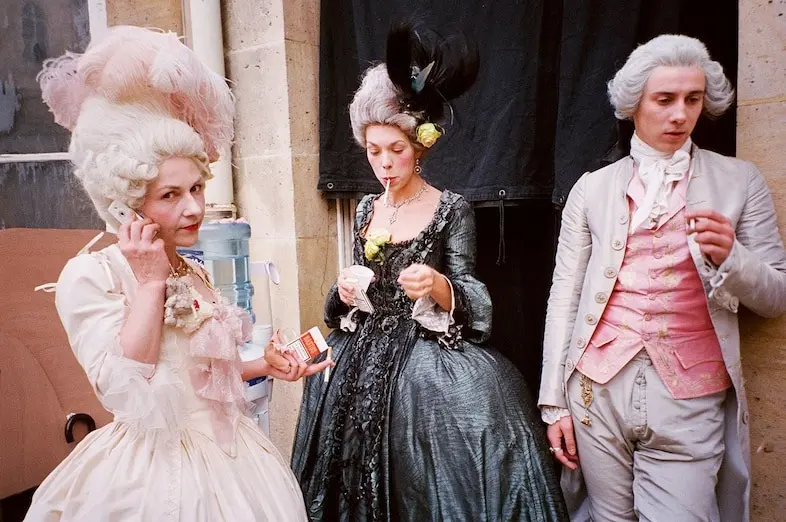
This enduring cultural legacy is now being celebrated in a new, highly anticipated publication: Making Marie Antoinette, a photobook by Andrew Durham, published through MACK in collaboration with Coppola’s own imprint, Important Flowers. Featuring hundreds of rare behind-the-scenes photographs, an oral history compiled by Keaton Well, and an in-depth dialogue between Durham and the director, the book serves as both a nostalgic artifact and a rigorous analytical look at a cinematic milestone that transitioned from misunderstood oddity to undisputed, beloved cult classic.
Detailed Chronology: From Cannes Backlash to Cultural Omnipresence
To fully understand the triumph of Marie Antoinette, one must trace the rocky timeline of its creation, release, and subsequent ascent into the echelons of cinematic art.
Phase One: Conceived in Pastel (2004–2005)
Fresh off the massive, Oscar-winning success of Lost in Translation (2003), Sofia Coppola turned her attention to Antonia Fraser’s meticulously researched biographical work, Marie Antoinette: The Journey. Rather than focusing on the political mechanics of the French Revolution, Coppola was drawn to the intimate, deeply psychological isolation of a teenage Austrian archduchess thrust into the hyper-surveilled, hyper-ritualized fishbowl of Versailles. Pre-production began with an obsessive focus on tactile aesthetics: pastel silks, custom Ladurée pastry towers, and an intentional blend of historical opulence with modern adolescent emotional states.
Phase Two: The Cannes Friction and Box Office Misunderstanding (May–October 2006)
When Marie Antoinette made its world-premiere debut in competition at the 2006 Cannes Film Festival, the critical establishment was deeply unsettled. While the film’s lush cinematography by Lance Acord and Milena Canonero’s exquisite costume design (which would deservedly secure an Academy Award) drew universal praise, the narrative choices bewildered critics. Traditionalist film historians bristled at the deliberate historical anachronisms, the lack of heavy political didacticism regarding the storming of the Bastille, and the use of post-punk tracks by artists like Bow Wow Wow, New Order, and Siouxsie and the Banshees. The film’s domestic box office performance was modest, grossing roughly $60 million worldwide against a $40 million production budget, leading many contemporary trade publications to prematurely dismiss it as an expensive misfire.
Phase Three: The Digital Renaissance and Aesthetic Rebirth (2010–2020)
As media consumption shifted toward digital platforms and social media ecosystems, Marie Antoinette found its true, fiercely loyal audience. Long before algorithms dictated aesthetic trends, early-era Tumblr blogs and Pinterest boards adopted the film’s visual language as a foundational mood board. The synthesis of rococo luxury, youthful melancholy, and rebellious modern flourishes struck a profound chord with a new generation of digital natives. The film transformed from a box office disappointment into a peerless touchstone of internet-era visual culture, paving the way for the "coquette" and "balletcore" aesthetics that would dominate social media decades later.
Phase Four: Archival Preservation and Critical Vindication (2026 and Beyond)
Marking its twenty-year milestone, the release of Andrew Durham’s Making Marie Antoinette marks the final phase of the film’s institutionalization. No longer viewed as a stylistic quirk, Coppola’s directorial choices are now analyzed in university film departments as pioneering masterpieces of postmodern historical cinema. The film’s journey from festival jeers to canonical adoration stands as a testament to the enduring power of visionary filmmaking that refuses to pander to contemporary expectations.
Supporting Context & Metrics: The Mechanics of Anachronism
While films like Baz Luhrmann’s Moulin Rouge! and Brian Helgeland’s A Knight’s Tale (both released in 2001) had previously experimented with infusing period settings with modern rock and pop soundtracks, Sofia Coppola weaponized anachronism with a psychological precision that entirely changed the genre.
The Anachronism Matrix
Anachronism in Marie Antoinette is not used merely for cheap laughs or superficial shock value; it functions as a narrative bridge connecting 18th-century Versailles to 21st-century youth culture. By injecting contemporary emotional alienation, teenage boredom, and pop-cultural rebellion into the court of Louis XVI, Coppola achieved something radical: she made historical figures feel intensely, uncomfortably human.
- Audio-Visual Dissonance: The soundtrack, curated by Brian Reitzell, features a brilliant juxtaposition of classical baroque compositions by Jean-Philippe Rameau with 1980s New Wave and Post-Punk anthems. Tracks like Gang of Four’s "Natural’s Not in It" and The Strokes-adjacent indie rock pulses score the frantic, overwhelming sensory experiences of the young queen’s shopping sprees and gambling debts.
- The Converse Phenomenon: Perhaps the most famous visual easter egg of the film occurs during a shoe-shopping montage where a pair of lilac Converse All-Star sneakers sits casually amidst a collection of sumptuous, jewel-encrusted silk shoes. Far from breaking immersion, the flash of modern canvas serves as a meta-textual wink to the audience, reminding them that Marie Antoinette was, at her core, a teenager trapped in a rigid institutional machine.
Quantitative Impact and Cultural Reach
The economic and creative reverberations of Coppola’s aesthetic blueprint can be quantified across multiple creative industries:
- Costume Design Excellence: Milena Canonero’s work on the film secured the Academy Award for Best Costume Design in 2007, setting a new gold standard for historical textile recreation fused with contemporary haute couture styling (collaborating closely with houses like Manolo Blahnik and Ladurée).
- The Precursor to Prestige TV: Industry analytics show a direct lineage between the tonal styling of Marie Antoinette and subsequent serialized historical dramas. Netflix’s Bridgerton, which shattered streaming records by utilizing modern orchestral covers of pop songs and diverse casting, owes its stylistic DNA entirely to the doors kicked open by Coppola twenty years prior.
- Archival Documentation: Making Marie Antoinette encapsulates this legacy across 256 pages, featuring hundreds of previously unseen behind-the-lens moments captured by set photographer Andrew Durham, offering researchers and fans an unprecedented look into the logistical execution of a modern classic.
Official Statements and Archival Insights
The release of Making Marie Antoinette has brought forth new commentary from the principal architects of the film, shedding light on the intentionality behind its controversial choices.
In the book’s extensive dialogue between Andrew Durham and Sofia Coppola, the director reflects on the initial hostile reactions and the eventual vindication of her creative vision:
"At the time, people wanted a rigid history lesson. They wanted a textbook translated verbatim onto the screen with all the heavy solemnity that the French Revolution implies. But I wasn’t interested in making a Wikipedia page come to life. I wanted to capture what it felt like to be a literal child dropped into the most hyper-regulated, suffocatingly opulent environment imaginable. The music, the colors, the clothes—they weren’t jokes; they were emotional translations of a girl trying to survive her own gilded cage."
Andrew Durham, whose lens captured the delicate balance between high-art production design and the relaxed, modern reality of the actors off-camera, notes in the book’s press materials:
"Being on set with Sofia and the cast was an experience suspended in time. You would turn a corner in these incredible historic palaces in France and see Kirsten Dunst in full 18th-century regalia, complete with a towering white powdered wig, casually leaning against a modern lighting rig or sitting on a flight case smoking a cigarette. Those moments captured the exact spirit of the film—somewhere between rigid historical reality and the entrancing, dreamlike fiction we were constructing."
Keaton Well, who conducted the oral history featured within the publication, emphasizes the meticulous craftsmanship that underpinned every frame:
"People often mistake Coppola’s minimalism and focus on mood for a lack of rigor. Nothing could be further from the truth. Every single frame of Marie Antoinette was subjected to intense scrutiny regarding color theory, emotional resonance, and texture. The Academy Award for costume design was just the tip of the iceberg; the film is a masterclass in total-environment world-building."
Future Outlook: The Indelible Legacy of a Pastel Masterpiece
As Marie Antoinette crosses the twenty-year threshold, its cultural footprint shows no signs of diminishing. Instead, the film has graduated from a misunderstood arthouse experiment into a timeless masterwork that continues to inform how modern storytellers approach the past.
The publication of Making Marie Antoinette by MACK and Important Flowers acts as a definitive capstone to this two-decade cultural arc. It provides scholars, cinephiles, and fashion historians with a tangible artifact of a production that was years ahead of its time. By freezing the chaotic, beautiful behind-the-scenes energy of the set into print, the book ensures that the human element behind the cinematic sorcery is never forgotten.
Looking forward, the influence of Coppola’s masterpiece will undoubtedly continue to ripple through upcoming generations of filmmakers, designers, and digital artists. It established a vital precedent: that history does not have to be presented as a dry, distant museum exhibit to be valid. Through empathy, uncompromising aesthetic vision, and a willingness to court controversy, Sofia Coppola transformed a tragic historical figure into a vibrant, breathing icon of youthful resilience—proving that sometimes, to truly understand the past, you have to let it rock.