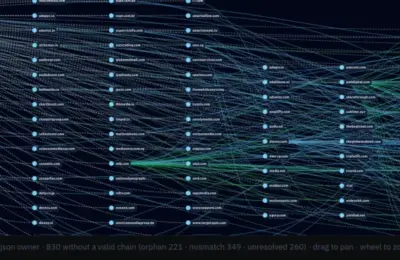
Executive Overview
For years, cybersecurity professionals and federal law enforcement agencies have warned consumers against purchasing cheap, unbranded streaming media players. Promising a tempting suite of perks—most notably, endless libraries of premium content, live broadcasts, and pay-per-view events for a nominal, one-time fee—these generic Android-based TV boxes have quietly flooded living rooms across the globe.
While early security warnings focused primarily on how these devices commandeer residential broadband connections to rent out IP addresses as proxies to anonymous third parties, a groundbreaking new threat intelligence report uncovers a far darker reality. A deep-dive analysis by threat researchers at Bitsight reveals that popular, low-cost streaming hardware—most notably devices belonging to the ubiquitous "H96" product family—are pre-programmed with sophisticated backdoors. These vulnerabilities weaponize the hardware to execute massive, automated ad fraud campaigns against online merchants and advertising networks.
Operating as a dual-threat mechanism, these compromised devices toggle between two distinct illicit functions depending on user behavior. When a television is actively powered on, the streaming stick typically acts as a passive residential proxy, routing stranger traffic through the home network. However, the moment the TV is switched off, the device springs into a resource-heavy second life: spoofing top-tier mobile devices, deploying visual-reasoning automation frameworks, and methodically clicking on ads hosted across sprawling networks of artificial intelligence-generated websites.
Orchestrated primarily by a mainland Chinese entity known as the Fengwo Group, this sprawling shadow enterprise generates an estimated $50,000 per day from ad fraud alone, exploiting tens of thousands of infected units worldwide. Despite urgent warnings from the Federal Bureau of Investigation (FBI) and security researchers alike, major e-commerce platforms continue to distribute these Trojan-horse devices, exposing millions of households and corporate networks to severe cyber risks.

Detailed Chronology: Unpacking the H96 Ad Fraud Pipeline
The anatomy of this massive ad fraud operation came to light following a meticulous investigation spearheaded by Pedro Falé, a threat researcher at cybersecurity firm Bitsight. The breakthrough occurred when Falé registered an expired domain name that had previously served as a critical telemetry server for H96 streaming devices.
Seizing the Telemetry Hub
By capturing the domain used by tens of thousands of active H96 streaming sticks globally, Falé gained unprecedented visibility into the backend infrastructure coordinating the devices. Historically, this domain collected routine hardware diagnostics and application manifests. However, upon auditing the incoming payload data, Falé discovered a glaring anomaly: nearly all of the connected TV boxes—devices fundamentally engineered to sit statically beside a television set—were reporting system profiles belonging to high-end mobile phones manufactured by brands such as Samsung, Vivo, Huawei, and Xiaomi.
“We noticed something was wildly wrong,” Falé noted. “Multiple devices reporting to this factory Android TV Box backdoor were ‘phones.’”
A deeper forensic inspection of the applications installed on these devices revealed a common denominator. Every single reporting unit housed identical applications developed by Zhejiang Fengwo IoT Technology Ltd, a company founded in 2019 in mainland China that operates a diverse ad-publishing portfolio under the umbrella of the Fengwo Group. Patent filings and corporate registry traces later confirmed that the group had intentionally engineered the underlying architecture of these applications to monetize hijacked traffic across international shell entities spanning Hong Kong and Singapore.

The Automated Click-Farm Cycle
Once established within the device firmware, the Fengwo Group applications turn the streaming box into an autonomous botnet node. Bitsight’s analysis indicates that the operation relies on a continuous loop of synthetic engagement:
- Device Spoofing: The TV box alters its network headers and device fingerprints to masquerade as a mobile operating system.
- Task Assignment: When idle, the device checks in with command-and-control servers to receive localized JavaScript modules generated via visual programming logic.
- Targeted Navigation: The device silently instantiates an embedded web browser, autonomously navigates to AI-generated web pages covering topics ranging from finance and gaming to food and healthcare, and interacts with page elements.
- Ad Monetization: Crucially, Bitsight observed that these AI-generated websites deliberately withheld advertisements from standard visitors, displaying revenue-generating creative banners only when the visiting browser matched the spoofed mobile device profiles transmitted by the H96 boxes.
To ensure high reliability and bypass standard anti-fraud protections, the Fengwo Group integrated an advanced automation pipeline. The system fuses three distinct vision and reasoning frameworks into a unified interface, allowing the automated scripts to accurately differentiate between standard webpage elements and dynamic advertisements, mimicking human-like browsing behaviors with pinpoint precision.
Supporting Context & Metrics: Architecture of the Scam
The technical efficiency behind the Fengwo Group’s operations highlights a growing industrialization of cybercrime. Rather than employing large teams of specialized software engineers to code every fraud campaign from scratch, the enterprise leveraged a surprisingly accessible development model.
Low-Skill Infrastructure via Blockly
Bitsight’s analysis of infrastructure certificates and internal developer wikis uncovered that the Fengwo Group utilized a proprietary implementation of Blockly—an open-source visual programming language originally built by Google to teach children how to code.

By utilizing Blockly’s drag-and-drop interface, low-skilled operators within the organization could assemble complex fraud routines without needing a deep understanding of underlying network engineering or JavaScript execution.
- Template Generation: A small cadre of elite developers builds complex template execution-unit images.
- Routine Assembly: Lower-level operators drag functional blocks together to define specific ad-fraud tasks.
- Cloud Deployment: Completed routines are compiled into JavaScript and pushed instantly to cloud storage buckets (such as Amazon S3) for rapid distribution to the botnet.
As one internal developer remarked in documentation uncovered by researchers, this modular approach drastically reduced operational costs by minimizing the number of high-skilled developers required to maintain the enterprise.
Scale, Revenue, and the "Digital Humans" Facade
Tracking approximately 38,000 active devices phoning home to a single legacy telemetry domain, Bitsight conservatively estimated that the ad fraud network pulls in roughly $50,000 daily. This figure represents only a fraction of the enterprise’s total turnover, as it excludes earnings generated from the concurrent residential proxy monetization side of the business.
Intriguingly, the primary domain associated with the Fengwo Group (fwgcloud.com) markets the enterprise under an entirely different guise: a futuristic artificial intelligence hub boasting over 120,000 "AI digital humans" available for rent for customer service, creative design, and emotional companionship.

However, security researchers view this high-tech storefront as a calculated camouflage. By masking botnet infrastructure behind an artificial intelligence service provider facade, operators can obscure the true scale of their botnet operations and deflect scrutiny from automated web scanners and regulatory bodies. When KrebsOnSecurity attempted to contact the company via the email address listed on its landing page, the message bounced back with an automated notification stating that the inbox was completely full—a fitting metaphor for an operation choking on high volumes of artificial traffic.
Official Statements and Industry Impact
The convergence of cheap Internet-of-Things (IoT) hardware, unverified operating systems, and automated ad fraud has drawn severe criticism from cybersecurity authorities globally.
The FBI’s IoT Warning
The Federal Bureau of Investigation has repeatedly issued alerts regarding the security and privacy risks associated with unverified, connected consumer devices. Criminal syndicates routinely exploit poorly secured hardware—ranging from streaming boxes to digital photo frames—to build expansive proxy networks. These proxies allow malicious actors to route illicit activities, including credential stuffing, cyberattacks, and ad fraud, directly through residential IP addresses, effectively framing innocent homeowners for cybercrimes originating from their own routers.
The Ongoing Battle on E-Commerce Platforms
Despite documented threats and public warnings from agencies like the FBI, major consumer marketplaces—including Amazon, Best Buy, and Newegg—continue to list and distribute hundreds of unbranded or white-label streaming sticks. Often marketed aggressively by online influencers as cost-free alternatives to mainstream entertainment packages, these devices frequently arrive pre-infected with malicious APKs (Android application packages) embedded deep within custom system partitions that standard factory resets cannot purge.

Furthermore, the vulnerability landscape extends far beyond ad fraud. Earlier in the year, proxy tracking firm Synthient documented the rapid spread of botnets like Kimwolf, which leveraged severe unauthenticated remote code execution vulnerabilities in streaming box firmware to enslave millions of devices into distributed proxy networks.
Future Outlook & Recommendations
As threat actors increasingly adopt generative artificial intelligence and modular programming paradigms to automate cybercrime, the traditional digital advertising ecosystem faces an existential crisis. Advertisers lose billions of dollars annually to non-human traffic, while consumers unknowingly host criminal infrastructure inside their living rooms.
To mitigate these escalating risks, security experts urge a fundamental shift in how consumers and enterprises approach smart home hardware:
- Stick to Reputable Brands: Consumers should strictly purchase streaming hardware from verified manufacturers (such as Google, Roku, Apple, and Amazon) that maintain transparent security update lifecycles and hold official OS certifications.
- Verify Google Play Protect Certification: Google provides explicit guidelines allowing users to verify whether an Android TV device is genuinely certified. Uncertified devices should be immediately disconnected from home networks.
- Monitor Network Traffic: Network administrators should implement basic firewall rules or consumer-grade intrusion detection systems to monitor anomalous outbound telemetry, particularly connections directed toward unverified or newly registered domains.
- Industry-Wide Cleansing: Major e-commerce platforms face mounting regulatory pressure to implement stricter vendor vetting procedures to purge unverified, pre-infected IoT hardware from their digital storefronts.
Until robust regulatory frameworks and marketplace accountability measures take full effect, the onus remains on the consumer to exercise extreme vigilance when tempted by the allure of "unlimited free content" packaged in a cheap plastic box. In the modern threat landscape, if a smart device is drastically underpriced, the user is not the customer—they are the product.