Executive Overview
The consumer pet technology sector is undergoing a profound paradigm shift. What began as simple, electromechanical timers attached to plastic food hoppers has evolved into a sophisticated sub-industry defined by computer vision, gravimetric telemetry, and predictive health analytics. As domestic pet owners increasingly seek quantitative insights into animal wellness, smart feeders have emerged as one of the most competitive and densely populated categories within the smart home ecosystem.
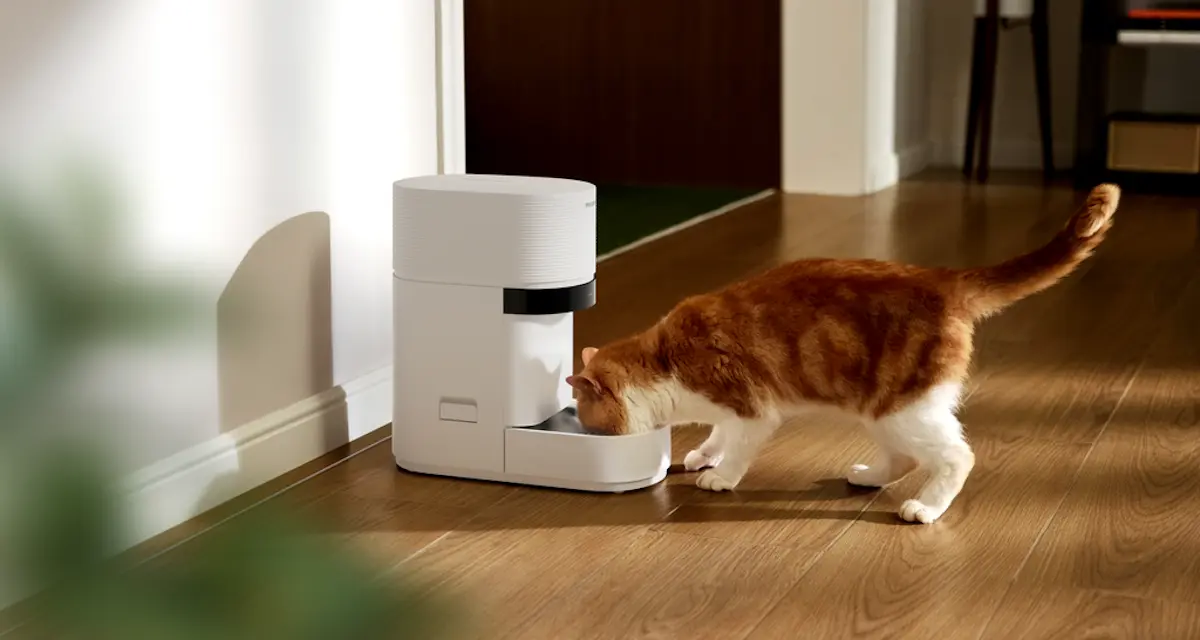
Petlibro, a prominent manufacturer in the pet tech landscape, has expanded its hardware footprint with the launch of the Granary 2 series. Building upon the company’s previous innovations—including its refrigerated wet food dispenser—the Granary 2 line focuses exclusively on dry food management through advanced metric tracking. By incorporating integrated load-cell scales and AI-driven facial recognition directly into the hardware, the series shifts the primary function of an automatic feeder from simple food delivery to real-time dietary telemetry.
Priced between $129.99 and $249.99, the four-tier Granary 2 ecosystem attempts to address a historical blind spot in pet care: the difference between dispensed food and consumed food. However, as hardware capabilities escalate, so too does the industry’s reliance on recurring software revenue. Petlibro’s latest launch highlights both the technological maturity of modern pet care hardware and the growing prevalence of subscription-gated features within the IoT appliance market.
Detailed Chronology & Lineup Breakdown
The Evolution of Petlibro’s Hardware Portfolio
Petlibro’s market trajectory illustrates the rapid maturation of pet IoT appliances. Several years ago, the brand gained traction by tackling one of the most mechanically challenging pain points in automated feeding: wet food preservation. By introducing a refrigerated wet food dispenser, the company demonstrated that consumer demand existed for specialized, high-performance hardware capable of going beyond basic kibble distribution.
Following the success of its original Granary line, Petlibro turned its attention back to dry food dispensing, recognizing that traditional timed feeders lacked critical feedback loops. Standard automatic feeders dispense food based on an internal clock, but they operate entirely blind to whether a pet actually consumes the meal, leaves it untouched, or gets crowded out by another animal in a multi-pet home.
To address these operational blind spots, Petlibro developed the Granary 2 series, introducing gravimetric load sensors across all models and artificial intelligence models across its higher-end configurations.
+-----------------------------------------------------------------------------------+
|                            PETLIBRO GRANARY 2 SERIES                              |
+-------------------+----------+----------------------------------------------------+
| Model             | Price    | Key Features                                       |
+-------------------+----------+----------------------------------------------------+
| Granary 2 (Base)  | $129.99  | Weight-scale tray, app control, intake tracking    |
| Granary 2 Vision  | $189.99  | Adds 1080p AI camera, up to 10-cat recognition     |
| Vision Duo        | $199.99  | Dual-chute/bowl hardware for multi-pet homes       |
| Granary 2 X       | $249.99  | Advanced AI micro-portioning & dietary gating      |
+-------------------+----------+----------------------------------------------------+
The Four-Tier Product Architecture
The Granary 2 lineup is structured into four distinct pricing and feature tiers designed to target varying household sizes, budgets, and veterinary needs:

1. Granary 2 (Base Model) — $129.99
The entry-level model introduces the core architectural shift of the entire series: the built-in tray scale. Replacing simple volume-based guessing, the base model provides app-controlled schedule management, portion customization, and consumption tracking by continuously weighing the contents of the feeding bowl.
2. Granary 2 Vision — $189.99
The mid-tier option introduces optical biometric intelligence. Equipped with a 1080p high-definition camera with infrared night vision, the Vision model uses machine learning algorithms to recognize up to 10 individual feline faces. It coordinates visual identification with bowl-scale telemetry to isolate individual eating habits in multi-cat settings.
3. Granary 2 Vision Duo — $199.99
Engineered specifically for multi-pet environments, the Vision Duo features a dual-chute physical architecture that routes food into two separate feeding bowls. Supported by spatial AI tracking, the system ensures distinct, non-overlapping meal distribution for households managing multiple animals simultaneously.
4. Granary 2 X — $249.99
Positioned as the flagship model, the Granary 2 X combines real-time computer vision identification with specialized mechanical access controls. Designed for pets requiring strict therapeutic diets, prescription food management, or severe caloric restriction, the Granary 2 X dynamically limits access, opening its physical feeding mechanisms only when the authorized pet is identified by the AI.
Supporting Context & Technical Metrics
Gravimetric Measurement: Solving the Consumption Problem
The defining technological upgrade across the entire Granary 2 platform is the transition from volumetric dispensing to gravimetric intake telemetry.
Traditional automatic feeders utilize internal augers or paddle wheels to rotate kibble into an exit chute. The software calculates portion sizes by estimating the volume of food moved per motor revolution. This approach introduces two critical points of failure:
- Volumetric Inaccuracy: Differences in kibble size, shape, and density lead to significant portion variance.
- Lack of Post-Dispense Telemetry: A traditional feeder cannot determine if a bowl is already full, if a pet ate immediately, or if the food sat unconsumed for days.
TRADITIONAL FEEDER:
[App Schedule] ---> [Motor Rotates] ---> [Food Dispensed] ---> (System assumes meal was eaten)

GRANARY 2 SYSTEM:
[App Schedule] ---> [Motor Rotates] ---> [Tray Scale Weighs Food]
                                                 |
                                                 v
[App Telemetry Dashboard] <--- [Tray Scale Measures Residuals]
 (Tracks eating speed, duration, & true consumption)
The Granary 2 addresses this by embedding a high-precision weight sensor directly into the base tray beneath the food bowl. By measuring the tare weight before dispensing, the weight immediately following dispensing, and the continuous weight of the residual food left in the bowl, the device accurately calculates actual caloric intake.

This sensor architecture unlocks several behavioral metrics via the companion app:
- Net Food Consumption: Exact weight (in grams or ounces) ingested per meal session.
- Duration and Speed: The time elapsed between a pet approaching the bowl and departing, allowing calculation of eating velocity.
- Circadian Patterning: Logged data points indicating preferred feeding windows, nocturnal grazing habits, and feeding frequency over 24-hour cycles.
- Longitudinal Aggregation: Historical views categorized by daily, weekly, monthly, and yearly intervals to help spot sudden drops in appetite—often the earliest clinical sign of feline renal failure, diabetes, or dental distress.
Optical Hardware and Computer Vision Features
In the camera-enabled configurations (Vision, Vision Duo, and Granary 2 X), optical hardware works alongside the tray scale.
- Sensor Specifications: 1080p resolution with an ultra-wide field of view designed to monitor both the food dish and the immediate approach area.
- Infrared Night Vision: Integrated LED arrays allow visual monitoring in complete darkness, accommodating nocturnal feline feeding patterns.
- Edge/Cloud Machine Learning: The camera captures facial and structural features, matching them against stored biometric profiles to identify up to 10 distinct cats.
- Gated Dispensing Logic: In models equipped with selective access mechanisms, the optical module acts as an electronic lock, physically blocking access or deferring dispensing if an unregistered or unauthorized pet approaches the tray.
- Two-Way Audio & Custom Prompts: Integrated speaker and microphone hardware enable real-time two-way communication and localized audio playback, allowing owners to record custom voice clips that trigger during scheduled feed events.
+---------------------------------------------------------------------+
|                     FEEDING MODES & SAFETY ARCHITECTURE             |
+---------------------------------------------------------------------+
|  [Smart Refill Mode]  |  Keeps bowl continuously supplied with      |
|                       |  micro-portions until daily limit is hit.    |
+-----------------------+---------------------------------------------+
|  [Scheduled Mode]     |  Dispenses fixed portions at predetermined   |
|                       |  times throughout the day.                  |
+-----------------------+---------------------------------------------+
|  [Safety Systems]     |  * Mechanical anti-jam optical sensors      |
|                       |  * Real-time app failure alerts             |
|                       |  * Internal lithium-ion backup battery      |
+---------------------------------------------------------------------+
Ecosystem Dynamics & Subscription Models
While the Granary 2 hardware introduces significant utility, it also illustrates a controversial trend in the smart home landscape: the monetization of post-purchase software features via subscription paywalls.
The True Cost of Ownership: Subscriptions vs. Base Hardware
To access the complete feature set of the Granary 2 series—particularly on the Vision variants—consumers must navigate a multi-tiered software pricing structure.
+-------------------------------------------------------------------+
|                  PETLIBRO HARDWARE & SUBSCRIPTION TIER            |
+--------------------------+-----------------------+----------------+
| Service Level            | Functionality         | Annual Cost    |
+--------------------------+-----------------------+----------------+
| Out-of-the-Box (Free)    | Basic scheduling,     | $0.00          |
|                          | real-time scale weigh |                |
+--------------------------+-----------------------+----------------+
| Petlibro Care Plan       | Advanced health analytics,| $59.99 / year |
|                          | longitudinal trends   |                |
+--------------------------+-----------------------+----------------+
| Video Cloud Plan         | HD video recording,   | $119.99 / year |
|                          | cloud playback        |                |
+--------------------------+-----------------------+----------------+
Without an active subscription, camera-equipped models function largely as live-streaming feed monitors and localized dispensers. Advanced metrics—such as long-term algorithmic health tracking and cloud-stored event playback—require ongoing financial commitments. Over a three-year operational lifespan, a Granary 2 Vision ($189.99) bundled with both Care and Video plans costs over $700, significantly shifting the value proposition for consumers.
Competitive Benchmarking
The consumer pet feeder market broadly splits into two hardware categories: low-cost, open-ecosystem devices prioritizing basic utility, and premium, feature-dense platforms built around proprietary software ecosystems.
+-------------------------------------------------------------------------------------+
|                          COMPETITIVE MARKET COMPARISON                              |
+------------------+----------+--------------------+------------------+---------------+
| Device           | Price    | Scale Integrated?   | AI Vision?       | Subscriptions?|
+------------------+----------+--------------------+------------------+---------------+
| Pawsync Smart    | $79.99   | Yes                | No               | Optional/Minimal|
| Petlibro Granary 2| $129.99 | Yes                | No               | Optional      |
| Petlibro Vision  | $189.99  | Yes                | Yes (Up to 10)   | $59.99-$119.99|
| Catit Pixi Smart | $140.00  | No (Volumetric)    | Optional Camera  | No            |
+------------------+----------+--------------------+------------------+---------------+
The Pawsync Smart Feeder ($79.99) serves as a direct low-cost competitor to the base Granary 2 model. Pawsync offers gravimetric weight monitoring and precise portion management at roughly 60% of the cost of Petlibro’s entry-level model. However, Petlibro differentiates itself through its higher build quality, more polished software interface, backup battery systems, and optional AI vision features for multi-pet homes.

Future Outlook & Industry Implications
From Reactive Pet Ownership to Predictive Diagnostics
The technology integrated into the Petlibro Granary 2 series reflects a broader trend toward data-driven pet care. Feline health conditions, such as chronic kidney disease (CKD), lower urinary tract diseases (FLUTD), and hepatic lipidosis, often present subtle early symptoms. Cats naturally hide illness, making changes in feeding frequency, meal duration, and daily intake difficult for owners to spot until a condition becomes advanced.
By continually logging micro-grams of kibble consumption and tracking feeding speed down to the second, integrated systems like the Granary 2 provide objective datasets that can be shared directly with veterinary professionals. In the near future, pet health platforms will likely integrate this feeding data directly with electronic veterinary health records (EHRs), enabling predictive alerts when a pet’s feeding behavior diverges from its established baseline.
Hardware Monetization and the Future of IoT Pet Care
As hardware margins compress across consumer electronics, pet technology companies are increasingly adopting business models pioneered by security camera manufacturers like Ring and Arlo. The introduction of tiered subscriptions for cloud storage, AI identification, and advanced behavioral processing turns hardware sales into long-term subscription relationships.
Petlibro’s Granary 2 series represents a solid technological advancement in dry food management. Its integration of scale-based telemetry and computer vision directly solves historical problems in automated pet care. However, its long-term market success will largely depend on whether consumers accept paying ongoing subscription fees for the full suite of health analytics built into their pet’s feeding bowl.