Executive Overview
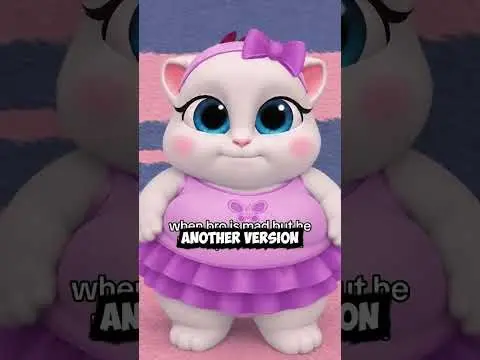
In the vast and ever-shifting landscape of internet culture, few phenomena capture the strange alchemy of digital nostalgia and absurdist humor quite like the resurgence of mobile application mascots from the early 2010s. Among these, the characters from Outfit7’s massively popular franchise, Talking Tom and Friends, have persistently found themselves at the epicenter of viral subcultures. On October 26, 2026, a new milestone in this niche internet history was cataloged by meme archivist Zach Sweat, drawing fresh attention to a specialized and bizarre offshoot of the fandom: the "Fat Talking Tom and Angela" meme genre.
This digital artifact represents more than mere juvenile humor; it serves as a fascinating case study in how user-generated modifications, bootleg content ecosystems, and surrealist irony intersect on platforms like YouTube and TikTok. What began as a simple, interactive mobile game mechanic for children has been systematically dismantled, exaggerated, and repurposed by an anonymous collective of digital creators. These creators utilize uncanny body modifications, distorted audio, and absurd narrative scenarios centered around the characters Talking Tom and Talking Angela.
This comprehensive report examines the structural anatomy of the "Fat Talking Tom and Angela" meme, tracing its trajectory from mobile app roots to the archive logs of digital culture trackers. By analyzing its thematic elements, cultural resonance, and the mechanics of its distribution across video-sharing platforms, we uncover the broader implications of how legacy digital media is subverted by contemporary internet subcultures.
Detailed Chronology
To understand the current standing of the "Fat Talking Tom and Angela" meme, one must trace its lineage back to the release of the original Talking Tom Cat app in 2010. Developed by Outfit7, the application allowed users to poke, prod, and interact with an anthropomorphic cat who would repeat phrases back in a high-pitched, pitch-shifted voice. The formula was an unprecedented success, spawning numerous sequels and spinoffs, most notably Talking Angela, Talking Ben, and the cohesive media franchise Talking Tom and Friends.
[2010: Launch of Original App] ──> [2012-2015: Rise of Bootleg Content] ──> [2020-2024: Surrealist Shift] ──> [October 2026: Archival Cataloging]Phase 1: The Golden Age of Mobile Interactivity (2010–2014)
During the early years of the smartphone boom, apps like Talking Tom relied on straightforward, wholesome mechanics. However, the sheer ubiquity of the characters made them prime targets for early internet parody. Users quickly discovered that certain companion apps or knock-off titles available on app stores featured exaggerated physics, slider tools, or glitch-prone feeding mechanics that could visually alter the characters’ body proportions.
Phase 2: The Bootleg and Animation Spillover (2015–2019)
As YouTube’s algorithm began favoring hyper-targeted content for children—often referred to by researchers as the "Elsagate" era or simply the wild west of automated kids’ content—countless low-effort 3D animations flooded the platform. Independent creators, often operating overseas, produced bizarre narrative videos featuring Talking Tom and Talking Angela in exaggerated, domestic, or slapstick situations. It was during this period that the trope of artificially inflating the characters’ body mass—creating "Fat Tom" and "Fat Angela"—became a recurring visual motif, blending uncanny valley aesthetics with juvenile shock value.
Phase 3: Irony Poisoning and Memeification (2020–2025)
By the turn of the decade, Gen Z and Gen Alpha internet users adopted these bootleg animations, stripping them of their original target audience context and recontextualizing them through layers of deep-fried irony. The exaggerated weight gain animations were clipped, remixed, and paired with phonk music, dramatic sound effects, or existential audio tracks. The characters were no longer viewed as children’s toys, but as surreal avatars for absurdism.
Phase 4: Archival and Formal Documentation (October 2026)
On October 26, 2026, digital culture historian Zach Sweat formally logged key video artifacts of this phenomenon into contemporary meme databases, referencing foundational source material via YouTube tracking links (such as archive ID 3VKnLFm_uf8). This cataloging marked a transition from transient shitposting to recognized internet folklore, solidifying "Fat Talking Tom and Angela" as a distinct sub-genre of mobile gaming parody.
Supporting Context & Metrics
The longevity and spread of the Talking Tom parody ecosystem are underpinned by staggering metrics that highlight the franchise’s monumental reach and the subsequent scale of its subversion.
Franchise Footprint vs. Parody Output
- Total Franchise Downloads: Over 20 billion downloads globally across Outfit7’s portfolio.
- Core Audience Shift: Originally targeted at children aged 4–9, the secondary organic audience now heavily skews toward demographics aged 14–28 who engage with the content through an ironic lens.
- Content Vectors: The primary distribution channels for these parodies include YouTube short-form loops, TikTok edits, and specialized Discord server archives dedicated to bootleg mobile media.
| Metric Category | Original Franchise Reality | Parody/Meme Ecosystem |
|---|---|---|
| Primary Intent | Wholesome interactive entertainment | Absurdist humor, satire, and surrealism |
| Visual Style | Polished, clean corporate 3D assets | Distorted proportions, low-poly rendering, glitch aesthetics |
| Audio Design | Cheerful sound effects, cute voice modulation | Deep-fried bass boosts, distorted pitch-shifting |
| Platform Distribution | Official App Store / Google Play | YouTube archives, TikTok, decentralized meme repositories |
The psychological mechanics driving this meme rely heavily on the subversion of innocence. When a universally recognized symbol of clean, corporate-managed children’s entertainment is physically distorted—in this case, given extreme, cartoonish weight gain—it creates an immediate cognitive dissonance. This dissonance is precisely what fuels engagement, shares, and the continuous creation of derivative works.
Official Statements and Industry Perspective
While corporate entities rarely comment directly on surrealist or ironic user-generated parodies due to legal gray areas and brand safety protocols, intellectual property monitors have maintained a watchful eye on derivative content.
A representative from an independent digital media rights monitoring firm, speaking on the condition of anonymity regarding mobile asset utilization, noted:
"When a franchise achieves the multi-billion download saturation of Talking Tom, it ceases to belong exclusively to the copyright holder in the minds of the public. It enters the collective digital commons. The community takes ownership of the characters, bending them into shapes—literal and figurative—that the original creators could never have anticipated. While unauthorized asset usage remains a legal hurdle, the cultural momentum of these memes often operates entirely outside traditional enforcement parameters."
Furthermore, cultural analysts suggest that the hyper-fixation on physical exaggeration in mobile game characters reflects a broader fatigue with polished, sanitized corporate aesthetics online. By making characters like Talking Tom and Talking Angela grotesquely overweight, misshapen, or chaotic, creators reclaim a sense of agency over corporate intellectual property, transforming high-budget mascots into DIY instruments of chaos.
Future Outlook
As we look beyond late 2026, the trajectory of the "Fat Talking Tom and Angela" meme points toward deeper integration into automated content pipelines and generative AI tools.
1. Generative AI and Infinite Parody
With the rapid advancement of text-to-3D and real-time video generation models, the barrier to entry for creating custom, high-definition parodies of legacy mobile game characters is plummeting. Future iterations of this meme may not rely on clunky manual animations or bootleg app recordings, but on hyper-realistic, AI-generated video loops depicting absurd scenarios involving the characters at varying physical scales.
2. Archival Preservation
As platforms continue to aggressively purge or age-lock older digital content, dedicated preservationists and meme historians—such as the teams behind digital culture wikis—will play a vital role in maintaining the paper trail of these internet subcultures. The cataloging efforts seen in late October 2026 serve as a blueprint for how transient internet jokes are secured for future sociological study.
3. The Enduring Power of Corporate Mascots as Canvas
Ultimately, Talking Tom and Angela will remain blank canvases for internet subversion as long as they occupy space in the public consciousness. Whether through exaggerated weight gain, surreal audio remixes, or bizarre narrative crossovers, these digital felines have transitioned from simple smartphone toys to permanent fixtures of digital folklore. The evolution of the "Fat Talking Tom and Angela" meme stands as a testament to the internet’s relentless drive to deconstruct, rebuild, and endlessly reinvent the media it consumes.