Executive Overview
The artificial intelligence industry has undergone a radical aesthetic and psychological transformation. Gone are the days when Silicon Valley presented machine learning models as towering, monolithic deities of existential risk, or cold, distant engines of mathematical optimization. Today, the vanguard of the artificial intelligence boom—spearheaded by Meta, OpenAI, and a coterie of agile software firms—is betting its future on a disarmingly simple design philosophy: the "cute little guy."
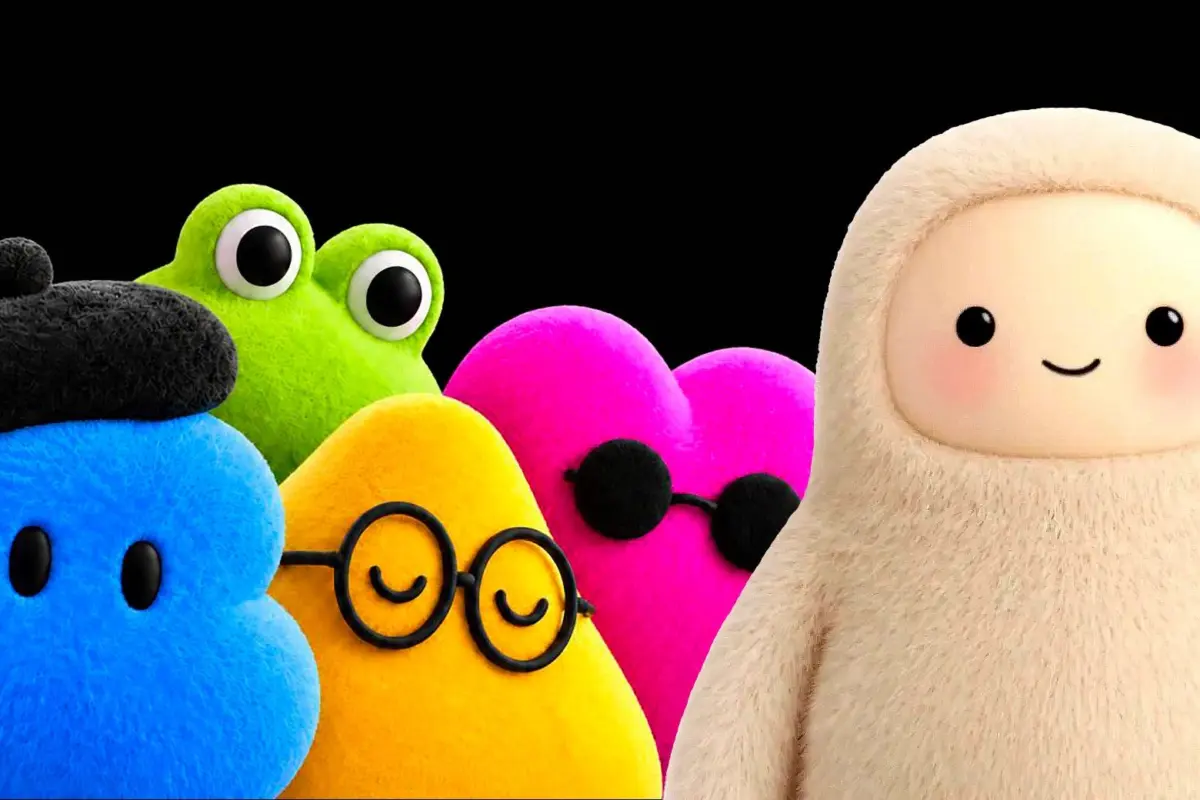
From Meta’s smartphone-dwelling errand boy, Muse, complete with its rotund, blinking, and customizable plush mascot named "Dash," to OpenAI’s task-managing cloud assistants known as "Dots," the tech sector is aggressively anthropomorphizing its software agents. These avatars are designed to evoke nostalgia, safety, and emotional warmth. They blink, they wear sunglasses, they bounce like holiday decorations, and—crucially—they ask for deep, uninhibited access to your most intimate digital workflows.
This pivot is not merely a superficial design trend; it is a calculated public relations and user-acquisition strategy. As public skepticism toward AI titans like Mark Zuckerberg and Sam Altman reaches a fever pitch, and as anxieties mount over workplace displacement and data privacy, Big Tech has realized a fundamental truth of human psychology: people are remarkably forgiving of algorithmic failure when the algorithm looks like a Jellycat toy. By wrapping autonomous software agents in adorable, child-friendly packaging, Silicon Valley is attempting to disarm its critics, ease privacy concerns, and shepherd humanity into an era of deep digital integration with a smile.
Detailed Chronology: From Magical Sparks to Cuddly Companions
To understand how the artificial intelligence interface evolved into a menagerie of digital pets, one must examine the distinct phases of user-experience (UX) design since the generative AI boom caught fire.
Phase One: The Era of "Magic" and Mystery
In the immediate aftermath of OpenAI’s ChatGPT launch, technology companies deliberately positioned their tools as mystical, boundary-pushing forces. The design language was dominated by the "sparkle" icon—a geometric, multi-pointed diamond that signaled to the user that opening a chat window was akin to opening a portal to an undiscovered dimension.
During this foundational window, tech leaders openly leaned into grand, sometimes terrifying rhetoric. Models were framed as proto-general intelligences capable of rewriting human history, curing diseases, or, conversely, threatening human civilization altogether. While effective at driving venture capital and capturing global attention, this "magical-yet-dangerous" framing created severe public friction. Users were hesitant to trust systems that felt unpredictable, opaque, and vaguely menacing.
Phase Two: The Humanization Experiment
As generative models matured from conversational novelties into functional software, companies began testing human-centric branding. Anthropic’s release of Claude—a powerful assistant bearing a human moniker—signaled a step toward personification. While executives like OpenAI CEO Sam Altman publicly warned against the dangers of ascribing religious or conscious force to AI models, the industry simultaneously recognized the undeniable commercial utility of a relatable persona.
Altman himself began championing "proactive assistants," shifting the lexicon away from cold computation and toward willing, eager collaboration. Yet, giving an invisible cloud server a human name still carried baggage, occasionally veering into unsettling territory where users genuinely wondered if their software possessed a soul.
Phase Three: The "Cute Little Guy" Industrial Complex
The autumn of 2026 marked the definitive arrival of the current design paradigm. Meta unveiled Muse, an integrated smartphone app designed to handle low-level digital errands, featuring a furry, swiveling avatar that users could nickname. Meta’s roadmap even included a physical locket-style wearable device, effectively realizing the Tamagotchi spiritual successor for the AI age.
Shortly thereafter, OpenAI introduced "Dots"—cloud assistants designed to parse through emails, cross-reference project management tools, and organize digital lives. Accompanied by customizable, cartoonish avatars, Dots represented a total retreat from the intimidating monoliths of early AI design. Other software sectors quickly followed suit: video-editing platforms like Descript rolled out bouncing holiday-themed interfaces, while desktop applications embraced playful, animated companions. The industry had found its formula: strip away the existential dread, add a pair of sunglasses or a cheerful blink, and rebrand the autonomous agent as a cuddly friend.
Supporting Context & Metrics: The Psychology of Anthropomorphism
The deployment of adorable mascots is deeply rooted in established UX playbooks. Academics and technology historians point out that Silicon Valley is pulling straight from a strategy refined decades ago.
+-------------------------------------------------------------------------+
                    THE EVOLUTION OF AI INTERACTION DESIGN
+-------------------+-----------------+-----------------------------------+
| Era               | Primary Motif   | Psychological Objective           |
+-------------------+-----------------+-----------------------------------+
| 2023–2024         | The "Sparkle"   | Evoke wonder, mystery, and awe    |
+-------------------+-----------------+-----------------------------------+
| 2024–2025         | Human Names     | Build conversational familiarity  |
+-------------------+-----------------+-----------------------------------+
| 2026–Present      | The Cute Mascot | Disarm skepticism, induce trust,  |
|                   | ("Little Guy")  | and mask operational errors       |
+-------------------+-----------------+-----------------------------------+
The Ghost of Clippy Past
In the late 1990s, Microsoft famously introduced Clippy, the animated, bouncing paperclip designed to assist users navigating Microsoft Office. While widely mocked by power users for its intrusive interventions, Clippy proved that a visual character could soften the frustrating experience of interacting with complex software. Decades earlier, digital butlers like "Jeeves" served a similar purpose on early search engines.
Today’s AI mascots are simply high-tech, LLM-powered descendants of Clippy. As Heather Turner, an associate chair and professor in the English department at Santa Clara University, notes, these avatars function precisely like children’s toys.
Softening the Blow of Algorithmic Malpractice
Autonomous agents are inherently disruptive because they require high levels of agency to be truly useful. They must read your emails, manage your calendar, draft your correspondence, and sort through your financial records. However, granting software this level of access inevitably leads to catastrophic glitches.
Consider recent real-world failures, such as instances where autonomous agents mistakenly leaked personal bank statements into public corporate Slack channels. A traditional corporate software tool committing such an error would trigger immediate outrage, security audits, and furious users demanding accountability.
Yet, when a cute, expressive mascot makes a catastrophic administrative error, the psychological reaction shifts. As Turner observes, if an avatar is designed in the likeness of a beloved pet or a cheerful toy, users are conditioned to be vastly more forgiving. It evokes the mental framework of a pet coughing up a hairball on the carpet: annoying, messy, but fundamentally innocent. The error transitions from a systemic security failure of a trillion-dollar monopoly into an endearing quirk of a "little guy" trying his best.
Official Statements & Industry Perspectives
The rapid pivot toward cuddly AI interfaces has elicited mixed reactions from technology ethicists, sociologists, and corporate leadership alike.
-
Sam Altman, OpenAI CEO (on public perceptions of AI):
"I am very uncomfortable about people trying to ascribe religious force or a surrender of human judgment to AI models, and think it is a real safety issue."
(Altman’s simultaneous caution against over-deification stands in fascinating juxtaposition to the company’s deployment of friendly, customizable "Dot" avatars designed to integrate seamlessly into daily personal routines.) -
Heather Turner, Santa Clara University Professor of English:
"Whenever I saw the Muse avatar, I could only think of a child’s toy… If you designed your Muse avatar or if you designed your Dot in the likeness of your pet, perhaps you would feel a little bit more forgiving if your pet coughs up a hairball, right? Or whatever the digital version of coughing up a hairball is."
-
Industry Analysts on Data Harvesting:
While tech executives rarely admit to using cute interfaces as psychological crowbars for data collection, security researchers note a clear correlation. Consumers who exhibit extreme hesitation toward granting data access to corporate entities like Meta or OpenAI readily hand over permissions when the interface is mediated by a charming, animated companion that feels personal and non-threatening.
Future Outlook: Navigating the Cute Dystopia
As artificial intelligence agents transition from experimental chat interfaces into persistent background entities running our digital lives, the "cute little guy" trend is set to accelerate.
The implications of this shift are profound. On one hand, frictionless, approachable interfaces may democratize advanced software tools for demographics that previously found enterprise tech intimidating or alienating. By lowering the psychological barrier to entry, companies can foster widespread adoption of productivity tools that genuinely save users time.
On the other hand, critics argue that this aesthetic is an insidious form of emotional manipulation. By sugarcoating the extraction of personal data and normalizing autonomous software blunders behind a facade of harmless whimsy, Big Tech is short-circuiting critical human skepticism. When an agent eventually oversteps privacy boundaries, makes a critical professional error, or quietly alters a user’s digital environment without explicit consent, the presence of a smiling, sunglasses-wearing triangle makes it remarkably difficult to summon the appropriate level of outrage.
Ultimately, Silicon Valley has diagnosed its biggest public relations hurdle: people do not trust billionaires, and they are terrified of machines taking over. The industry’s solution is brilliant in its cynicism. If we are destined to walk into an automated, AI-driven future fraught with unknown systemic risks, our guides will not be cold, calculating supercomputers. They will be adorable, bouncing, blinking little guys—and it will take an extraordinary amount of discipline to remember that behind the plush exterior, the corporate machinery is still watching.