Executive Overview
In the heartland of America, where political loyalties are often as deep and unyielding as the limestone foundations of the Kansas plains, a tectonic shift is underway. For the first time in nearly a century, the political map of Kansas is flashing crimson and blue in equal measure, transforming a historically safe Republican stronghold into one of the most closely watched toss-up Senate races in the country.
At the center of this unexpected midterm earthquake is the Rev. Adam Hamilton, a prominent Methodist megachurch pastor running as a Democrat against the incumbent Republican senator, Roger Marshall. For lifelong conservatives in small towns like Ellsworth—where Donald Trump has dominated by 50-point margins since 2016—the prospect of voting for a Democratic candidate would have once been unthinkable. Yet, frustrated by polarized gridlock, economic pressures, and a perceived erosion of public morality in Washington, voters are increasingly willing to cross party lines.
Hamilton’s campaign is not merely a localized anomaly; it is a fascinating case study in modern American political strategy. By deliberately leaning into his faith, openly quoting the Gospels, and championing a moderate, centrist platform, Hamilton is attempting something rare for a contemporary Democrat: reclaiming religious vocabulary from the religious right and appealing directly to mainstream Protestants, Catholics, and disillusioned conservatives.

As national parties pour millions into the race in the final stretch, the outcome in Kansas may offer a crucial roadmap for the Democratic Party nationwide. It raises a high-stakes question for strategists: Can a candidate of deep, uncompromised faith bridge the ideological divide in a post-Trump political landscape, or is Adam Hamilton simply a once-in-a-generation political unicorn?
Detailed Chronology: On the Campaign Trail in Kansas
The Ground Game: Crisscrossing the Plains
To understand the momentum behind Adam Hamilton’s insurgent campaign, one must look at the immense physical ground game required to traverse a state as vast as Kansas. Over a grueling four-day stretch, the campaign covered roughly 900 miles of highway, charting a course from Kansas City to Salina, Lindsborg, Hutchinson, Garden City, Hanston, Topeka, and Overland Park.
The strategy was personal and relentless. Rather than relying solely on television airwaves and digital ad buys, Hamilton took his message directly to community spaces—crowded bookstores, historic downtown theaters, and small Swedish chapels. At each stop, the atmosphere felt less like a traditional partisan political rally and more like a town hall or pastoral counseling session.

The Hutchinson Gathering: Diagnosing Washington’s Malady
On a crisp Thursday afternoon in Hutchinson, Kansas, hundreds of voters packed into an old brick movie theater featuring a marquee emblazoned with the word "Fox." Many attendees wore "Republicans for Hamilton" pins, a visual testament to the broad-tent coalition the campaign has managed to assemble.
Taking the stage, Hamilton diagnosed the ailments plaguing Washington, DC, and filtering down into Kansas communities through the lens of classic American allegory. Members of the United States Senate, he suggested gently, had begun to mirror Dorothy’s companions in The Wizard of Oz—having lost their minds, their hearts, and their courage.
He spoke candidly about how intense political polarization, exacerbated by Donald Trump’s rhetoric, had fractured local communities, turning neighbors into suspicious strangers. He recounted an emotional exchange with a mother who had asked him simply to be "somebody who’s going to help me not hate my neighbors with the red caps anymore." The line drew knowing laughter and quiet sighs of relief from an audience weary of perpetual conflict.

The Lindsborg Hymn and the Middle Road
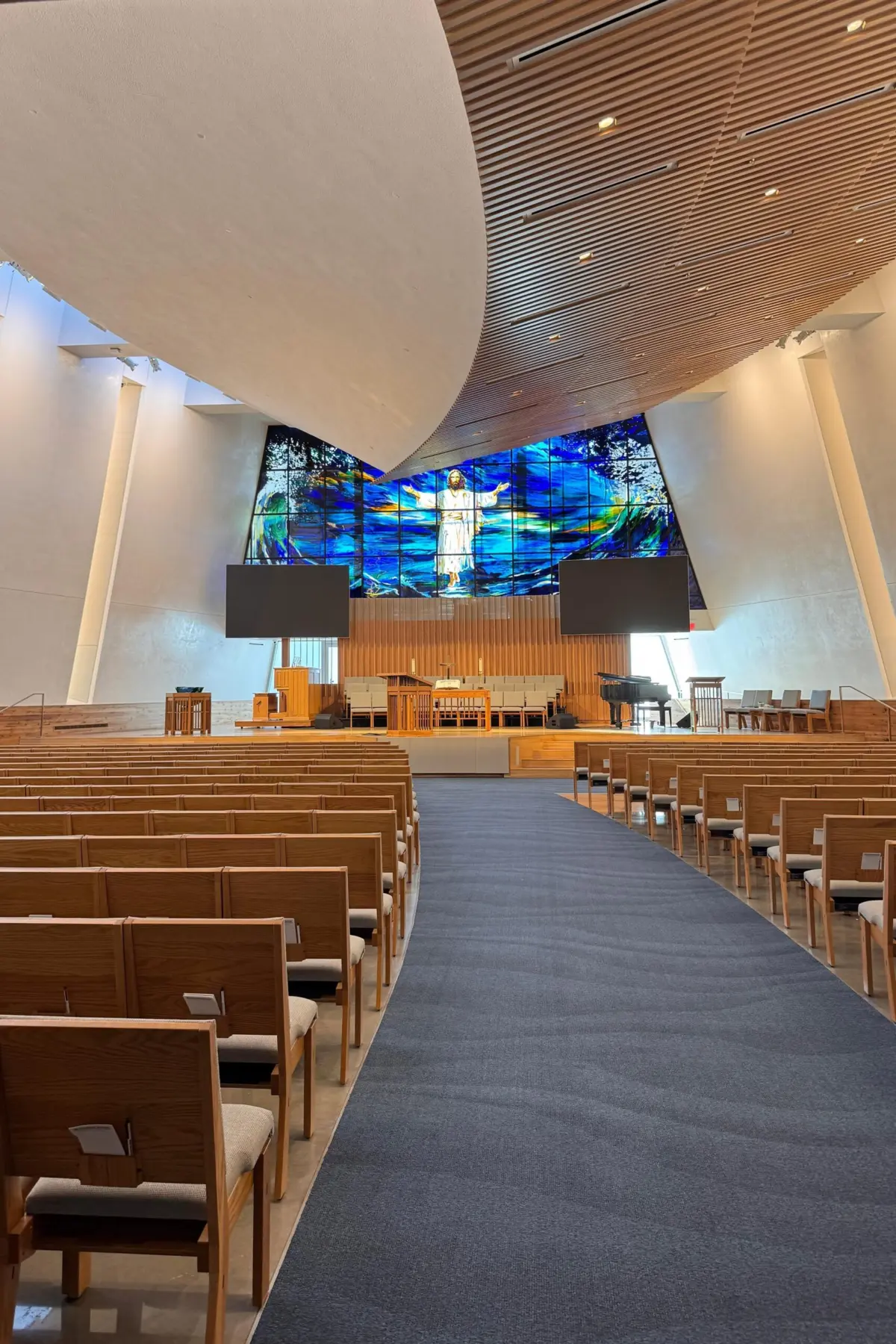
In Lindsborg, known as Kansas’s "Little Sweden," light poured through the stained-glass windows of a historic chapel as hundreds of voices joined together in song. Hamilton, standing at the front of the room, led the crowd in a rendition of "All Creatures of Our God and King," a hymn rooted in an 800-year-old prayer by St. Francis of Assisi.
This blending of civic discourse and sacred tradition is the hallmark of Hamilton’s public persona. Yet, his definition of "moderate" politics diverges sharply from the coastal understanding of the term. While coastal politicians often define moderation through deficit reduction or defense spending, Hamilton embraces a complex, heterodox set of views on hot-button social issues, refusing to bend to the absolutist demands of either party’s political base.
Supporting Context & Metrics: Religion, Realignment, and Public Opinion
The Shifting Religious Landscape
To fully grasp the significance of Hamilton’s campaign, one must examine the macro-level shifts in American religion and politics over the past several decades. From the 1960s through the 1980s, the Democratic Party could reliably count on substantial support from white evangelical Protestants, particularly in congressional elections.

However, by the 1990s, a profound realignment took place. As American society experienced rapid cultural shifts, white evangelicals moved decisively toward the Republican Party, effectively locking in a permanent, powerful voting bloc across the South and the American heartland. Simultaneously, the Democratic Party grew increasingly secularized, alienating many traditional religious voters and largely ceding faith-based outreach to the GOP.
Scholars and pollsters note that while winning back the white evangelical base remains a steep hill for Democrats, ample room for growth exists among white Catholics and mainline Protestant voters—those belonging to historic, non-evangelical institutions such as the Presbyterian, Lutheran, Episcopalian, and United Methodist churches.
Polling Dynamics and the Character War
The race in Kansas shifted dramatically in September following a landmark investigative report by The New York Times revealing that incumbent Republican Senator Roger Marshall—a former OB-GYN—had filed lawsuits against more than 700 former patients for unpaid medical bills, resulting in high interest charges and, in some cases, arrests stemming from missed court dates.

The revelation upended the race, injecting questions of personal integrity and ethics directly into the public discourse. Paired with reports regarding Marshall’s primary residence and campaign finance controversies, the incumbent’s public standing plummeted.
According to CNN polling averages from September and October, Hamilton surged ahead in net favorability ratings among toss-up Senate races nationwide. Across several red states, including Kansas, Iowa, Texas, and Alaska, polling indicates that voters increasingly view Democratic challengers as holding an advantage when asked which candidate projects superior moral character and decency.
Official Statements and Campaign Crossfire
As Hamilton’s momentum grew, national Republican figures and the Marshall campaign launched aggressive counteroffensives, targeting both his political positions and his standing as a religious leader.

The National Pushback
In September, during a rally in the Kansas City suburbs, Vice President JD Vance launched a blistering critique of Hamilton, echoing arguments long made by the religious right against mainline Protestant clergy. Vance dismissed Hamilton’s platform as "left-wing radicalism dressed in the skin suit of our religion," and asserted that the candidate was exploiting his pastoral background for political and financial gain.
Donald Trump echoed these sentiments at a rally in Wichita, labeling Hamilton a "Radical Left LUNATIC" and asserting that he did not represent true evangelical values. Furthermore, Republican campaign advertisements targeted the Church of the Resurrection’s handling of decades-old historical allegations involving a former volunteer at a church camp, accusing Hamilton of failing to protect victims.
The Defense of the Pastor
The attacks drew a swift and organized rebuke from the faith community. More than 100 United Methodist clergy signed an open letter defending Hamilton’s ministry, warning that partisan attacks on a pastor and an entire Christian denomination tear at the fabric of the broader religious community.

Hamilton himself responded to the attacks with characteristic composure:
"People know what I’ve stood for—they know I’m not some woke, far left, whatever," Hamilton noted in an interview. "And I feel at peace about it. Still, that’s 24,000 other people in my church that you’re attacking, and you’re attacking every other mainline Christian across the state of Kansas as you’re doing that."
Campaign representatives for Senator Marshall declined to comment on specific pastoral criticisms when queried by press outlets, choosing instead to frame Hamilton as a "woke megachurch CEO" out of step with traditional Kansas values.

Future Outlook: Implications for the 2026 Midterms and Beyond
Whether Adam Hamilton successfully pulls off a historic upset on election day or falls just short, his campaign has injected a high-stakes, existential question into the national political conversation: Can a self-described "radical centrist" and openly religious leader provide a viable playbook for the Democratic Party in conservative regions?
Political scientists and religion scholars suggest that while Hamilton’s specific blend of megachurch leadership skills, communication polish, and deep institutional backing is difficult to replicate, the core philosophy of his campaign holds valuable lessons.
- Reclaiming Moral Language: Candidates who speak authentically about faith without seeking to impose religious law can successfully neutralize the monopoly that Christian nationalism has held over religious discourse in rural and red states.
- Focusing on the Mainline: Democrats looking to expand their electoral map must prioritize engagement with mainline Protestants and moderate Catholics who feel alienated by cultural extremism on both the far-left and far-right.
- The Primacy of Character: In an era marked by deep cynicism toward political institutions, personal integrity, empathy, and perceived moral consistency remain potent electoral currency.
As voters in Kansas and across the country head to the ballot box, the echoes of Adam Hamilton’s campaign trail message—focused on shared community, mutual respect, and the foundational biblical call to care for the vulnerable—may well reverberate far beyond the borders of the Sunflower State, signaling a new chapter in American political and religious life.