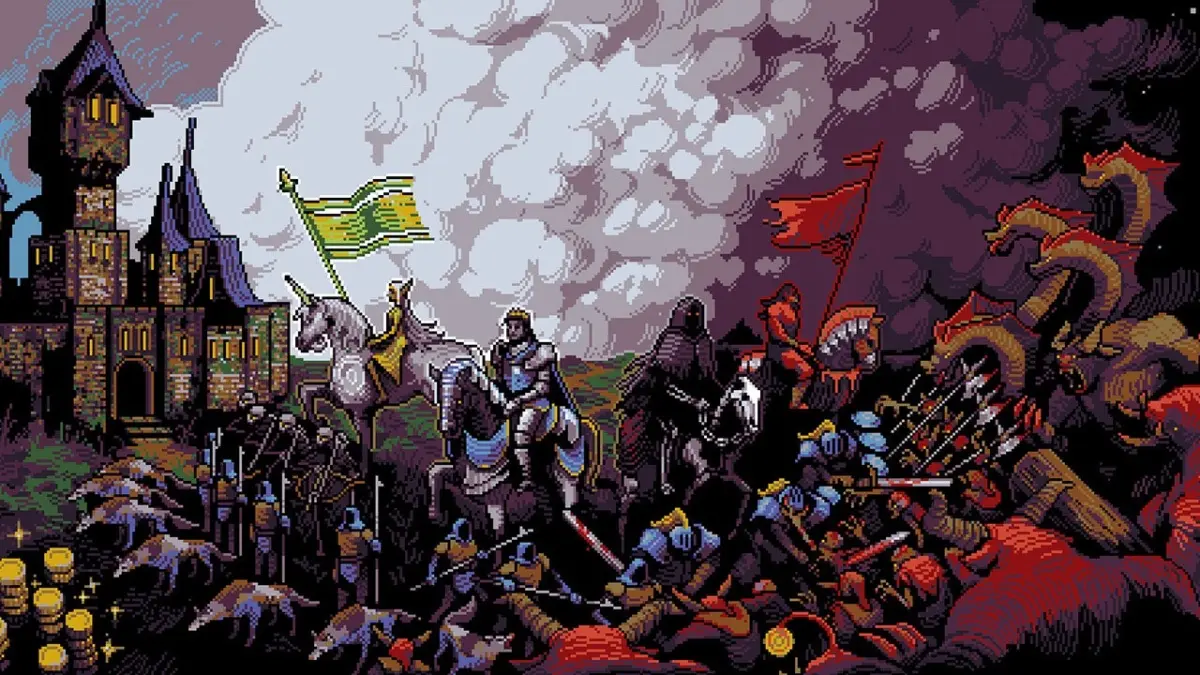
In the ever-evolving landscape of modern PC gaming, genre hybridization has emerged as the premier vehicle for innovation. Developers are no longer satisfied operating within the rigid, well-worn boundaries of established pillars; instead, they are increasingly looking to mash together diametrically opposed design philosophies to see what emergent gameplay loops might crawl out of the primordial soup. The latest ambitious entry into this high-risk, high-reward design space is Heroes Never Die, a newly announced fantasy strategy title from French independent studio Ludogram.
At first glance, the elevator pitch sounds like an exercise in design dissonance: take the relentless, dopamine-driven horde-survival mechanics popularized by runaway indie smash Vampire Survivors, and weld them directly onto the deep, methodical empire-management and tactical army-building DNA of genre royalty like Heroes of Might and Magic. Yet, according to Ludogram, this strange cross-pollination is precisely what strategy enthusiasts didn’t know they were craving.
Slated for a targeted PC release in 2027, Heroes Never Die aims to marry the twitch-reflex, screen-clearing chaos of the "bullet-heaven" subgenre with the thoughtful positioning, resource gathering, and strategic unit composition of classic turn-based fantasy grand strategy. Players will not merely be dodging thousands of encroaching ghouls, goblins, and abominations as a lone, automated warrior; they will be simultaneously cultivating a stronghold, marshalling an army drawn from four distinct factions, and utilizing powerful fantasy commanders to turn the tide of real-time warfare.
As the industry looks ahead toward a crowded release slate, Heroes Never Die has immediately positioned itself as one of the most intriguing dark horses of the decade. With an expansive roster of heroes, an arsenal of dozens of unique tactical units, and a promise of infinite replayability through procedural generation and dynamic run structures, the title is already capturing the attention of strategy purists and roguelike enthusiasts alike. Ahead of its official 2027 launch, Ludogram has pulled back the curtain to reveal early details, upcoming playtest opportunities, and a glimpse into the multi-year development shadow-work that brought this unusual project to life.
Detailed Chronology: From Shadowy Conception to Public Reveal
The genesis of Heroes Never Die did not happen overnight. According to the development team at Ludogram, the project has been quietly gestating behind closed doors for roughly two years, evolving from a speculative whiteboard concept into a fully realized, playable vertical slice.
The Incubation Phase (2022–2023)
When the bullet-heaven genre exploded into the mainstream consciousness following the meteoric success of Vampire Survivors, game developers across the globe rushed to analyze its core psychological hook. The appeal was fundamentally rooted in accessibility, constant progression loops, and the intoxicating spectacle of clearing thousands of on-screen enemies with hyper-powered abilities. However, many industry veterans quickly noticed a limitation in the formula: once a player mastered the optimal build paths, individual runs could begin to feel homogeneous, relying heavily on twitch reactions rather than long-term strategic planning.
Ludogram’s core creative leadership, spearheaded by Creative Director Edouard Gaudel, began asking a provocative question: What would happen if the player wasn’t just a singular hero surviving against the odds, but an active commander anchoring a growing, breathing fantasy faction?
During this initial incubation phase, the team experimented with various mechanical frameworks. How do you balance the frantic, real-time pacing of survival games with the deliberate, tactical positioning required by traditional strategy titles? The answer required building a proprietary engine logic capable of rendering hundreds of distinct tactical units on screen simultaneously without sacrificing the performance stability demanded by real-time action games. Over the course of 24 months, Ludogram refined this balance, shifting away from pure macro-management toward an integrated micro-survival loop where every unit retained tactical significance.
The Public Unveiling (Late 2024 / Early 2025)
The official announcement of Heroes Never Die marks a critical milestone for Ludogram, transitioning the project from a secretive internal prototype to an outward-facing community-driven experience. By opening the floor to public scrutiny years ahead of its final release window, the studio is signaling a strong commitment to iterative development.
Rather than locking the game away until it is fully polished, Ludogram has opted for an exceptionally early community integration model. The announcement arrived bundled with an immediate call to action: the launch of a private playtest sign-up campaign alongside a Steam store page debut. This transparent roadmap gives prospective players a direct line to the development team, allowing the community to stress-test the complex economic and tactical loops that define the Heroes Never Die experience.
Supporting Context & Metrics: Breaking Down the Mechanics of Heroes Never Die
To fully appreciate what Ludogram is attempting to achieve, one must examine the specific systemic pillars that prop up Heroes Never Die. The game is not merely a reskinned arcade survival title; it is a dense, systemic tactical sandbox designed to offer deep strategic replayability.
The Hero Roster: Over 20 Legendary Commanders
At the heart of every run in Heroes Never Die is the selection of your primary avatar. The launch lineup boasts over 20 distinct heroes, each belonging to different archetypes inspired by classic high-fantasy tropes—ranging from arcane spellcasters and holy paladins to shadowy assassins and brutal warlords.
Crucially, these heroes are not just cosmetic skins with different projectile colors. Each commander possesses an individualized skill tree, active abilities, and passive bonuses that fundamentally alter how you approach a run. Selecting a necromantic overlord will naturally lean your strategy toward swarm resurrection and attrition, whereas choosing a high-elven tactician will reward disciplined unit positioning and ranged dominance. Furthermore, players will not only have to contend with computer-controlled monster hordes; the campaign mechanics pit you directly against rival heroes, injecting a competitive or boss-rush dynamic into the survival loop.

Factions, Units, and Army Building
Where Heroes Never Die truly distinguishes itself from traditional survival games is its integration of real-time army building. Borrowing heavily from the Heroes of Might and Magic tradition, the game features four distinct factions, subdivided into an arsenal of over 60 unique units.
As players survive the onslaught of monster waves, they must simultaneously engage in town upgrading and resource gathering. Gathered materials can be invested back into your stronghold to unlock higher-tier barracks, magical outposts, and specialized economic structures. This creates a fascinating risk-reward dichotomy: do you spend your hard-earned resources on immediate defensive upgrades to survive the next imminent wave, or do you gamble on long-term infrastructure investments that will yield powerful high-tier army units later in the run?
With 60+ units distributed across four ideological factions, army compositions can vary wildly. Ludogram has emphasized procedural generation and run-to-run variance, promising that no two playthroughs will ever play out the exact same way. Players will be forced to adapt their tactical doctrines on the fly, depending on the resources available, the factional units drafted, and the specific enemy types swarming the map.
| Game Feature | Traditional Survival Games (Vampire Survivors) | Heroes Never Die (Ludogram) |
|---|---|---|
| Primary Control | Single isolated hero | Hero commander + Real-time army units |
| Progression Scope | Per-run weapon/item upgrades | Town building, resource gathering, faction recruitment |
| Tactical Depth | Positioning and build path optimization | Unit formations, faction synergies, multi-front defense |
| Enemies | Endless monster waves | Monster hordes plus rival enemy heroes |
| Content Scale | Varied characters and weapons | 20+ Heroes, 4 Factions, 60+ Units |
Official Statements: Insights from the Development Team
The announcement of any ambitious cross-genre title is bound to raise eyebrows among traditionalists and skeptics alike. Recognizing this, Ludogram’s leadership has been vocal about their vision, motivations, and the emotional weight of finally bringing their multi-year passion project into the light.
In an official studio statement, Creative Director Edouard Gaudel reflected on the long, quiet journey of bringing the concept to life:
"We’re delighted to finally announce Heroes Never Die, a project we’ve been working on in the shadows for a couple of years. We cannot wait to see our first players fighting hordes of monsters, and evolving their armies while meeting our heroes. Don’t forget to join our upcoming Playtest!"
Gaudel’s remarks underscore a developer deeply aware of the expectations riding on a concept as high-concept as "bullet-heaven meets turn-based strategy lineage." By inviting players into the fold via the private playtest, Ludogram is acknowledging that balancing real-time survival reflexes with macro-level strategic army management will require rigorous, community-driven iteration. The studio’s willingness to open development doors this early suggests a high degree of confidence in their core game loop, even with a distant release horizon.
Future Outlook: What Lies Ahead for Heroes Never Die
As the gaming community digests the initial reveal of Heroes Never Die, attention naturally turns toward the road map leading up to the tentative 2027 PC launch. A three-year runway is a considerable amount of time in modern game development—long enough for market trends to shift, technological standards to evolve, and ambitious concepts to either be successfully refined or buckling under the weight of their own feature creep.
The Critical Role of the Upcoming Playtest
For Ludogram, the immediate future hinges entirely on the success of their upcoming private playtests. These early builds will serve as the crucible in which the game’s core mechanical identity is tested against real players. Developers will be closely monitoring how community members navigate the friction between micro-managing a frantic survival arena and macro-managing an expanding fantasy town.
Will casual survival fans find the army-building elements overly bureaucratic? Will strategy purists find the real-time evasion mechanics too frantic? Answering these questions early is precisely why Ludogram has chosen to announce the game years in advance. The feedback gathered from these foundational playtests will undoubtedly steer the direction of balancing patches, UI/UX overhauls, and potential feature prioritization.
Platform Strategy and Long-Term Viability
While Heroes Never Die has been formally confirmed exclusively for PC via Steam as of its initial announcement, the game’s systemic DNA—combining clear visual readability, economic progression loops, and accessible control schemes—suggests a strong candidate for future console and mobile adaptations down the line. However, for now, the development team is laser-focused on optimizing the PC experience.
As players head over to Steam to wishlist the title and secure their spots in the impending playtest queue, Heroes Never Die officially enters the conversation as one of the most intellectually stimulating indie strategy projects on the horizon. If Ludogram can successfully thread the needle between the addictive, arcade-style chaos of survival games and the cerebral depth of grand strategy classics, 2027 may very well yield one of the most uniquely captivating indie hits of the decade.