Executive Overview
Electric bicycles have fundamentally reshaped modern urban mobility. By bridging the gap between human-powered exertion and motorized efficiency, e-bikes have transformed grueling daily commutes into manageable, sweat-free journeys while opening up longer recreational rides for a broader demographic of cyclists. For urban dwellers battling the chronic space constraints of city living, the foldable electric bike has emerged as the holy grail of micro-mobility. Promising the best of both worlds—motorized pedal-assist coupled with a compact frame that collapses into a neat package for apartment storage or office transport—these machines seem tailor-made for the modern city.
However, convenience rarely comes without compromise. Beneath the sleek marketing promises of seamless portability lie a series of engineering compromises, heavy physical realities, and financial costs that buyers often overlook until their new investment is sitting in their living room.
While a folding e-bike can effortlessly slide under a work desk, getting it there often involves wrestling with dead weight, enduring a harsher ride over urban potholes, and navigating strict public transit weight limits. Furthermore, the specialized mechanics required to make a frame fold introduce unique maintenance challenges and safety considerations. Before committing thousands of dollars to a foldable electric platform, urban commuters must look past the novelty of the folding mechanism and critically evaluate the heavy trade-offs inherent to this compact form factor.
Detailed Chronology & Structural Evolution
The journey of the foldable bicycle dates back over a century, originally engineered for military deployment and early commuters who needed to seamlessly transition between trains and footpaths. However, the integration of modern lithium-ion batteries and compact hub motors into folding frames represents a much more recent technological evolution—one that has accelerated rapidly over the last decade.
Phase One: The Rise of Mechanical Folders
Long before electrification, brands like Brompton established the gold standard for mechanical folding bikes. The engineering focus was squarely on minimizing spatial footprint. Hinges were tightly integrated, frames were optimized for quick collapses, and weight was kept to a bare minimum because the rider was the sole engine.
Phase Two: The Motorized Integration
As electric motor technology miniaturized, manufacturers naturally sought to apply e-bike propulsion to folding architectures. This phase was defined by brute-force adaptation: taking traditional folding frames and attempting to bolt on heavy batteries, thicker down tubes to house electronics, and high-torque hub motors. Early iterations struggled with structural integrity, often suffering from flex at the hinge points under the combined load of the motor and rider torque.
Phase Three: The Modern Compromise
Today’s market features sophisticated folding e-bikes ranging from nimble, premium lightweight commuters to heavy-duty, fat-tire utility folding bikes. Yet, the core physics problem remains unsolved: combining high-capacity batteries, robust electric motors, and hinged frames inevitably results in a mechanical paradox. The harder manufacturers try to make a folding e-bike rugged and powerful, the heavier and more cumbersome it becomes, challenging the very premise of its portability.
Supporting Context & Metrics: Unpacking the Trade-Offs
To truly understand whether a foldable electric bike fits your lifestyle, one must analyze the hard metrics surrounding weight, comfort, range, and infrastructure compliance.
1. Folding Does Not Mean Lightweight
The most common misconception among first-time buyers is that folding a bike makes it easy to carry. In reality, you must separate bikes you can fold from bikes you can comfortably transport on foot.
A standard e-bike requires a battery and motor, but a folding e-bike also requires heavy hinges, specialized locking mechanisms, and reinforced structural joints to prevent the frame from flexing. All of these components add substantial mass.
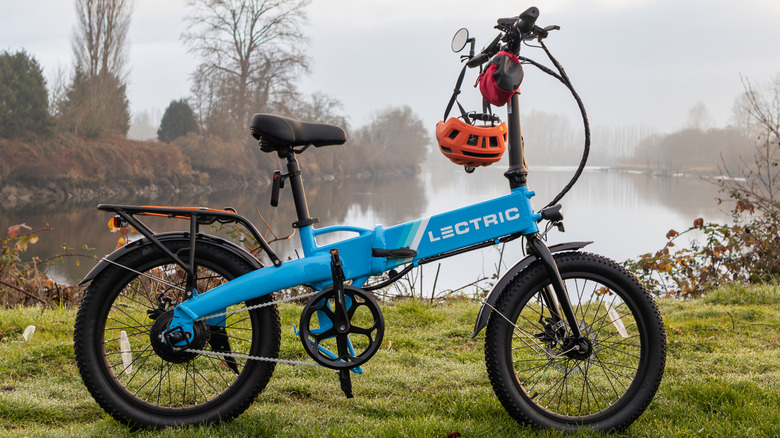
- The Weight Reality: Consider popular models like the Lectric XP series. A rugged folding e-bike featuring a powerful 500W motor can easily tip the scales at 62 pounds without its battery. Adding a standard battery pack tamps on another 7 pounds, pushing the total weight to a staggering 69 pounds (approx. 31 kg).
- The Transit Hurdle: Lifting nearly 70 pounds into the trunk of a car is one thing; carrying that same dead weight up three flights of stairs to an office or navigating a crowded subway station is an entirely different physical challenge. Even if you remove the battery to shave off a few pounds, the stripped frame remains uncomfortably heavy and awkward to grip.
Furthermore, public transit regulations present strict legal and operational barriers. Major transit operators, such as Amtrak, enforce strict weight ceilings—often capping allowed bicycles at a maximum of 50 pounds. This immediately disqualifies heavy-duty folding e-bikes from being legally brought onboard many trains and buses, defeating the multi-modal transit strategy many buyers intend to use.
2. Comfort Versus Compactness on Rough Roads
Compact folding bikes inherently rely on smaller wheels (often ranging from 16 to 20 inches) to maintain a manageable footprint when collapsed. While small wheels allow the bike to pivot quickly and slide under office furniture, they wreak havoc on ride quality when navigating imperfect urban infrastructure.
- Potholes and Patchwork Pavement: Smaller wheels drop deeper into ruts and potholes than larger 27.5-inch or 700c wheels. On broken city streets, every bump is magnified. Without robust front and rear suspension or wide, high-volume tires, the ride can quickly become fatiguing and jarring.
- The Customization Ceiling: Achieving proper ergonomics on a folding frame is notoriously difficult. Because frame geometry is constrained by the folding mechanism, adjustment ranges for the saddle height, handlebar reach, and stem angle are often limited. If the bike’s factory geometry does not match your specific body proportions, you cannot simply swap out components the way you would on a traditional diamond-frame bicycle.
3. Financial Costs: Premium Pricing for Portability
Engineering a compact, folding frame that can safely withstand the vibrational forces of an electric motor requires precision manufacturing and high-grade materials. Consequently, consumers face a steep financial barrier for quality.
- Entry-level folding e-bikes may tempt buyers with lower price tags, but they often utilize cheap hinges that develop play over time, low-capacity batteries, and underpowered brakes.
- Premium alternatives, such as Brompton’s Electric C Line, P Line, and ultra-lightweight T Line series, command prices ranging from $4,700 to well over $7,800.
Investing heavily in a folding e-bike does not automatically buy you a maintenance-free ownership experience. In fact, the specialized nature of these bikes often increases long-term upkeep costs.
Official Industry Insights & Expert Recommendations
Industry veterans and leading bicycle manufacturers emphasize that test-riding and logistical planning are mandatory steps before purchasing any folding micro-mobility device.
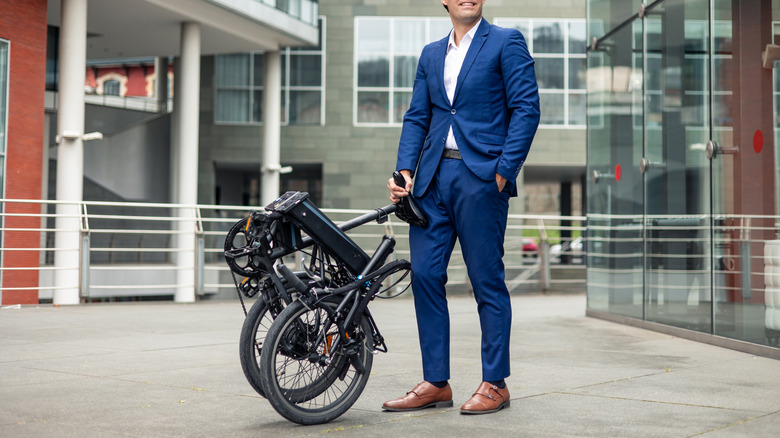
Major manufacturers like Tern Bicycles outline strict maintenance protocols regarding folding joints and frame safety. Unlike a rigid frame that distributes stress evenly across welded joints, a folding bike concentrates mechanical stress onto specific pivot points, latches, and quick-release clamps.
The Maintenance Imperative
Regular servicing is non-negotiable. Repeatedly folding and unfolding the frame introduces wear and tear onto pressure points that are critical to rider safety. Experts strongly advise conducting pre-ride inspections of all locking clamps before every single journey. A loose or improperly adjusted hinge can result in catastrophic frame failure mid-ride.
The "Try Before You Buy" Protocol
Cycling experts recommend a rigorous field test before exchanging money for a folding e-bike:
- The Lift Test: With the battery fully installed, attempt to lift the bike from its designated balance point. Carry it up a mock flight of stairs or walk with it for 100 meters to gauge its true portability.
- The Measurement Test: Fold the bike completely, measure its exact dimensions, and map out where it will live in your hallway, car trunk, or under your office desk.
- The Surface Test: Take the bike for a test ride over the roughest patches of pavement you can find along your intended commute route to evaluate how the smaller wheels and suspension handle real-world vibrations.
Future Outlook: Where is the Foldable E-Bike Market Heading?
Despite the inherent trade-offs, the demand for foldable electric bikes shows no signs of slowing down. As urban density increases, parking becomes scarcer, and multi-modal commuting grows in popularity, manufacturers are pouring millions of dollars into research and development to solve the weight-versus-durability equation.
Material Science Breakthroughs
The future of the category lies in advanced material science. We are beginning to see broader experimentation with ultra-lightweight carbon fiber composites, aerospace-grade aluminum alloys, and titanium frames (such as Brompton’s T-Line). These exotic materials aim to shave crucial pounds off the total weight without compromising structural rigidity.

Smart Integration and Battery Efficiency
Battery technology is also evolving. Solid-state batteries and higher energy-density cell configurations promise to deliver greater range from smaller, lighter power packs, directly addressing the compromise between battery capacity and overall bike weight. Furthermore, integrated IoT tracking, automated electronic locking mechanisms for folding joints, and modular accessories are expected to make these bikes safer and more intuitive to operate.
Conclusion
A foldable electric bike is a brilliant piece of engineering that can completely transform an urban commute—provided your expectations are grounded in reality. They are not lightweight magic carpets, nor are they plush touring cruisers designed for rugged terrain. They are hyper-specialized tools built for a very specific lifestyle. By carefully weighing the realities of weight, maintenance, ride comfort, and financial investment against your daily routine, you can determine whether the compromises of the folding e-bike are the right fit for your journey ahead.