Executive Overview
Across the United States, a quiet, high-stakes infrastructure race is underway. Driven by federal mandates and a relentless push to expand cellular networks, mobile broadband, and broadcast capabilities, communications towers are being upgraded at an unprecedented pace. However, beneath the promise of lightning-fast connectivity and expanded rural coverage lies a grim reality: the workers climbing these dizzying heights are paying with their lives.
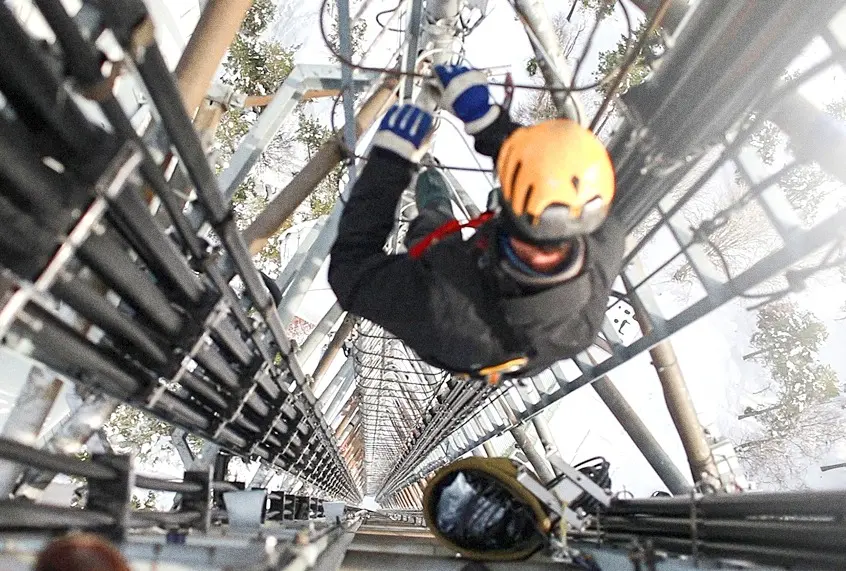
As the Federal Communications Commission (FCC) enforces a strict July 2020 deadline to relocate nearly 1,000 television stations to new frequencies—a massive logistical undertaking known as the "post-auction repack"—tower technicians are facing mounting pressure. Balancing on skeletal steel structures soaring up to 2,000 feet into the air—dwarfing iconic landmarks like the 1,776-foot One World Trade Center—these workers operate in a largely unregulated, high-risk environment.
Industry veterans, safety experts, and labor advocates warn that an acute shortage of qualified technicians, combined with politically driven deadlines, has turned routine maintenance and equipment upgrades into deadly gambles. Despite repeated warnings from safety organizations and congressional appeals for a more measured timeline, federal regulators and lawmakers have largely stayed the course, prioritizing economic expansion and digital connectivity over worker safety. With Occupational Safety and Health Administration (OSHA) standards lacking specific, proactive protocols tailored to communications tower hazards, the industry remains a regulatory blind spot where human lives are traded for network efficiency.
Detailed Chronology and Recent Tragedies
The human toll of the nationwide infrastructure rush is marked by a series of preventable tragedies that underscore the immediate dangers faced by tower technicians on a daily basis.
In September 2017, the hazards of high-altitude work were laid bare in Miami Gardens, Florida. A crew of three young technicians—23-year-old Brachton Barber of Longwood, Florida; 35-year-old Benito Rodriguez of Tampa, Florida; and 31-year-old Marcus Goffena of Sidney, Ohio—scaled a local broadcast tower to replace an antenna for WSVN-Channel 7. During the operation, disaster struck. All three workers suffered fatal injuries, cutting short promising careers and devastating their families. The incident sent shockwaves through the broadcasting community, serving as an early indicator of the catastrophic risks accompanying rushed tower modifications.
Just months later, in April 2018, the crisis escalated from individual technician errors or equipment failures to catastrophic structural collapse. A towering 1,980-foot broadcast tower in Fordland, Missouri, operated by Ozarks Public Television, catastrophically buckled and collapsed. The disaster claimed the life of 56-year-old Stephen Lemay of Blaine, Washington. Lemay, described by loved ones as a dedicated family man, was performing crucial upgrade work when the multi-thousand-foot structure gave way. The collapse not only snuffed out a human life but also plunged the regional public television station into an extended operational blackout, triggering complex local investigations that highlighted the compounded vulnerabilities of aging infrastructure under sudden modification pressure.
These high-profile disasters are not isolated anomalies; they represent the sharp edge of a persistent trend. According to tracking data compiled by industry watchdogs, fatalities among tower climbers continue to accumulate year after year. Every rush to meet an artificial deadline or restore localized service quickly adds another notch to an unacceptably high death toll, exposing the systemic vulnerabilities inherent in how tower work is contracted, subcontracted, and executed.
Supporting Context and Metrics: The Anatomy of a High-Risk Industry
To understand why communications tower work is uniquely lethal, one must examine the staggering physical and structural risks involved. Tower climbers routinely ascend anywhere from 100 to 2,000 feet above solid ground. At these elevations, workers are exposed to a volatile combination of environmental hazards, including extreme wind shears, ice accumulation, severe electrical storms, and intense solar radiation.
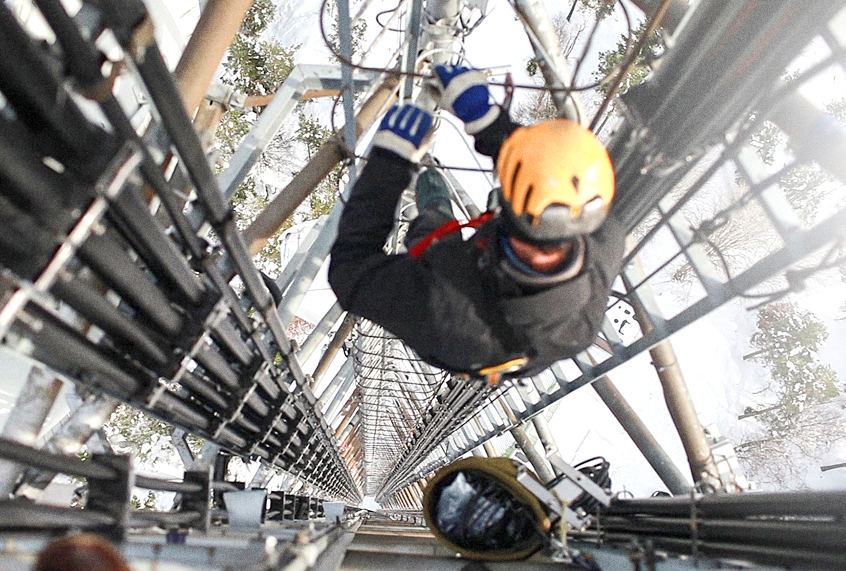
Beyond natural elements, the structural integrity of the towers themselves is increasingly compromised. Thomas Fuller, an occupational safety expert from Illinois State University, testified before OSHA that America’s tower infrastructure is aging rapidly. As decades-old towers are retrofitted with heavier, modern antennas and denser arrays of communication gear to support growing data demands, they bear loads they were never originally engineered to handle.
"As towers age and additional antennae are added, they become more hazardous," Fuller explained in public comments to federal regulators. He further highlighted a pervasive culture of fear and silence within the industry: "Often, workers and tower climbing companies are hesitant to report structural problems for fear of losing the work. There is no federal agency to report unsafe structural conditions to and expect a timely response."
Statistically, the danger is astronomical. David Michaels, who served as assistant labor secretary under the Obama administration, noted the stark discrepancy between tower work and standard industrial labor. "Tower workers have a risk of fatal injury perhaps 25 to 30 times higher than the risk for the average American worker," Michaels stated. "This is clearly unacceptable."
Despite these alarming statistics, federal oversight remains strikingly inadequate. OSHA does not currently possess comprehensive safety standards specifically and exclusively written to protect communications tower workers from the unique matrix of hazards they encounter. While the agency initiated exploratory steps toward crafting targeted rules in 2015—prompted by a grim spike in which 13 tower workers were killed in a single year, surpassing the previous two years combined—meaningful, enforceable federal mandates have been painfully slow to materialize. Critics point out that when OSHA does step in following fatalities, the resulting penalties levied against negligent employers are often minimal, failing to deter systemic safety shortcuts.
Compounding the regulatory vacuum is the economic ecosystem of the broadcasting and telecommunications sectors. Commercial TV and radio stations maintain a heavy political presence in Washington, D.C., pouring tens of millions of dollars into federal lobbying efforts. In 2017 alone, the industry spent nearly $29 million lobbying lawmakers, ensuring that corporate interests and rapid technological transitions remained central to legislative priorities while worker protection reforms lagged behind.
Official Statements and Competing Perspectives
The conflict over the pace of America’s broadcast and wireless expansion has created a sharp divide between industry safety advocates, who plead for caution, and pro-business lawmakers, who demand speed.
Jim Tracy, chairman of the National Association of Tower Erectors (NATE), has been a vocal critic of the aggressive timelines mandated by the federal government. In congressional testimony and public addresses, Tracy has consistently urged lawmakers and regulators to decelerate the post-auction repack schedule.
"There is one inescapable fact," Tracy warned in September 2017. "There are not, at present, enough qualified workers to perform all the tower work we will be required to complete." Tracy’s warnings highlight a structural labor shortage: complex rigging, structural reinforcement, and high-altitude electrical work require rigorous, time-consuming training that cannot be rushed without introducing fatal vulnerabilities.

Engineering professionals on the ground echo these concerns. Bill Hayes, director of engineering for Iowa Public Television, captured the precarious balance between operational continuity and human life during the rollout of the FCC mandate. "You can be gambling at best with the reliability of your station’s service, and at worst you’re gambling with people’s lives," Hayes cautioned.
Conversely, a powerful coalition of federal lawmakers has pushed aggressively in the opposite direction. A bipartisan group of 56 members of Congress—including prominent figures such as Rep. Steve Scalise (R-La.) and Rep. Darrell Issa (R-Calif.)—sent formal communications to FCC Chairman Ajit Pai, adamantly demanding that the July 3, 2020, deadline for the television repack remain strictly enforced.
Proponents of the rigid timeline argue that rapid modernization is an absolute prerequisite for maintaining America’s competitive edge in the global digital economy. In their joint appeals to the FCC, the lawmakers framed the aggressive schedule as an economic imperative, writing, "Ultimately, it’s a matter of economic necessity in today’s globally-connected world." They argue that expediting the transition frees up valuable spectrum for advanced wireless services and extends vital broadband access to underserved rural populations, benefits they believe outweigh the logistical friction of the rollout.
Future Outlook: Navigating the Post-2020 Landscape
As the dust settles on the initial wave of federally mandated spectrum auctions and station relocations, the long-term outlook for communications tower safety remains deeply precarious. The fundamental tensions that sparked the crises of 2017 and 2018 have not been resolved; rather, they continue to evolve alongside the explosive growth of 5G networks, smart-city infrastructure, and continuous telecommunications upgrades.
The foundational challenge is structural and cultural. Without a comprehensive, specialized set of OSHA standards tailored exclusively to the rigors of tower climbing, workers will continue to navigate a patchwork of voluntary guidelines and under-enforced protocols. Furthermore, the multi-tiered subcontracting model prevalent in the telecommunications industry—where major carriers outsource work down through multiple layers of contractors and subcontractors—often dilutes accountability, leaving low-level climbing crews pressured to cut corners to meet impossible profit margins and deadlines.
Industry experts emphasize that safeguarding the future of wireless expansion requires a fundamental realignment of priorities. True modernization cannot be measured solely in gigabits per second or the speed of spectrum clearance; it must also account for the human capital required to build and maintain the physical scaffolding of the modern information age.
Until federal regulators enact rigorous, mandatory safety frameworks, and until corporations and lawmakers acknowledge that the human cost of rushed tower work is too high a price to pay, technicians across the nation will continue to risk their lives in the shadows of America’s broadcast towers—scaling unprecedented heights under the constant, heavy weight of deadlines that leave no room for error.