Executive Overview
More than a decade after the catastrophic Deepwater Horizon oil and gas blowout ruptured the northern Gulf of Mexico, a comprehensive new scientific assessment reveals a staggering ecological reality: the deepwater ecosystem did not merely weather the disaster—it collapsed, and it shows virtually no signs of recovery.
Published in the Proceedings of the National Academy of Sciences (PNAS), the landmark study documents what researchers are calling the fastest and most severe faunal decline ever recorded in Earth’s largest ecosystem type. Across hundreds of miles of deep-pelagic habitat—stretching from 650 feet below the surface down to a mile deep—populations of foundational midwater species, including krill, squid, shrimp, octopus, and lanternfish, plummeted by 60 to 85 percent in the years immediately following the spill.
The consequences of this silent apocalypse extend far beyond the immediate casualty count. The sweeping die-off has triggered severe genetic bottlenecks within surviving populations, diminished the ocean’s biological pump responsible for sequestering atmospheric carbon dioxide, and starved top apex predators. Prominent marine biologists unconnected to the study have praised its rigorous methodology, noting that the converging lines of net-haul data, acoustic surveys, and genetic sampling leave no doubt: the Deepwater Horizon disaster fundamentally broke the structural resilience of the deep Gulf.
As regulatory bodies weigh the viability of industrial deep-sea mining across global oceans, this definitive assessment serves as a stark warning. It proves that extreme industrial accidents can permanently impair abyssal environments that were once falsely assumed to be safely buffered from human interference.
Detailed Chronology of the Disaster and Scientific Discovery
April 20, 2010: The Horizon Catastrophe
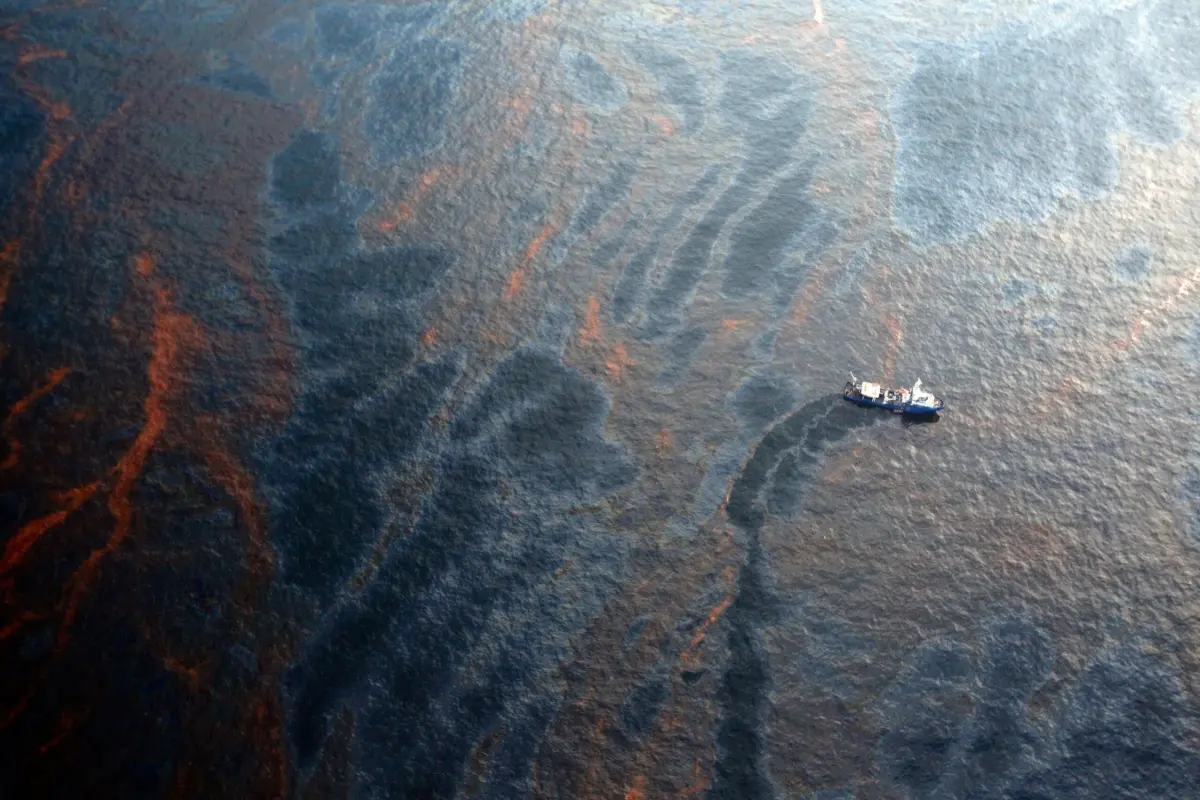
The timeline of destruction began on a spring evening roughly 50 miles southeast of the Mississippi Delta. The Deepwater Horizon, a transoceanic drilling rig operating under contract for energy giant BP, suffered a catastrophic methane gas release that roared up the drill pipe. The resulting explosion and raging fire claimed the lives of 11 crew members and ignited the largest accidental marine oil spill in human history.
For 87 harrowing days, the broken Macondo wellhead, resting nearly a mile beneath the ocean surface, spewed crude oil and toxic fossil gas completely unchecked. When the well was finally capped, an estimated 4.9 million barrels of oil—equivalent to the capacity of about 400 tanker trucks daily, or enough to fill 1.2 million automobiles—had poured into the marine environment. Simultaneously, roughly 7.7 billion cubic feet of natural gas flooded the deep sea at a rate of 88 million cubic feet per day.
In a frantic attempt to mitigate surface contamination, state and federal authorities authorized the unprecedented application of 1.84 million gallons of chemical dispersants. While some surface oil was driven ashore to devastate coastal wetlands, barrier islands, and shellfish beds, and other hydrocarbon fractions settled onto the benthic zone, massive plumes remained trapped in the deep water column. Suspended indefinitely by ocean currents, these toxic chemical cocktails began executing a slow, invisible devastation upon the pelagic organisms living in perpetual darkness.
The Decadal Investigation: 2011 to 2023
To track the invisible toll of the spill, an elite team of marine scientists initiated an exhaustive, multi-year monitoring framework. Led by Tracey Sutton, a professor of marine and environmental sciences at Nova Southeastern University, the research team established a baseline through intensive sampling conducted across nine months in 2011. They then executed nine subsequent sweeping surveys between 2015 and 2023.
Operating across a vast grid encompassing the deep-pelagic zone—which accounts for approximately 90 percent of the total volume of the Gulf of Mexico—researchers deployed specialized opening-and-closing nets from rolling, slippery vessel decks. Operating around the clock, they sampled at both high noon and midnight to account for the diurnal vertical migration of midwater species. This physical sampling was paired with ship-mounted scientific echosounders, which independently measured sound waves reflected off dense layers of marine biomass.
When the final datasets were compiled and analyzed, the results were sobering. Populations of core food-web taxa—such as krill and lanternfish—had crashed by up to 85 percent between 2011 and late 2014, and subsequent surveys through 2023 demonstrated zero meaningful demographic rebound.
Supporting Context & Metrics: The Anatomy of a Pelagic Collapse
The sheer scale of the Deepwater Horizon ecological collapse can be understood through specific metrics tracking toxicity, population attrition, and environmental disruption:
- Population Depletion: Core midwater fauna, including squid, shrimp, octopus, krill, and lanternfish, dropped by 60 to 85 percent within three and a half years of the blowout.
- The Squalid Silence of Whales: A related 2024 study documented an 80 percent decline in deep-diving toothed whales. Long-term resident populations, such as sperm whales that once thrived directly off the Mississippi River plume, have effectively vanished from regional sightings over the past decade.
- Volume of Contamination: The spill ejected 4.9 million barrels of oil and 7.7 billion cubic feet of fossil gas directly into the deep sea, accompanied by 1.84 million gallons of toxic chemical dispersants.
- Acoustic & Olfactory Disruption: Lingering hydrocarbons and chemical dispersant residues have been shown to impair development, reproduction, and survival rates. Crucially, scientists believe these pollutants disrupt the delicate olfactory senses of deep-sea animals, effectively blinding them to the presence of potential mates in pitch-black waters.
Furthermore, the cascading ecological failures have systematically starved large pelagic predators. Marine mammals and large pelagic fish require dense, concentrated patches of midwater prey to sustain their high metabolic demands. With foundational forage species decimated, the nutritional foundation supporting the upper tiers of the marine food web has fundamentally fractured.
Official Statements and Expert Analysis
The rigor and gravity of the new findings have earned widespread validation from independent oceanographers and marine ecologists who were not involved in authoring the PNAS study.
Dr. Bruce Robison, a senior scientist at the Monterey Bay Aquarium Research Institute who reviewed the findings, emphasized the unprecedented nature of the data:
"It is important for the public to understand just how disastrous this oil spill was. The Gulf has not recovered, and it’s been over 15 years. There is no other study that I know of with such an incredible number of net samples."
Robison underscored that the research focuses primarily on non-commercial species, illuminating a sobering truth: human industrial activity can severely degrade marine life even in the most remote, deep-ocean environments far removed from coastal fisheries.
Dr. Jeffrey Drazen, a marine ecologist at the University of Hawaii at Manoa, highlighted the methodological fortification of the paper, noting that the convergence of three distinct lines of evidence—net hauls, acoustic echosounder surveys, and genetic sampling—provides an unassailable evidentiary framework.
"Through logical elimination," Drazen stated, "and without actually pointing a finger, they leave no doubt that the oil spill is the cause of the decline."
Lead author Tracey Sutton elaborated on the broader systemic impacts during interviews regarding the study. He explained that the localized extinction-level pressures on midwater forage species directly explain the ghost-town conditions observed among top-tier marine mammals. Without localized density spikes of krill and small fish, apex predators like sperm whales cannot find sufficient caloric intake to survive or reproduce in the northern Gulf.
Future Outlook: Implications for Conservation and Deep-Sea Mining
As federal, state, and tribal natural resource trustees continue long-term damage assessments and restoration initiatives funded by BP’s historic $20.8 billion 2016 settlement—which included up to $8.8 billion earmarked specifically for environmental restoration—this new study injects an urgent cautionary note into global environmental policy.
For decades, the deep sea has been treated by industrial developers as an infinite, resilient buffer zone largely immune to the degradations plaguing shallow coastal waters. The Deepwater Horizon legacy shatters this comforting illusion. The study’s authors warn that the impacted region now exists in a diminished ecological state characterized by "limited resilience to facilitate recovery" alongside profound genetic bottlenecks that threaten the long-term viability of surviving lineages.
These findings carry immediate ramifications for emerging industrial frontiers, most notably proposed deep-sea mining operations. Companies and nations increasingly eye the abyssal plains for lucrative deposits of polymetallic nodules, rare earth elements, and precious metals. However, independent experts warn that commercial mining activities—which routinely discharge slurry wastewater containing heavy metals, fine particulate matter, and lubricating oils into the water column—risk replicating the exact biochemical pathways of destruction witnessed in the Gulf.
Ultimately, the cautionary tale of the northern Gulf of Mexico deep sea is clear: once the delicate chemical and biological equilibria of the abyssal zone are shattered by industrial hubris, recovery is measured not in years or decades, but in generations—if recovery is possible at all.