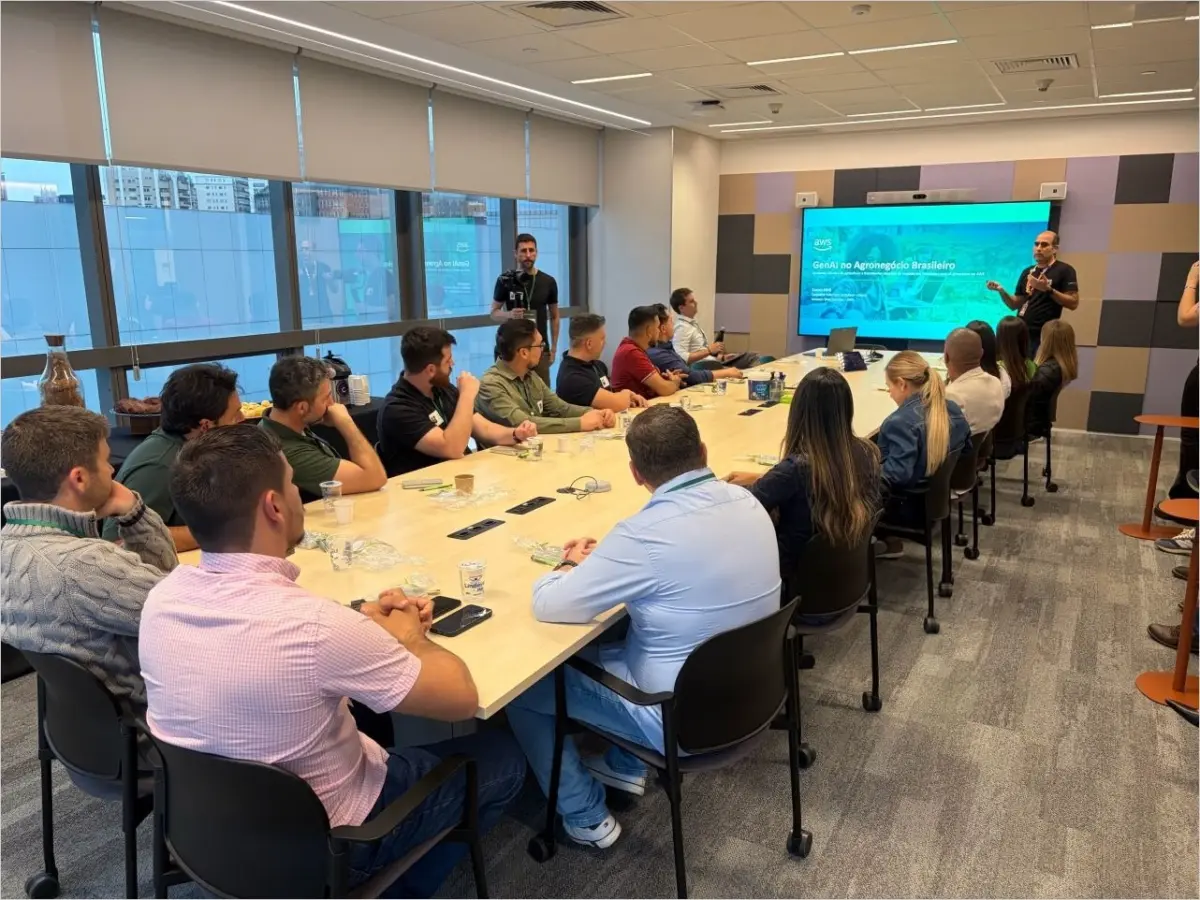
In the rapidly evolving landscape of enterprise cloud computing, the boundary between traditional infrastructure management and bleeding-edge artificial intelligence is steadily dissolving. This week’s developments from Amazon Web Services (AWS) highlight a profound operational pivot: organizations are no longer debating whether to integrate generative AI into legacy sectors like agribusiness or deep infrastructure, but how to deliver these capabilities securely, economically, and at scale.
From the boardrooms of São Paulo to the front lines of threat intelligence, recent announcements underscore a new operational reality. Vulnerability lifecycles have compressed to the point where traditional patch windows are dangerously obsolete; consequently, security tooling must evolve from passive scanning to active, automated remediation. Simultaneously, hardware abstractions, serverless architectures, and advanced AI model integrations are lowering the friction of cloud adoption, allowing enterprises to migrate massive workloads—such as U.S. Bank’s 119-terabyte Oracle Exadata migration—with unprecedented efficiency.
This comprehensive report breaks down the most critical AWS announcements, architectural shifts, and strategic insights of the week, structured for technology leaders, cloud architects, and engineering executives who need to stay ahead of the curve.
Detailed Chronology & Technical Deep-Dive
1. Security & Vulnerability Management: AWS Continuum and the Death of the Traditional Patch Window
The most critical overarching theme of the week is the paradigm shift in cybersecurity: the gap between vulnerability disclosure and active exploitation has effectively closed. This urgency was starkly underscored by Amazon Threat Intelligence telemetry revealing the PHP2Shell exploitation attempt (tracked via MadPot) on October 17—four days prior to the public disclosure of CVE-2026-109618 and CVE-2026-109619. Proof-of-concept exploits were circulating mere hours before embargoes lifted, rendering traditional multi-day patch cycles a liability.
To counter this compressed threat landscape, AWS has announced the general availability of AWS Continuum:
End-to-End Context Graphs: Rather than operating as a disconnected scanner that merely dumps a list of vulnerabilities into a backlog, Continuum constructs a living context graph by ingesting data directly from code repositories and the live AWS environment.
Sandbox Reproduction: Exploitable findings are safely reproduced in an isolated sandbox using proof-of-concept code. Engineers are presented with a concrete visualization of the exploit path rather than an abstract severity score.
Proximity-Based Risk Ranking: Issues are ranked dynamically based on how closely an attack path runs to business-critical systems.
Automated Pull Requests: Once analyzed, Continuum automatically opens a fix as a pull request. Currently, the control boundary requires explicit human approval to merge remediation PRs, though autonomous fix classes gated by strict confidence thresholds are planned for future iterations.
Continuum is currently available in the US East (N. Virginia) and US West (Oregon) regions, accompanied by official AWS WAF mitigation playbooks for the aforementioned CVEs.
Managing ingress and network exposure for containerized microservices has historically created friction between platform engineering teams (who own the underlying network topology and security boundaries) and application teams (who own business logic). Amazon ECS Gateway directly resolves this operational divide.
Separation of Concerns: Platform teams define a centralized gateway encompassing organization-wide subnets, security groups, TLS certificates, listener settings, and AWS WAF web ACLs. Application teams seamlessly opt in by attaching a gateway connector to their service definitions.
Automated Provisioning: ECS automatically provisions an ACM certificate, unique DNS hostname, listener rules, target group, and a security group that restricts inbound traffic exclusively to the Application Load Balancing layer.
Cost and Scale Economics: Up to 25 services can share a single Application Load Balancer (ALB). ECS dynamically provisions ALBs upon initial connection and deprecates them when traffic ceases. Furthermore, a single gateway can associate with up to 10,000 clusters, with a maximum of five gateways per cluster.
Adoptable incrementally via UpdateService without disrupting legacy load balancers, Amazon ECS Gateway is available at no additional charge in all commercial regions where Amazon ECS operates.
3. Machine Learning & High-Performance Compute
TorchNeuron: Native PyTorch Support for AWS Trainium (Public Beta)
Hardware lock-in has long hindered enterprise AI strategies. AWS is actively dismantling this barrier with TorchNeuron, an open-source PyTorch backend designed for Trainium2 and Trainium3 instances. By simply switching device targets to .to('neuron'), developers can execute models natively on Trainium without rewriting codebases, preserving eager execution and torch.compile pipelines. Integrated with the Neuron Kernel Interface (NKI) for custom operators and landing alongside AWS Neuron 2.33, this release decouples high-performance training infrastructure from rigid software frameworks.
Amazon SageMaker AI Training Sessions
Training custom models traditionally required deep infrastructure expertise in managing distributed GPU clusters and fault recovery. SageMaker AI Training Sessions (now generally available) allow developers to retain granular control over the post-training loop—including custom loss functions and reward signals—while SageMaker abstracts away GPU allocation, distributed execution, and checkpoint storage. Billing is strictly metered against active token processing, pausing while custom reward functions evaluate batches. The service also expands native support for frontier architectures, including Muse Glimmer, Qwen 3.8, and Ministral 3.
Claude Structured Outputs on Amazon Bedrock
Data extraction pipelines have historically struggled with parsing unstructured text into predictable, programmatic schemas. Anthropic’s Claude models on Amazon Bedrock now natively support Structured Outputs across both bedrock-runtime and bedrock-mantle endpoints. Enterprises can extract schema-compliant JSON directly from financial reports, clinical documentation, and support ticket queues without relying on brittle custom parsing, retry logic, or external post-processing scripts.
4. Database Modernization & Migration
Amazon ElastiCache Serverless for Valkey: Zero-Downtime Online Migration
Migrating self-managed Valkey or Redis Open Source databases running on Amazon EC2 into cloud-native architectures has historically involved maintenance windows or third-party replication tooling. ElastiCache Serverless for Valkey now supports online migration with zero downtime.
Measured against strict ElastiCache SLA availability standards, migrations guarantee zero errors returned to clients throughout the cutover phase. Database administrators prepare the migration, initiate background data synchronization, and execute either a manual or automatic cutover seamlessly. This capability is now generally available across all commercial, China, and AWS GovCloud regions.
Supporting Context & Metrics
To contextualize the velocity of these updates, examining field reports and operational benchmarks reveals critical insights into modern cloud economics:
Agribusiness Generative AI Integration: During a recent AWS presentation in São Paulo titled "GenAI no Agronegócio Brasileiro", commercial leaders emphasized that in traditional industries like agriculture, hands-free interfaces are paramount. The upgrade to the Amazon Polly Generative engine—which expanded its catalog to 57 voices across 11 languages, introducing two new Brazilian Portuguese voices (Leo and Carolina)—directly addresses this need. When a machine operator’s hands are fixed on a steering wheel across expansive farm operations, voice is the primary user interface.
Tokenomics for Coding Agents: Benchmark studies on automated coding assistants reveal that cost mechanics diverge significantly from standard inference due to the compounding context windows replayed on every development turn. Open-source benchmarking tools indicate that intelligent request routing can reduce agentic operational costs by 44.7%, with a marginal trade-off of just 4.8% in mean quality.
Enterprise Database Migration Scale: Demonstrating the raw horsepower of modern AWS migration tooling, U.S. Bank successfully migrated 119 terabytes distributed across four Oracle Exadata databases to Amazon RDS for Oracle. Utilizing a configuration-driven pipeline powered by Oracle XTTS, AWS DataSync, and Amazon EFS, the initial baseline copy completed in approximately 7 days, with cutover windows averaging just 4 hours per database over a bandwidth-capped Direct Connect circuit.
Official Statements & Industry Perspectives
The convergence of automated security, hardware democratization, and conversational AI reflects a maturing cloud ecosystem. Industry leaders within AWS engineering and global technical communities have highlighted the philosophical shift driving these releases:
"When your user has both hands on a steering wheel driving between remote agricultural fields, the interface is no longer a screen—it is a voice. Delivering hyper-natural localized synthesis like our new Brazilian Portuguese Polly voices isn’t just a feature upgrade; it’s an operational necessity for frontline workers."
— AWS Technical Field Leadership, São Paulo Briefing
On the critical evolution of enterprise security, security architects emphasize that defensive postures must adapt to an aggressive threat reality:
"The assumption of a multi-day patch window is a relic of the past. When malicious actors weaponize vulnerabilities twelve hours before public disclosure, your vulnerability management system must act as an active closed-loop pipeline—discovering, sandbox-testing, ranking by business criticality, and generating pull requests before human intervention is even requested."
— AWS Security Engineering Division
Future Outlook & Upcoming Events
As we look toward the final quarter of the year, cloud practitioners and enterprise leaders must prepare for the industry’s premier annual gathering:
AWS re:Invent 2026: Scheduled for November 30 to December 4 in Las Vegas, this year’s conference features an expansive catalog of over 2,200 specialized sessions. With reserved seating now live, engineering teams are encouraged to finalize their schedules to engage directly with AWS architects and preview the next generation of cloud infrastructure.
Community Engagement: The regional community season concludes with AWS Community Day Brasil Norte in Belém on October 31, fostering localized collaboration across Latin America’s rapidly expanding tech ecosystem.
Summary of Key Service Releases This Week
Service / Feature
Category
Strategic Impact
AWS Continuum
Security
End-to-end vulnerability management with automated sandbox testing and PR remediation.
Amazon ECS Gateway
Networking
Centralized network/security governance combined with simplified microservice opt-in.
Amazon Polly Generative Upgrade
Machine Learning
14 new voices (including Brazilian Portuguese Leo & Carolina) for natural voice UIs.
TorchNeuron (Public Beta)
Compute & AI
Native PyTorch backend for Trainium2/3 instances, eliminating hardware lock-in.
SageMaker AI Training Sessions
Machine Learning
Managed post-training loops and custom loss functions without GPU infrastructure overhead.
Claude Structured Outputs
Bedrock / AI
Schema-compliant JSON extraction from LLMs without custom parsing logic.
ElastiCache Serverless for Valkey
Database
Zero-downtime online migration from self-managed Redis/Valkey instances.
Check back next Monday for another comprehensive Weekly Roundup of announcements, technical deep-dives, and architectural insights from the AWS ecosystem.