Executive Overview
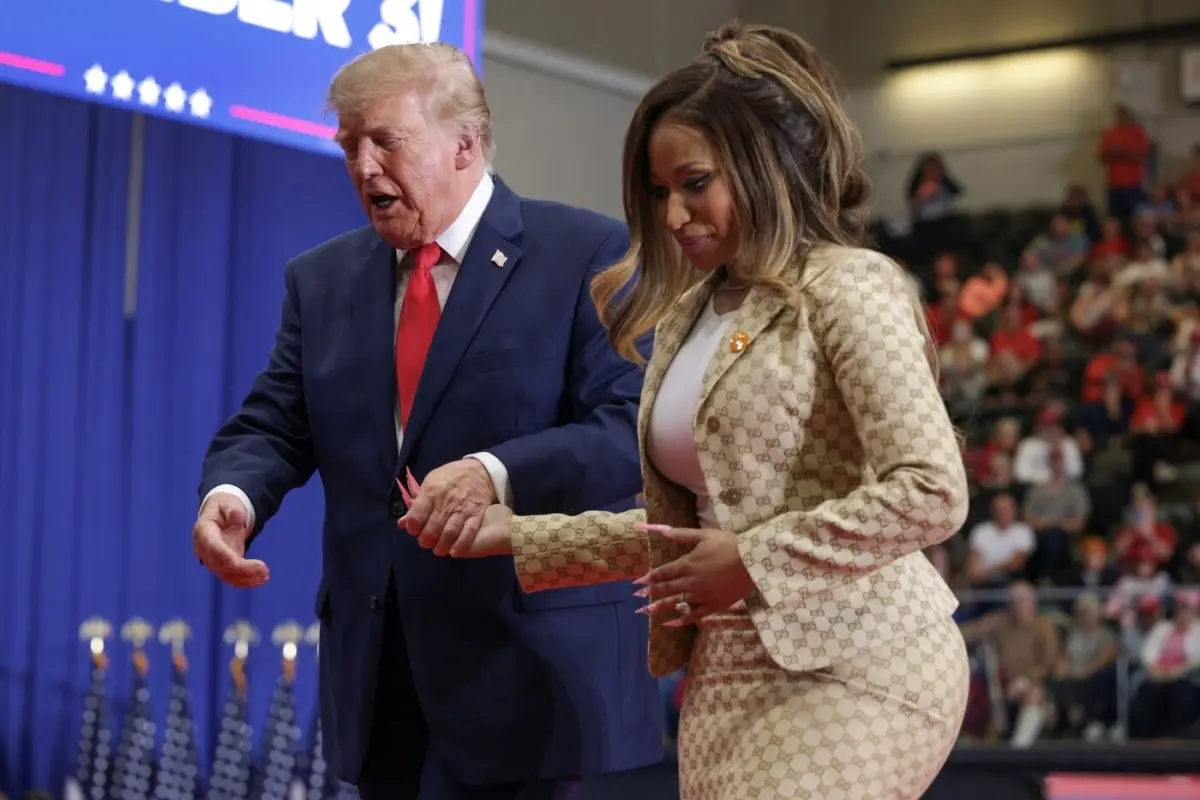
In the modern digital landscape, the intersection of pop culture, politics, and aesthetics has never been more volatile—or more visually codified. Following a high-profile appearance at a Donald Trump rally in Washington, D.C., rapper Nicki Minaj ignited a fierce online firestorm not solely because of her political shift, but because of her physical presentation. Social media users swiftly dubbed her updated look "Republican makeup," pointing to a distinct shift in her beauty routine characterized by matte finishes, heavy, unblended foundation, and harsh, geometric brows.
This viral phenomenon is not isolated to Minaj. Actresses and public figures like Sydney Sweeney have similarly faced intense public scrutiny and accusations of "looking like a Republican" amid political controversies and voter registrations. These instances have catalyzed a deeper cultural conversation regarding an uncomfortable, age-old human impulse: the tendency to equate aesthetic beauty with moral goodness, and political corruption or ideological divergence with physical unattractiousness.
While internet commentators and internet personalities like Matt Bernstein and TikTok creators have humorously or critically dissected the stylistic homogeneity of the modern right-wing aesthetic—pointing to a perceived stifling of creativity and self-expression—cultural critics argue that weaponizing appearance against political adversaries mirrors the superficial tactics of figures like Donald Trump himself. This investigative feature explores the emergence of the "Republican makeup" trend, the psychological and societal underpinnings of equating morals with looks, and the danger of reducing complex political harm to mere aesthetic failures.
Detailed Chronology: The Evolution of the "Republican Aesthetic" in Public Discourse
To understand how beauty became an ideological battleground, one must trace the timeline of events that brought the "Republican look" from backstage political circles into mainstream internet lexicon.
The Rise of the Right-Wing Glamour Squad
Over recent years, a distinct visual standard has emerged among conservative media figures, political candidates, and Trump administration affiliates. Analysts, beauty commentators, and journalists writing for publications like WWD began noting a specific styling template among prominent right-wing women, including Homeland Security figures, administration spokespeople like Karoline Leavitt (notably scrutinized during a Vanity Fair profile), and media surrogates.
Unlike the dewy, hyper-customized, and trend-fluid aesthetics popularized by TikTok influencers and mainstream Hollywood stylists, the conservative political aesthetic leaned heavily into a uniform, highly conventional presentation: flat, straightened hair, conservative or neutral business attire, and a specific style of heavy-handed makeup.
Sydney Sweeney and the Voter Registration Backlash
The cultural anxiety surrounding ideological shifts and physical presentation intensified significantly when actress Sydney Sweeney became the center of a political firestorm. Following controversies surrounding her American Eagle advertising campaigns, her disavowal of art as a political medium, and the public revelation that she is registered as a Republican in her home state of Florida, public perception of the actress shifted overnight.
Social media platforms like X (formerly Twitter) and TikTok erupted with commentary suggesting that Sweeney’s political alignment was somehow foreshadowed or mirrored by her changing public aesthetic. Commentators began weaponizing her appearance, arguing that her controversies rendered her "ugly" to a public that once idolized her "bombshell" status, highlighting how quickly public adoration evaporates once political allegiance is exposed.
Nicki Minaj’s Trump Summit Appearance and the Viral Backlash
The discourse reached a boiling point when 43-year-old rap icon Nicki Minaj shared a series of images on X, captioned "Barbie, 🛒: Ken"—referencing her husband, Kenneth Petty. Dressed in a simple white button-down shirt, a chunky brown-and-black belt, and black trousers, Minaj debuted a dramatically stripped-back look. Her hair was worn straight with stark blonde highlights, and her makeup featured a matte, heavy-powder finish, blocky, harsh eyebrows, and a warm, uneven foundation tone.
The internet reacted with swift astonishment. Within hours, users flooded the platform with side-by-side comparisons and critical analyses. One viral post by user @leekstarr_ succinctly captured the public mood: "I’m not even joking, this is literally Republican makeup."
The post opened the floodgates for thousands of comments analyzing the stylistic "decuntification" of public figures who align themselves with right-wing politics. Content creators, including TikTok comedian Suzanne Lambert, leaned into the trend by launching satirical tutorials on how to achieve the "Republican makeup" look—characterized by skipped skincare steps, streaky, mismatched foundation bases, garish eyeshadows, clumpy mascara, and stark, overdrawn eyebrows.
Supporting Context & Metrics: Deconstructing the "Republican Look"
While the internet treats "Republican makeup" as a punchline, cultural theorists and beauty critics have pointed out that the aesthetic is rooted in specific socio-political and stylistic constraints.
What Defines "Republican Makeup"?
According to breakdowns by fashion and culture journalists, the aesthetic relies on a rejection of modern, fluid beauty trends in favor of a rigid, traditionalist standard. Key characteristics include:
- Matte and Flat Skin Bases: A complete avoidance of dewy, skin-like finishes, opting instead for heavy, caked-on powder that absorbs light and flattens facial dimensions.
- Mismatched Foundation: Frequently reported as overly warm, orange-toned, or improperly matched to the subject’s undertones, creating a stark mask-like effect.
- Harsh and Geometric Features: Overdrawn, blocky eyebrows that lack natural gradient or softness, paired with heavy, imprecise eyeliner and clumpy mascara.
- Stylistic Homogeneity: A strict adherence to conventional, understated wardrobe choices (such as neutral-toned blazers, basic white shirts, and standard-issue accessories) that suppress individual artistic expression.
The Fascist Suppression of Self-Expression
Prominent internet personality and podcaster Matt Bernstein added theoretical weight to the discourse when reacting to Minaj’s new look, writing: "The immediate, complete decuntification is such a tell. There is no room for creativity or self-expression within a fascist movement. Here’s your beige jacket and flat hair and boring makeup. Enjoy."
This critique speaks to a broader sociological observation: authoritarian or far-right political movements historically favor uniformity, discipline, and traditionalist conformity over individualistic creative expression. In this context, the adoption of a sterile, homogenous beauty standard by alternative artists or pop icons is viewed by critics not merely as a bad makeup day, but as a visual surrender of their individuality to a flattened ideological mold.
The Trap of Equating Beauty with Morality
Despite the cultural catharsis of mocking political opponents through their appearance, cultural critic and beauty writer Jessica DeFino warned in interviews with Dazed that this framework is fundamentally flawed.
"It’s an easy framework," DeFino explained when discussing why society rushes to declare problematic figures physically unattractive. "It takes a very complex situation and whittles it down to the superficial. Wouldn’t it be so easy if ugly people were bad and pretty people were good and we knew the right person to agree with and the right way to be in the world?"
When the public learns that an admired figure holds harmful political views, the psychological dissonance is often resolved by retroactively deciding that the person was "always ugly" or that their poor moral character has physically manifested on their face. However, historians and sociologists remind us that beauty standards themselves are historically constructed upon pillars of exclusion—including racism, classism, ageism, colorism, and fatphobia. Assuming that ideological goodness correlates with adherence to dominant beauty ideals reinforces the very oppressive systems that progressive movements seek to dismantle.
Official Statements & Public Reactions
The collision between political ideology and beauty commentary has drawn sharp divisions across the media landscape, prompting responses from influencers, cultural commentators, and political figures alike.
- Social Media and Creator Responses: Viral commentary on platforms like X and TikTok has overwhelmingly framed the aesthetic shift as an external manifestation of internal moral compromise. Creators have utilized humor to process the disillusionment of watching celebrated artists align with conservative political platforms.
- The Hypocrisy of Superficial Politics: Critics have frequently drawn parallels between the internet’s obsession with the "ugly" nature of conservative styling and the rhetoric utilized by political leaders themselves. Donald Trump’s history of weaponizing physical appearance against opponents—such as his public remarks dismissing political rivals or insulting journalists like Katie Rogers as "ugly" after critical reporting—highlights how superficial attacks transcend political divides.
- Calls for Substantive Discourse: Media analysts argue that focusing on makeup application, wardrobe choices, or physical aging detracts from the tangible harm caused by political rhetoric and policy positions. Whether it is Nicki Minaj’s vocal support for conservative figures or Sydney Sweeney’s political alignments, critics emphasize that public accountability should target actions, legislation, and rhetoric rather than superficial aesthetics.
Future Outlook: Where Politics, Pop Culture, and Beauty Collide
As the political landscape heads toward future election cycles, the fusion of internet beauty culture and partisan politics shows no signs of slowing down. The phenomenon of "Republican makeup" highlights a broader cultural shift: the public no longer views celebrity aesthetics in a vacuum. Every style choice, brand partnership, and political endorsement is scrutinized as a cohesive package deal of personal brand and moral alignment.
However, the discourse surrounding Minaj and Sweeney serves as a cautionary tale for both the internet mob and cultural critics. While satirical trends and aesthetic critiques offer immediate communal relief in times of political tension, relying on superficial insults risks validating the same toxic paradigms utilized by authoritarian figures.
Moving forward, the challenge for cultural commentators and consumers alike will be to hold public figures accountable for the real-world impact of their political choices without falling back on the lazy, exclusionary logic that equates physical appearance with moral worth. True political and cultural critique must look past the foundation, the brows, and the wardrobe, focusing instead on the substantive actions shaping our society.