In the modern digital landscape, the pressure to maintain an omni-channel presence can easily overwhelm even the most seasoned creators and lean marketing teams. The modern content ecosystem demands a relentless stream of tweets, threads, newsletters, video scripts, and visual carousels—often leaving solo operators trapped in a perpetual cycle of content creation and burnout. However, a paradigm shift is underway. Rather than viewing artificial intelligence as an all-or-nothing replacement for human ingenuity, forward-thinking creators are deploying AI as an interactive, persistent integration layer within their daily workflows.
Drawing from insights shared by AI strategist Nicky Saunders in collaboration with Michael Stelzner, this report investigates how to construct a personalized "AI Creative Director" using Anthropic’s Claude. By bridging the gap between raw, unfiltered voice journaling and automated, multi-platform publishing pipelines, creators can scale their output without sacrificing authenticity. This comprehensive guide explores the structural foundations, technical methodologies, and ethical guardrails required to build a sustainable, voice-aligned AI content system.
Detailed Chronology: From Concept to Execution
The process of building an AI creative director cannot be rushed into automated execution. To prevent the proliferation of generic "AI slop," creators must systematically move through distinct phases of vision alignment, skill building, and workflow automation.
Phase 1: Establishing Creative Vision and Style
Before any system can successfully mimic or amplify a brand voice, the foundational elements of vision and style must be firmly established. Attempting to deploy an AI assistant without this context is equivalent to onboarding a remote contractor with a vague directive to "make content."
Defining Vision: Vision encompasses the emotional resonance of the content, the intended audience takeaway, strategic conversion goals, and explicit boundaries detailing what not to include. When vision is ambiguous, creators can utilize conversational prompting—such as asking Claude to interview them about the goals of an upcoming campaign—to clarify intent before production begins.
Codifying Style via Inspiration: Style requires demonstration rather than mere description. Creators are encouraged to compile a diverse repository of visual and textual references—ranging from magazine covers and Pinterest boards to competitor layouts and website screenshots—and upload them into a dedicated Claude project. This allows the AI to analyze saturation levels, typography, color theory, and structural cadence, progressively teaching the creator the technical vocabulary needed to refine their aesthetic preferences.
Phase 2: Constructing Persistent Claude Skills
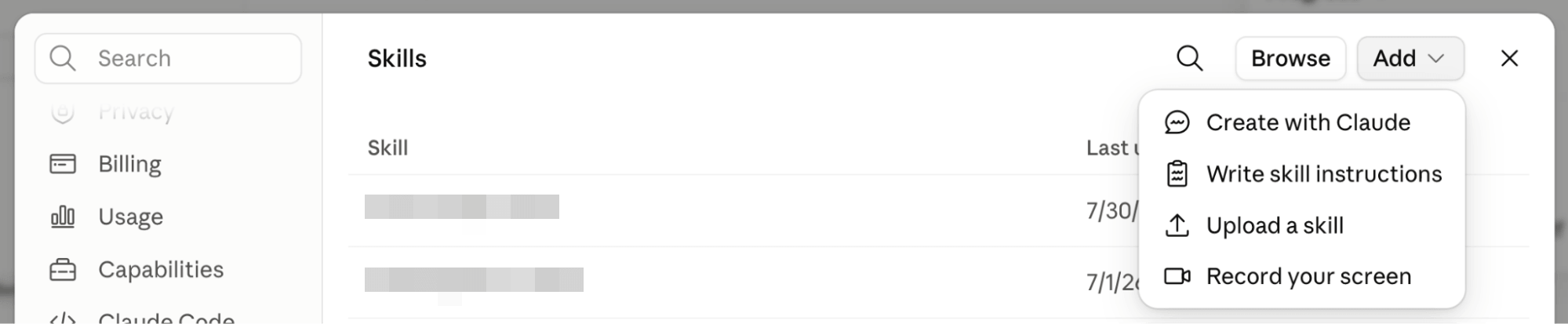
Once vision and style are defined, the next operational hurdle is eliminating the need to re-train the AI in every new chat window. This is solved by developing Claude Skills—reusable instruction sets and rulebooks that function as persistent memory.
The Brand Voice Skill: By feeding Claude a rich corpus of natural speech—including video transcripts, podcast recordings, Zoom transcripts, and written essays—creators can train an AI profile that achieves an 80% to 85% alignment with their natural phrasing and cadence. Human editors then refine the remaining margin, drastically reducing the friction of staring at a blank page.
The Platform Style Skill: Recognizing that a Substack essay demands a drastically different cadence than an X (formerly Twitter) thread or an Instagram caption, this secondary skill analyzes and stores platform-specific formatting conventions.
Data Ingestion via Apify: To streamline the gathering of raw source material for these skills, strategists like Saunders leverage tools like Apify. Equipped with MCP connectors for Claude, Apify scrapes public transcripts, comments, and metrics across YouTube, Instagram, and competitor channels, feeding structured data directly into connected storage systems like Notion or Google Drive.
Phase 3: Architecting the DraftLoop Content Workflow
With skills established, creators can implement an automated pipeline—such as Saunders’s DraftLoop system—which transforms a single spark of thought into a multi-channel content suite.
The Daily Voice Journal: Moving away from rigid content calendars, the pipeline begins with an unscripted daily voice journal recorded during a morning walk via Notion’s AI meeting notes. Inspired by Julia Cameron’s "Artist’s Way" morning pages, this unpolished debrief captures genuine thoughts, stressors, and spontaneous epiphanies. Even an expression of feeling stuck can be processed using iterative questioning (e.g., asking "Why?" three times) to unearth authentic business insights.
Automated Processing and Human-in-the-Loop Review: Scheduled tasks within Claude Cowork automatically ingest new journal entries each morning, generating initial drafts of tweets, newsletters, quote graphics, and scripts. Crucially, the system pauses for human review. Around mid-morning, the creator evaluates the output, approves winning concepts, and instructs the AI on which directions to pursue for final production.
Visual and Video Generation: Approved concepts trigger integrated media generation. Tools like Higgsfield, connected via MCP, generate custom carousels and animated assets directly inside the chat window. Meanwhile, platforms like HeyGen allow creators to preview video scripts using custom AI avatars, providing a rehearsal mechanism before final recording.
Supporting Context & Metrics: The Economics of AI-Assisted Workflows
The integration of advanced AI models into creative workflows yields measurable improvements in productivity, consistency, and cognitive load management.
Time-to-Publish Ratios: Industry analyses indicate that creators utilizing structured AI integration layers reduce their initial drafting time by up to 70%, allowing them to redirect hours toward community engagement, product development, and high-level strategy.
Model Specialization (The Fable 5 Advantage): Advanced tiers of Claude—specifically models like Claude Fable 5 Low—demonstrate superior performance when tasked with concise, high-impact copywriting. Metrics from early adopters show that resource-intensive models excel at generating high-converting hooks, email subject lines, and punchy carousel headlines compared to generalized baseline models.
Platform Economics: Tools designed to support automated scraping and content routing (such as Apify, with entry-tier pricing starting around $29 per month) democratize enterprise-grade data intelligence, enabling solo creators to perform sophisticated competitive analysis and audience feedback tracking previously reserved for large agencies.
Official Statements and Strategic Philosophy
The overarching philosophy guiding the deployment of an AI Creative Director centers on empowerment without abdication. As Nicky Saunders emphasizes throughout her methodology, AI must remain a collaborative partner rather than an autonomous proxy.
"AI works best as an integration layer within existing creative workflows… Think of it as a twenty-four-seven brain-warming buddy. When calling a colleague isn’t an option at 2 a.m., you can open a conversation, break down an idea, and ensure it doesn’t get lost by morning."
This perspective addresses the common psychological barrier of content creation: the friction of early validation. By offering immediate, structured feedback—evaluating whether an idea "has legs" and suggesting viable trajectories—Claude functions as an objective sounding board devoid of human ego dynamics.
Furthermore, Saunders draws a firm boundary regarding automated execution: direct publishing API integrations are intentionally bypassed. By maintaining a strict human-in-the-loop requirement for the final publishing stage, creators safeguard their brand accounts against platform violations, security vulnerabilities, and algorithmic misalignments. The AI proposes, but human judgment disposes.
Future Outlook: The Next Evolution of Autonomous Content Systems
As Large Language Models and Model Context Protocol (MCP) ecosystems continue to mature, the architecture of the AI Creative Director is poised for profound expansion. We are moving rapidly toward an era where contextual memory is seamless, and multi-modal agents can execute complex, cross-platform media campaigns from a single spoken sentence.
However, as automation scales, the ultimate differentiator for creators will not be the volume of content produced, but the authenticity of the raw source material. Systems like DraftLoop prove that the future belongs to creators who use AI not to fabricate synthetic personas, but to amplify their genuine, lived human experiences. By anchoring machine intelligence in authentic voice journaling, creators can achieve unprecedented scale while deepening their connection with their audiences in an increasingly crowded digital marketplace.