Executive Overview
In an era where streaming personalization dictates our daily cultural soundtracks, the boundary between individual identity and family utility has long been blurred. For over a decade, parents worldwide have faced a unique digital frustration: the systematic "algorithmic pollution" of their personal music profiles. Every lullaby streamed at bedtime, every Disney anthem played on repeat during a road trip, and every rendition of a viral children’s song has silently warped the complex machine learning models that power Spotify’s recommendation engines.
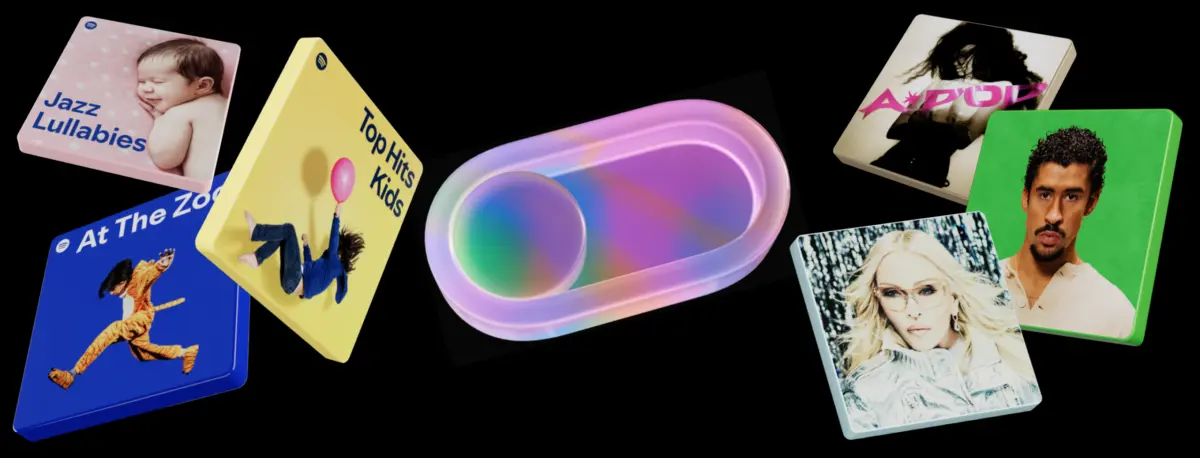
On Tuesday, September 15, 2026, Spotify officially addressed this long-standing user pain point. The streaming giant announced the global rollout of a dedicated toggle designed to exclude kids’ and family music from users’ personal taste profiles. Available immediately to both Free and Premium subscribers on mobile devices, this feature represents a significant shift in how the platform handles multi-user environments under a single account. By enabling this toggle, users can instantly shield their personalized playlists—such as Discover Weekly and Daily Mix—as well as their highly anticipated year-end Spotify Wrapped campaigns from being dominated by children’s content.
This move is more than a simple product update; it is a calculated response to years of user advocacy, viral social media complaints, and the evolving technical realities of the modern, connected smart home.
Detailed Chronology: The Road to Algorithmic Separation
To understand the significance of Spotify’s latest update, one must trace the historical intersection of smart device adoption, streaming personalization, and user frustration.
+-----------------------------------------------------------------------------+
|                                  TIMELINE                                   |
+-----------------------------------------------------------------------------+
|                                                                             |
|  2015-2016: Spotify Wrapped debuts, immediately highlighting "profile       |
|             pollution" as parents' top songs are dominated by lullabies.    |
|                                                                             |
|  Feb 2023:  Spotify introduces a manual, playlist-by-playlist exclusion      |
|             tool—a tedious, labor-intensive fix for most families.          |
|                                                                             |
|  July 2026: Spotify expands "Managed Accounts" to Free-tier users under 13, |
|             improving parental controls but leaving shared devices unsolved. |
|                                                                             |
|  Sept 2026: Spotify launches the global, retroactive "Exclude Kids &        |
|             Family Music" toggle, permanently fixing the issue.             |
|                                                                             |
+-----------------------------------------------------------------------------+
The Early Era of Profile Pollution (2015–2022)
When Spotify popularized its annual Wrapped campaign in the mid-2010s, it turned data listening habits into social currency. Suddenly, users were eager to share their top genres, artists, and songs on social media. However, for parents, this annual event quickly became a source of mild embarrassment and frustration. Instead of showcasing their actual tastes in indie rock, jazz, or hip-hop, their Wrapped graphics were routinely dominated by Kidz Bop, nursery rhymes, or the soundtrack to Disney’s latest animated feature.
Despite the launch of the Spotify Family Plan, which offered separate accounts for family members, the problem persisted due to the hardware dynamics of the modern household.
The Partial Fix (February 2023)
Recognizing that users wanted more control over their recommendation inputs, Spotify introduced a feature in early 2023 that allowed listeners to exclude specific playlists from their taste profiles. While this was a step in the right direction, it required manual maintenance. Users had to proactively create playlists for their children’s music and manually flag them. It did not protect the account from ad-hoc searches, voice-activated requests via smart speakers, or curated algorithmic stations.
The Expansion of Parental Controls (July 2026)
In mid-2026, Spotify made a major push to capture younger demographics securely by expanding its "Managed Accounts" feature to users on its Free tier. This allowed parents to create managed profiles for children under the age of 13, ensuring age-appropriate content filters and parental oversight. Yet, even with these accounts available, the physical reality of how families consume audio remained an obstacle.
The Ultimate Resolution (September 15, 2026)
With the launch of the dedicated kids’ and family music toggle, Spotify bypassed the need for tedious manual curation. By implementing a global, category-wide filter, the company gave users a retroactive tool to cleanse their data. Any historically streamed children’s content is instantly bypassed by the taste engine once the toggle is activated, offering an immediate reset of the user’s digital identity.

Supporting Context & Technical Metrics: The Smart Home Dilemma
The root cause of algorithmic contamination lies in the architecture of the modern smart home. To understand why this toggle was necessary, it is essential to analyze the friction between personalized software algorithms and shared hardware ecosystems.
The Shared Device Bottleneck
According to industry smart-home adoption metrics, the average connected household contains multiple shared audio endpoints:
- Smart Speakers (e.g., Amazon Echo, Google Nest): Often placed in central communal areas like kitchens, living rooms, and playrooms.
- Smart TVs and Streaming Bars: Frequently used to play background music or videos for children.
- In-Car Entertainment Systems: Vehicles equipped with Apple CarPlay or Android Auto are primary zones of "forced streaming," where parents play children’s music to keep passengers calm during commutes.
Because these physical devices are typically authenticated using the primary account holder’s credentials (usually a parent), the streaming platform receives a single stream of telemetry data. The recommendation engine cannot naturally distinguish between a 35-year-old parent driving to work and a 5-year-old requesting a lullaby on a bedroom speaker at 7:30 PM.
| Device Type | Primary User Account | Typical Listener(s) | Impact on Taste Profile |
|---|---|---|---|
| Personal Smartphone | Parent | Parent | Low risk of pollution (unless shared) |
| Living Room Smart TV | Parent | Entire Family | High risk of movie soundtracks & family tunes |
| Kitchen Smart Speaker | Parent | Parent & Children | High risk of ad-hoc requests & background noise |
| Kids’ Bedroom Speaker | Parent | Child | Extreme risk of repetitive lullabies/bedtime audio |
| In-Car Console | Parent | Parent & Children | High risk of repetitive "commute" playlists |
The Mechanics of Algorithmic Recalculation
Spotify’s personalization engine relies on a mix of collaborative filtering, natural language processing, and raw audio analysis to construct a user’s "Taste Profile." When the new toggle is switched on, Spotify’s backend applies a metadata filter that flags tracks categorized under specific genres:
- Children’s Music / Nursery Rhymes
- Animated Movie Soundtracks (e.g., Disney, Pixar, DreamWorks)
- TV Show Theme Songs for Toddlers and Kids
- Lullabies and Bedtime White Noise
Once flagged, the streaming history of these tracks is bypassed during the calculation of the user’s affinity score. Crucially, this process is retroactive. Spotify does not delete the listening history—as those metrics are still needed for royalty payouts to artists and distributors—but it isolates the data, preventing it from influencing future recommendations or the year-end Wrapped calculations.
Official Statements & Community Reactions
The release of this feature was met with immediate relief from the platform’s user base, ending years of viral complaints across social platforms.
The Corporate Perspective
In its official announcement on September 15, 2026, Spotify highlighted its commitment to personalization and user autonomy:
"Our users look to Spotify to provide a highly personalized, curated audio experience that reflects who they are. However, we know that for parents and caregivers, sharing an account with family members can make it difficult to maintain a personal space. With the introduction of the Kids and Family Taste Profile toggle, we are giving our listeners the power to instantly clean up their recommendations and ensure that their personalized playlists and Wrapped experiences truly reflect their individual tastes."
The Voice of the Community
For years, the demand for this feature was a recurring topic on community forums. On the Spotify Live Ideas forum, the suggestion to implement a "kids’ music toggle" had garnered thousands of votes and hundreds of comments.

On platforms like Reddit, subreddits such as r/toddlers and r/britishproblems routinely featured viral threads every December, with parents sharing screenshots of their Wrapped summaries dominated by tracks like Jack Black’s "Steve’s Lava Chicken" from the Minecraft movie or endless loops of Disney’s Encanto soundtrack.
One user on Reddit summed up the collective sentiment of the community following the announcement:
"Finally, I can listen to my Discover Weekly without a random Kidz Bop cover ruining the flow. I love my kids, but I don’t need Cocomelon interrupting my morning commute playlist."
Future Outlook: The Evolution of Multi-User Personalization
The launch of the kids’ and family toggle represents a broader trend in the software-as-a-service (SaaS) and streaming industries: the transition from strict "single-user" accounts to fluid, context-aware profiles.
+-----------------------------------------------------------------------------+
|                         FUTURE PERSONALIZATION TRENDS                       |
+-----------------------------------------------------------------------------+
|                                                                             |
|  [Voice Profiling] ------> Automatically switches profiles based on who     |
|                            speaks to the smart speaker.                     |
|                                                                             |
|  [Contextual Filters] ---> Dynamically filters recommendations based on     |
|                            location, time of day, or active device.         |
|                                                                             |
|  [Cross-Platform Standard] Streaming services adopt uniform multi-user      |
|                            controls for shared household hardware.          |
|                                                                             |
+-----------------------------------------------------------------------------+
Voice Recognition and Dynamic Profile Switching
As smart speakers and home assistants become more sophisticated, the next frontier for streaming platforms is automated, voice-profile switching. Future iterations of the Spotify app on devices like Amazon Alexa or Google Assistant may automatically detect who is speaking. If a child requests a song, the system could stream it from a restricted sub-profile without affecting the parent’s primary account, eliminating the need for manual toggles entirely.
Context-Aware Filtering
Beyond age-specific filters, streaming services are exploring wider contextual filters. For example, users may soon be able to toggle off "workout music," "study white noise," or "focus lofi beats" from their main taste profiles. This would ensure that functional audio—tracks played purely for background utility rather than active enjoyment—does not interfere with a user’s core musical identity.
By addressing the "parent problem," Spotify has set a new standard for how modern platforms handle the complex, shared realities of the digital household. It proves that in the competitive landscape of music streaming, protecting the integrity of user data is just as important as expanding the library of content.