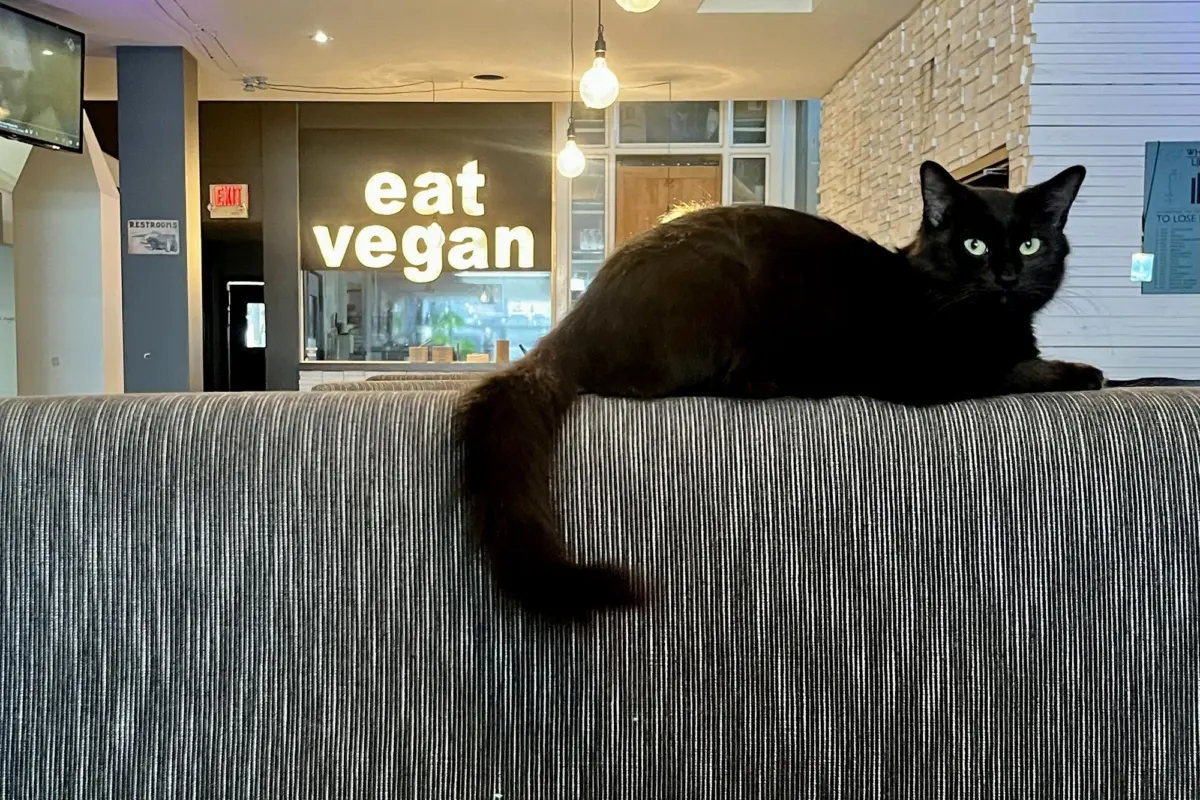
Across the United States, a quiet and sobering architectural shift is taking place within the culinary landscape. Dedicated, all-vegan restaurants—once heralded as the cultural engines of the plant-based movement—are shuttering their doors in unprecedented numbers. This contraction is unfolding against a complex backdrop: even as plant-based alternatives become increasingly normalized on mainstream omnivorous menus, the standalone vegan establishment is facing an existential crisis.
In progressive strongholds and mid-tier cities alike, beloved neighborhood anchors are disappearing. From the closure of pioneering institutions in New York, Los Angeles, and Portland to the quiet fade of local gems in smaller markets like Madison, Wisconsin, the trend signals a profound recalibration of the plant-based economy.
This deep dive investigates the structural, cultural, and economic forces driving this contraction. By examining proprietary industry data, speaking with restaurateurs on the front lines, and analyzing the paradox of mainstream vegan integration versus dedicated storefront survival, this report explores a critical question for the future of the animal rights and food sustainability movements: What is lost when our culinary sanctuaries vanish, and what does their decline reveal about the resilience of modern ethical consumerism?
Detailed Chronology: The Rise and Retrenchment of Plant-Based Dining
To understand the current wave of closures, one must trace the trajectory of the plant-based dining boom that characterized the 2010s. Buoyed by viral health documentaries (Forks Over Knives, Cowspiracy, What the Health), a surge in ethical consumerism, and the explosive market entry of next-generation meat analogs like Beyond Meat and Impossible Foods, the decade experienced a golden age of plant-based culinary experimentation. Entrepreneurs rushed to fill what they perceived as a rapidly expanding market, opening concepts ranging from casual fast-food iterations to high-end, avant-garde dining rooms.
However, the tumultuous aftermath of the Covid-19 pandemic shattered the financial predictability of the restaurant industry as a whole, hitting independent, niche businesses with compounding severity.
2022–2024: Data compiled by HappyCow—the premier global directory for plant-based dining—revealed a stark contraction in the United States’ top vegan dining hubs. Between 2022 and late 2024, the number of dedicated vegan restaurants in New York City, Los Angeles, and Portland, Oregon, dropped by 21 to 25 percent.
2025: The closures shifted from smaller, newer venues to legacy pillars of the movement. Iconic institutions announced their permanent wind-downs, including Modern Love and Candle in New York City, The Vegan Joint in Los Angeles, and Plum Bistro in Seattle. Oakland’s historic Millennium—a pioneering force in upscale plant-based cuisine for over three decades—shuttered its original iteration before later executing a leaner, scaled-down reopening.
2026: The contraction deepened. According to HappyCow records tracked by industry analysts, the total count of all-vegan restaurants in the US dropped from 1,717 in October 2025 to 1,509 by mid-2026. In mid-tier markets like Madison, Wisconsin, the landscape contracted even more sharply; the closure of the beloved Mad Rabbit Cafe reduced the city’s fully vegan brick-and-mortar storefronts to a precarious single digit.
This downward slope reflects not merely a passing post-pandemic blip, but a systemic correction in how plant-based dining is funded, operated, and consumed.
Supporting Context & Metrics: The Numbers Behind the Vegan Recession
The decline of dedicated vegan restaurants cannot be attributed to a single factor, but rather to a convergence of macroeconomic pressures, demographic realities, and shifting cultural sentiments.
1. Stagnating Demographic Growth
Despite the cultural ubiquity of meat-free marketing, core demographic adoption has largely plateaued. According to annual Gallup polling data, the percentage of Americans identifying as vegan has remained stubbornly fixed at approximately 2 percent—the exact same figure recorded when Gallup first began tracking the metric in 2012. While millions of consumers practice "flexitarianism" or selectively reduce meat intake, the population of committed, full-time adherents required to sustain brick-and-mortar vegan businesses has not grown proportionally.
2. The Mainstream Omnivorous Menu Paradox
Paradoxically, one of the most significant pressures facing all-vegan restaurants is the widespread adoption of plant-based options by traditional, omnivorous dining establishments. Data from food service insights firms indicates that consumers increasingly expect flexible menus. When a neighborhood brewpub, an upscale Laotian restaurant, or a local sushi bar successfully integrates high-quality, craveable vegan dishes into its core offerings, the geographic and social necessity of traveling to a dedicated vegan restaurant diminishes.
As Claire Conaghan of food industry research firm Datassential notes, many diners opt for plant-based meals incidentally when they are seamlessly integrated into a broader menu without an overt "vegan statement" branding.
3. Cultural and Political Shifts
Sociological factors also play a role. The resurgence of traditional dietary messaging, protein-obsessed fitness culture—which often wrongly frames plant-based proteins as inadequate for muscle building—and a broader political-cultural pushback against perceived "unnatural" synthetic foods have created an ambient headwind for plant-based marketing.
Furthermore, prolonged inflation, rising fuel prices driven by geopolitical conflicts, and escalating operational overhead continue to squeeze independent restaurateurs across all culinary categories, amplifying the vulnerability of niche dining concepts.
Official Statements & Industry Perspectives
To contextualize these macro trends, industry leaders, founders, and researchers offer a nuanced look at the human and economic realities behind the headlines.
The Burnout Factor: Nate Anger, Founder of Mad Rabbit Cafe
For many founders, the decision to close is driven less by immediate insolvency and more by the unsustainable lifestyle demands of small-business ownership. Nate Anger, owner of Madison’s Mad Rabbit Cafe, noted that his restaurant remained profitable throughout its three-year run. However, the margins were insufficient to justify the personal toll.
"I live here. I spend far more time here than anywhere else," Anger shared in an interview during the cafe’s final service. "I’ve missed my kids’ baseball game and tournaments and school band recitals."
Anger pointed out that while his core base of dedicated regulars was fiercely loyal, the restaurant’s growth was inherently capped by the stagnation of the broader local vegan population.
The Global Perspective: Vegan Hospitality Survey Insights
Preliminary data from a 2026 global industry survey conducted by the non-profit Vegan Hospitality complicates the narrative that vegan restaurants are failing purely due to lack of consumer interest. Among surveyed plant-based restaurateurs primarily operating in the US and Mexico, roughly 80 percent stated they would still choose to open a fully vegan concept if given the choice today. Crucially, among business owners who were forced to close or sell, the majority reported that operating as a strictly vegan entity either aided their business or made no meaningful difference to their market viability.
The Researchers’ Dilemma: Seth Ariel Green, Stanford Humane and Sustainable Food Lab
Evaluating whether dedicated vegan businesses or mainstream menu integrations do more to advance the animal rights movement remains an open question among researchers. Seth Ariel Green, a research scientist at Stanford’s Humane and Sustainable Food Lab, admits that quantifying the behavioral impact is exceptionally difficult:
"I have no idea how to weigh the pros and cons of, when I’m choosing between meals, 1) signaling to the world that vegan businesses are viable or 2) signaling to a particular business that their vegan options are viable. That’s a hard problem!"
Green emphasizes that driving dietary change and reducing societal meat consumption is maddeningly complex, requiring strategies that tap into pre-existing cultural and social identities rather than relying solely on ideological conversion.
Future Outlook: Do Vegan Restaurants Still Matter?
As the dust settles on the post-pandemic contraction, the plant-based culinary movement stands at a definitive crossroads. The central question facing advocates, entrepreneurs, and diners is whether dedicated vegan restaurants still serve a vital purpose in a world where plant-based entrees are increasingly accessible at fast-casual chains and neighborhood pubs.
The answer lies in understanding the unique social infrastructure that all-vegan establishments provide. While mainstream omnivorous restaurants successfully remove the social friction of dining with mixed-diet peer groups, they rarely foster a concentrated sense of community.
Historically, the animal rights and plant-based movements have struggled with a profound lack of physical, in-person social spaces. Dedicated vegan restaurants have long functioned as the movement’s "third spaces"—havens where a private ethical commitment is validated by a shared cultural identity, where spontaneous connections are forged, and where veganism is framed not as a diet of deprivation, but as an experience of culinary abundance, hospitality, and joy.
Furthermore, independent vegan restaurants remain the primary R&D laboratories for plant-based gastronomy. Without specialized kitchens pushing the boundaries of texture, flavor, and technique, the pipeline of culinary innovation that eventually trickles down into mainstream food culture risks drying up.
Striking a Balance in the Culinary Ecosystem
Ultimately, the future of plant-based eating is unlikely to be an all-or-nothing proposition. A resilient culinary ecosystem requires a symbiotic balance:
Mainstream Integration: Omnivorous restaurants offering high-quality, accessible plant-based options to normalize daily reduction of animal product consumption and prevent social isolation for vegans.
Dedicated Sanctuaries: All-vegan storefronts that serve as cultural anchors, innovation hubs, and physical communities where the full scope of a compassionate food future can be experienced without compromise.
As the market weeds out underperforming concepts and adapts to shifting economic realities, the remaining plant-based restaurants—and the memories of beloved neighborhood staples like the Mad Rabbit Cafe—remind us of what is ultimately at stake. Beyond the balance sheets and demographic polling lies the enduring power of the table: a miniature utopia where, for the duration of a meal, we are invited to taste a world free from animal exploitation.