Executive Overview
The modern AAA video game industry stands at a profound ideological crossroads. On one side of the debate are massive corporate structures prioritizing financial stability, risk aversion, and Games-as-a-Service (GaaS) models intended to recreate the runaway success of titles like Fortnite, Roblox, and Overwatch. On the other side are veteran creators who fear that this corporate homogenization is slowly eroding the medium’s capacity for genuine surprise and player engagement.
This underlying friction erupted into public discourse following comments made by industry luminary and The Last of Us co-director Bruce Straley. In a comprehensive interview with Edge magazine, Straley critiqued the current landscape of big-budget game development, specifically pointing to Santa Monica Studio’s upcoming God of War: Laufey as an emblem of a wider issue: a multi-billion-dollar ecosystem that delivers breathtaking technical fidelity while recycling the same core gameplay loops—or "verbs"—that have dominated the industry for the past two decades.
The backlash was swift, amplified by social media algorithms and the gaming press, prompting Straley to issue a formal apology to the God of War: Laufey development team. He clarified that his critique was never an attack on individual craftspeople, but rather a systemic concern regarding a risk-averse industry. This episode has reignited a vital, long-overdue conversation about player fatigue, executive leadership failures, and whether the medium of interactive entertainment is losing its unique psychological impact.
Detailed Chronology: From ‘Edge’ Magazine to a Social Media Firestorm
The timeline of this controversy highlights how quickly nuanced industry critiques can be flattened into sensationalized headlines within modern media ecosystems:
- Mid-September 2026: Edge magazine publishes an in-depth feature exploring the structural and creative breaking points within the contemporary games industry. The piece features commentary from several prominent developers and industry figures, including Bruce Straley.
- September 18, 2026: Excerpts from Straley’s interview circulate online. In them, he remarks that while graphical fidelity in modern AAA titles is "mindblowing," the actual gameplay experiences feel uninspired. He explicitly uses God of War: Laufey as an example, questioning whether players are genuinely excited by the moment-to-moment mechanics despite the staggering artistic and technical labor involved.
- September 18–19, 2026: Social media platforms light up with polarized reactions. While some users agree that AAA gaming has stagnated into "cinematic action-adventure templates," others accuse Straley of punching down at an upcoming release and its director, Ariel Lawrence.
- September 19, 2026: Recognizing that his remarks have drawn unwanted, hostile scrutiny toward the Santa Monica Studio team, Straley takes to X (formerly Twitter) to post a multi-part apology and clarification. He details his apprehensions regarding player dopamine exhaustion, the erosion of innovation by platform holders, and the systemic failure of top-tier publishing leadership.
Supporting Context & Metrics: The Mechanics of Modern Fatigue
To understand the core of Straley’s argument, one must examine what he terms the repetition of "verbs." In game design, verbs dictate what the player is physically and interactively doing—running, jumping, shooting, dodging, and executing contextual melee prompts.
For the past twenty years, a foundational lineage of games—including Half-Life 2, Gears of War, BioShock, Uncharted 2, and The Last of Us—helped codify the modern AAA mold. These titles established a cinematic, narrative-driven blueprint that balanced environmental storytelling with tightly scripted action loops. However, as development budgets have swelled into the hundreds of millions of dollars, publishers have become increasingly reluctant to discard this proven blueprint.
Industry analysts point to several economic and physiological factors driving this stagnation:
- Escalating Development Costs: With AAA budgets routinely surpassing $200 million and development cycles stretching past five years, the financial penalty for commercial failure is catastrophic. Consequently, publishers demand standardized, highly marketable gameplay structures that appeal to broad demographics.
- The Psychological Toll on Players: Straley argues that video games possess a unique physiological advantage over passive media like film or television because players are active participants. This active agency triggers distinct dopamine responses. When those interactive loops remain unchanged over decades, that physiological payoff risks diminishing, leading to acute player fatigue.
- The Live-Service Mirage: In an effort to secure recurring revenue streams, corporate leadership frequently pivots development teams toward Games-as-a-Service (GaaS) initiatives. Straley notes that attempting to force traditional single-player studios to engineer the next Overwatch or Roblox demonstrates a fundamental disconnect between executive decision-makers and their core audiences.
Official Statements and Developer Insights
The fallout of Straley’s remarks sheds light on the internal anxieties of game creators striving to balance artistic ambition with commercial viability.
In his thread on X, Straley pulled no punches regarding where he believes the fault ultimately lies:

"I want to apologize to the Laufey team for dragging you all into this uninvited and unnecessary negative attention. I was trying to illustrate an industry concern and my mistake of naming your game is being used out of context and for clickbait. You don’t need this. I’m sorry."
He further elaborated on the systemic barriers facing creative teams:
"Unfortunately the platforms that need to bring stability have eroded the ability to innovate… Hot take: There’s a lack of good leadership, clear direction, and conviction from the people at the top, in charge of the money. (Money = stability) I believe if they understand their brand, they could have honest, inspiring conversations with creators to steer our medium to innovate."
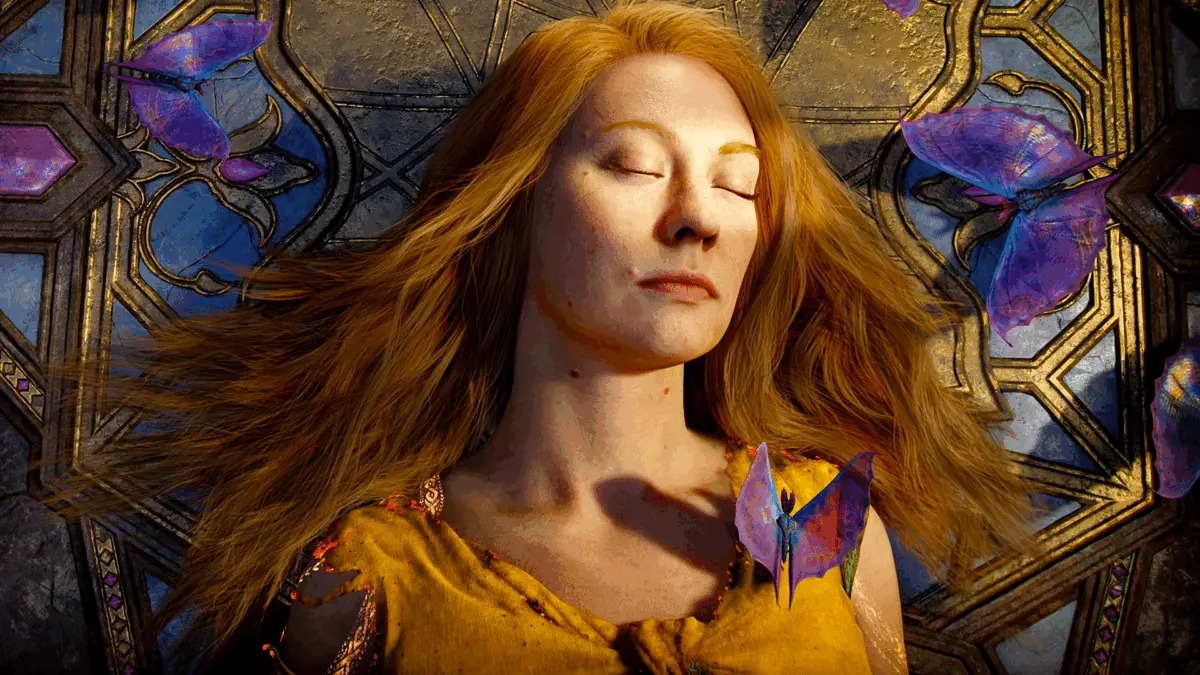
Meanwhile, the team at Santa Monica Studio has been navigating its own challenges regarding God of War: Laufey. Announced during a PlayStation State of Play presentation in June 2026, the game shifts perspective away from Kratos to focus entirely on Faye (voiced by Deborah Ann Woll). While the title aims to explore established mythology through a fresh lens ahead of its scheduled February 16, 2027 release, it has encountered skepticism from fans hesitant to embrace a protagonist other than the Ghost of Sparta.
Director Ariel Lawrence and Santa Monica Studio have repeatedly assured the community that Kratos will return in future projects, while urging fans to give Faye’s narrative a fair chance to expand the universe’s thematic depth.
Future Outlook: Can AAA Gaming Rediscover Its Risk-Appetite?
Bruce Straley’s departure from Naughty Dog in 2017 after an illustrious 18-year tenure marked the end of an era for cinematic action games. His subsequent co-founding of Wildflower Interactive in 2022—and the ongoing development of their upcoming project, Coven of the Chicken Foot—reflects a personal shift toward more agile, creatively unconstrained environments.
The broader question remains whether the rest of the AAA landscape can follow suit. As production pipelines lengthen and financial risks mount, the pressure to conform to safe, predictable design paradigms has never been higher. Yet, player pushback and candid critiques from industry veterans signal a growing appetite for disruption.
If the medium is to avoid creative calcification, publishers, platform holders, and studio executives must heed these warnings. Empowering creators to experiment with novel mechanics—rather than recycling the same twenty-year-old gameplay loops—will be the defining challenge for the next generation of interactive entertainment.