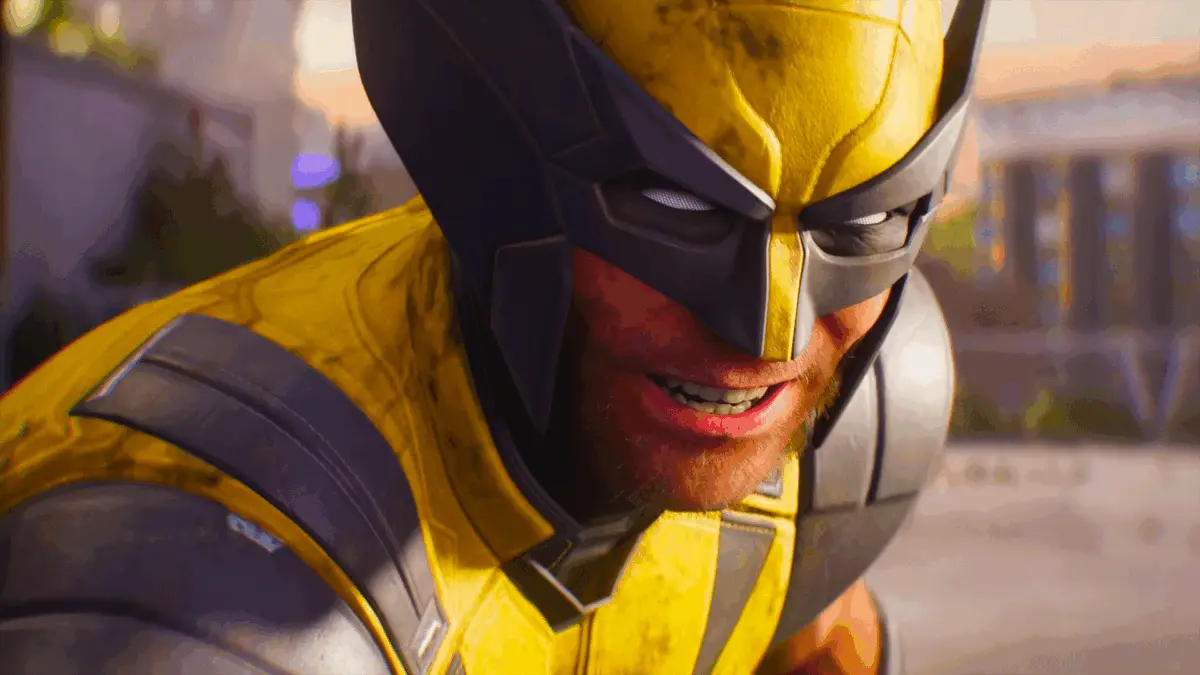
In the modern digital landscape, video game development operates under a microscope unlike any other creative medium. Every texture, asset, line of code, and visual flourish is subject to immediate dissection by millions of players online. For Insomniac Games, this hyper-scrutiny reached a fever pitch following the mid-September launch of its PlayStation 5 exclusive, Marvel’s Wolverine.
Following the game’s September 15 release, a viral social media post threw the studio into an unexpected defensive posture. A TikTok user shared footage showcasing bizarre, distorted bathroom signs within the game world—figures that appeared melted together in a manner eerily reminiscent of common generative artificial intelligence artifacts. As anxieties surrounding the integration of generative AI in creative industries sit at an all-time high, the clip quickly cascaded across X (formerly Twitter) and other platforms, igniting widespread fan speculation and accusations that Insomniac had relied on artificial intelligence to build assets for the AAA superhero title.
Insomniac Games was forced to intervene swiftly to quell the rising tide of backlash. James Stevenson, the studio’s director of community and marketing, publicly debunked the claims, clarifying that the visual anomaly was the result of a routine technical rendering glitch—specifically, a UV map bug—rather than machine learning or generative AI.
This controversy represents only the latest in a string of post-launch hurdles for Marvel’s Wolverine, which has simultaneously enjoyed a robust commercial debut and navigated community pushback over gameplay mechanics, visual features, and narrative linearity. This report examines the timeline of the controversy, the technical reality behind the viral glitch, the broader discourse surrounding generative AI in video game development, and the current state of Insomniac’s latest Marvel adaptation.
Detailed Chronology: From TikTok Discovery to Studio Clarification
The sequence of events that led to Insomniac’s public denial unfolded rapidly across social media platforms over the course of just a few days following the game’s launch.
The Spark: SmoothMango’s TikTok Discovery
On September 17, TikTok creator SmoothMango published a short video documenting an odd visual discovery while exploring Marvel’s Wolverine on PlayStation 5. The minute-long clip focused on a pair of public restroom signs inside the game’s environments. Instead of the conventional, cleanly rendered icons typically used for gendered washrooms, the figures appeared warped, warped together, and structurally nonsensical—hallmarks often associated with early or unpolished AI-generated imagery.
"Folks, that looks AI-generated," SmoothMango remarked in the video, which quickly amassed hundreds of thousands of views. "I am trying to think of a way to describe this that is not AI generation because there’s no way it’s a bathroom for mutants. That looks supremely suss."
Given the current cultural climate, in which gamers and digital artists alike are intensely protective of human-made creative work, the video struck a nerve. The juxtaposition of a major PlayStation exclusive from a premier studio utilizing assets that looked artificially corrupted triggered immediate concern.
The Viral Cascade on X and Public Alarm
As is customary in modern gaming discourse, the TikTok clip did not stay contained to a single platform. Within hours, users on X—notably user Rock Solid—repackaged screenshots and screen recordings from the video, amplifying the narrative.
The online community quickly split into factions. While some veterans of game development suggested it was merely a texture streaming error or a UV mapping failure, a vocal segment of the player base viewed it as proof of a broader corporate trend toward cutting corners using generative AI tools. Threads discussing the ethics of AI in AAA development multiplied, placing intense pressure on Insomniac Games to issue a formal response.
Insomniac’s Official Intervention
Recognizing the potential for reputational damage and the rapid spread of misinformation, Insomniac Games moved quickly to address the rumors. James Stevenson took to X to directly refute the claims, offering a transparent technical explanation for the visual aberration.
"No. This is a UV map bug and we have a fix coming. There are no AI generated assets in Marvel’s Wolverine."
— James Stevenson (@JamesStevenson), September 18, 2026
Stevenson’s definitive statement poured cold water on the viral speculation. By identifying the root cause as a UV map bug—a common rendering issue where a 2D texture fails to align correctly across a 3D model’s geometry—the developer provided a concrete technical rationale that aligned with standard game development troubleshooting rather than procedural AI generation.
Supporting Context & Metrics: The Generative AI Anxiety in Modern Gaming
To understand why a pair of distorted bathroom signs caused such an explosive reaction, one must examine the broader industry context regarding generative artificial intelligence.
The Industry-Wide Backlash Against AI
Over the past several years, generative AI has become one of the most contentious subjects in the entertainment industry. From concept art and voice acting to scriptwriting and texture generation, the implementation of machine learning models has sparked fierce debates among developers, unions, and consumers.
The Fear of Replacement: Artists, writers, and designers have expressed profound anxiety that studios will utilize generative AI to cut labor costs, diminishing the soul and craftsmanship of video games.
Precedent and Backlash: Several recent incidents—such as Level-5 scrambling to reupload trailers due to AI backlash, or ongoing discussions regarding voice actor protections—have left audiences hyper-vigilant. Gamers have actively trained themselves to spot the distinct visual "tells" of AI generation: warped fingers, nonsensical geometry, blurred lines, and incoherent background details.
The "Uncanny Valley" of Glitches: UV mapping bugs, like the one seen in Marvel’s Wolverine, frequently produce results that visually mimic AI artifacts. When a 3D model’s texture coordinates are scrambled, limbs or geometric shapes can overlap and stretch in bizarre ways, unintentionally triggering the exact pattern recognition that modern gamers use to hunt for generative AI.
A Tough Launch Fortnight for Insomniac
The bathroom sign controversy did not occur in a vacuum; it arrived during a tumultuous launch window for Marvel’s Wolverine, compounding a series of other minor community grievances:
The "Fart Gas" Scent Trails Controversy: Immediately following the September 15 release, players criticized Logan’s Scent Trail mechanic—an auditory and visual tracking system that fans humorously and mercilessly dubbed "fart gas." The intense online mockery prompted Insomniac to push out a rapid nerf and investigate options for a toggle switch.
Linearity and Gameplay Scrutiny: Players have also been testing the limits of the game’s more linear sequences, such as its motorcycle escape scenarios, to see how the game handles fail-states and player agency.
Actor and Narrative Reactions: Voice acting and character performances have been a point of heavy discussion online, with actors like Liam McIntyre brushing off brutal community commentary as standard internet noise.
Despite these speed bumps, early data indicates that Marvel’s Wolverine has performed admirably at retail, establishing a strong commercial footprint even if it has not quite reached the stratospheric sales milestones set by Insomniac’s previous blockbuster, Marvel’s Spider-Man.
Official Statements and Technical Breakdown
The core of the issue rests upon a misunderstanding of how 3D graphics engines process textures. To appreciate Stevenson’s clarification, it is helpful to examine what a UV map bug actually entails in video game development.
What is a UV Map Bug?
In computer graphics, "UV mapping" is the 3D modeling process of projecting a 2D image (a texture map) onto a 3D surface. The letters "U" and "V" denote the axes of the 2D plane, as "X," "Y," and "Z" are already utilized for spatial coordinates in 3D space.
When a UV map is corrupted, bugged, or improperly loaded:
The texture coordinates become unmoored from their designated vertices.
The rendering engine attempts to stretch or wrap the 2D image across the 3D geometry blindly, resulting in smeared, duplicated, or melted-looking visuals.
These rendering errors often distort human figures, text, and environmental icons into unrecognizable, grotesque shapes—explaining why the bathroom sign figures appeared merged together.
Insomniac’s Commitment to Human-Made Craftsmanship
Insomniac Games has long built a reputation as one of the premier story-driven action game developers in the industry, renowned for meticulous artistic direction in titles like Ratchet & Clank: Rift Apart and the Spider-Man series. By explicitly stating that "There are no AI-generated assets in Marvel’s Wolverine," leadership sought to reassure its core audience that the studio continues to rely entirely on human artists, animators, and programmers to construct its digital worlds.
Future Outlook: Patching and Moving Forward
As Insomniac works to address the technical hiccups of Marvel’s Wolverine, the roadmap for post-launch support is already clear.
Imminent Hotfixes: The studio has confirmed that a dedicated patch addressing the UV mapping bug responsible for the distorted bathroom signs is currently in development and will be deployed soon. This fix will eliminate similar visual anomalies found throughout the game’s environments.
Iterative Polish: Alongside the texture fix, Insomniac is continuing to monitor player feedback regarding mechanical pain points, such as the aforementioned scent trail indicators and audio cues, ensuring the gameplay experience aligns closer to fan expectations.
Critical Reception: IGN awarded Marvel’s Wolverine a 6/10 in its official review, noting that while the combat system is initially slick and satisfying, it wears thin before the conclusion—though strong character work elevates the narrative experience above mediocrity.
Ultimately, the viral AI panic surrounding Marvel’s Wolverine serves as a fascinating case study in modern media consumption. It highlights how hyper-vigilant audiences have become regarding emerging technologies, how quickly misinformation can propagate across TikTok and X, and how vital transparent, direct communication from developers remains in neutralizing false narratives before they take root.