Fashion moves in cyclical twenty-year intervals, a well-documented rhythm that currently places the stylistic markers of the mid-to-late 2000s squarely in the cultural crosshairs. As the Spring/Summer 2027 (SS27) collections unfold across the globe, London Fashion Week (LFW) has served as an unexpected epicenter for a very specific nostalgia: the opulent, scandalous, and relentlessly preppy universe of the cultural monolith Gossip Girl.
Far from being a mere passing reference or a single nostalgic nod, the quintessential teen drama has permeated LFW with surprising ubiquity. Across the span of just forty-eight hours, the aesthetics, sonic landscapes, and dramatic narratives of Manhattan’s elite have been channeled not once, not twice, but three distinct times by some of the industry’s most compelling talents. Beijing-born designer Oscar Ouyang, avant-garde mainstay Simone Rocha, and Central Saint Martins (CSM) graduate Gui Rosa have all independently tapped into the Gossip Girl ethos for their SS27 outings.
This convergence is more than a fleeting stylistic coincidence; it is a manifestation of a broader, systemic shift within contemporary design. The runway is currently experiencing a profound infatuation with neo-preppyism, aristocratic code-switching, and upper-class rebellion. From Jonathan Anderson’s explorations of youth and aristocracy to the enduring society-girl tropes championed by Conner Ives and Thom Browne, the fashion industry is looking backward to decode the future of luxury. As LFW presses forward, the resurrection of the Upper East Side aesthetic offers a fascinating case study in how television, class signifiers, and millennial nostalgia collide to dictate the modern wardrobe.
Detailed Chronology: A Weekend of Upper East Side Revival
The Gossip Girl takeover of London Fashion Week SS27 did not happen all at once; rather, it built in a steady, crescendoing wave across the schedule, transforming the city’s tents and presentation spaces into virtual extensions of Constance Billard School for Girls and the steps of the Met.
Oscar Ouyang: The Cygnet Identity Crisis
The thematic groundwork for the weekend was laid by Oscar Ouyang, whose third on-schedule runway presentation set a deeply contemplative yet fiercely privileged tone. Titled Cygnet, Ouyang’s SS27 collection explored the precarious, transitional space of youth—metaphorically comparing young people to baby swans whose feathers have yet to turn white. The collection centered on a narrative familiar to any viewer of the television series: wealthy, socially ambitious youth raiding their family estates to reinvent historical heirlooms for their own rebellious ends.
Ouyang’s signature preppy tailoring—easily imagined on the bright young things of London’s aristocracy and high-society circles—served as the canvas. But it was the sensory execution that sealed the thematic connection. As a star-studded runway lineup featuring industry royalty such as Lily McMenamy (daughter of Kristen McMenamy) and Lennon Gallagher (son of Liam Gallagher) marched down the catwalk, the sound system blasted unmistakable audio fragments. Speakers echoed with dialogue from season one, episode four of Gossip Girl—the pivotal dramatic arc wherein Blair Waldorf is unceremoniously ousted by Serena van der Woodsen as the face of her mother’s fashion campaign. The clothes, the lineage of the models, and the sonic backdrop converged to establish an atmosphere of aristocratic angst that set the tone for the entire week.
Simone Rocha: The Sonic and Textural Subversion
If Ouyang established the narrative foundation, Simone Rocha injected it with dark, romantic subversion on the morning of day four. Rocha opened her presentation with a soundtrack deeply indebted to the Gossip Girl mythos, anchored by a track entitled “gg” by Russian-Estonian experimental musician Lolina.
For the uninitiated, the sonic cues were rich with insider references. The original composition opens with the iconic line, "That’s one secret I’ll never tell," explicitly name-dropping Gossip Girl later in its verses. Enhanced by its clever double-G title, the song functions almost as an unauthorized sonic diary of the television series. Rocha utilized an Arca remix of the track to underscore a collection that married raw emotional gravity with private-school signifiers.
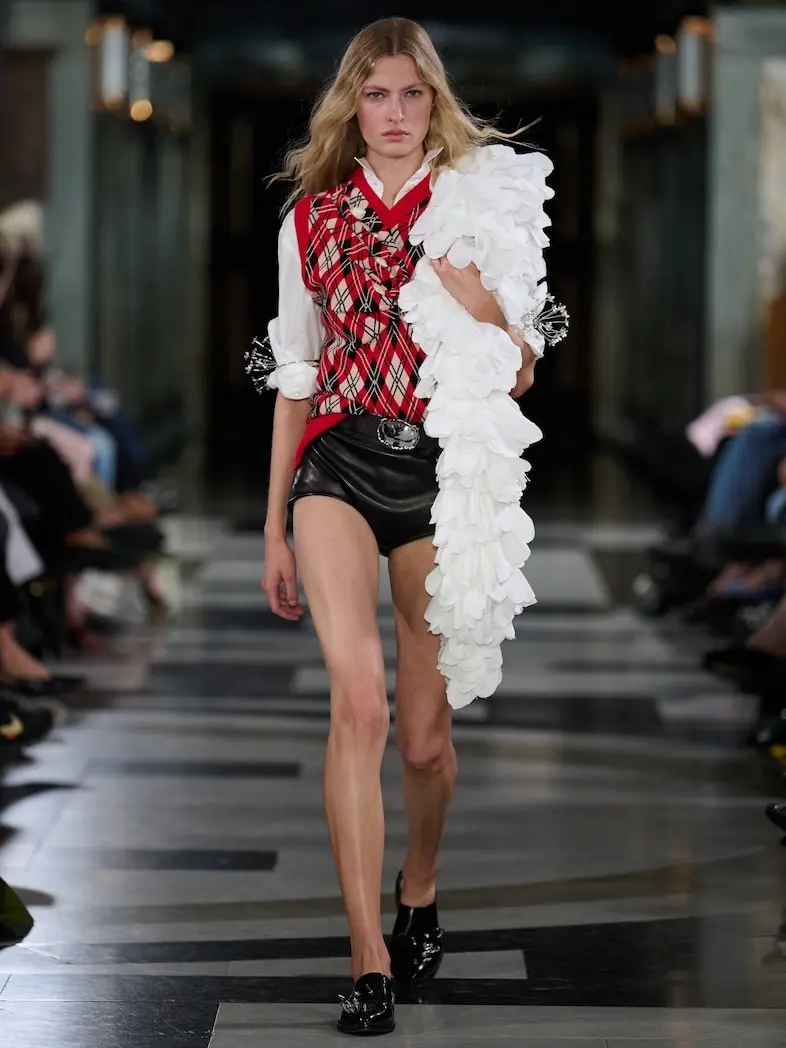
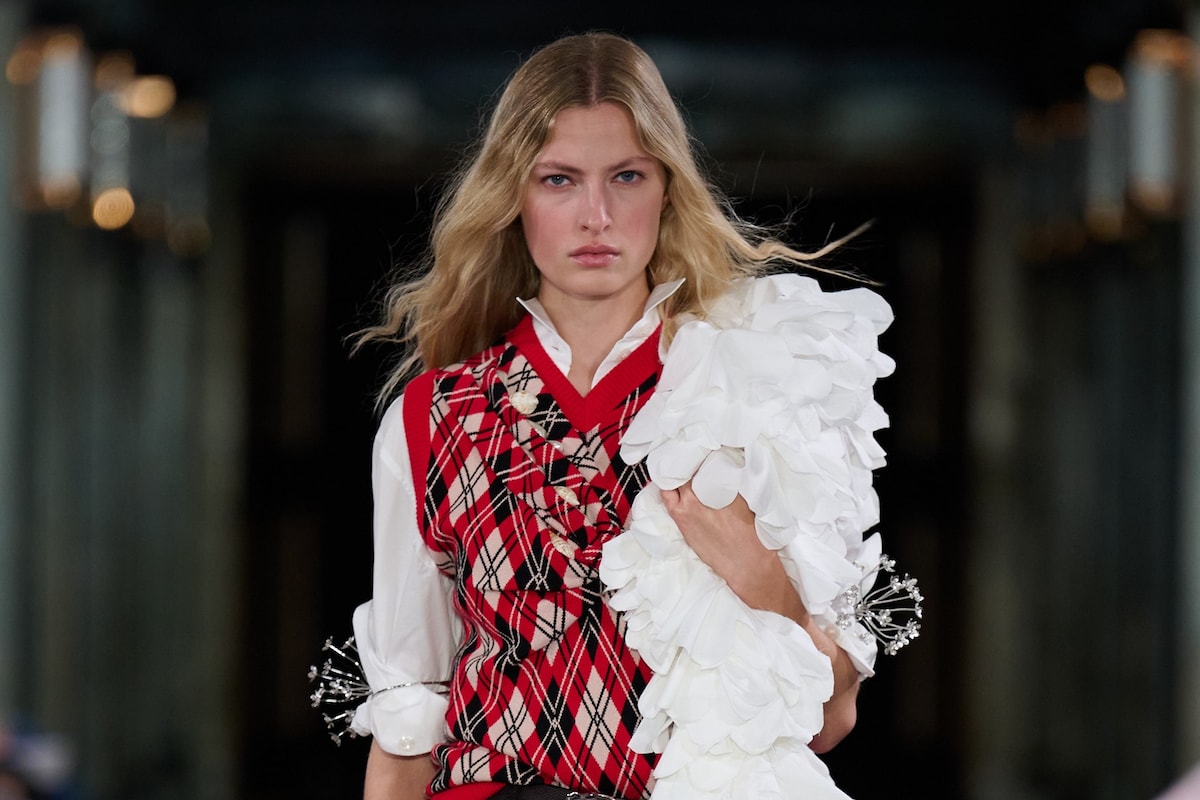
On the runway, the Gossip Girl influence manifested in sparkling tulle and structural gowns fit for a debutante ball at Constance, juxtaposed sharply against classic collegiate staples. Argyle-print sweater vests—the undisputed uniform of Blair Waldorf—were reimagined through Rocha’s signature lens of melancholy and structural volume, proving that the markers of elite youth could be twisted into avant-garde high fashion.
Gui Rosa: The Deranged "Kiss on the Lips" Party
The crescendo of the weekend’s nostalgic obsession arrived on the afternoon of day four, courtesy of CSM graduate Gui Rosa, who made a triumphant on-schedule debut with an intimate presentation at the St James’s Court Hotel.
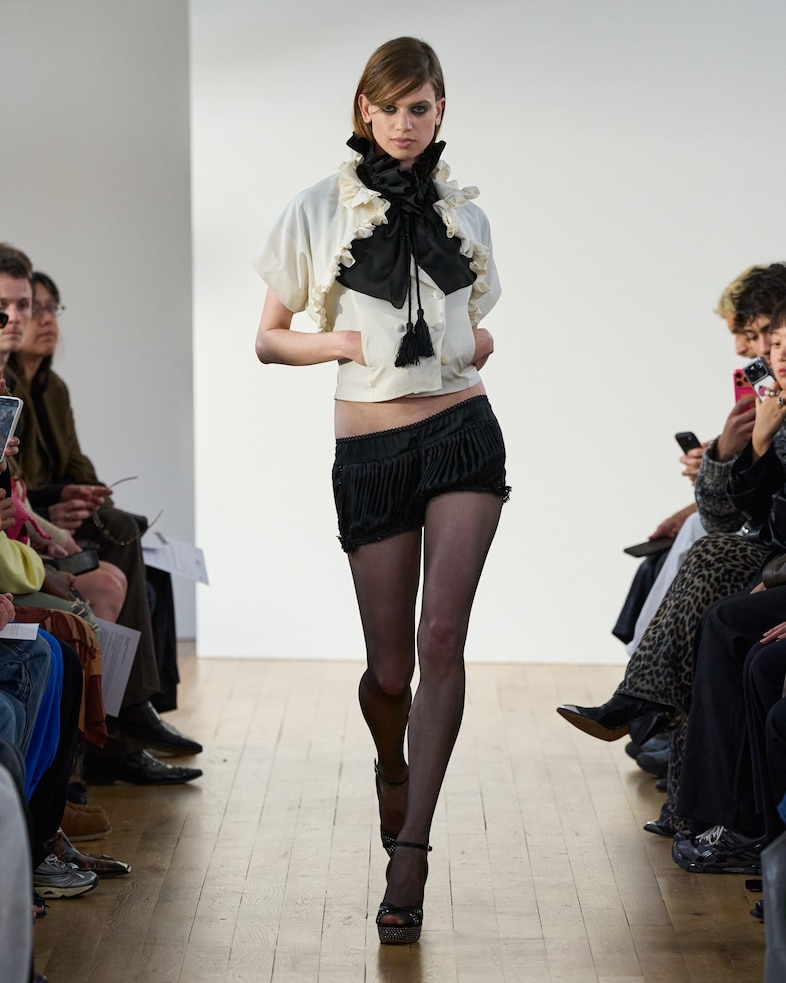
Rosa’s debut was nothing short of controlled chaos. Models navigated the grand ballroom simultaneously, presenting a wardrobe of slinky camisoles, razor-sharp pencil skirts, and jarringly vibrant neon footwear. Backstage, the Portuguese designer made no secret of his primary reference point.
"It’s my own interpretation of Gossip Girl’s ‘Kiss on the Lips’ party from the first season," Rosa explained, encapsulating the collection’s frenetic energy. "It’s a deranged version of it, and I’m bringing elements of my own life into it. I could be wearing a ballgown, but then I’m taking the tube and eating crisps on the way home."
This dichotomy—between the hyper-wealthy fantasy of the Upper East Side and the grounded reality of contemporary creative youth—informed every aspect of the presentation. Models sported voluminous, bleach-blonde hair styled à la Serena van der Woodsen, paired with party dresses that looked as though they had been pulled straight from the rebellious, DIY-infused closet of a young Jenny Humphrey.
The auditory landscape completed the immersion. Lady Gaga’s “Poker Face”—a track that famously soundtracked a high-stakes episode of Gossip Girl season two—blared through the venue, seamlessly blended with modern hyper-pop and club anthems like Slayyyter’s “I’m Actually Kinda Famous,” a song custom-built for the fictional tastes of Chuck Bass and Blair Waldorf.
Supporting Context & Metrics: The Neo-Preppy Phenomenon
The simultaneous appearance of Gossip Girl references across three vastly different designer aesthetics at LFW is not a statistical anomaly; it is a symptom of a much larger tectonic shift in global fashion consumption.
The Preppy Resurgence in Global Capitals
Over the past eighteen months, preppy and collegiate aesthetics have systematically reclaimed territory across every major fashion capital. Industry metrics and consumer interest trackers reveal a sharp upward trajectory in searches for tailored blazers, pleated skirts, argyle knits, and Ivy League outerwear.
This resurgence is being spearheaded by major design houses and independent disruptors alike:
Jonathan Anderson at Dior: Anderson’s menswear and unisex collections have consistently drawn inspiration from the sartorial codes of young aristocrats, blending historical opulence with modern, irreverent silhouettes.
Conner Ives: The New York-based designer has built a critical darling status around his hyper-specific archetypes of American society girls, vintage prom queens, and upper-crust nostalgia.
Thom Browne: Browne remains the undisputed godfather of institutional tailoring, continuously deconstructing and elevating the traditional school uniform into high-concept theatrical art.
The Millennial Nostalgia Economy
The timing of the Gossip Girl renaissance aligns neatly with demographic purchasing power. The generation that consumed the original run of the series (which premiered in 2007) is now firmly within its prime luxury-purchasing years. Millennials and older Gen Z consumers are actively seeking out cultural touchstones from their formative years, viewing the early-aughts aesthetic through a lens of post-ironic appreciation.
Furthermore, the democratization of fashion via digital platforms has transformed the specific markers of wealth depicted in the show—headbands, loafers, blazers, and layered knits—into accessible templates for personal branding. When designers like Ouyang, Rocha, and Rosa reference Gossip Girl, they are tapping into a shared cultural language that instantly communicates status, drama, and aspirational luxury to a digital-first audience.
Official Statements and Designer Perspectives
The intersection of high fashion and television melodrama often invites skepticism, yet the designers driving the SS27 movement are remarkably candid about the intentionality behind their references.
Gui Rosa’s reflections on his debut presentation offer a window into the psychological framework of modern designers who grew up consuming hyper-stylized media. By framing his collection as a "deranged" homage to the infamous Gossip Girl masquerade, Rosa highlights the tension between fantasy and reality.
"It’s my own interpretation of Gossip Girl’s Kiss on the Lips party from the first season,"Gui Rosa noted backstage at the St James’s Court Hotel. "It’s a deranged version of it, and I’m bringing elements of my own life into it. I could be wearing a ballgown, but then I’m taking the tube and eating crisps on the way home."
This quote encapsulates the democratization and subversion of elite aesthetics. The clothes may evoke the impenetrable wealth of Manhattan’s elite, but they are filtered through the gritty, pragmatic realities of London’s contemporary creative class—a generation navigating skyrocketing living costs, public transit, and a volatile economic landscape while simultaneously dreaming in haute couture.
Similarly, Oscar Ouyang’s structural narrative via Cygnet underscores the psychological weight placed on clothing during transitional life stages. The wardrobe of the wealthy elite serves, in Ouyang’s hands, as armor for young people attempting to construct an identity in a world saturated by surveillance, social media, and societal expectations—themes that defined the very core of Dan, Serena, Blair, and Chuck’s adolescent trials.
Future Outlook: Where Does the Upper East Side Go Next?
As London Fashion Week continues to chart the course for Spring/Summer 2027, the industry finds itself at a fascinating crossroads. The wholesale embrace of Gossip Girl-inspired aesthetics signals a broader cultural fatigue with minimalism and utilitarianism. Consumers and creators alike are hungry for narrative-driven fashion—clothes that tell a story, evoke a character, and invite the wearer into a theatrical performance of identity.
However, the question remains: how much longer can the industry sustain its obsession with the early 2000s upper-class narrative before it risks over-saturation?
The Evolution of Aristocratic Subversion
The success of Ouyang, Rocha, and Rosa suggests that the aesthetic has legs, provided designers continue to inject it with personal subversion. The future of the preppy trend lies not in literal replication—no one needs a carbon copy of Eric Daman’s original costume design—but in deconstruction. By filtering the wealth-signifiers of the Upper East Side through the eccentricities of London nightlife, the sustainability concerns of modern production, and the realities of working-class youth culture, designers are transforming a dated television reference into a living, breathing design philosophy.
As fashion month moves onward to Milan and Paris, industry insiders are left speculating which house will be next to mine the archives of Manhattan’s elite. Will Italian tailoring take a page from Nate Archibald’s playbook? Will Parisian ateliers adopt the dramatic flair of Georgina Sparks?
The answers to those questions remain closely guarded secrets within the inner circles of the fashion world. But as any devoted follower of New York’s most infamous anonymous blogger knows all too well: