Date: September 28, 2026
Author: Saf Malik (Adapted & Expanded by Senior Industry Analysts)
Estimated Read Time: 6–8 minutes
Executive Overview
In a strategic maneuver set to reshape the landscape of digital infrastructure, the Submer Group has officially announced the launch of Corenix, a specialized modular data centre infrastructure company. Tailored explicitly to meet the grueling demands of hyperscalers, neoclouds, and artificial intelligence (AI) operators, Corenix emerges at a critical bottleneck in the tech industry: the race to deploy high-density, power-hungry AI factories faster than traditional construction timelines allow.
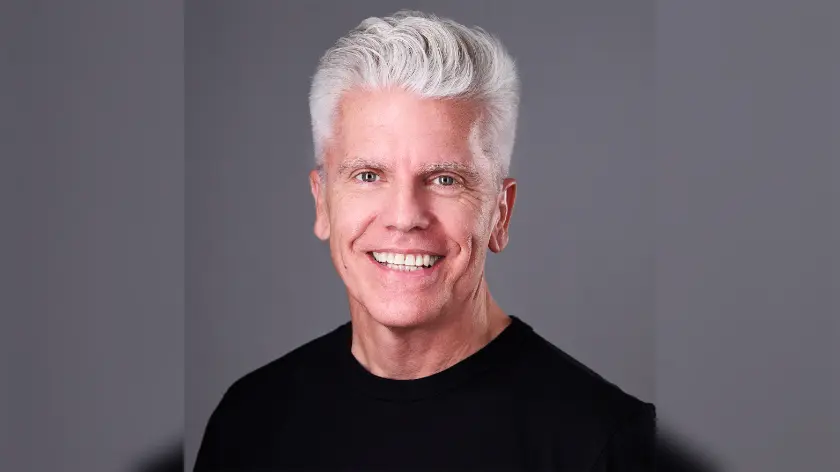
Headquartered in Houston, Texas, Corenix will be spearheaded by Martin Renkis, a seasoned digital infrastructure executive and former leader at Johnson Controls. The company’s core value proposition rests on a pre-integrated, factory-tested modular deployment model. By designing comprehensive data centre modules—covering IT hardware, power distribution, advanced cooling, and networking—off-site and prior to deployment, Corenix aims to slash project delivery windows from years to mere months.
This launch marks a monumental evolution for Submer Group. Once known primarily as an immersion cooling pioneer founded in Barcelona in 2015, Submer has aggressively transformed into a comprehensive digital infrastructure powerhouse. With over 500MW of liquid-cooled infrastructure deployed globally and a landbank exceeding 8GW across the Americas, EMEA, and APAC, the introduction of Corenix solidifies Submer’s ambition to control every facet of the next-generation data centre ecosystem.
Detailed Chronology and Strategic Evolution
To understand the weight of Corenix’s market entry, one must trace Submer Group’s strategic trajectory over the past decade.
- 2015: Submer is founded in Barcelona, Spain, quickly establishing itself as an innovator and market leader in immersion cooling technologies—a vital methodology for keeping high-density server racks from overheating.
- The AI Boom & Early Expansion: As generative AI models exploded in size and computational requirements, traditional air and even standard water-cooling methods hit a physical wall. Submer expanded its operational scope beyond simple cooling units, moving boldly into comprehensive data centre design, construction, and land acquisition.
- Scaling Global Footprint: Over subsequent years, Submer amassed a massive portfolio, securing over 8 gigawatts of powered land across the Americas, Europe, the Middle East, Africa, and Asia-Pacific. The group also organized its capabilities into distinct pillars, including Rubix Data Centers (focused on developing and operating AI campuses) and Radian Arc (delivering GPU-as-a-Service and AI-as-a-Service).
- September 2026 (The Corenix Launch): Recognizing that real estate and power availability are only half the battle—and that the physical construction phase remains a major industry bottleneck—Submer officially spins up Corenix to handle modular infrastructure delivery. Martin Renkis is brought on as Chief Executive Officer to steer its global operations out of Houston.
The Corenix Model: Engineering the Future of AI Factories
Traditional data centre construction is notoriously sluggish. Building a multi-megawatt facility from the ground up often takes anywhere from 18 to 36 months—a timeline fundamentally misaligned with the hyper-accelerated product cycles of modern AI hardware and GPU iterations.
Corenix has been architected specifically to dismantle this timeline barrier.
Factory-Tested Integration
Rather than assembling components piece-by-piece on a greenfield or brownfield site under unpredictable weather and labor conditions, Corenix engineers, integrates, and factory-tests complete data centre modules at its production facilities. These modules encompass everything an operational AI workload requires:
- IT Infrastructure: High-density compute chassis.
- Power Management: Robust backup, distribution, and conversion systems.
- Cooling Systems: State-of-the-art thermal management, leaning heavily on Submer’s deep liquid-cooling pedigree.
- Networking: High-bandwidth, low-latency interconnects.
Each platform is constructed around official Nvidia reference designs, ensuring seamless compatibility with the world’s most advanced accelerated computing hardware. Furthermore, every build is customized precisely to the client’s spatial and operational parameters.
Lifecycle Management
Corenix’s responsibility doesn’t end at the factory door. The company oversees the entire deployment lifecycle, including:
- Safe delivery to the customer site.
- Rigorous connection to existing site infrastructure (power grids and water supplies).
- Comprehensive acceptance testing and commissioning.
- Final handover for immediate operational readiness.
Scalability and Flexibility
According to Submer Group, legacy data centre builds lack the structural flexibility needed to support successive generations of high-density hardware. Corenix’s modular architecture empowers neoclouds and hyperscalers to adopt a "pay-as-you-grow" framework. Operators can deploy initial capacity to meet immediate computing needs, then seamlessly expand their footprint as local power availability, capital, and regional demand permit.
Leadership Spotlight: Appointing Martin Renkis as CEO
The appointment of Martin Renkis as CEO of Corenix signals a strong intent to scale rapidly and execute with enterprise-grade precision.
Renkis brings a formidable track record in the industrial and digital infrastructure sectors. Most recently serving as the Executive Director of Data Centre Infrastructure Services at Johnson Controls, Renkis was instrumental in developing comprehensive AI infrastructure offerings that integrated power, liquid cooling, advanced heat recovery, operational software, and project financing.

His entrepreneurial background further cements his capacity for innovation. Renkis previously founded Smartvue, an Internet of Things (IoT) cloud video platform that was successfully acquired by Johnson Controls. Before that, he founded Trainersoft, an e-learning software company acquired by OutStart (subsequently absorbed by IBM).
Renkis’s philosophy centers heavily on transparency, risk mitigation, and predictability—qualities desperately needed in the current infrastructure market.
Official Statements and Industry Insights
The leadership team at Submer and Corenix emphasized that the market’s current trajectory demands an absolute paradigm shift in how digital infrastructure is delivered.
Patrick Smets, CEO of Submer Group, noted:
"AI factories are driving unprecedented demand for new capacity, and the market simply needs a faster, more predictable way to build it. Traditional methods cannot keep pace with accelerated computing. Corenix represents our commitment to removing friction from the deployment pipeline, ensuring our partners can scale without hesitation."
Martin Renkis, CEO of Corenix, highlighted the company’s customer-centric accountability model:
"Customers want absolute clarity on scope, rigorous testing, and clear accountability before they commit capital. At Corenix, our goal is to put a guaranteed go-live date on the table before a contract even exists. We provide a single, unified team responsible for everything—from initial factory integration all the way through to on-site commissioning."
Renkis pointed to a recent milestone achieved by the broader Submer ecosystem: the successful delivery of a multi-hundred-megawatt modular campus buildout from initial order to full operational delivery in a stunning nine months.
Supporting Context & Industry Metrics
To fully grasp the significance of Corenix’s market entry, one must look at the broader macro-environmental pressures facing the data centre sector:
- The Power Crunch: AI workloads require staggering amounts of electricity. Data centre operators are increasingly constrained not by capital, but by utility interconnect queues and power generation availability. Modular builds allow operators to maximize localized power pockets efficiently.
- Thermal Density Challenges: Traditional air cooling is virtually obsolete for modern GPU clusters (such as Nvidia’s Blackwell and subsequent architectures). Liquid cooling integration—Submer’s historical bread and butter—is now a mandatory baseline for AI infrastructure.
- The Corporate Ecosystem: Corenix operates alongside two sibling entities within the Submer Group portfolio:
- Rubix Data Centers: Developing and operating large-scale AI data centre campuses.
- Radian Arc: Supplying GPU-as-a-Service and AI-as-a-Service models to enterprise clients.
With primary hubs spanning Barcelona, Houston, and Taipei, Submer Group is uniquely positioned to service the global North American, European, and Asian digital economies concurrently.
Future Outlook
As the artificial intelligence boom matures from an experimental gold rush into foundational global infrastructure, the competitive advantage will belong to those who can deploy secure, power-efficient, and thermally optimized compute environments with absolute predictability.
With Corenix now operational under the seasoned leadership of Martin Renkis—and backed by Submer Group’s vast landbank, liquid-cooling expertise, and modular manufacturing capacity—the company is poised to become a dominant force in the global neocloud and hyperscale supply chain. By promising firm go-live dates before contracts are signed and shaving months off traditional deployment timelines, Corenix is setting a new benchmark for what the industry should expect from data centre infrastructure providers.