Executive Overview
In the fast-paced ecosystem of cloud computing, developer communities and cutting-edge artificial intelligence continue to intersect in transformative ways. Last week, the Amazon Web Services (AWS) Developer Experience team maintained its commitment to grassroots engagement by traveling to Seoul, South Korea, to connect with the AWS Korea User Group (AWSKRUG)—one of the largest and most active cloud developer communities globally. These ongoing international delegations underscore AWS’s dedication to listening directly to its developer base, gathering critical qualitative feedback, and refining its developer tooling to match real-world workflows.
Simultaneously, the week’s engineering highlights featured a major leap forward for AI-assisted development: the introduction of a one-click AWS Lambda setup prompt for coding agents. This new capability bridges the gap between advanced autonomous AI models and cloud architecture, equipping modern AI coding assistants with pre-configured serverless skills, Model Context Protocol (MCP) servers, and built-in architectural best practices.
However, the week was not entirely without technical hurdles. AWS operations faced a notable transparency test when an operational issue caused inaccurate estimated billing data to display within AWS Cost Explorer, triggering erroneous budget and cost anomaly alerts for some users. AWS has since resolved the issue, restored normal service operations, and committed to a comprehensive retrospective to bolster its reliability and alerting precision moving forward. This report delivers an exhaustive, deep-dive analysis of these developments, contextualizing how community feedback, generative AI workflows, and operational accountability shape the modern cloud landscape.
Detailed Chronology: Global Community Engagement and the Seoul Delegation
Fostering Grassroots Innovation in South Korea
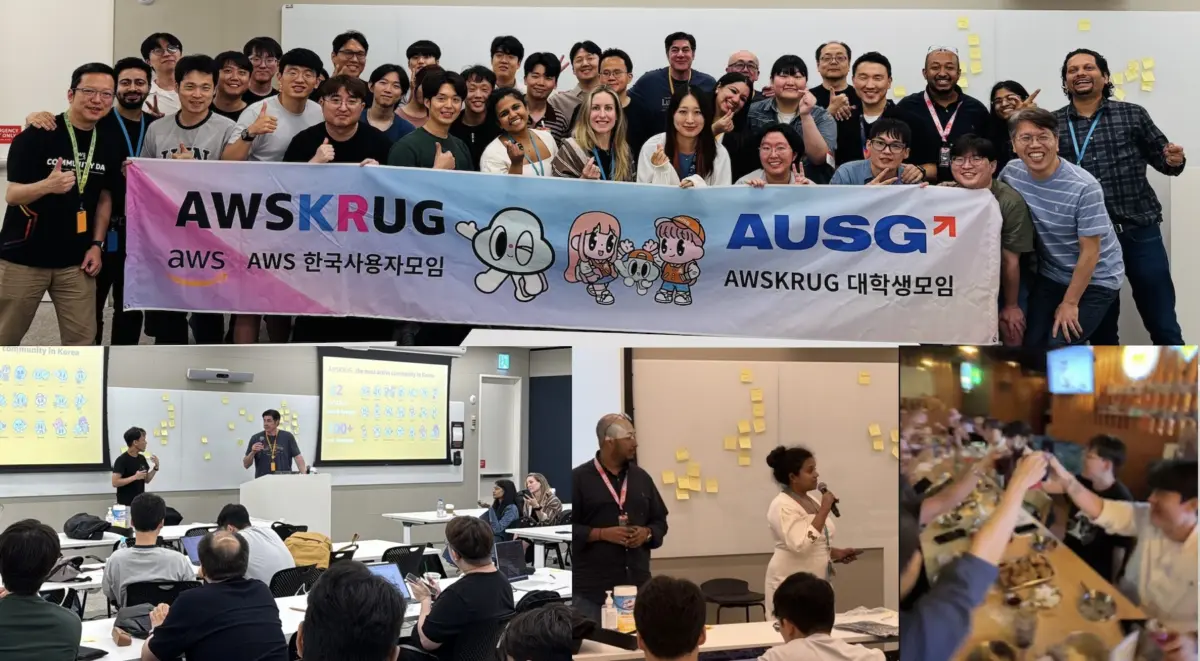
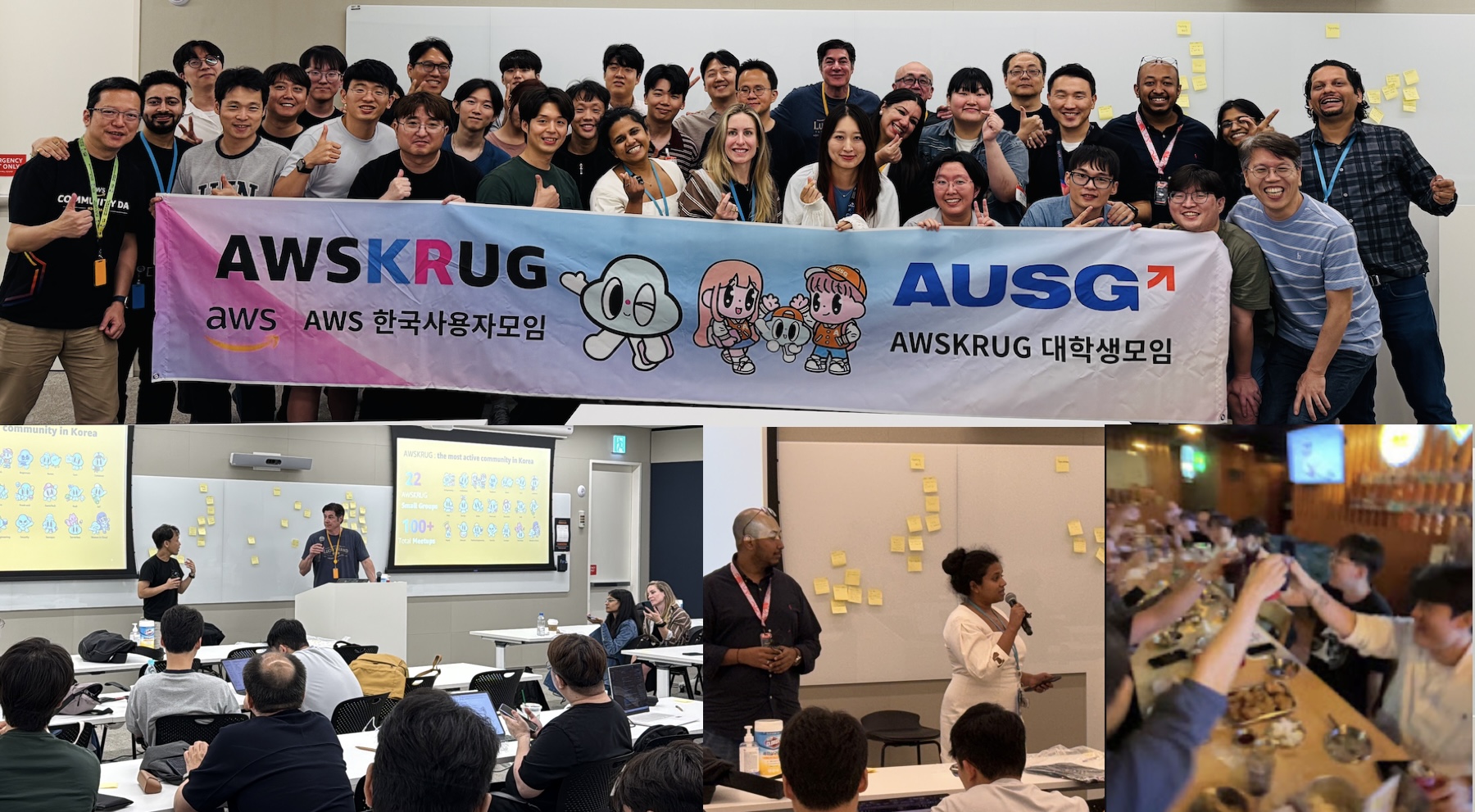
The cornerstone of last week’s community outreach was the AWS Developer Experience team’s visit to Seoul to meet with the leadership core of the AWS Korea User Group (AWSKRUG). Recognized widely as the pinnacle of cloud developer ecosystems in South Korea, AWSKRUG boasts a remarkably structured framework consisting of 20 distinct meetup groups segmented by both geographic area and specialized technical topics. Together, these subgroups orchestrate upwards of 100 events annually, predominantly centered in the bustling tech hubs of Seoul.
For the AWS Developer Experience team, these international excursions are far more than ceremonial visits; they serve as a critical feedback loop. During the multi-day engagement, AWS representatives and AWSKRUG leaders engaged in candid retrospectives, evaluating the successes of the first half of the year alongside areas requiring immediate architectural or educational remediation. Community leaders openly voiced specific feature requests, documentation improvements, and tooling enhancements tailored directly to the needs of Korean builders.
Cultural Integration and Developer Solidarity
True to the collaborative ethos of the global tech community, the technical discussions extended beyond formal meeting rooms. True to regional tradition, the delegation participated in a classic Chimaek session—a beloved Korean cultural pairing of fried chicken and beer. These informal networking environments have long proven essential for breaking down corporate barriers, allowing engineers, community organizers, and product managers to forge genuine human connections.
By prioritizing face-to-face interactions across the Asia-Pacific region, AWS ensures that its regional roadmaps remain reflective of diverse global developer needs—ranging from localized documentation support to specialized enterprise development paradigms.
The Cutting Edge: One-Click AWS Lambda Setup for AI Coding Agents
Revolutionizing Serverless with AI
Among the product announcements and developer tooling updates released last week, the introduction of a one-click Lambda setup prompt for coding agents stands out as a paradigm-shifting milestone. As software development increasingly incorporates autonomous coding assistants, ensuring that these AI models understand cloud-native architecture—specifically serverless best practices—has become a paramount engineering challenge.
The newly introduced prompt configuration natively equips AI coding agents with deep AWS Serverless skills and integrates the Serverless Model Context Protocol (MCP) server. By baking serverless best practices directly into the initialization phase, the prompt ensures that any infrastructure or application code generated by the agent adheres to AWS security, scalability, and efficiency standards from the very first line of code.
Supported Platforms and Ecosystem Integration
Versatility is a core pillar of the new setup framework. The underlying Lambda agent setup guide provides out-of-the-box installation commands and configuration parameters for a wide array of leading AI coding environments and assistants, including:
- Claude Code
- Kiro
- Cursor
- GitHub Copilot
- Codex
- Devin Desktop
- OpenCode
Step-by-Step Implementation Guide
For developers looking to integrate this capability into their daily workflows, the activation process has been streamlined to minimize friction:
- Navigate to the AWS Lambda console.
- Locate and select the Copy agent prompt button.
- Alternatively, developers can manually fetch the setup instructions by copying the raw markdown URL:
fetch https://docs.aws.amazon.com/lambda/latest/dg/samples/aws-lambda-agent-setup.md - Paste the URL or copied prompt directly into your preferred AI coding agent.
Furthermore, developers can augment their AI assistants with broader ecosystem awareness via the Agent Toolkit for AWS. This toolkit equips coding agents with real-time AWS knowledge and secure resource access guidelines. To install the AWS MCP Server within the toolkit, developers can execute:
fetch https://raw.githubusercontent.com/aws/agent-toolkit-for-aws/refs/heads/main/setup-instructions/setup.md

This integration drastically reduces hallucinations in AI-generated infrastructure-as-code (IaC), ensuring that cloud architects and developers can delegate routine serverless boilerplate creation to AI with unprecedented confidence.
Supporting Context, Metrics, and Ecosystem Growth
Navigating the AWS Event Landscape
AWS continues to maintain a robust calendar of educational, networking, and technical events designed to support developers at every stage of their cloud journey. Builders looking to sharpen their skills or network with industry peers can leverage several structured pathways:
- AWS-Led Events: Explore upcoming in-person and virtual conferences tailored to enterprise cloud transformation.
- Startup Events: Specialized programming designed to help early-stage founders scale their technological infrastructure efficiently using AWS Activate credits and architectural best practices.
- Developer-Focused Events & Summits: Deep-dive technical sessions hosted globally, offering hands-on workshops and direct access to AWS solution architects.
- AWS Builder Center: A centralized community hub where builders can connect, share innovative solutions, and access curated documentation and technical content.
For professionals seeking real-time tracking of platform evolution, the official What’s New with AWS page and the AWS Blogs portal remain indispensable resources for tracking weekly releases, architectural deep dives, and case studies.
Operational Retrospective: Addressing the Cost Explorer Incident
Incident Overview and Customer Impact
Transparency and reliability are foundational tenets of cloud computing. Over the past weekend, however, a number of AWS customers experienced unexpected friction related to platform observability. An operational issue occurred within AWS Cost Explorer, causing the service to display inaccurate estimated billing data.
As a direct consequence of this underlying metric corruption, several downstream monitoring systems reacted predictably: customers reported receiving erroneous budget notifications and false-positive cost anomaly detection alerts. Furthermore, the dashboard presented inflated estimated cost and usage metrics, leading to understandable anxiety among finance and engineering teams monitoring cloud expenditures.
Resolution and Corrective Measures
AWS engineering teams mobilized swiftly to diagnose and mitigate the anomaly. The core issue has been fully resolved, and all AWS services—including billing, cost management, and anomaly detection pipelines—have returned to normal operational status.
In an official statement addressing the incident, AWS management expressed regret over the concern and operational confusion caused:
"The issue has been resolved, and all AWS services are operating normally. We apologize for the concern this incident caused our customers and are conducting a thorough retrospective to prevent events like this from reoccurring, as well as improving our response when billing incidents occur."
Future-Proofing Financial Observability
To ensure absolute confidence in financial tooling, AWS is conducting an exhaustive internal engineering review. The retrospective focuses on three core pillars:
- Pipeline Validation: Implementing stricter validation checks on telemetry and cost-metering data pipelines before ingestion into Cost Explorer.
- Alert Threshold Sensitivity: Refining budget and anomaly detection alerting logic to better differentiate between genuine cost spikes and reporting anomalies.
- Communication Protocols: Accelerating the dissemination of incident updates via the AWS Health Dashboard to ensure affected organizations can quickly verify billing data integrity during operational events.
Future Outlook
As the cloud computing landscape marches forward, the convergence of human community governance and autonomous machine intelligence is reshaping how infrastructure is built and managed. The successful dialogue between AWS and the AWS Korea User Group exemplifies the irreplaceable value of localized community feedback in driving global product roadmaps. Simultaneously, innovations like the one-click Lambda agent setup signal a definitive shift toward AI-native developer experiences, where cloud best practices are baked into the tooling by default.
Looking ahead, the primary challenge for cloud providers will lie in maintaining the delicate balance between rapid feature velocity—particularly in generative AI and serverless tooling—and uncompromised operational stability, as evidenced by the recent Cost Explorer incident. By pairing aggressive developer-centric innovation with transparent incident retrospectives and robust community partnerships, AWS remains uniquely positioned to lead the next generation of cloud architecture.
Check back next Monday for another comprehensive Weekly Roundup highlighting the latest milestones across the AWS ecosystem.