Executive Overview
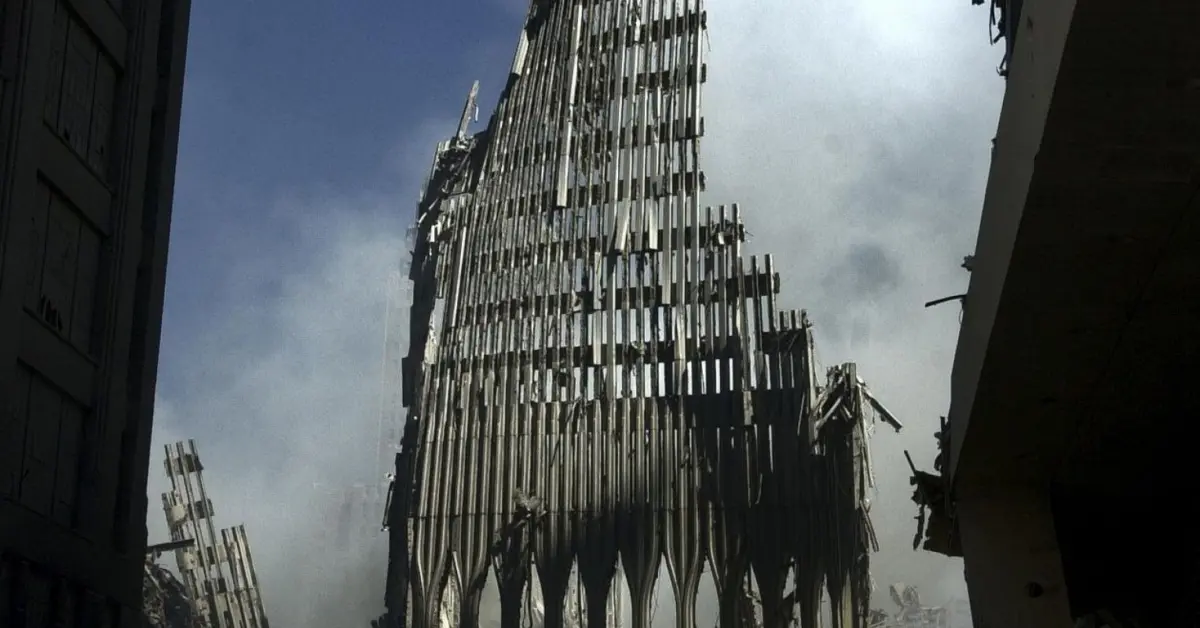
As the global community approaches the solemn 25th anniversary of the September 11 attacks, our collective consciousness turns once more to the profound trauma that reshaped the modern world. Beyond the architectural devastation and the geopolitical aftershocks lies the enduring, deeply human toll: the families forever altered by the loss of loved ones on that fateful day, and the thousands more impacted by the subsequent decades of war and military service.
Yet, the story of September 11 is not merely one of perpetual sorrow; it is also a testament to the evolution of human resilience and the revolutionary transformation of how society approaches mass trauma. For centuries, Western psychological paradigms treated grief as an internal, highly individualized affliction to be managed and ultimately severed. However, the sheer scale of modern tragedies—epitomized by 9/11—forced a radical realignment in mental health care.
Organizations like the Tragedy Assistance Program for Survivors (TAPS) realized early on that traditional clinical frameworks, reliant solely on licensed mental health professionals, were wholly inadequate for addressing widespread, catastrophic loss. Out of this necessity arose a powerful paradigm shift: the institutionalization of peer-to-peer support. By pairing the newly bereaved with individuals who had successfully navigated similar trauma, organizations unlocked an ancient truth recognized by our ancestors—that grief is a journey best undertaken collectively, and that true healing is catalyzed by those who have walked the path before.
Detailed Chronology: The Historical and Modern Evolution of Grief
To understand the mechanics of modern trauma recovery, one must first trace the historical trajectory of how humanity has conceptualized and processed loss. The human experience of grief is as old as civilization itself, evolving from elaborate public spectacles to clinical isolation, and finally returning to a communal model of shared survival.
Antiquity and the Public Nature of Loss
The pain of loss extends far beyond written records, but the earliest foundations of Western civilization reveal that grieving was rarely treated as a private burden.
- Ancient Egypt (c. 2600 BC): During the Old Kingdom, mourning the loss of elite and ruling-class members was a massive, highly orchestrated public experience characterized by elaborate pomp, ritualized lamentation, and communal pageantry. Grief was woven into the very fabric of societal hierarchy.
- Classical Greece (5th Century BC): Greek tragedies served as large-scale public rituals designed for the cathartic expression of loss and trauma. These performances transformed individual grief into a civic experience—and arguably a civic obligation—allowing entire communities to process catastrophe collectively.
- Nordic and Germanic Traditions: These cultures embedded grief into public mythological storytelling and highly structured, communal remembrance ceremonies, reinforcing the notion that sorrow required a shared cultural container.
The Rise of Organized Religion and Early Psychology
With the spread of Christianity and other organized religions, public funerals and standardized mourning rites became dominant. However, the late 19th and early 20th centuries marked the birth of modern psychology, which sought to strip grief of its purely spiritual or communal contexts and examine it through a clinical lens.
In 1917, Sigmund Freud published his seminal work, Mourning and Melancholia, marking the first formal psychological theory of grief. Freud’s framework emphasized the painful necessity of "detachment"—the idea that the healthy mind must completely "let go" of the lost object to redirect psychic energy toward new attachments. For much of the 20th century, this medicalized model dominated therapeutic interventions, often pathologizing prolonged grief and encouraging individuals to process their sorrow behind closed doors.
The Modern Paradigm Shift: Continuing Bonds and 9/11
In the latter half of the 20th century, researchers began challenging Freud’s detachment model. Seminal works, such as Klass, Silverman, and Nickman’s 1996 book Continuing Bonds: New Understandings of Grief, argued that healthy grieving does not require severing ties with the deceased. Instead, reattaching to the memory and maintaining a continuous, evolving bond with that which was lost proved far more psychologically sustainable.
This theoretical evolution met its ultimate testing ground on September 11, 2001. The sheer magnitude of the tragedy shattered the illusion that grief could be neatly contained within clinical offices. The events of that day concretized a global cultural ethos of "never forgetting," proving that catastrophic trauma demands a public, shared architecture of survival.
Supporting Context & Metrics: The Scale of Modern Trauma and TAPS
The numbers associated with modern military and national security losses tell a staggering story of endurance. When catastrophic loss occurs on a national scale, traditional healthcare systems face immediate capacity constraints.
- The TAPS Footprint: Since its inception, the Tragedy Assistance Program for Survivors (TAPS) has provided vital, compassionate support to over 100,000 bereaved family members.
- The 9/11 Impact: In the wake of the September 11 attacks and the subsequent conflicts, TAPS has directly served 14,858 9/11-related bereaved military family members.
- The Clinical Shortage: To scale operations to meet these unprecedented demands, TAPS recognized that relying exclusively on licensed mental health clinicians was mathematically and practically impossible. The scarcity of trauma-trained clinicians, combined with the unique isolation felt by military survivors, necessitated a structural pivot toward community-led interventions.
This realization catalyzed the large-scale implementation of peer support models, transforming everyday survivors into frontline agents of psychological recovery.
The Mechanics of Peer Support
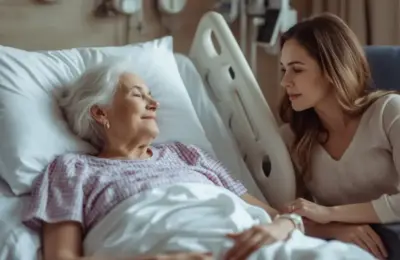
According to the Substance Abuse and Mental Health Services Administration (SAMHSA), peer support relies on individuals who share common denominators—most notably, lived experiences. When individuals who have successfully navigated harrowing life events receive proper training, they can serve in a peer support capacity with unmatched efficacy.
Peer supporters leverage the unique bond of shared experience to establish three critical psychological anchors:
- Credibility: Because they have lived through the fire, their insights cannot be dismissed as academic or detached.
- Perceived Empathy: They offer a profound, wordless understanding that eliminates the survivor’s fear of being a burden or misunderstood.
- Hopefulness: They serve as living, breathing proof that it is entirely possible to survive devastating loss and continue carrying love forward.
Within the TAPS framework, these peers are systematically trained in a simple, non-linear bereavement model. This structure avoids rigid timelines, honoring the reality that trauma recovery is not a straight line from pain to closure, but rather a lifelong integration of love and loss.
Official Perspectives: Insights from Trauma Experts and Advocates
The evolution of modern grief support is championed by leading clinicians, researchers, and advocates who have dedicated their lives to understanding trauma at both the micro and macro levels. Their collective insights underscore why peer-based, community-centered healing remains the gold standard for mass casualty recovery.
Cherie Castellano, CSW
Vice President for Survivor Services at TAPS and member of the New York Emergency Services 9/11 Delegation to England and Ireland
"The pain of loss is universal, yet the modern tendency has often been to isolate the grieving individual, expecting them to heal in silence. Our work across international delegations and domestic response teams has shown that true healing requires tearing down those walls of isolation. When survivors speak to survivors, the dynamic shifts from clinical observation to authentic human solidarity."
Lisa Zucker, MSW
Senior Director of Education at TAPS
"Education and structured support must go hand-in-hand when addressing mass trauma. By training peers to understand the non-linear nature of grief, we dismantle the harmful myth that there is a ‘correct’ way to mourn. We teach communities how to sit with pain rather than rush to fix it."
Bonnie Carroll
Founder and President of TAPS and 2015 Presidential Medal of Freedom Recipient
"Twenty-five years after 9/11, our core promise remains entirely unchanged: no one who is grieving the death of someone who served our nation should ever have to walk that road alone. Survivors caring for survivors has been at the heart of our mission from the very beginning. It remains one of the most powerful expressions of healing, hope, and the enduring bonds of love—a promise we extend to all survivors of loss, regardless of its origin."
George S. Everly, Jr., PhD, MA
Faculty at The Johns Hopkins School of Medicine and Ground Zero Initiative Veteran
"In the immediate aftermath of Ground Zero, and through decades of studying acute psychological trauma, we learned that formal clinical interventions must be augmented by natural human support networks. Peers harness credibility and empathy in ways that textbooks never can. The ancients understood this intuitively, and modern behavioral science has finally caught up to the wisdom of shared human endurance."
Future Outlook: Global Applications and the Enduring Promise of Connection
As we look toward the quarter-century mark of September 11, 2001, the lessons forged in the fires of American tragedy are expanding far beyond national borders. The principles of peer support, refined through decades of walking alongside military families, are now being deployed internationally—most notably in conflict zones such as Ukraine, where a new generation of civilians and defenders faces the unimaginable horrors of modern warfare.
From this historical review and modern evolution, a profound three-fold revelation emerges:
- Grief is a Journey: It is a dynamic, lifelong process rather than a medical condition to be "cured" or an obstacle to be bypassed.
- Companionship is Essential: This journey is exceptionally burdensome when undertaken alone and is best navigated with shared human companionship.
- Peers are the Ultimate Guides: The most effective companions are those who have traversed a similar terrain and emerged with their capacity to love intact.
There is profound, irreplaceable healing in sitting across from someone who requires no explanation of grief, who respects the absence of timelines, and who embodies the living proof that love outlives loss.
Ultimately, twenty-five years after the towers fell, the legacy of 9/11 is not merely one of vigilance and sorrow, but of an enduring revolution in human empathy. By validating the ancient wisdom that healing should never be a solitary experience, modern society has reclaimed a timeless truth: through the support of others, we learn the essential, unbreakable lessons of hope, resilience, and enduring love.