Executive Overview
Months after an 18-year-old high school standout’s life was abruptly cut short following a holiday weekend excursion, his family, legal representatives, and community members remain locked in a grueling search for transparency. Nolan Xavier Wells, a promising wide receiver from Ocean Springs, Mississippi, disappeared during a July 4 boat trip to Horn Island. When his body was recovered days later, it marked not the resolution of a tragedy, but the beginning of an enduring institutional stalemate.
The Jackson County Sheriff’s Office declined to classify or investigate Wells’s death as a homicide, setting off a chain of events that has highlighted deep-seated concerns regarding local investigative thoroughness, systemic accountability, and racial equity in the American justice system. In September, a Jackson County grand jury returned a "no true bill," declining to issue any criminal indictments. To date, both the state-conducted autopsy and an independent forensic evaluation commissioned by the grieving family have returned the same frustrating classification: cause and manner of death remain "undetermined."
While local authorities and the district attorney consider the matter closed, civil rights attorney Ben Crump and the Wells family maintain that justice has not been served. They are aggressively pushing for a federal intervention, arguing that vital questions remain unanswered. This high-profile case has transcended local geography, transforming into a national touchstone for marginalized families who find themselves navigating a labyrinth of institutional stonewalling.
Beyond the courtroom and the sheriff’s department, Wells’s story has ignited a broader, urgent conversation about civic engagement, mental health, and the profound impact of local elections. With Wells having been 18—old enough to vote in this upcoming election cycle had his life not been prematurely stolen—advocates are channeling their collective grief into political empowerment. This report examines the chronology of the investigation, the technical roadblocks in determining the cause of death, the official stances of involved parties, and the transformative power of community-driven civic action.
Detailed Chronology: The Disappearance and Aftermath
To understand the weight of the current struggle, one must examine the timeline of events that began on Independence Day and spiraled into a multi-jurisdictional controversy.
July: The Fourth of July Excursion and Disappearance
The events began during the peak of the summer holiday weekend. Nolan Wells, known among his peers in Ocean Springs as a dedicated athlete with an expansive future, embarked on a recreational boat trip heading toward Horn Island—a barrier island off the Mississippi Gulf Coast managed federally as part of the Gulf Islands National Seashore. For reasons that remain intensely disputed and obscured by conflicting accounts, Wells went missing during the excursion.
Initial reports of his disappearance triggered search and rescue operations involving local marine patrols and emergency responders. However, the anxiety of his family and friends quickly turned to profound devastation when rescue operations transitioned into a recovery effort.
Recovery and the Initial Law Enforcement Response
Days after he went missing, Wells’s body was recovered from the water. From the earliest stages of the recovery, the Jackson County Sheriff’s Office established a posture that has drawn fierce criticism from the victim’s advocates. Despite the suspicious circumstances often associated with sudden, unexplained drownings or water-related fatalities among young adults, local investigators chose not to treat the incident as a homicide.
Critics and legal experts note that treating a sudden death with a presumption of non-criminality can inadvertently compromise the collection of transient forensic evidence, setting a restrictive tone for all subsequent investigations. Without a homicide classification, standard investigative protocols—such as exhaustive neighborhood canvassing, immediate cell phone extractions, and aggressive witness sequestration—are frequently deprioritized.
September: The Grand Jury Decision
By late summer, the investigative findings compiled by local law enforcement were handed over to prosecutors, who presented the case to a Jackson County grand jury. In September, the grand jury returned a "no true bill." In the American legal framework, a grand jury issues a no true bill when it determines that there is insufficient probable cause to formally charge a suspect with a crime.
For the Wells family, the grand jury’s decision felt less like a thorough exoneration of wrongdoings and more like a procedural dead-end. Because grand jury proceedings are notoriously secretive, held behind closed doors without the presence of the victim’s family or their independent legal counsel, the public was left with zero visibility into what evidence was presented, which witnesses testified, or how rigorously the state argued the case.
Autumn to Present: The Autopsy Impasse and Legal Escalation
More than three months after the grand jury’s decision, the fundamental question remains unanswered: How did Nolan Wells die?
Both the official state autopsy report and the independent autopsy commissioned independently by the Wells family reached the same frustrating plateau. Both concluded that the cause and manner of death are "undetermined." In forensic pathology, an undetermined classification is rendered when natural disease, trauma, or toxicology results fail to point conclusively to a single mechanism of death, or when post-mortem decomposition obscures critical physical evidence.
Despite these medical ambiguities, the local district attorney’s office has closed the active local file, asserting that all procedural avenues have been exhausted. Refusing to accept this closure, the family retained renowned civil rights attorney Ben Crump. Recognizing the limitations and potential biases within the local apparatus, Crump and the family are actively petitioning federal authorities—including the Department of Justice—to launch an independent civil rights and investigative review into the circumstances surrounding Wells’s final hours.
Supporting Context & Metrics: Systemic Disparities and Public Health
The grief surrounding Nolan Wells is compounded by a larger, systemic reality that disproportionately affects families of color across the United States. Statistical data and psychological research provide critical context for understanding why cases like Wells’s provoke such intense national trauma.
The Disproportionate Burden of Unsolved Cases
According to civil rights advocacy groups and independent criminal justice researchers, cases involving Black victims—particularly young men—frequently face systemic hurdles in receiving equitable investigative attention. Data from federal law enforcement databases historically reveal a lower clearance rate for homicides and suspicious deaths involving Black victims compared to their white counterparts.
When local authorities prematurely close investigations or categorize suspicious deaths as "undetermined" without exhaustive inquiries, it deepens a historic distrust between marginalized communities and law enforcement agencies. This distrust is not merely ideological; it is built on decades of lived experience where marginalized families have had to fight tooth and nail simply to secure basic investigative transparency.
The Psychology of Collective Uncertainty
Mental health experts emphasize that unresolved community trauma, such as that experienced by Ocean Springs residents and the broader network of Wells’s supporters, inflicts measurable psychological distress. The persistent state of "not knowing" prevents closure, keeping the nervous system in a chronic state of fight-or-flight.
However, psychological studies in behavioral activation indicate that agency serves as a powerful antidote to helplessness. When individuals feel completely powerless in the face of macro-level injustices, taking small, structured, values-based actions—such as researching local candidates, attending civic meetings, or participating in the democratic process—helps restore psychological equilibrium. Control, in times of crisis, is rarely about having all the answers immediately; it is about reclaiming intentionality in what one does next.
Official Statements and Institutional Positions
The standoff over Nolan Wells’s case is defined by sharply contrasting positions taken by local law enforcement, prosecutors, and the family’s legal team.
The Jackson County Sheriff’s Office and District Attorney
Local law enforcement and prosecutorial authorities have maintained a defensive posture throughout the ordeal. The Jackson County Sheriff’s Office defended its initial determination that the incident did not warrant a homicide investigation, pointing to the absence of immediate, overt signs of foul play at the recovery scene.
Furthermore, the district attorney’s office relies heavily on the "undetermined" findings of the medical examiners and the subsequent decision by the grand jury. From the perspective of local officials, once a grand jury reviews the evidence and declines to indict, and medical professionals cannot legally substantiate a specific cause of death, the judicial system has reached its operational limit. Local authorities argue that continuing to expend municipal resources on an unprovable case is unwarranted, formally closing the local chapter of the investigation.
Ben Crump and the Wells Family Legal Team
Conversely, civil rights attorney Ben Crump has sharply criticized the local handling of the case, arguing that an "undetermined" autopsy report should serve as an invitation for deeper, more sophisticated forensic scrutiny rather than an excuse to shut the door.
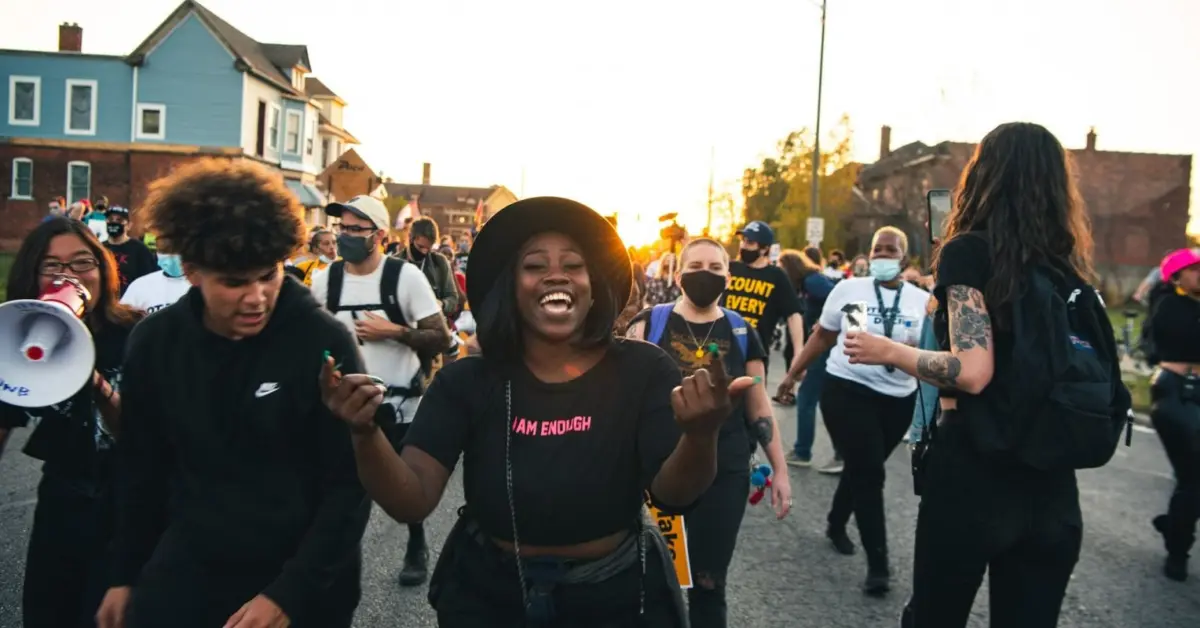
During public demonstrations and memorial gatherings—including emotional chants led at Wells’s funeral asserting that "his life matters"—Crump has emphasized that the state’s failure to determine a cause of death does not equate to the absence of foul play or negligence. By demanding a federal investigation, the legal team is signaling that local institutions may lack the objectivity, resources, or political will to thoroughly investigate high-stakes cases involving young Black men. They contend that true justice requires federal oversight to ensure no stone was left unturned.
Future Outlook: Translating Grief into Systemic Reform
As the nation looks toward upcoming election cycles and legislative sessions, the trajectory of cases like Nolan Wells’s points toward a growing movement connecting personal tragedy with structural political reform.
The Power of Local Accountability
While federal interventions and high-profile civil lawsuits command national headlines, experts stress that the most immediate levers of accountability remain local. The officials who dictate how investigations are handled—district attorneys, county sheriffs, coroners, and medical examiners—are frequently elected positions or roles directly shaped by local governance.
- District Attorneys: Possess absolute discretion over which evidence is presented to a grand jury and how aggressively a case is prosecuted.
- Sheriffs: Oversee the day-to-day operations of the primary investigative agencies responding to sudden deaths.
- Coroners and Medical Examiners: Determine official causes of death, with structural independence varying wildly by county lines.
Transforming these offices requires an engaged electorate that looks past top-tier national races to scrutinize the platforms and records of down-ballot candidates. Communities are increasingly demanding structural reforms, such as mandatory independent second autopsies funded by the state in cases of suspicious "undetermined" deaths, and greater transparency in grand jury proceedings.
Sustaining Engagement Beyond the Ballot Box
True systemic change requires endurance. Advocates warn against "cyclical engagement," where public outrage peaks immediately following a tragedy or an election day, only to dissipate into apathy afterward. Sustainable healing, as framed by community psychologists, relies on collective resilience—attending school board meetings, monitoring county budget allocations for law enforcement training, supporting grieving families through sustained advocacy, and holding elected officials accountable long after the ballots have been counted.
Nolan Wells was 18 years old—an age of transition, brimming with potential, and standing on the threshold of full civic participation. Though his life was cut short before he could cast his first ballot, his memory is now serving as a powerful catalyst. By refusing to let his story fade into administrative obscurity, his family and community are ensuring that his voice echoes loudly in the very rooms where power, policy, and justice are shaped.