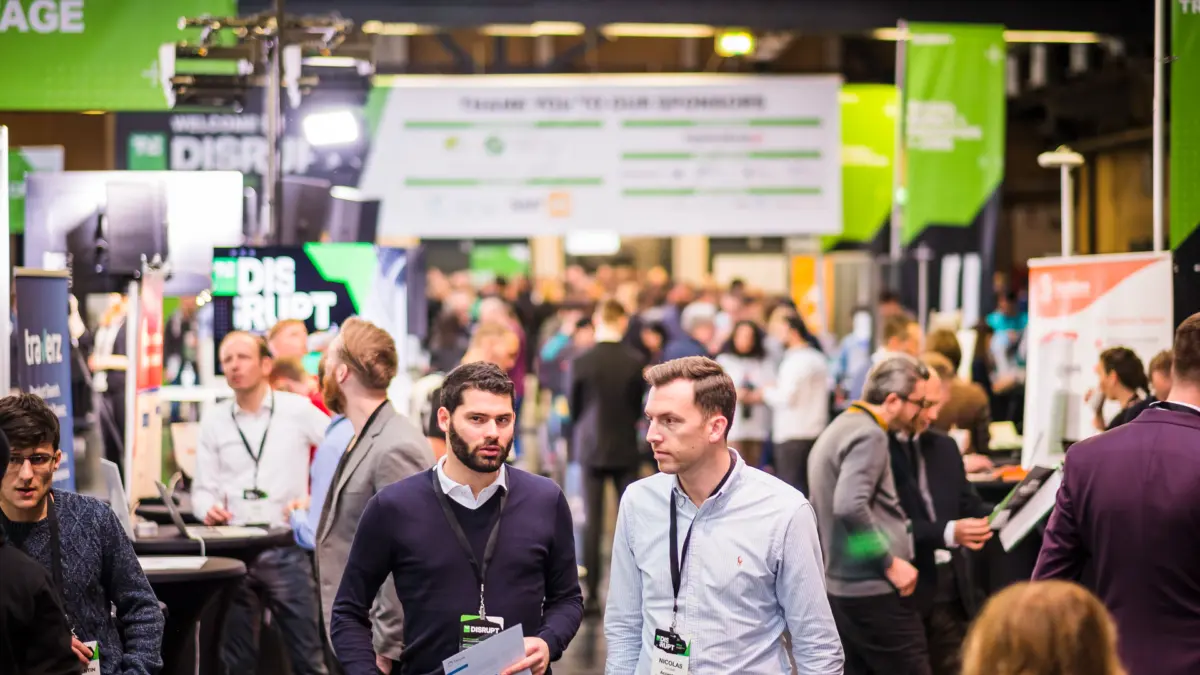
Executive Overview
As the global technology sector navigates a complex macroeconomic landscape marked by shifting venture capital dynamics, the premium on early-stage "discovery" has never been higher. Against this backdrop, TechCrunch Disrupt 2026 is positioning itself as the critical focal point for the next generation of technological breakthroughs. Scheduled to take place from October 13–15, 2026, at San Francisco’s Moscone West, the event is projected to convene over 10,000 founders, investors, and operators.
At the heart of this year’s assembly is a fundamental question facing the tech ecosystem: How do market participants identify genuine, paradigm-shifting innovations before they are priced out by mainstream consensus?
With the early-bird registration deadline fast approaching on September 25, 2026, at 11:59 p.m. PT—offering tier-based savings of up to $200, alongside strategic incentive structures such as a 50% discount on secondary tickets and 30% off group registrations—the rush to secure access highlights a broader industry trend. In an era where speculative hype cycle curves are compressing, physical curation spaces like Disrupt’s Startup Battlefield 200 have evolved from mere promotional showcases into vital, high-yield intelligence-gathering hubs for the global venture community.
Detailed Chronology: The Road to Disrupt 2026
The path to TechCrunch Disrupt 2026 is defined by a highly structured operational and curation timeline designed to filter thousands of global applications down to a concentrated cohort of high-potential startups.
[Applications & Curation Phase]
       │
       ▼
[September 25, 2026 (11:59 PM PT)] ──► Early-Bird Pricing & Registration Deadline
       │
       ▼
[October 13, 2026] ──────────────────► Day 1: Startup Battlefield 200 Exhibition Opens
       │
       ▼
[October 14, 2026] ──────────────────► Day 2: Top 20 Finalists Selected & Live Pitches Begin
       │
       ▼
[October 15, 2026] ──────────────────► Day 3: Finalist Pitches, Jury Deliberation & Disrupt Cup Ceremony
The Selection and Curation Funnel
Months before the doors open at Moscone West, TechCrunch’s editorial team and industry analysts engage in a rigorous vetting process. Startups from around the globe submit exhaustive data regarding their proprietary technology, market addressability, founder backgrounds, and early operational metrics.

Unlike standard trade shows where exhibition space is purely transactional, the Startup Battlefield 200 cohort is hand-selected. This editorial gatekeeping ensures that the 200 companies exhibiting on the show floor represent a highly vetted cross-section of the global early-stage landscape.
The Three-Day Operational Matrix
Once onsite in San Francisco, the event unfolds across a meticulous three-day sequence:
- Day 1 (October 13): The Discovery Phase. The exhibition floor opens, allowing the 200 selected startups to showcase their products directly to attendees. Investors and corporate development executives utilize this period for targeted scouting, direct founder engagement, and initial product demonstrations.
- Day 2 (October 14): The Competitive Winnowing. From the initial pool of 200, a select group of 20 finalists is elevated to the main Disrupt Stage. These teams present live, high-stakes pitches to panels of top-tier venture capitalists and industry experts.
- Day 3 (October 15): The Grand Finale. The final pitches conclude, leading to intense deliberation by the judging panel. The event culminates in the awarding of the prestigious Disrupt Cup and a $100,000 equity-free cash prize to the champion, signaling to the broader market which company has successfully defended its thesis under intense scrutiny.
Supporting Context & Metrics: The Economics of the Battlefield
To understand why the tech sector continues to anchor its autumn calendar around Disrupt, one must examine the historical and quantitative track record of the Startup Battlefield program.
The $32 Billion Alumni Legacy
The true metric of any startup accelerator or showcase lies in its long-term survival and capitalization rates. Since its inception, Startup Battlefield alumni have collectively raised more than $32 billion in follow-on funding.
The program’s hit rate is illustrated by its list of alumni, many of which transitioned from obscure, early-stage presenters into cornerstone infrastructure of the modern digital economy:

| Company | Battlefield Era Status | Current Market / Exit Status |
|---|---|---|
| Dropbox | Early-stage cloud storage prototype | Publicly traded industry standard |
| Discord | Nascent gaming communication platform | Ubiquitous community infrastructure valued in the billions |
| Cloudflare | Early web security & performance tool | Enterprise security giant protecting global internet traffic |
| Fitbit | Wearable hardware pioneer | Acquired by Google |
| Mint | Early personal finance aggregator | Acquired by Intuit |
| Trello | Novel visual collaboration tool | Acquired by Atlassian |
This historical context demonstrates that the "Discovery" theme of Disrupt is not merely a marketing catchphrase; it is a documented pipeline for venture-scale returns.
[Battlefield Applications] ──► [Selected Battlefield 200] ──► [Top 20 Finalists] ──► [1 Disrupt Cup Winner]
                                        │
                                        └─► Historical Result: $32B+ in Cumulative Funding Raised
The Dynamics of Pattern Recognition in 2026
In the current venture landscape, individual company pitches are useful, but the aggregate data of the Battlefield 200 cohort offers a broader strategic benefit. By observing 200 early-stage companies simultaneously, analysts can identify macro-level trends:
- Technological Democratization: Observing which developer tools and infrastructure APIs are being universally adopted by founders to build their products.
- Market Reorientation: Tracking how legacy enterprise problems are being re-architected using novel approaches, such as decentralized protocols or specialized AI agents.
- Capital Efficiency: Evaluating how modern early-stage teams structure their operations and burn rates in a high-interest-rate environment compared to previous tech cycles.
For institutional investors, this concentration of startups provides a rare opportunity to calibrate their investment theses against real-world data points, shifting their approach from reactive deal-hunting to proactive thematic investing.
Official Perspectives: Curation, Strategy, and Scale
The strategic value of Disrupt 2026 is reinforced by the professionals who design and execute the event’s programming. The alignment of marketing strategy, editorial curation, and startup enablement is critical to maintaining the event’s high standards.
Jessica Barrera, a key figure at TechCrunch Events with a background in tech marketing dating back to 2017, emphasizes the importance of providing scalable opportunities for early-stage companies:

"Navigating Silicon Valley’s complex ecosystem requires more than just capital; it demands visibility, network density, and the right platform to scale. Our objective with Disrupt 2026 is to lower the barrier to entry for high-potential founders, giving them direct access to the decision-makers who can catalyze their growth trajectory."
Furthermore, TechCrunch maintains a strict wall of editorial independence regarding the Startup Battlefield 200 selection process. While corporate sponsorships and paid exhibition options exist elsewhere within the venue, the core Battlefield cohort cannot purchase their way onto the roster. This editorial integrity ensures that investors on the floor are evaluating startups selected purely on merit, technical viability, and market potential.
This commitment to quality is what attracts top-tier venture partners to the judging panels. The live Q&A sessions on the Disrupt Stage serve as an educational masterclass for attendees, revealing the precise risk vectors, unit economics, and competitive dynamics that veteran investors focus on when evaluating a business.
Future Outlook: The Next Wave of Tech Paradigms
As the industry looks toward the late 2020s, the innovations showcased at Disrupt 2026 are poised to define the next major market cycles. Several key sectors are expected to dominate the conversation at Moscone West:
The Convergence of Hardware and AI
While software-as-a-service (SaaS) remains a fundamental business model, the integration of advanced artificial intelligence into physical systems—ranging from edge computing devices to autonomous logistics and robotics—is emerging as a primary growth sector. The Startup Battlefield 200 is expected to feature a significant shift toward companies solving the physical-digital bottleneck.

Deep Tech and Applied Science
With traditional software markets highly saturated, founders are increasingly tackling complex, hard-science challenges. Expect to see early-stage teams presenting breakthroughs in:
- Novel materials and synthetic biology applications.
- Decarbonization technologies and grid-scale energy storage solutions.
- Next-generation quantum computing frameworks and specialized silicon architecture.
The Evolution of the Startup Epicenter
Despite frequent debates regarding geographical decentralization, San Francisco remains the undisputed capital of early-stage venture activity. Hosting Disrupt 2026 at Moscone West reinforces the city’s role as the primary physical hub for global tech talent.
For founders, operators, and investors looking to secure their position in this evolving landscape, the September 25 registration deadline represents a critical decision point. Access to this concentrated ecosystem of capital, talent, and intelligence remains one of the most effective ways to prepare for the technological shifts ahead.