Executive Overview
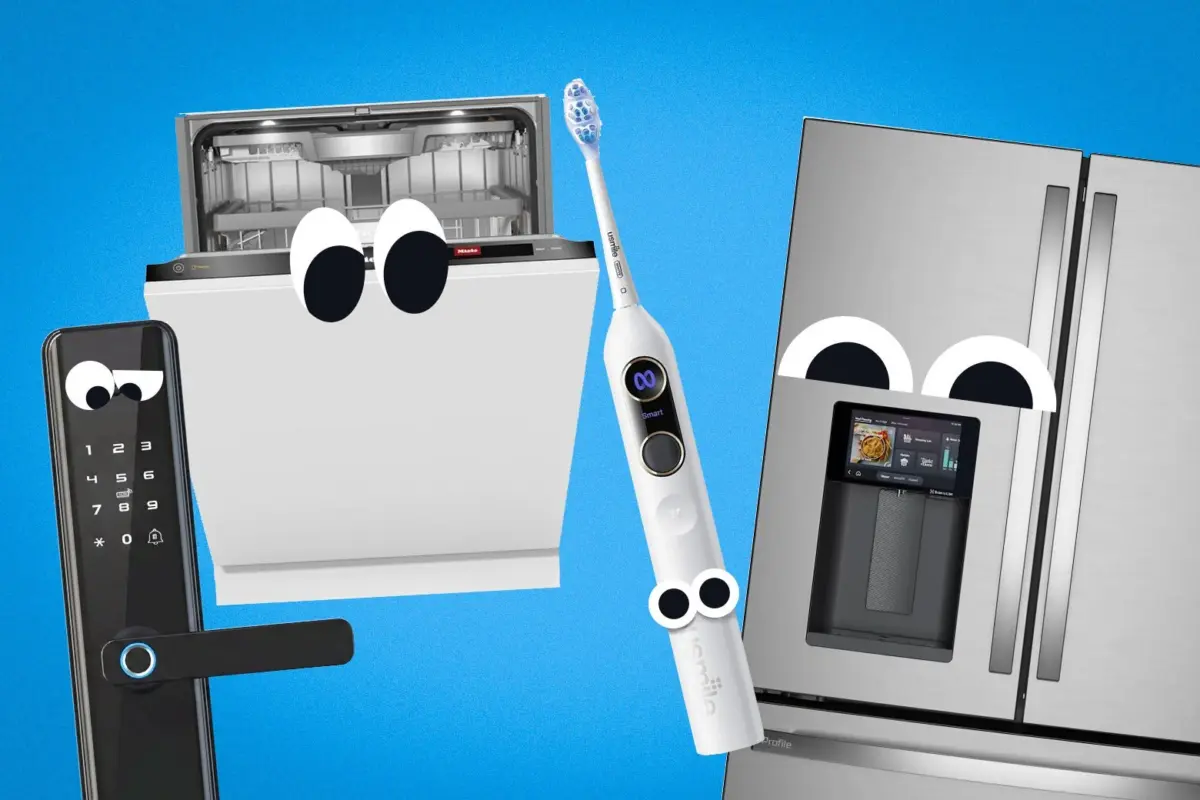
The modern smart home is no longer content merely keeping your milk cold or your laundry dry; it now demands visual oversight of your private life. Recent debuts from major appliance manufacturers have thrust consumers into an era of hyper-quantified domesticity. At the international home appliance exhibition IFA 2026 in Berlin, industrial giant Miele introduced a high-tech smart dishwasher featuring an interior camera designed to monitor cleaning performance and optimize washing cycles. Simultaneously, Dyson unveiled a $500 electric toothbrush equipped with a 100,000-pixel macro-lens camera, streaming a live feed of your dental hygiene routine directly to your smartphone.
These devices join a growing ecosystem of household apparatuses—including smart ovens, AI-powered refrigerators, and internet-connected doorbells—that utilize onboard cameras to illuminate the previously unseen corners of daily life. Proponents argue these tools offer unprecedented optimization, energy efficiency, and preventative health benefits. However, this hardware proliferation arrives at a cultural crossroads. Consumers express intense anxiety regarding corporate data harvesting, public surveillance, and AI training models, yet they increasingly welcome frictionless, automated conveniences into their most intimate spaces. This article examines the technological creep of domestic cameras, the psychological drivers fueling our addiction to busyness, the tension between data privacy and seamless living, and where this relentless march toward total visibility ultimately leads.
Detailed Chronology: The Evolution of Domestic Surveillance
The integration of optical sensors into household objects did not happen overnight. It represents a steady, strategic creep of industrial design and software ecosystems over the past two decades.
- Early 2000s – The Connected Era Begins: The earliest "smart" appliances focused primarily on Wi-Fi connectivity and remote diagnostics, allowing technicians to check error codes without a home visit. Cameras remained strictly the domain of dedicated home security systems.
- The 2010s – The Rise of the Smart Doorbell: Consumer comfort with in-home optics shifted drastically with the normalization of smart doorbells and indoor security cameras. Brands like Ring and Nest accustomed homeowners to monitoring their front porches and living rooms from mobile apps while away at work.
- Late 2010s to 2020s – Kitchen Convergence: Tech conglomerates and appliance makers targeted the kitchen. Smart refrigerators experimented with internal inventory-tracking cameras designed to monitor grocery stocks and predict shopping patterns. Smart ovens integrated computer vision to identify foods and automatically adjust cooking times and temperatures.
- September 2026 – The Peak of Micro-Optics (IFA Berlin): At the IFA 2026 exhibition, Miele redefined dishwasher technology by placing a camera inside the wash chamber. This sensor evaluates the dirt levels of plates and silverware in real-time, tailoring water pressure, temperature, and detergent usage to meet personal cleanliness profiles.
- The Fall of 2026 – The $500 Visionary Toothbrush: Dyson pushed the boundaries of personal care technology by releasing an electric toothbrush that integrates a macro-lens camera. Rather than relying on simple vibration metrics, the device maps and livestreams the interior of the user’s mouth, targeting interdental spaces to prevent future dental decay.
Supporting Context & Metrics: The Psychology of Busyness and Control
To understand why consumers are willing to purchase appliances that watch them eat, wash, and brush, one must examine the socio-cultural architecture of modern life. We live in an epoch defined by an addiction to busyness. Cultural velocity has accelerated dramatically; trend cycles, news ecosystems, and digital content move through our peripheral awareness at unprecedented speeds.
In this environment of perpetual acceleration, inefficiency feels like a moral and financial failure. Consider the downstream consequences of minor domestic errors:
- The Dishwasher Paradox: If a dishwasher cycle fails to clean a pan thoroughly, the user must re-wash it by hand, wasting precious minutes and running a second cycle that incurs financial and environmental costs.
- The Dental Deficit: Failing to brush a hard-to-reach molar translates directly into expensive dental bills and physical discomfort down the line.
- The Productivity Treadmill: Every domestic friction point represents potential lost labor or lost leisure time.
Even as counter-movements emerge—such as consumers picking up analog hobbies, solving sudoku puzzles, or practicing "frictionmaxxing" to reintroduce physical resistance into their lives—the overarching cultural pulse demands control. When the outside world feels chaotic, hyper-managing the minutiae of the kitchen and the bathroom provides a psychological illusion of absolute mastery.
Furthermore, history demonstrates that society consistently resists, submits to, and eventually relies on labor-saving innovations. In the 18th century, early adopters of the umbrella in Britain were publicly mocked as weak. Elevators, escalators, and laptop computers all faced intense skepticism regarding safety, etiquette, and social decay before becoming invisible necessities of modern infrastructure.
Official Statements & Industry Perspectives
Manufacturers defend these intrusive designs not as surveillance tools, but as essential partners in domestic optimization.
"Our goal is the elimination of household decisions," noted representatives from Miele during their press rollout at IFA 2026. By utilizing internal machine-vision systems, appliances can dynamically adapt to real-world variables rather than relying on rigid, pre-programmed cycles. Proponents emphasize that a dishwasher camera ensures optimal energy and water efficiency, tailoring resource usage down to the precise soil level of each load.
In the personal care sector, manufacturers frame optical integration as preventative healthcare. Dyson’s engineering teams argue that traditional electric toothbrushes leave too much to guesswork. By providing a live, magnified feed of the brushing process, the device bridges the gap between bi-annual professional cleanings, empowering users to correct blind spots in real-time.
Conversely, consumer rights advocates and privacy experts voice deep alarm. The proliferation of connected devices creates a sprawling attack surface for malicious actors and expands the data portfolios of corporate entities. Critics point out a profound dissonance in the current consumer market: while buyers desperately crave control over their environments, they simultaneously harbor intense desires for privacy. This tension manifests in physical pushback—such as citizens smashing automated traffic and surveillance cameras on city streets, branding AI-powered smart glasses as "pervert glasses," and circulating widespread warnings regarding corporate data harvesting for AI training models.
Future Outlook: Where Do We Go From Here?
The emergence of the camera-equipped toothbrush and dishwasher raises critical questions about the future trajectory of consumer technology and behavioral psychology.
- The Normalization Curve: While a $500 camera-toothbrush or a heavily monitored dishwasher may currently occupy a niche luxury market with limited immediate adoption, foundational technology tends to trickle down. Features that debut as expensive novelties frequently become standard industry baselines within a decade.
- Erosion of the Unmonitored Space: As cameras migrate from public thoroughfares into private hallways, kitchens, and bathrooms, the boundary of the unmonitored self shrinks. The psychological impact of living under perpetual self-surveillance—even when administered by benevolent appliances designed to clean our teeth—remains largely unexplored.
- The Price of Agency: Consumers face a stark dichotomy. Rejecting these technologies preserves privacy but risks falling behind in a culture that increasingly rewards speed, efficiency, and data-driven optimization. Accepting them trades away personal boundaries for the promise of a frictionless, perfectly manicured existence.
Ultimately, your toothbrush and your dishwasher are not instruments of an immediate, authoritarian police state; rather, they are voluntary additions to a culture that equates self-knowledge with self-control. As these devices quietly integrate into our daily routines, they force us to confront an uncomfortable reality: our willingness to sacrifice privacy is often directly proportional to our exhaustion with the demands of modern life.