Executive Overview
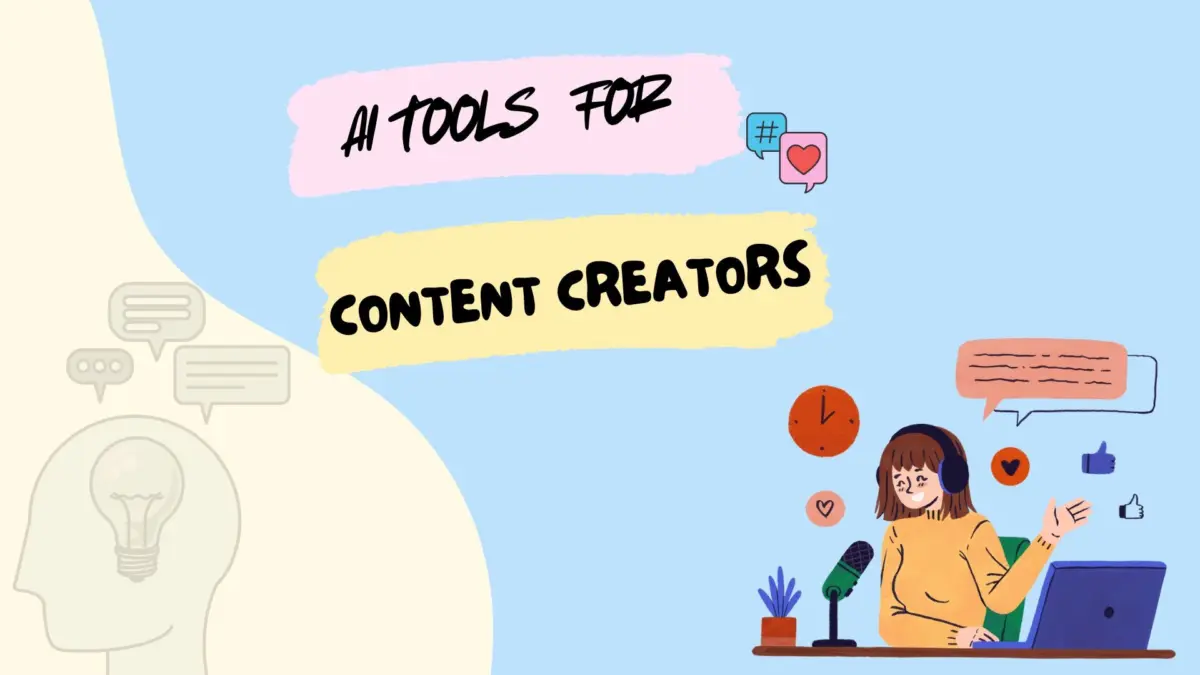
The digital content ecosystem of 2025 bears little resemblance to the landscape of just a few years ago. Driven by rapid advancements in machine learning, generative neural networks, and natural language processing, artificial intelligence has shifted from a novel experiment to the foundational infrastructure of modern media production. For social media influencers, digital marketers, and enterprise business owners alike, keeping pace with audience demand for fresh, high-impact content has transitioned from an operational hurdle into an automated advantage.
Today, creators are no longer judged solely by their manual output, but by their ability to orchestrate sophisticated AI ecosystems. These technologies do not replace human ingenuity; rather, they serve as high-velocity catalysts, lifting the heavy burdens of ideation, transcription, rendering, and optimization. This comprehensive market overview examines the top ten AI tools defining the content creation landscape in 2025, detailing their core competencies, ideal use cases, and strategic value for modern creators.
Detailed Chronology: The Evolution of AI-Assisted Creation
To understand where the industry stands in 2025, it is vital to trace how generative technology matured into an indispensable enterprise and creator asset.
- 2020–2021: The Emergence of Primitive Generation. Early large language models and basic text-to-image generators captured public imagination. While innovative, their outputs frequently required extensive human correction, hallucination filtering, and manual editing before they were suitable for public consumption.
- 2022–2023: Multimodal Breakthroughs. Platforms began breaking down silos between text, audio, and visual data. Creators experienced the sudden proliferation of coherent text generation, distinct synthetic voices, and vector-to-image synthesis that drastically lowered the barrier to entry for digital media.
- 2024: Workflow Integration and Real-Time Manipulation. The focus pivoted from standalone generation to seamless workflow integration. Tools began embedding directly into standard editing suites, offering semantic video editing, zero-shot voice cloning, and precise style controls that respected specific brand guidelines.
- 2025: Autonomous Orchestration and Hyper-Personalization. Today, platforms act as cooperative agents. They analyze platform-specific trends, dynamically alter parameters to match shifting audience psychology, and generate fully realized, multi-channel campaigns from minimal human prompts.
The Top 10 AI Tools Transforming Content Creation in 2025
1. ChatGPT: Content Ideation and Advanced Scriptwriting
- What Makes It Special: ChatGPT has matured past basic text prompting into a comprehensive content creation assistant. By bridging advanced language comprehension with specialized structural optimization, it maintains consistent brand voices and deep industry expertise across massive volumes of text.
- Core Capabilities: Context-aware brainstorming, long-form article structuring, real-time tone adjustment, and programmatic scriptwriting for diverse platforms.
- Ideal User Profile: Professional content writers, inbound marketers, and corporate communication teams requiring consistent, high-yield written outputs.
2. Canva Magic Studio: Visual Design and Social Media Assets
- What Makes It Special: Canva Magic Studio democratizes graphic design by pairing an intuitive drag-and-drop interface with robust generative AI. The platform autonomously interprets design principles, ensuring generated assets adhere to established brand aesthetics without requiring a background in fine art.
- Core Capabilities: Text-to-image generation within layout grids, automated background removal, one-click resizing for multi-platform deployment, and intelligent template suggestions.
- Ideal User Profile: Small business owners, social media managers, and solo creators needing rapid, professional-grade visual assets.
3. RunwayML: Next-Generation Video Synthesis and Editing
- What Makes It Special: RunwayML stands as a premier video creation powerhouse, bridging cinematic effects with consumer accessibility. Its paradigm-shifting manipulation features—such as altering environmental conditions via text prompts or executing clean, real-time object removal—remove traditional technical bottlenecks from video production.
- Core Capabilities: Text-to-video generation, motion brush controls for localized animation, frame interpolation, and advanced green-screen replacement.
- Ideal User Profile: Independent filmmakers, YouTube creators, and commercial video editors seeking accelerated post-production workflows.
4. Midjourney: Cinematic and Artistic AI Image Generation
- What Makes It Special: Midjourney continues to set the standard for aesthetic fidelity, mastering the fine nuances of photographic lenses, lighting setups, and artistic movements. Its capacity to interpret complex creative briefs and preserve visual consistency across multiple generations makes it the premier choice for distinctive branding.
- Core Capabilities: Hyper-realistic image rendering, style reference integration (
--sref), parameter-driven aspect ratio control, and multi-image variations. - Ideal User Profile: Digital artists, creative directors, and digital marketers demanding elite-tier visual collateral.
5. Synthesia: Scalable AI Avatar-Based Video Production
- What Makes It Special: Synthesia eliminates the friction of traditional video shoots by allowing creators to generate human-presenter videos using hyper-realistic AI avatars. With synchronized gestures, lifelike micro-expressions, and instant multilingual translation, it scales localized corporate communication effortlessly.
- Core Capabilities: Custom avatar generation, multi-language speech synthesis, automated script-to-video conversion, and interactive video embedding.
- Ideal User Profile: Corporate trainers, educators, and global marketing teams scaling personalized video output.
6. Descript: Semantic Audio and Video Editing
- What Makes It Special: Descript reimagines audio and video post-production by translating media files directly into editable text transcripts. Editing a podcast or interview is now as straightforward as highlighting and deleting sentences in a word processor.
- Core Capabilities: Automatic speech-to-text transcription, studio-quality sound enhancement, AI-driven filler-word removal, and voice synthesis patching.
- Ideal User Profile: Podcasters, documentary editors, and remote media production teams prioritizing efficiency.
7. ElevenLabs: Hyper-Realistic Voice Synthesis and Cloning
- What Makes It Special: ElevenLabs has redefined synthetic voice generation by capturing emotional inflection, natural breath pauses, and precise regional accents. Its voice cloning technology empowers creators to generate broadcast-grade voiceovers without renting recording studios.
- Core Capabilities: Zero-shot voice cloning, emotional range adjustment, multilingual dubbing, and high-fidelity text-to-speech output.
- Ideal User Profile: Audiobook narrators, video game developers, and international content creators needing localized voice acting.
8. Tribescaler: Viral Content and Headline Optimization
- What Makes It Special: Tribescaler applies data science to social media copywriting. By dissecting patterns from top-performing viral posts across major platforms, its analytics engine provides actionable frameworks to optimize hooks, headlines, and structural pacing.
- Core Capabilities: Hook generation libraries, viral pattern analysis, thread structure formatting, and engagement metrics forecasting.
- Ideal User Profile: Growth hackers, social media strategists, and influencers focused on audience acquisition and retention.
9. Clickable: Automated Ad Creation and Optimization
- What Makes It Special: Clickable merges analytics with creative automation to streamline paid media campaigns. It audits existing brand assets and rapidly builds platform-optimized ad variations engineered for maximum conversion.
- Core Capabilities: Multi-variant ad generation, automated A/B testing asset layout, compliance checking for ad networks, and performance analytics integration.
- Ideal User Profile: Performance marketers, e-commerce brands, and digital agencies managing large-scale ad spend.
10. Copy.ai: Enterprise-Grade Marketing Copywriting
- What Makes It Special: Copy.ai specializes in high-converting commercial copy. Leveraging deep frameworks in consumer psychology, it automates everything from email sequence drafting to long-form landing page copy while adapting seamlessly to distinct brand guidelines.
- Core Capabilities: Workflow automation for marketing pipelines, dynamic product description generation, sales email sequences, and CRM integrations.
- Ideal User Profile: Enterprise marketing departments, copywriters, and sales organizations scaling conversion-driven content.
Supporting Context & Metrics
The integration of artificial intelligence into the creator economy is no longer a fringe movement; it is an economic imperative. Industry analysts report that creators utilizing specialized AI toolchains have reduced their production time per asset by an average of 55%, allowing them to scale output across multiple social networks simultaneously.
Furthermore, marketing departments incorporating AI video and text solutions have noted up to a 40% increase in campaign ROI, primarily driven by hyper-personalization capabilities and rapid A/B testing cycles. However, this proliferation of content brings its own challenges. With global digital output surging, audience fatigue is a rising concern, placing an even higher premium on original human perspective, authentic brand voice, and rigorous editorial oversight.
Official Statements and Industry Perspective
Thought leaders across the technology and media sectors emphasize that the rise of generative tools marks a fundamental shift in creative labor:
"Artificial intelligence does not usurp human imagination; it removes the mechanical drag from the creative process. The creators who thrive in 2025 are those who treat AI not as a magic button, but as a tireless digital intern capable of executing complex instructions at unprecedented speeds."
— Dr. Elena Vance, Senior Director of Media Technology Research
Industry pioneers note that as baseline content production becomes commoditized through automation, the true differentiator for creators moving forward will be their strategic vision, ethical curation, and the distinct emotional resonance of their storytelling.
Future Outlook
As we look toward the remainder of 2025 and beyond, the trajectory of content creation points toward autonomous, highly integrated agent ecosystems. We can anticipate tools that not only generate assets based on static prompts, but proactively analyze real-time cultural shifts, draft proactive content strategies, and autonomously deploy multi-format campaigns across global markets with minimal human intervention.
For creators, the mandate is clear: embrace experimentation, master the toolchains that align with your strategic goals, and double down on the uniquely human elements of empathy, intuition, and narrative depth. The future of content creation is expansive, dynamic, and limited only by the boundaries of human imagination.
Disclaimer: All features, specifications, and pricing metrics referenced in this article are subject to change by their respective platform operators. This publication contains affiliate partnerships; we may earn a modest commission should you elect to upgrade to premium tiers through our referral links. Pricing data verified as of January 2, 2025.