Executive Overview
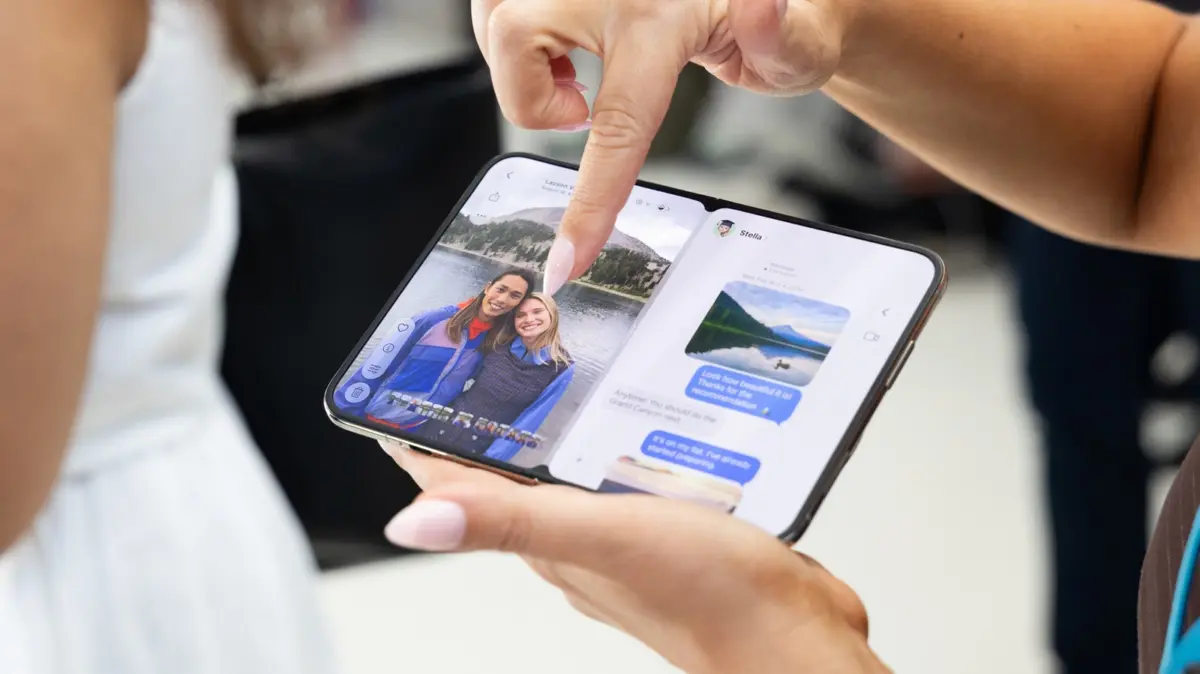
Apple has officially entered the foldable smartphone arena with the much-anticipated announcement of the iPhone Duo, a device that has instantly dominated tech news cycles and reignited industry-wide debate. As consumers and analysts pore over specifications, pricing, and initial impressions, one hardware element has commanded the lion’s share of attention: the display crease.
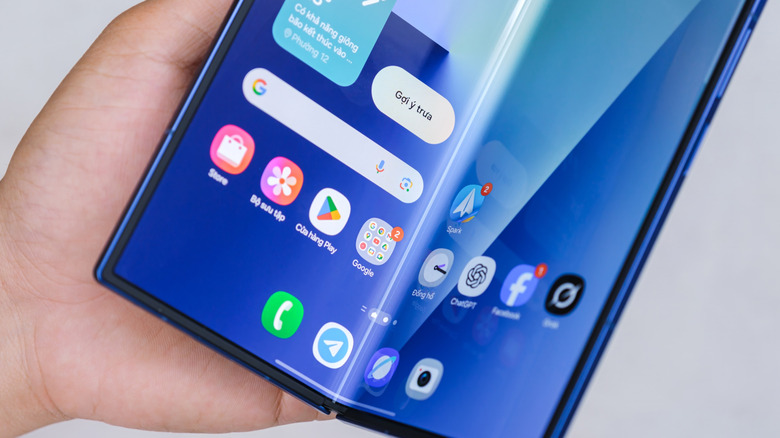
Historically, the dreaded center fold has remained the single greatest architectural compromise of foldable technology. While competitors like Samsung have made incremental strides in minimizing this structural indentation through advanced hinge engineering and flexible ultra-thin glass (UTG), no manufacturer has successfully eradicated it. Apple’s tactical answer to this enduring physics problem comes in the form of a specialized matte nano-texture screen coating, designed to diffuse light and optically mask the depression.
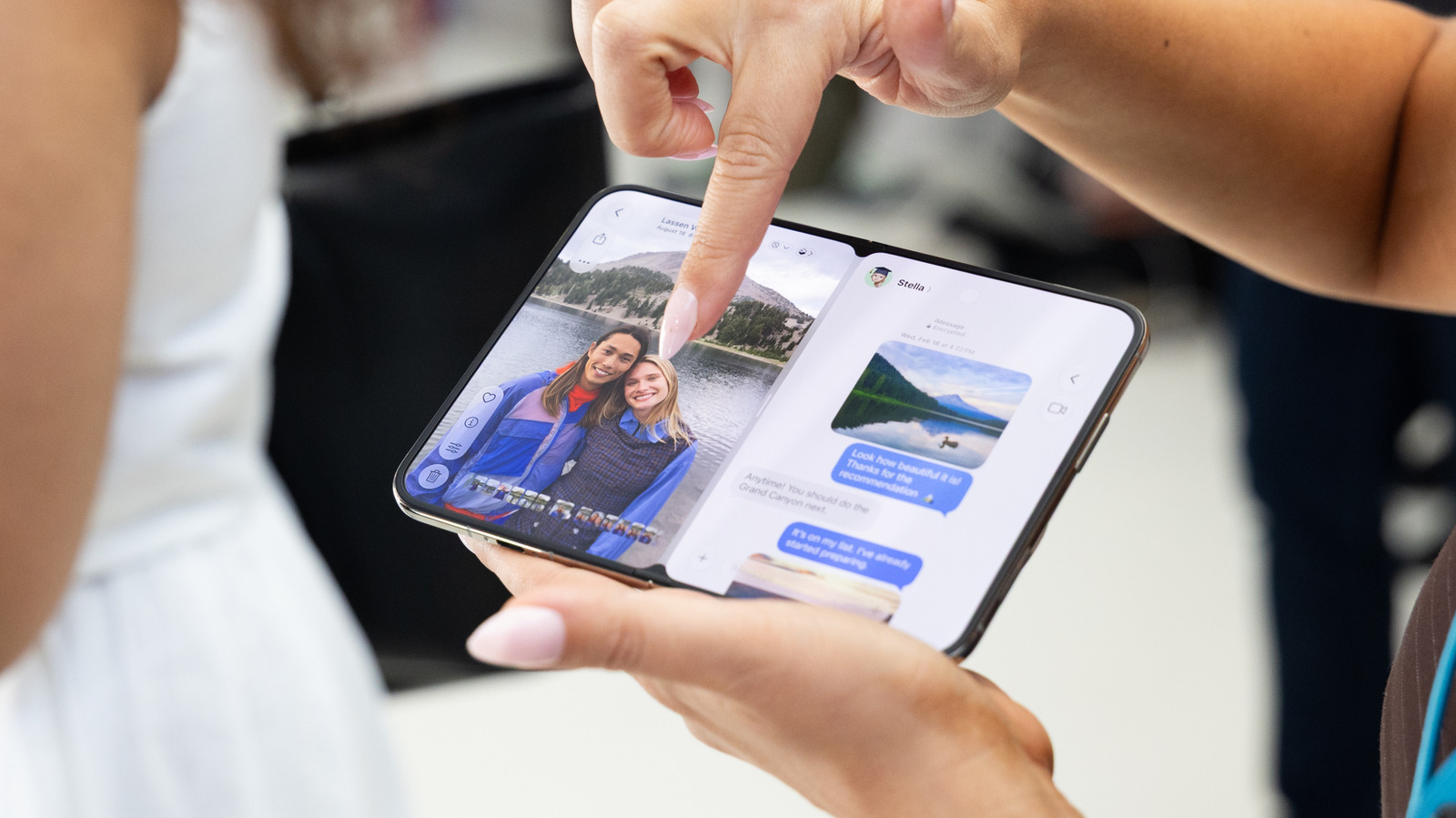
Initial hands-on sessions paint a promising picture, with early observers reporting that the crease is remarkably faint—often described as something easier to detect via tactile feedback than direct visual observation. However, a crucial caveat tempers this initial enthusiasm: we will not know the true visibility or durability of the iPhone Duo’s crease for a long time.
Because foldable displays suffer from cumulative fatigue over thousands of folding cycles, pristine out-of-the-box impressions offer only a transient snapshot. As the iPhone Duo prepares to hit retail shelves, the tech community must wait months—if not years—to determine whether Apple’s innovative optical masking holds up against everyday wear and tear, environmental degradation, and mechanical stress.
Detailed Chronology
To understand the current discourse surrounding the iPhone Duo, it is essential to trace how foldable screen technology and Apple’s secretive development pipeline converged leading up to this monumental release.
- The Early Foldable Era (2019–2021): The commercialization of foldable smartphones by pioneers like Samsung and Royole introduced consumers to a revolutionary form factor. However, these first-generation devices were plagued by aggressive, highly visible central creases, fragile polymer layers, and structural vulnerabilities that made mainstream adoption difficult.
- Iterative Hardware Refinements (2022–2024): Throughout successive generations—culminating in devices like the Samsung Galaxy Z Fold 8—manufacturers refined their drop-mechanics and hinge designs. Screens shipped entirely flat in their packaging, yet the physical indentation inevitably grew more pronounced as users folded and unfolded the panels thousands of times.
- Apple’s Prolonged R&D Phase: While competitors iterated rapidly in public view, Apple spent years filing patents and testing various folding mechanisms in secretive Cupertino laboratories. Analysts frequently noted Apple’s hesitation to enter the market until it could solve the dual problems of structural reliability and visual imperfections.
- The iPhone Duo Announcement (Early 2025): Apple officially unveiled the iPhone Duo, introducing a proprietary foldable panel equipped with a matte nano-texture coating. The device instantly captured global attention, with tech journalists and VIP attendees receiving brief, controlled hands-on opportunities.
- The Pre-Launch Reality Check (Present): With retail availability scheduled for next month, the industry sits in a holding pattern. Reviewers have analyzed the fresh-out-of-the-box hardware, but industry experts emphasize that short-term evaluations cannot account for long-term material fatigue.
Supporting Context & Metrics: The Physics of the Fold
To appreciate the scale of the challenge Apple is attempting to solve, one must examine the underlying mechanics and materials science that govern foldable displays.
The Physics of Material Fatigue
At a fundamental level, folding a screen requires bending a layered stack of materials—including protective films, polarized filters, OLED emissive layers, and a flexible substrate—around a precise radius. When a material undergoes continuous plastic and elastic deformation, it experiences cumulative fatigue.
Even when utilizing advanced polymers or ultra-thin bendable glass, the region directly subjected to the hinge axis undergoes constant molecular stress. Over time, this stress leads to micro-structural settling, which manifests visibly as a permanent indentation or "crease."
[Unfolded State]
Flat OLED Panel ----------------------------------- (0 folds)

[Mid-Life State]
Flat OLED Panel -----___/------------------------- (5,000 folds)
                      ^
               Micro-settling begins

[Aged State]
Flat OLED Panel ------___/------------------------ (25,000+ folds)
                       ^
               Pronounced physical & optical crease
Apple’s Optical Strategy: Nano-Texture vs. Mechanical Eradication
Rather than entirely eliminating the physical depression through purely mechanical means—a feat that continues to elude the entire consumer electronics industry—Apple has deployed an ingenious optical workaround.
The iPhone Duo incorporates a specialized nano-texture surface treatment, historically utilized on high-end desktop displays like the Pro Display XDR and select iPad Pro models. By micro-etching the glass at a nanometer scale, the screen scatters ambient light rather than reflecting it mirror-style.
In the context of a foldable display, this diffusion is transformative. Because sharp reflections are what typically highlight the uneven contours of a crease under office lights or direct sunlight, diffusing the light effectively blurs the visual boundaries of the indentation.
- Visual Impact: Early hands-on reports indicate that under normal lighting conditions, the crease is virtually invisible to the naked eye.
- Tactile Reality: Reviewers noted that running a fingertip across the center of the display still reveals a subtle dip, proving that the physical valley remains present underneath the nano-textured surface.
Comparative Wear Metrics across the Industry
To contextualize Apple’s approach, consider how competing devices degrade over standard lifecycle benchmarks:
| Manufacturer / Model | Out-of-the-Box Crease Visibility | Crease Visibility After 10,000 Folds | Primary Mitigation Strategy |
|---|---|---|---|
| Samsung Galaxy Z Fold 8 | Negligible to Low | Moderate to High | Drop-hinge mechanism & ultra-thin glass |
| Google Pixel Fold Series | Low | Moderate | Custom fluid-friction hinge |
| Apple iPhone Duo | Extremely Low (Masked) | Unknown (Pending Long-term Testing) | Nano-texture matte coating & custom hinge |
Official Statements and Industry Insights
Apple leadership has leaned heavily into the narrative of uncompromised durability and meticulous engineering regarding the iPhone Duo.
Speaking with industry trade publications, Apple’s newly appointed Vice President of Hardware Engineering expressed immense pride in the device’s structural integrity. Addressing the engineering team’s design philosophy, the executive emphasized that every millimeter of the hinge mechanism and display stack was subjected to rigorous stress testing designed to simulate years of aggressive daily use.
Furthermore, Apple executives have consistently highlighted their skepticism toward quick-fix aftermarket solutions—notably remarking that seeing consumers apply third-party screen protectors to delicate displays "makes my skin crawl," underscoring why Apple chose to integrate a factory-engineered nano-texture solution rather than leaving surface protection to the end-user.
Independent analysts and veteran reviewers, however, urge caution. While praising Apple’s out-of-the-box execution, technical commentators emphasize that marketing claims and controlled laboratory stress tests do not always align with the chaotic realities of consumer usage—which includes accidental drops, pocket lint, abrasive particulate matter, and extreme temperature fluctuations.
Future Outlook: The Road Ahead for Foldable Displays
As the iPhone Duo prepares to hit store shelves next month, the tech ecosystem stands at a critical juncture. The coming months will transition the discourse from manufacturer claims and controlled previews to hard, empirical reality.
1. The Creator Torture Tests
As soon as retail units land in the hands of the public, prominent technology content creators and independent reviewers will subject the iPhone Duo to extreme durability testing. Automated robotic folding arms, drop tests on concrete, and abrasive scratch testing will push the nano-texture coating and hinge assembly well beyond standard consumer parameters. These tests will provide the first real data on how quickly the crease begins to degrade under duress.
2. Real-World Consumer Adoption
Laboratory metrics matter very little compared to how a device performs in a pair of jeans pockets during a humid summer commute. Over the next three to six months, early adopters will provide invaluable feedback regarding whether the nano-texture coating retains its anti-reflective and optical-masking properties after months of finger oils, cleaning wipes, and constant opening and closing.
3. Industry Imitation and the Competitive Response
If Apple’s nano-texture approach proves successful in maintaining long-term aesthetic concealment of the crease, rival manufacturers will inevitably race to adopt similar matte display technologies. The race to eliminate the foldable crease—or at least render it completely imperceptible—will dictate the hardware roadmap for premium mobile devices through the remainder of the decade.
Conclusion
Apple has undeniably engineered one of the most compelling foldable devices to date, successfully mitigating the visual impact of the industry’s most stubborn flaw right out of the box. Yet, physics cannot be entirely cheated. Until the iPhone Duo has logged millions of collective folds in the hands of everyday users, the true durability of its nano-texture screen remains an open question—one that only time can answer.