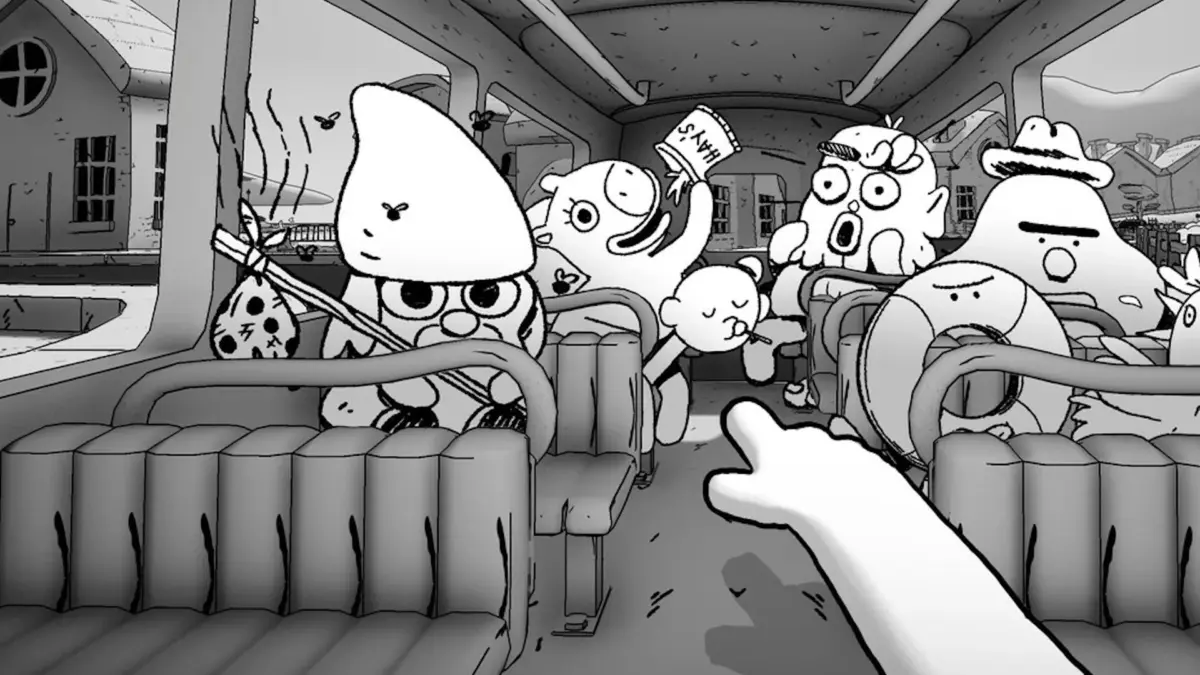
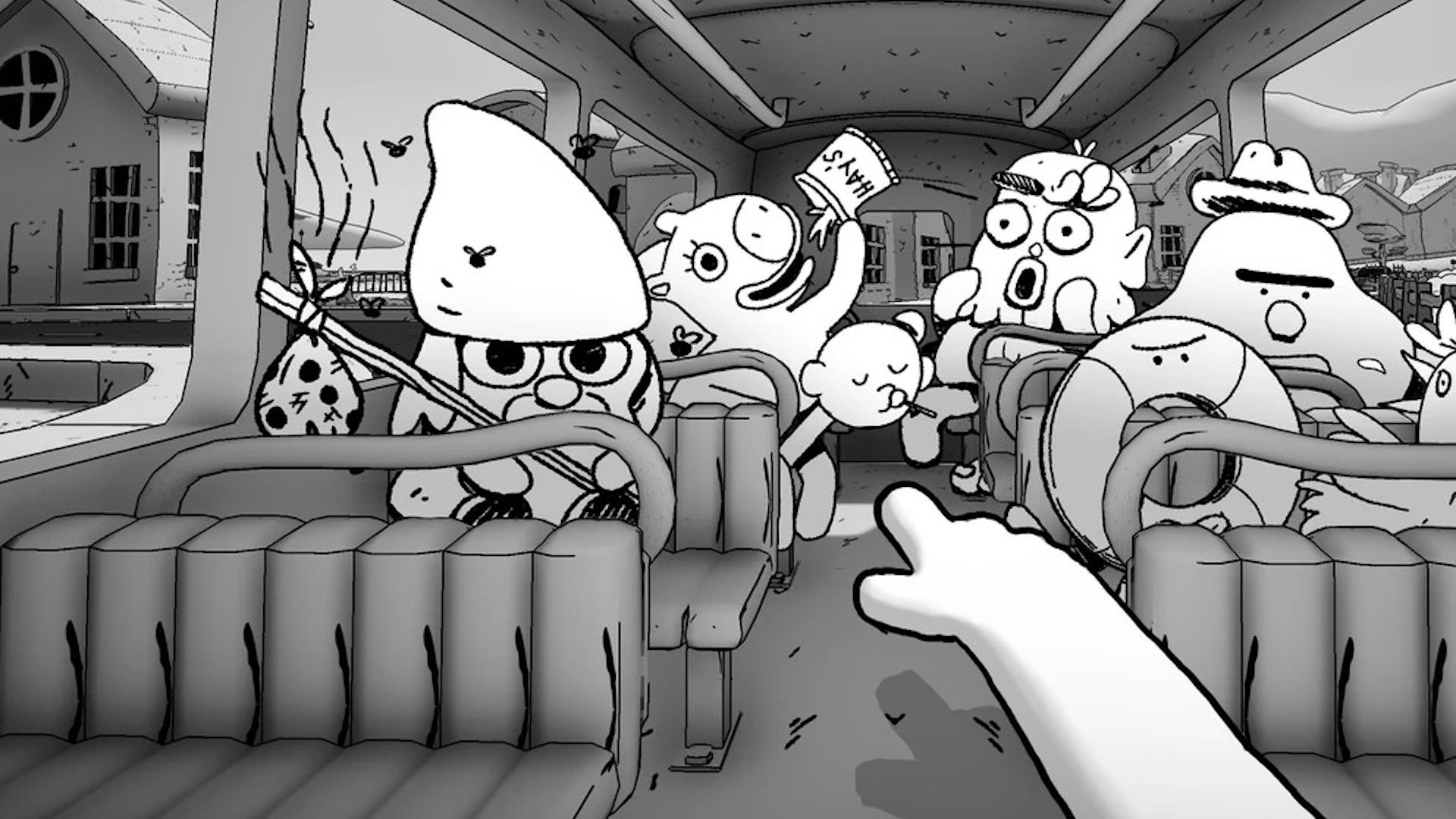
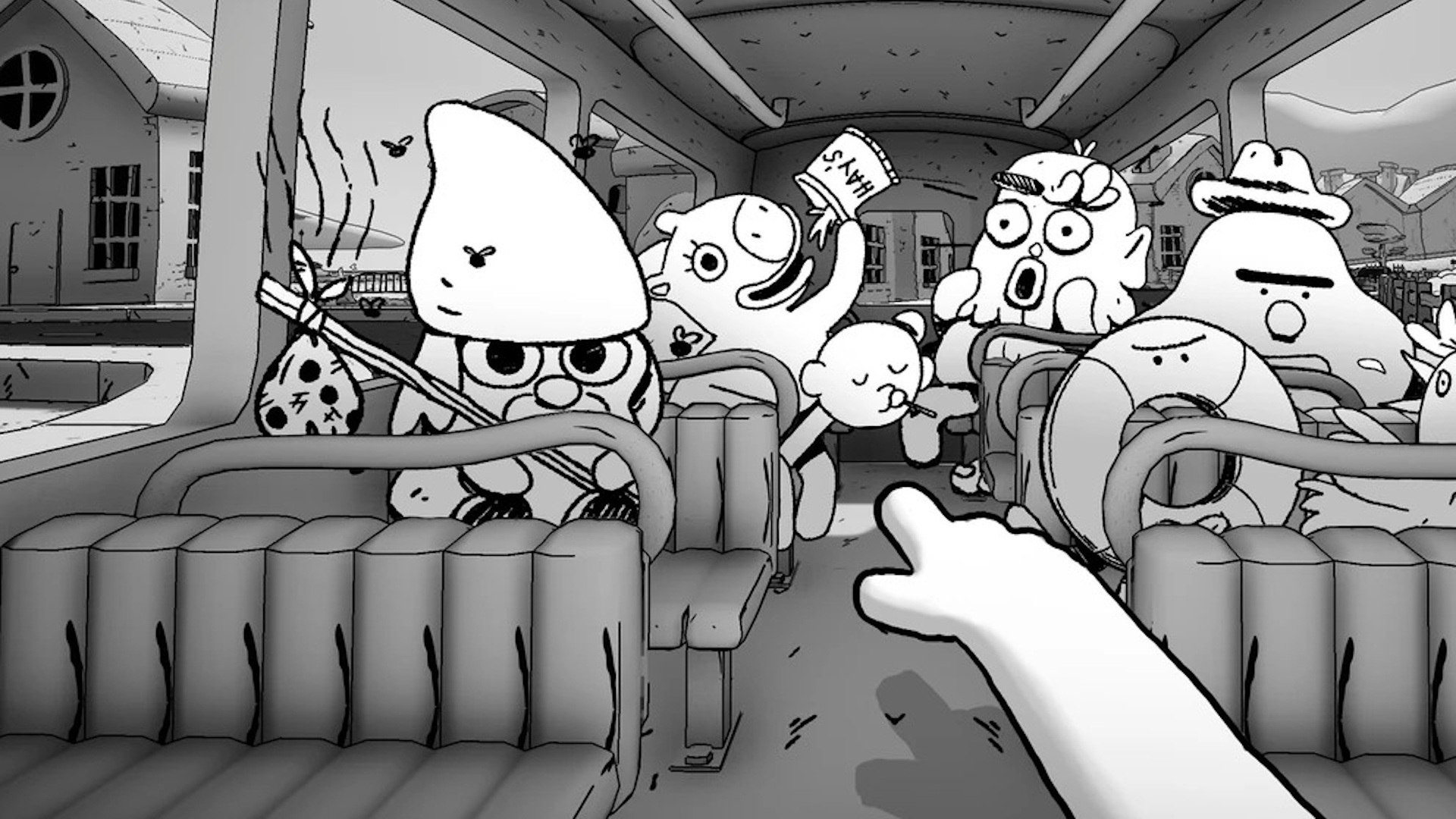
The landscape of the independent video game industry is undergoing a seismic realignment. Less than three months after Xbox severed ties with legendary developer Double Fine Productions—a high-profile casualty of a sweeping corporate "streamlining" initiative orchestrated by Microsoft CEO Satya Nadella—the studio has emerged from the fog of restructuring with a renewed sense of creative autonomy. Demonstrating remarkable agility, the studio has announced its first post-Xbox release: Thank You Bus Driver, an unconventional, hyper-focused driving simulation scheduled to launch on October 14.
Described by the developers as a collision of Crazy Taxi and Papers, Please, Thank You Bus Driver represents a return to the scrappy, experimental roots that originally defined Double Fine. Rather than pursuing massive, triple-A production cycles or leaning on the predictable comforts of legacy franchises, the studio is introducing a new publishing banner: Double Fine Action Labs. Spearheaded by studio head Tim Schafer, this subsidiary label is designed specifically to house low-budget, highly experimental titles born from rapid-development environments.
This strategic pivot arrives at a critical juncture. Following Microsoft’s controversial decision to shutter multiple internal studios and enact thousands of layoffs across its gaming division, independent developers are increasingly forced to re-evaluate their relationships with major corporate conglomerates. Double Fine’s rapid pivot back to self-publishing and alternative production models offers a fascinating case study in post-acquisition resilience. This report examines the timeline of these dramatic industry events, the mechanics and creative ethos behind Thank You Bus Driver, the implications of the newly minted Double Fine Action Labs label, and what the future holds for one of gaming’s most beloved creative houses.
Detailed Chronology: From Microsoft Restructuring to Independence
To understand the context of Thank You Bus Driver, one must retrace the turbulent sequence of events that reshaped Microsoft’s gaming division and forcefully thrust Double Fine back into the independent arena.
The Microsoft "Streamlining" Wave
In early 2024, Microsoft embarked on a aggressive corporate restructuring plan aimed at cutting overhead costs and consolidating its massive entertainment portfolio following its historic acquisition of Activision Blizzard and its existing stable of Bethesda and Xbox Game Studios. Led by Microsoft CEO Satya Nadella and Xbox leadership, the directive prioritized operational efficiency, high-yield intellectual properties, and predictable financial returns.
Throughout successive rounds of layoffs—culminating in a devastating wave that eliminated over 3,200 jobs across the Xbox ecosystem and completely dissolved multiple development studios—questions arose regarding the long-term viability of mid-tier and creatively eccentric studios operating under the corporate umbrella. While Microsoft executives publicly praised the "streamlining" process as a necessary measure for long-term health and agility, the creative community watched with mounting apprehension.
The Severing of Double Fine Productions
Among the casualties of Microsoft’s evolving strategy was Double Fine Productions. Acquired by Xbox in 2019 during a period of aggressive studio expansion, the studio behind Psychonauts 2, Brütal Legend, and Broken Age found itself suddenly operating outside the Microsoft ecosystem once again.
While the sudden separation presented severe logistical and financial challenges, it simultaneously unshackled the studio from corporate oversight, milestone pressures, and shifting platform strategies. Stripped of its corporate safety net, Double Fine acted with characteristic speed, utilizing its established industry reputation, loyal fanbase, and deep well of institutional knowledge to pivot directly toward independent self-publishing.
The Birth of Double Fine Action Labs and the Road to October 14
Recognizing the need to decouple its large-scale ambitions from smaller, passion-driven projects, studio leadership formalized a new operational wing: Double Fine Action Labs. Announced concurrently with their return to independence, this publishing label serves as an incubator for bite-sized, experimental titles that do not require multi-year, multi-million-dollar runways.
Within weeks of establishing this new framework, Double Fine confirmed the existence of Thank You Bus Driver. Bypassing traditional lengthy marketing rollouts, the studio announced an October 14 release date, signaling to the industry that the independent iteration of Double Fine is leaner, faster, and more willing to take creative risks than ever before.
Detailed Context & Metrics: Unpacking Thank You Bus Driver
At first glance, Thank You Bus Driver defies categorization within contemporary driving simulation standards. While titles like Bus Simulator or Euro Truck Simulator focus heavily on adherence to traffic laws, route optimization, and realistic vehicle handling physics, Double Fine’s latest creation treats the open road as a theater of bureaucratic absurdity and chaotic passenger management.
Mechanics and Core Loop
The gameplay loop of Thank You Bus Driver is distilled into three absolute, unyielding priorities. Players must pilot their vehicle along designated routes, ensure passengers reach their correct stops, and—crucially—maintain absolute order inside the cabin.
The game’s aesthetic and mechanical identity is best encapsulated by Double Fine’s own description on the social platform Bluesky: "Crazy Taxi meets Papers, Please!"
Players are tasked with the mundane, hypnotic rhythm of transit driving, interrupted constantly by unruly passengers violating transit regulations. Rather than simply issuing warnings or calling for virtual law enforcement, the game empowers players to take direct, physical action:
The Slap: Unruly passengers who break the rules are subjected to immediate physical reprimand.
The Ejection: Non-compliant riders who refuse to modify their behavior can be physically seized and thrown out of the back door of the moving bus.
This darkly comedic, anarchic approach infuses a mundane profession with the trademark surrealist humor that has characterized Double Fine’s catalog for decades. It shares spiritual DNA with other unconventional studio experiments, such as their recent multiplayer pottery-smashing brawler, proving that the team’s appetite for bizarre conceptual mashups remains entirely unbowed by corporate upheaval.
Platforms and Accessibility
Reflecting its origins as a nimble, low-friction project, Thank You Bus Driver is engineered for broad accessibility across PC distribution storefronts. The game is scheduled to launch simultaneously on:
Steam: Leveraging Valve’s massive global community infrastructure and wishlist systems.
GOG.COM: Ensuring a DRM-free option for purists and digital preservationists.
Itch.io: Demonstrating a continued commitment to the independent creator community and alternative PC marketplaces.
By avoiding platform exclusivity agreements, Double Fine is maximizing its market reach from day one, allowing the game to find its audience wherever PC players congregate.
Official Statements and Industry Perspectives
The announcement of Thank You Bus Driver and the formalization of Double Fine Action Labs have sparked widespread discussion regarding the state of indie development and the sustainability of corporate acquisitions in the video game sector.
Tim Schafer on the Philosophy of "Action Labs"
In a comprehensive interview with GamesBeat, Double Fine CEO Tim Schafer elaborated on the strategic necessity behind the new publishing label. He emphasized that the industry’s current fixation on massive, multi-year blockbuster developments has created a widening gap between massive hits and creative stagnation.
"They’re complete games. They’re not incomplete," Schafer explained, discussing the design philosophy behind Action Labs titles. "But they’re rough and scrappy and small. They’re meant to be cheap and played for shorter amounts of time."
Schafer noted that establishing a distinct publishing label is vital for managing consumer expectations and protecting the studio’s creative bandwidth.
"This is not Psychonauts 3," Schafer stated clearly. "This is an experimental thing. We had a lot of fun with it, and we thought it was fun enough to share with people."
By explicitly framing these releases as experimental "rough diamonds," Double Fine aims to bypass the toxic cycle of over-hype and unrealistic player expectations that frequently plagues indie titles positioned as major releases. This philosophy harkens back to the studio’s legendary internal game jams, known as Amnesia Fortnight, where developers are given short timeframes to prototype wild, unproven ideas without the burden of commercial anxiety.
Industry Reaction to Microsoft’s Strategy
While Microsoft leadership continues to champion corporate "streamlining" as a triumph of modern fiscal management—with CEO Satya Nadella publicly praising the efficiency gains following successive studio closures—industry analysts and labor advocates view the landscape with deep concern. The rapid exit of studios like Double Fine from the Xbox ecosystem highlights the inherent friction between corporate conglomerates seeking predictable quarterly growth and creative entities driven by iterative, artistic experimentation.
Double Fine’s swift transition back to independence serves as a powerful counter-narrative. Rather than folding under the weight of corporate divestment, the studio has leveraged its legendary brand equity to reclaim total creative sovereignty.
Future Outlook
As the gaming industry looks toward the remainder of 2026 and beyond, the trajectory of Double Fine Productions offers a fascinating roadmap for veteran developers navigating life after major corporate acquisitions.
The Survival of the Mid-Tier Creative Studio
The launch of Thank You Bus Driver on October 14 is much more than the release of a quirky indie game; it is a stress test for self-published, low-budget creative experiments in an oversaturated digital marketplace. If Action Labs can successfully monetize these scrappy, rapid-development titles, it could establish a sustainable financial model that allows independent studios to bypass the whims of venture capitalists and platform holders entirely.
Ongoing Ventures and Community Engagement
Beyond Thank You Bus Driver, Double Fine remains deeply engaged with its community. The studio is currently wrapping up the latest iteration of its celebrated community-driven development initiative, Amnesia Fortnight 2026, which has enjoyed a highly successful Kickstarter campaign. By continuing to invite fans into the conceptualization and development process, Double Fine maintains a fiercely loyal consumer base that acts as a financial and cultural buffer against industry volatility.
Conclusion
The narrative surrounding Double Fine Productions over the past year is a testament to resilience, adaptability, and unwavering creative identity. Cast adrift by corporate restructuring, the studio has refused to wither, choosing instead to double down on what made them legendary in the first place: audacity, humor, and a willingness to build games that no one else would dare to pitch.
When players step behind the wheel of Thank You Bus Driver on October 14—readying their virtual palms to slap unruly passengers and hurling rule-breakers out the back door—they will not just be playing a video game. They will be witnessing the triumphant, defiant return of an independent icon.