Executive Overview
The landscape of modern video game development is defined by an ongoing convergence between high-end console experiences and accessible mobile platforms. For decades, franchises built on deep mechanical complexity, demanding cooperative gameplay, and massive world designs—such as Capcom’s esteemed Monster Hunter series—were considered virtually untouchable by mobile hardware limitations. However, as mobile processing power has evolved and development teams have mastered touch-screen optimizations alongside peripheral integrations, this barrier has rapidly dissolved.
Enter Monster Hunter Outlanders, an upcoming free-to-play mobile title developed by TiMi Studio Group in collaboration with Capcom. Set for an official global release on October 29, 2026, for iOS and Android devices, this installment represents a fascinating paradox. On one hand, it leans into the modern mobile gaming ecosystem by adopting a free-to-play business model and gacha mechanics. On the other hand, early gameplay trailers, closed beta test feedback, and design disclosures reveal a title that strives to preserve the intricate combat, heavy weapon dynamics, tactical preparation, and four-player cooperative ecosystem that define the franchise’s mainline console and PC entries.
Initially announced on November 9, 2022, Outlanders has spent years in development under the purview of TiMi Studio Group—a prominent subsidiary of Tencent known for heavy-hitting mobile adaptations and original blockbusters like Pokémon Unite and Call of Duty: Mobile. While initial skepticisms surrounding mobile-only spin-offs are a natural defense mechanism for veteran gaming communities, the emerging reality of Outlanders suggests a project built with genuine reverence for Capcom’s intellectual property. This article provides a comprehensive deep-dive into the genesis of Monster Hunter Outlanders, its technical and mechanical execution, its controversial monetization structure, and what its imminent arrival signals for the future of portable action-RPG design.
Detailed Chronology: From 2022 Announcement to the 2026 Launch Window
To understand where Monster Hunter Outlanders stands today, it is essential to trace the historical timeline of its development, public disclosures, and community milestones.
November 2022: The Initial Revelation
When Capcom and TiMi Studio Group first pulled back the curtain on Monster Hunter Outlanders on November 9, 2022, the reaction across the global gaming community was mixed. Following the massive, critically acclaimed success of Monster Hunter: World and Monster Hunter Rise, fans were eager to see how the franchise would evolve on contemporary hardware. The announcement of a mobile-exclusive spin-off handled by an external studio initially caused trepidation. Traditionalists worried about simplified mechanics, automated combat loops, or invasive microtransactions that would detract from the core fantasy of hunting towering beasts through strategic mastery and player skill.
The Long Silence and Behind-the-Scenes Iteration
Following the initial announcement, Outlanders entered a prolonged period of quiet development. Unlike fast-turnout mobile titles that rely on constant hype cycles, TiMi Studio Group and Capcom opted for an iterative approach. During this extended timeframe, the developers focused on translating the complex inputs of a console controller—such as directional rolling, weapon buffering, stamina conservation, and combo-string execution—into a functional, responsive interface suitable for touchscreens while keeping full controller support at the forefront of their engineering goals.
Closed Beta Tests and Community Reception
As development matured, TiMi Studio Group initiated localized and regional closed beta tests (CBT) to stress-test server infrastructure and gauge player sentiment regarding combat fluidity.
The response from participants caught many skeptics by surprise. Playtesters reported that despite the platform shift, the core combat loop remained remarkably faithful. Players were tasked with gathering gathering-node materials, utilizing dynamic terrain, managing sharpness and stamina meters, and coordinating group tactics against classic large monsters. These positive closed beta reviews helped shift public perception, transforming Outlanders from an anticipated "cash-grab spin-off" into a genuinely intriguing mobile adaptation worthy of careful observation.
The September 2026 Final Stretch and Release Date Confirmation
As of late September 2026, the marketing campaign has shifted into high gear. Recent deep-dive trailers have showcased the opening moments of high-stakes hunts against massive dragons, validating player hopes that the game’s combat complexity would not be entirely sacrificed on the altar of mobile accessibility. With the global launch date locked in for October 29, 2026, attention has shifted from if the game can run to how its progression and monetization systems will affect the long-term player experience.
Supporting Context & Metrics: Mechanics, Development, and Monetization
Analyzing Monster Hunter Outlanders requires examining the structural pillars that support its gameplay loop, alongside the economic realities of its free-to-play architecture.
Combat Fidelity and Mechanical Depth
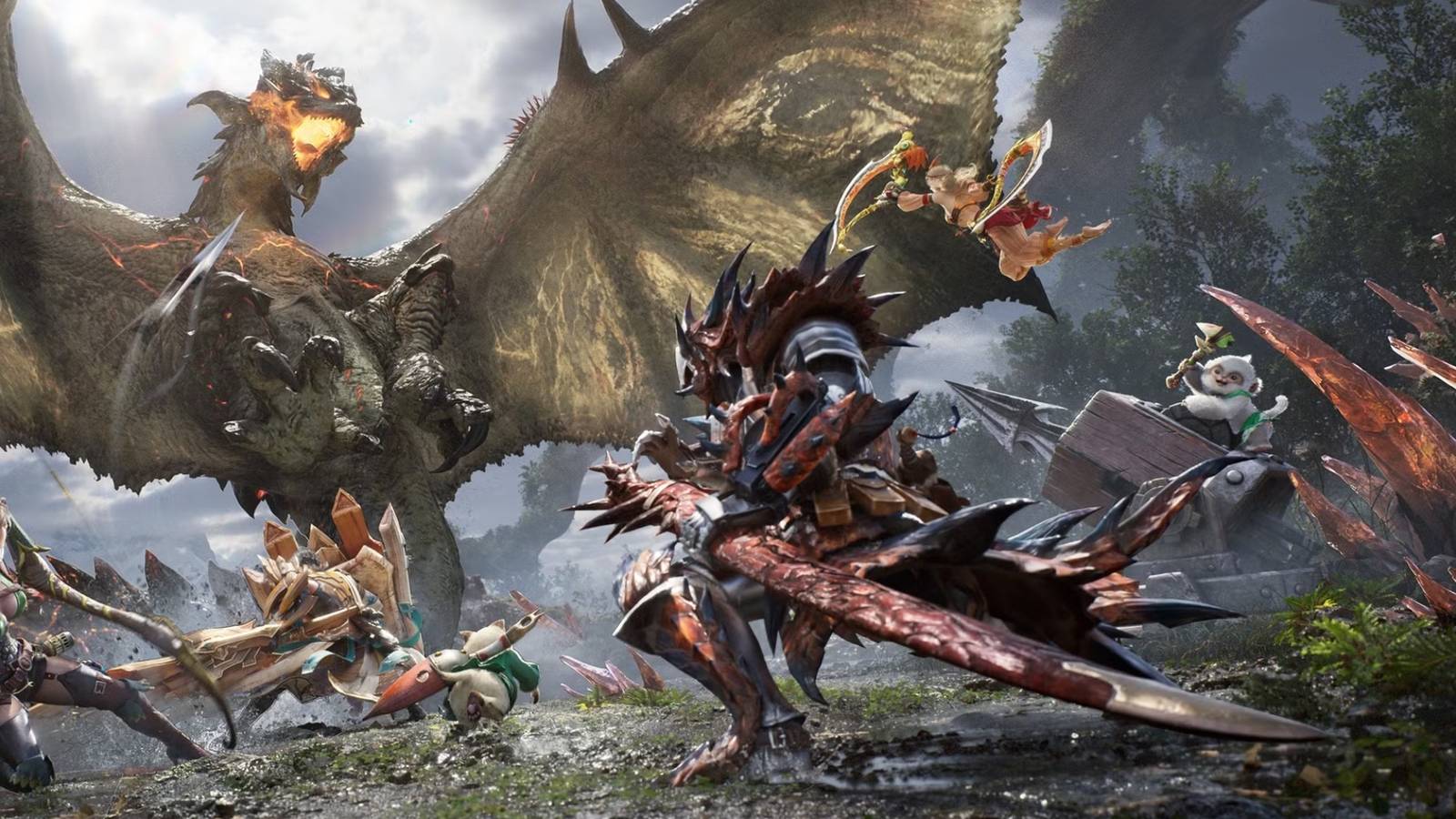
The hallmark of any Monster Hunter title is its weapon weight and commitment-heavy combat. In Outlanders, Capcom and TiMi Studio have worked to ensure these foundational principles remain intact.
- The Interface Challenge: A glance at the user interface in recent preview footage reveals an expansive layout featuring upwards of eight on-screen action buttons. This heavy control density underscores why the development team built robust native controller support into the project; playing a precision action game with this layout entirely via flat touchscreens would present a steep learning curve.
- Weapon Specialization and Preset Adventurers: Unlike mainline titles where a single custom avatar can wield any weapon class at will, Outlanders adopts a hero-collector approach characteristic of its mobile genre. Players pull for distinct "adventurers"—preset characters, each tied to specific weapon specialties and unique abilities. Whether a player favors the sweeping reach and rhythmic combos of the Long Sword or the defensive resilience of shield-bearing archetypes, character collection dictates tactical loadouts.
- Multiplayer Synergy: Retaining the iconic four-player cooperative framework is arguably the game’s greatest triumph. Hunting large monsters requires synchronized crowd-control efforts, healing management, and strategic positioning, ensuring that the social dynamic of calling friends into a hunt remains a core gameplay pillar.
The Developer Pedigree: TiMi Studio Group
Understanding the game’s execution requires evaluating its creator. TiMi Studio Group, a subsidiary of Tencent Games, commands immense technical resources and possesses a proven track record in transforming beloved console franchises and multi-player genres into successful mobile powerhouses. Their past credits include Call of Duty: Mobile—widely praised for bringing authentic first-person shooter mechanics to phones—and Pokémon Unite, a strategic team-based battle game. This pedigree suggests that Outlanders benefits from backend stability, optimized graphics engines, and smooth netcode capable of sustaining synchronized cooperative hunts across fluctuating mobile network conditions.
The Economic Model: Gacha Mechanics and Pity Systems
While the combat has earned praise, the monetization model remains the primary source of scrutiny among franchise veterans. Monster Hunter Outlanders is structured as a free-to-play gacha game.
- The Adventurer Pull System: Players expend in-game currency or premium tokens to roll for characters (adventurers) and potentially high-tier gear.
- The Pity Mechanism: To mitigate the frustrations inherent in randomized pulls, TiMi has implemented a standard industry pity system. Players are legally or structurally guaranteed to pull a top-tier (SSR) character after reaching a threshold of 90 pulls. Furthermore, hitting this pity threshold typically features a 50% chance of yielding the currently featured promotional banner character.
- The Fine Line of Exploitation: The ultimate verdict on Outlanders‘ economic design will hinge entirely on acquisition rates and balance. If free currency is distributed generously enough to allow engaging team compositions without forcing exorbitant expenditures, the game may find a healthy equilibrium. Conversely, if high-tier SSR adventurers hold an insurmountable statistical advantage over lower-tier counterparts, the community may view the progression grind as excessively predatory.
Official Statements and Industry Insights
Capcom’s strategic expansion into the mobile sector has been a calculated, multi-year initiative aimed at broadening the global reach of its premier intellectual properties. While traditionalists often express concern over mobile iterations diluting a franchise’s prestige, studio representatives and industry analysts view Outlanders as a bridge to untapped demographics.
In previous corporate strategy briefings, Capcom executives emphasized that mobile platforms represent a massive, burgeoning market—particularly in Asian territories where mobile gaming dominates daily entertainment consumption. By partnering with TiMi Studio Group, Capcom leverages world-class mobile development expertise while retaining creative oversight to ensure the franchise’s visual identity, monster designs, and lore integrity are preserved.
Early reviewer consensus from closed beta test analysis reflects cautious optimism. Analysts note that while the gacha mechanics introduce an inescapable layer of commercial friction, the underlying gameplay loop offers enough genuine Monster Hunter flavor to stand leagues above cheap, automated mobile clones that merely slap an established IP onto generic gameplay templates.
Future Outlook: What Monster Hunter Outlanders Means for the Franchise
As the October 29, 2026 launch date rapidly approaches, the gaming industry is poised to witness a critical test case for AAA-to-mobile franchise adaptations.
If Monster Hunter Outlanders succeeds, it will prove that mechanically demanding, cooperative action-RPGs can successfully migrate to iOS and Android without stripping away their core identity. It will establish a blueprint for how developers can honor complex combat systems while adapting to the realities of modern touch-and-peripheral mobile ecosystems.
However, the game also walks a tightrope. Its long-term viability will not be decided solely by how well a player can execute a helm-breaker combo with a Long Sword on a mobile screen, but by how fair, respectful, and engaging its live-service economy proves to be over months and years of post-launch updates, new monster introductions, and evolving banner rotations.
For millions of mobile-first gamers worldwide—and for veteran hunters looking for a portable fix between major console releases—Monster Hunter Outlanders is shaping up to be one of the most significant mobile launches of the decade. Whether it becomes a beloved staple of daily mobile gaming or a cautionary tale of monetization over-reach will be answered when the gates of its wild frontiers officially open.