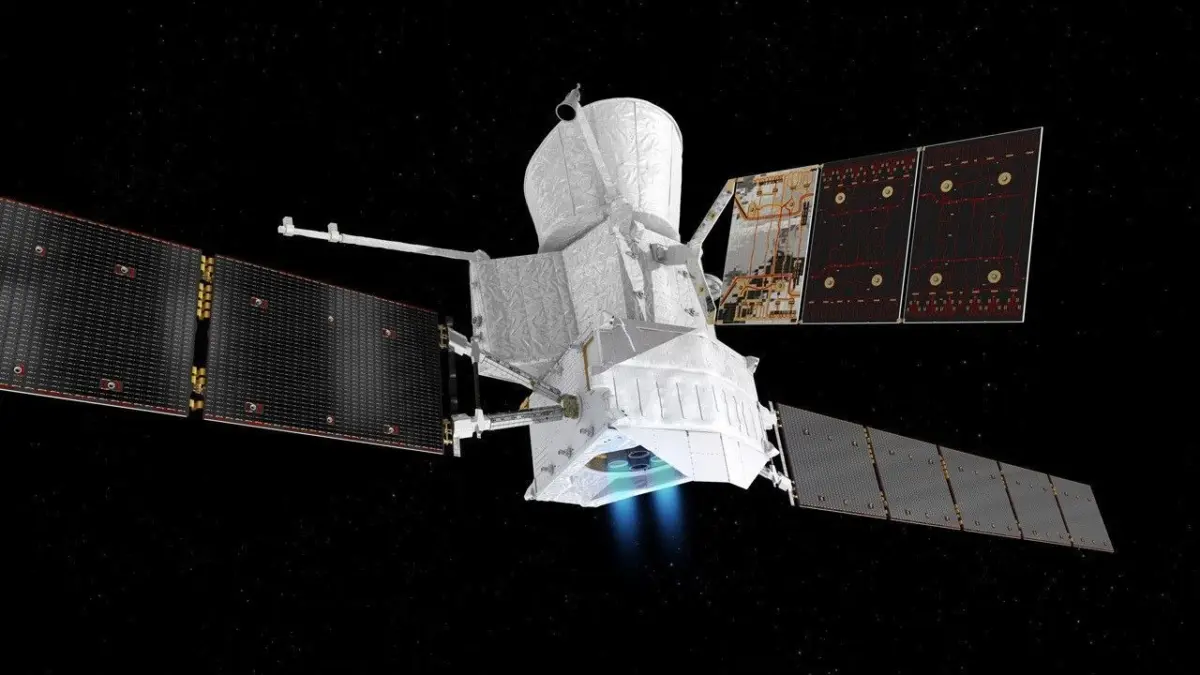
Executive Overview
After nearly eight years navigating the unforgiving expanse of the inner solar system, the European Space Agency (ESA) and the Japan Aerospace Exploration Agency (JAXA) joint mission, BepiColombo, has officially entered the final, most precarious chapter of its interplanetary journey. On September 3, ground control confirmed a critical milestone: the successful separation of the spacecraft’s propulsion module from the main scientific payload, setting the stage for its low-altitude insertion into orbit around Mercury.
Named in honor of the visionary Italian mathematician and engineer Giuseppe "Bepi" Colombo—whose pioneering mechanics made the "gravity assist" maneuver a cornerstone of modern astrodynamics—the mission is an engineering tour de force. Yet, this milestone arrives after a gauntlet of mechanical setbacks. Originally slated to achieve orbit last year, BepiColombo was forced to alter its trajectory following a propulsion subsystem malfunction. To salvage the mission, flight controllers devised an alternate path that utilized reduced thruster power, inevitably pushing the arrival date back by nearly a year.
Despite these hurdles, the stakes could not be higher. Mercury remains the least explored terrestrial world in our solar system, having been visited by only two spacecraft previously, both hailing from NASA (Mariner 10 and MESSENGER). BepiColombo is poised to rewrite our understanding of the innermost planet by deploying two distinct science craft into orbit simultaneously: the Mercury Planetary Orbiter (MPO) and the Mercury Magnetospheric Orbiter (dubbed "Mio"). Together, they will cut through the mysteries of Mercury’s bizarre interior, volatile exosphere, and chaotic magnetic environment, offering humanity its most comprehensive profile yet of a world forged in the violent crucible of our solar system’s birth.
Detailed Chronology: An Eight-Year Interplanetary Odyssey
The journey of BepiColombo is a masterclass in orbital mechanics, resilience, and international collaboration. Spanning close to a decade, the mission’s timeline has been punctuated by complex gravitational choreography, unexpected engineering crises, and triumphant recoveries.
Launch and Early Trajectory (2018–2020)
Launched on October 20, 2018, aboard an Ariane 5 rocket from Kourou, French Guiana, BepiColombo embarked on a uniquely circuitous route. Because of the immense gravitational pull of the Sun, flying directly to Mercury is virtually impossible with contemporary propulsion technology. Instead, the spacecraft was hurled outward and inward along a carefully calculated cosmic obstacle course.
During its early years in space, BepiColombo executed a series of flybys designed to shed excess velocity. The mission executed its first planetary rendezvous on April 10, 2020, skimming a mere 12,700 kilometers above Earth. This terrestrial gravity assist bent the spacecraft’s trajectory toward Venus, initiating a sequence of complex interplanetary loop-de-loops.
The Venus and Mercury Flyby Gauntlet (2020–2023)
Between 2020 and 2024, BepiColombo executed a total of nine gravity-assist maneuvers. These included:
- Earth: 1 flyby (2020)
- Venus: 2 flybys (2020 and 2021)
- Mercury: 6 flybys (starting in 2021 through 2024)
These planetary encounters acted as cosmic brake pedals, steadily bleeding off the immense orbital velocity the spacecraft gained as it "fell" inward toward the Sun. Every flyby required millimeter-precision navigation by the joint ESA-JAXA flight dynamics teams, ensuring that BepiColombo skimmed the upper atmospheres of these worlds without getting captured or damaged.
The Propulsion Malfunction and Course Correction (2023–2024)
The mission’s resilience faced its sternest test when engineers detected an anomaly within the spacecraft’s electric propulsion system. The ion thrusters, designed to provide continuous, low-thrust deceleration during the final phases of the journey, failed to deliver the expected electrical current.
Faced with the threat of a catastrophic mission failure, mission controllers devised an innovative workaround. By optimizing the remaining power output of the thrusters and leaning more heavily on subsequent Mercury gravity assists, the team plotted a modified trajectory. Though this rescue maneuver added nearly a year to the transit time, it preserved the integrity of the scientific instruments and ensured the spacecraft would successfully reach its destination.
Separation and Arrival (2025–2027)
On September 3, the mission entered its endgame. The Transfer Module—which housed the ion propulsion system and guided the stack through space—successfully detached from the science composite. With ground control confirming the clean separation, BepiColombo initiated its final descent sequence toward low Mercury orbit.
Following a complex series of orbital insertion burns and instrument calibrations, the spacecraft will split into its two constituent orbiters. Full-scale scientific observations are officially scheduled to commence in April 2027, marking the true dawn of the operational mission.
Supporting Context & Metrics: Overcoming the Hermean Hellscape
To understand the magnitude of BepiColombo’s achievement, one must appreciate the sheer hostility of the Hermean environment. Mercury is a planet of extremes, presenting engineering challenges that push the absolute boundaries of materials science and astrodynamics.

The Astrodynamics of Getting to Mercury
When a spacecraft travels from Earth toward the inner solar system, it is fundamentally "falling" down a steep gravitational well toward the Sun. While this descent is effortless, arresting that momentum is extraordinarily difficult.
To enter orbit around Mercury, a spacecraft must shed enormous amounts of orbital speed. Without gravity assists, a direct flight would require a prohibitive amount of chemical propellant—far more than any modern rocket can lift into space. BepiColombo’s cumulative trajectory has spanned approximately 6 billion miles (9.9 billion kilometers). This staggering distance was the necessary price of admission to trade rocket fuel for gravitational braking.
Thermal and Radiation Extremes
Operating in the immediate vicinity of the Sun exposes spacecraft to punishing solar radiation and thermal swings. Mercury’s surface temperatures are among the most volatile in the solar system:
- Daytime Highs: Solar radiation bakes the sunlit side of the planet, sending surface temperatures soaring above 800 degrees Fahrenheit (approximately 430 degrees Celsius)—hot enough to melt lead.
- Nighttime Lows: Because Mercury possesses only a vanishingly thin exosphere incapable of trapping heat, temperatures on the nightside plummet to a bone-chilling -290 degrees Fahrenheit (-180 degrees Celsius).
BepiColombo’s survival hinges on advanced thermal shielding, specialized ceramic coatings, and high-temperature multi-layer insulation. Furthermore, the spacecraft must constantly manage its orientation, using high-gain antennas and sun-shielding louvers to protect its sensitive electronics from the blistering solar glare and infrared radiation bouncing off Mercury’s surface.
Official Statements and Expert Perspectives
The complexity and ambition of the BepiColombo mission have drawn widespread acclaim from the international aerospace community, highlighting the power of collaborative planetary exploration.
"Getting to Mercury is arguably the most demanding mechanical challenge our generation of planetary scientists has undertaken," noted Dr. Johannes Benkhoff, ESA’s BepiColombo Project Scientist, during a recent mission briefing. "We aren’t just fighting the Sun’s immense gravity; we are fighting time, thermal radiation, and engineering constraints that leave zero room for error. The propulsion anomaly last year was a heart-stopping moment for the team, but the ingenuity of our flight dynamics controllers has turned a potential tragedy into an incredible engineering triumph."
JAXA’s project manager for the mission echoed these sentiments, emphasizing the unique cooperative framework between the European and Japanese space agencies. "BepiColombo represents a harmonious synthesis of distinct engineering philosophies," they stated. "By dividing the scientific burden between the MPO and Mio, we are achieving what no single space agency could accomplish alone. We are opening a dual window onto a world that has long guarded its deepest secrets."
Astrodynamicists tracking the separation phase have similarly lauded the precision required to execute the module drop. With the propulsion module safely discarded, the spacecraft is now operating on its redundant attitude control systems, steadily guiding the MPO and Mio stack into their preliminary staging orbits.
Future Outlook: A Dual-Orbiter Paradigm
The scientific payoff for this eight-year odyssey is projected to be immense. When BepiColombo splits into its two distinct spacecraft upon final orbital insertion, it will inaugurate a new era of comparative planetary science.
[ BepiColombo Composite Spacecraft ]
                 |
        (Orbital Insertion)
                 |
       +---------+---------+
       |                   |
[ MPO Orbiter ]     [ Mio Orbiter ]
(Surface & Core)    (Magnetosphere)
The Mercury Planetary Orbiter (MPO)
Built primarily by the ESA, the MPO is heavily armored to withstand the intense thermal environment close to the planet. Equipped with a suite of high-resolution cameras, spectrometers, and radiometers, the MPO will map Mercury’s entire surface in unprecedented detail. It will investigate the composition of surface rocks, search for elusive volatile compounds in permanently shadowed polar craters (where water ice is suspected to lurk), and probe the planet’s unusually large metallic core, which makes up roughly 85% of Mercury’s radius.
The Mercury Magnetospheric Orbiter ("Mio")
Contributed by JAXA, "Mio" is designed to study Mercury’s dynamic and asymmetric magnetic field. Unlike most terrestrial planets, Mercury’s magnetic field is offset from its geographic center. Mio will analyze how this magnetic shield interacts with the ferocious solar wind, exploring the physical mechanisms behind the planet’s magnetic "tornados" and charged particle dynamics within its tenuous exosphere.
Unlocking Solar System Evolution
By observing Mercury simultaneously from two distinct orbital planes, scientists will gather coordinated, multi-point measurements that eliminate temporal ambiguities—a limitation that plagued previous single-spacecraft missions.
As BepiColombo prepares for full-scale operations to begin in April 2027, the global scientific community waits with bated breath. This resilient mission promises not only to decode the geological and magnetic anomalies of the solar system’s innermost world, but also to shed light on the broader formation processes of rocky planets throughout our galaxy.