Executive Overview
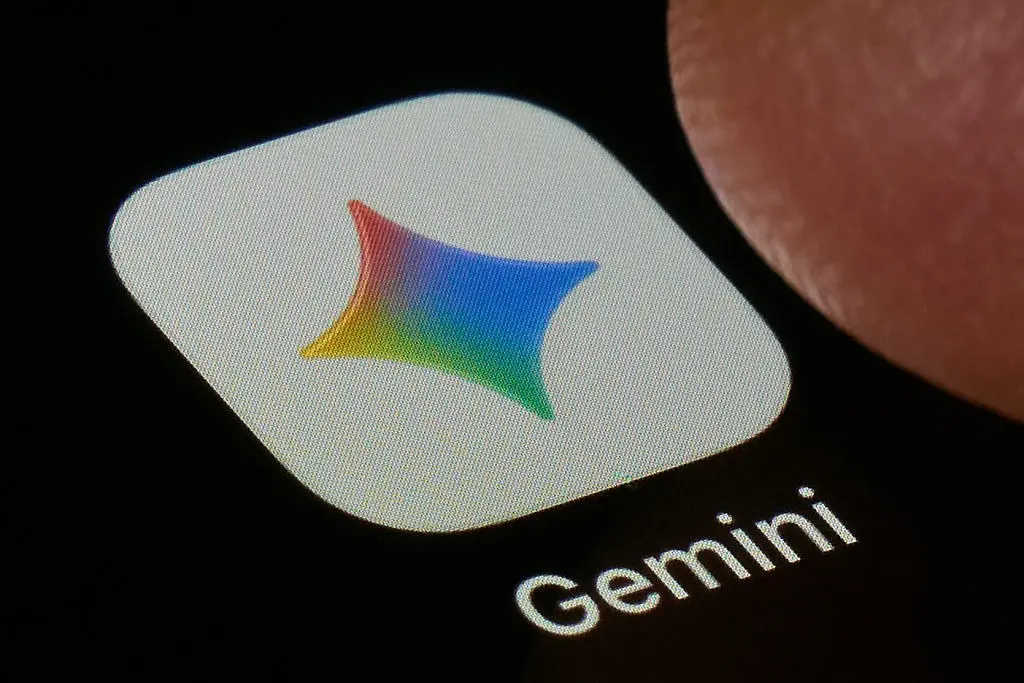
In the rapidly evolving landscape of generative artificial intelligence, the transition from novelty to utility is marked by frequent, sometimes ruthless product consolidations. In late September 2026, Google quietly signaled the end of one of its most heavily promoted consumer AI experiments: "Gems." Launched in 2024 as a direct competitor to OpenAI’s Custom GPTs, Gems allowed users to construct, customize, and share specialized AI personas tailored to specific tasks, such as coding partners, learning coaches, or nutritionists.
According to notifications distributed within the Gemini application, Google will officially wind down the standalone Gems interface on November 17, 2026. Rather than deleting user-generated creations, Google plans to automatically migrate these custom assistants into a new system-wide framework called "Skills."
This transition represents far more than a routine database migration or minor feature rebrand. It marks a fundamental shift in how the tech industry envisions the consumer interface for artificial intelligence. As "all-in-one" autonomous AI agents—such as Meta’s hardware-integrated "Muse Charm" and the viral agentic startup Instinct—capture consumer attention and massive venture funding, the concept of a standalone, highly branded custom chatbot is falling out of favor.
While the migration preserves the logic and instructions users invested in their Gems, the move has reignited criticism of Google’s product management strategy. Observers note that the company’s habit of over-branding features, only to dissolve them into broader system utilities later, mirrors historical product missteps in its messaging and social media portfolios. Furthermore, the reliance on a developer-centric slash-command (/) interface to invoke the new "Skills" raises critical questions about Google’s ability to design intuitive, mass-market consumer AI products.
Detailed Chronology
The life cycle of Google’s custom AI assistants reflects the breakneck pace of the generative AI boom, moving from conception to obsolescence in just over two years.
[Mid-2024] Gems Launched -> [Sept 2025] Shareable Gems -> [Sept 2026] Deprecation Notice -> [Nov 17, 2026] Automatic Migration to "Skills"Mid-2024: The Genesis of Gems
During its Google I/O conference in 2024, Google introduced "Gems" as a premier feature for Gemini Advanced subscribers. The premise was simple: lower the barrier to prompt engineering by allowing users to create persistent, specialized versions of Gemini.
To demonstrate utility, Google pre-packaged several templates:
- Learning Coach: A tutor designed to break down complex topics.
- Brainstormer: A creative partner for generating ideas and naming projects.
- Career Guide: A mock interviewer and resume consultant.
- Coding Partner: An assistant optimized for debugging and software development.
- Editor: A refinement tool focused on tone, grammar, and clarity.
Users quickly adopted the tool to build highly personalized agents, including vacation planners, fitness coaches, and customized cooking assistants.
September 2025: The Push for Virality
Initially restricted to individual accounts, Google attempted to turn Gems into a social and collaborative ecosystem in September 2025 by introducing the ability to share custom Gems via public links. The strategic intent was to mirror the success of OpenAI’s GPT Store, building a network effect where user-generated content drove platform loyalty and lowered acquisition costs.
September 2026: The Deprecation Warning
The first indications of a strategic pivot emerged over the weekend of September 27, 2026, when tech publication 9to5Google spotted system notifications within the Gemini app. The alert informed users that the standalone Gems feature would be retired.
The notification detailed a transition timeline leading up to November 17, 2026, when all existing Gems will automatically transform into "Skills." Google assured users that the transition would require no manual effort, and that existing Gems would remain fully operational until the mid-November deadline.
Supporting Context & Metrics
To understand why Google is retiring the "Gems" brand, it is necessary to examine the broader competitive pressures of the 2026 AI market and Google’s historical product patterns.
The Rise of Agentic AI and the 2026 Competitive Landscape
The landscape of late 2026 is vastly different from the chatbot-centric world of 2024. Consumers are moving away from static text boxes toward dynamic, autonomous agents that perform actions across applications and physical spaces.
Two key market developments highlight this shift:
- Meta’s Muse and the Charm Hardware: Meta’s "Muse" agent, integrated into the physical, Tamagotchi-like "Charm" device, has tapped into a novel consumer trend. By blending physical companionship with ambient, voice-first AI assistance, Meta bypassed the traditional chatbot interface entirely, making interaction passive and highly engaging.
- The Rise of Instinct: In late September 2026, viral AI agent startup Instinct closed a historic $1 billion Series C funding round, valuing the company at $10 billion. Instinct’s core appeal lies in its ability to execute complex, multi-step workflows across third-party software without requiring users to configure individual "bots" or write specialized system instructions.
In this environment, requiring a consumer to open a specific app, select a specific "Gem," and manually input text feels increasingly outdated.

The "Google Graveyard" and Branding Inflation
For industry analysts, the retirement of Gems is a familiar story. Google has a long-standing reputation for prematurely branding, launching, and subsequently abandoning consumer products.
This pattern is most evident in its communication portfolio:
| Era | Core Messaging Products | Outcome |
|---|---|---|
| Early 2010s | Google Talk, Google+ Hangouts | Fragmented user base across social and enterprise lines. |
| Mid 2010s | Google Allo, Google Duo | Allo (text) was shut down; Duo (video) was eventually merged into Google Meet. |
| Late 2010s | Hangouts Chat, Hangouts Meet | Rebranded simply to Google Chat and Google Meet. |
| 2020s | Google Messages (RCS), Google Chat | Ongoing efforts to unify consumer and enterprise messaging. |
This tendency to launch niche, highly branded features—only to later fold them back into a core service—often causes consumer confusion and erodes developer trust. Gems appears to be the latest casualty of this cycle. By granting Gems its own navigation tabs, custom icons, and marketing campaigns, Google built expectation around a standalone ecosystem that it is now dismantling.
Official Statements & Technical Mechanics
While Google has not issued a formal press release regarding the strategic shift, the in-app documentation and system behavior offer clear insights into how the transition to "Skills" will function.
The Mechanics of the Migration
According to Google’s support documentation, the transition to Skills is designed to prevent data loss. The underlying system prompts, custom instructions, and uploaded reference files that users associated with their Gems will be mapped directly to the new "Skills" architecture.
[User's Custom Gem]
  ├── Custom Instructions
  └── Reference Files
        │
        ▼ (Automatic Migration on Nov 17)
        │
[Unified Gemini Thread]
  └── Invoked via: "/[Skill Name]"
However, the user experience of invoking these custom instructions will change fundamentally:
- The Old Interface: Users navigated to a dedicated "Gems" directory, selected a persona, and opened a isolated chat thread dedicated exclusively to that persona’s role.
- The New Interface: Users will operate within a single, unified Gemini chat thread. To apply a specific set of instructions, they must type a forward slash (
/) followed by the name of the skill (e.g.,/editoror/coding-partner) directly into the main text field.
The UX Critique: Engineering vs. Consumer Design
While the unified thread model reduces interface clutter, the decision to rely on a slash-command (/) interface has drawn criticism from user-experience experts.
The slash command is a design paradigm popularized by developer tools like Slack, Discord, Notion, and IRC clients. While highly efficient for power users, programmers, and digital natives, it introduces friction for the average consumer who may not know which skills are available or remember the exact trigger words.
In contrast, competitors like Meta are focusing on natural language discovery, where the AI dynamically determines which sub-skills to deploy based on the context of the conversation, without requiring the user to memorize syntax.
Future Outlook
The transition from Gems to Skills represents a necessary step in the maturity of Gemini, even if the execution remains somewhat unpolished.
From Destination AI to Ambient Utility
By dismantling the silos of the Gems interface, Google is preparing Gemini for a future where AI is an ambient utility rather than a destination. In a future where Gemini is deeply integrated into Android, Chrome, and Google Workspace, standalone "chatbots" make little sense.
Instead, a user drafting an email in Gmail or writing a document in Google Docs will want to invoke their custom "Editor" or "Brainstormer" directly within their active window. Transforming Gems into "Skills" allows these custom configurations to travel with the user across the entire Google ecosystem, serving as modular plugins rather than isolated destinations.
The Survival of the Custom AI Market
Google’s pivot also raises broader questions about the viability of the "Custom Store" model pioneered by OpenAI. As large language models become more capable of understanding complex, multi-step instructions implicitly, the need for users to manually build and curate micro-assistants is decreasing.
The future likely belongs to integrated, system-level agents that adapt to the user’s behavior in real time, rather than static templates that require manual configuration and slash-command triggers. For Google, the success of the new "Skills" framework will depend on how quickly it can move past developer-centric interfaces and deliver a truly intuitive, context-aware assistant.