Executive Overview
Two decades ago, a single blog post penned by Jeff Barr quietly reshaped the trajectory of the global technology industry. On that day, Amazon Web Services introduced the Amazon Elastic Compute Cloud (EC2) Beta, offering developers and enterprises something that had previously been unimaginable: resizable Linux virtual servers in the cloud, billed strictly by the hour, originating from a single instance type (m1.small) housed inside a single AWS Region (US East).
What began as a modest, minimal-yet-functional experiment quickly metastasized into an economic and technological earthquake. Amazon EC2 effectively democratized computing infrastructure. It dismantled the immense capital expenditure barriers that had historically guarded software innovation, allowing garage-based startups and Fortune 500 enterprises alike to provision data center capacity with the click of a button.
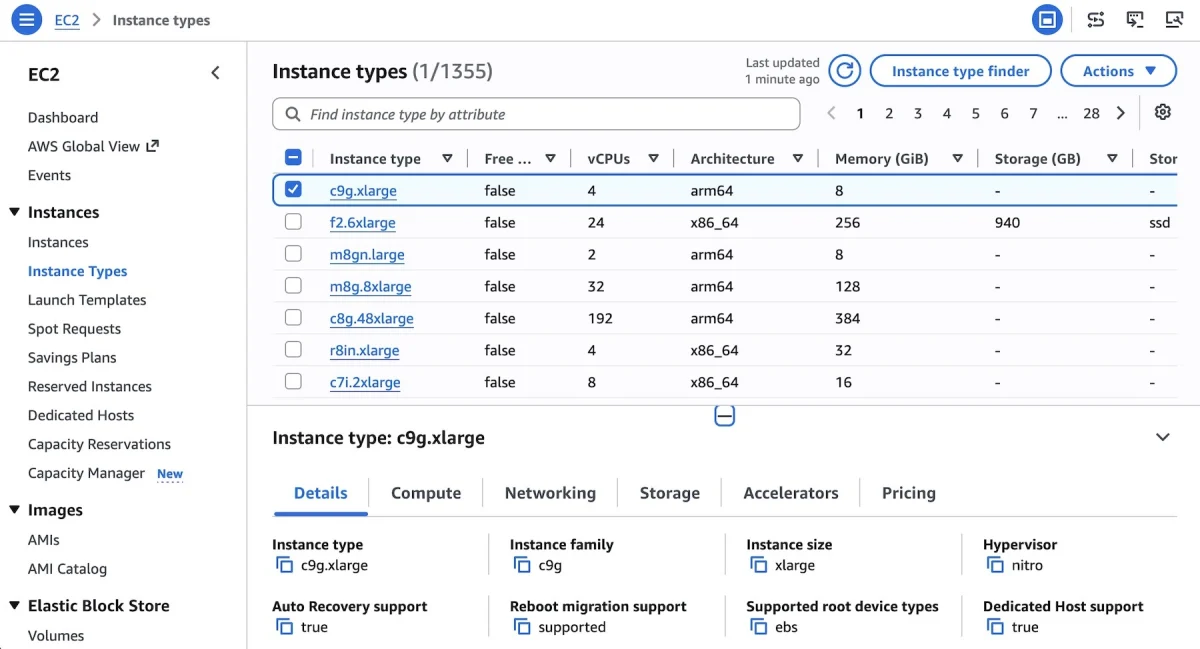
Today, as EC2 celebrates its monumental 20th anniversary, the service has evolved far beyond its humble single-region, single-instance origins. Spanning over 1,200 specialized instance types across 39 global Regions, and reaching beyond traditional data centers via local zones, edge deployments, and custom silicon architectures, EC2 stands as the undisputed bedrock of modern cloud computing. Every architectural pattern, containerized application, serverless function, and trillion-parameter artificial intelligence model running on AWS ultimately traces its DNA back to the foundational act of launching an EC2 instance. This retrospective examines two decades of unrelenting engineering evolution, the critical architectural breakthroughs that made it all possible, and the enduring philosophy that continues to define the world’s most ubiquitous compute platform.
Detailed Chronology: Twenty Years of Architectural Milestones
To understand the scale of Amazon EC2 today, one must retrace the step-by-step evolution of its foundational components. Over the past twenty years, AWS engineers systematically dismantled every hardware and software limitation inherent to traditional on-premises infrastructure, replacing static physical bottlenecks with dynamic, programmable software-defined primitives.
[2006: EC2 Beta Launch (`m1.small`)]
       │
       ▼
[2008: Amazon EBS (Persistent Storage)]
       │
       ▼
[2009: ELB, Auto Scaling, CloudWatch & Amazon VPC]
       │
       ▼
[2017: AWS Nitro System (Hardware Offloading & Security)]
       │
       ▼
[2018: AWS Graviton Processors & Outposts (Arm Custom Silicon & Hybrid)]
       │
       ▼
[Present: 1,200+ Instance Types across 39 Global Regions & AI Clusters]
2006–2007: The Genesis of Utility Computing
When the EC2 Beta launched in 2006, the concept of "utility computing"—paying for compute resources purely based on consumption, like electricity or water—was largely theoretical. The initial m1.small instance gave developers a basic virtual machine running Linux. Early adopters quickly realized that while powerful, the architecture lacked persistent storage; if an instance terminated, ephemeral local data vanished with it. This limitation sparked the next wave of intense engineering innovation.
2008: Solving Persistence with Amazon EBS
The introduction of Amazon Elastic Block Store (EBS) in 2008 marked a turning point for enterprise cloud adoption. By decoupling storage from ephemeral virtual server instances, EBS provided highly available, reliable, persistent block storage volumes that could be attached to any running EC2 instance. Suddenly, relational databases, enterprise resource planning (ERP) software, and stateful applications could safely migrate to the cloud without risking data loss upon instance reboot or failure.
2009: Elasticity, Automation, and Security
The year 2009 delivered a trifecta of automation and networking services that transformed EC2 from a collection of isolated virtual machines into a cohesive, highly scalable ecosystem:
- Elastic Load Balancing (ELB): Automatically distributed incoming application traffic across multiple EC2 instances, eliminating single points of failure.
- Auto Scaling: Empowered applications to dynamically scale capacity up or down based on real-time traffic demands, ensuring optimal performance without manual intervention.
- Amazon CloudWatch: Provided native, real-time monitoring of resource utilization and operational health.
- Amazon Virtual Private Cloud (VPC): Addressed enterprise security concerns by giving customers logically isolated, customer-defined virtual networks where they could launch EC2 instances with strict control over IP address ranges, subnets, route tables, and network gateways.
2017: The Hardware Revolution with the AWS Nitro System
As cloud workloads grew denser and more demanding, traditional hypervisors consumed significant CPU cycles and memory overhead just to manage virtualization tasks. In 2017, AWS introduced the AWS Nitro System, a breakthrough combination of dedicated hardware and lightweight hypervisor software. By offloading virtualization functions—such as networking, storage input/output, and security management—from the host CPU onto custom-built Nitro cards, AWS achieved near-bare-metal performance, enhanced security isolation, and faster delivery of new instance types.
2018–Present: Custom Silicon and Hybrid Expansion
Building on the success of the Nitro system, AWS changed the silicon game in 2018 by releasing AWS Graviton processors—custom, Arm-based CPUs designed in-house to deliver superior price-performance for scale-out workloads. Concurrently, AWS recognized that not all workloads could immediately move to public cloud data centers. This realization drove the creation of hybrid deployment models:
- AWS Outposts (2018): Brought native AWS infrastructure and EC2 instances directly into customer on-premises data centers.
- AWS Local Zones (2019): Placed compute and storage capacity closer to end-users in major metropolitan areas to eliminate network latency.
- AWS Wavelength (2019): Embedded EC2 computing power directly inside 5G telecommunications carrier networks to support ultra-low-latency edge computing applications like autonomous driving and real-time multiplayer gaming.
Supporting Context & Metrics: The Scale of Modern EC2
Numbers alone cannot fully capture the massive footprint of Amazon EC2, but they illustrate the breathtaking scope of the infrastructure underpinning the digital economy.
From One to 1,200+ Instance Types
What started as a single m1.small configuration has blossomed into a sophisticated catalog exceeding 1,200 distinct instance types. AWS has meticulously engineered specialized families to match every conceivable workload requirement:
- General-Purpose: Balanced compute, memory, and networking (e.g., T and M families).
- Compute-Optimized: High-performance processors ideal for batch processing, gaming servers, and scientific modeling (e.g., C and Graviton-powered instances).
- Memory-Optimized: Massive RAM footprints designed for in-memory databases, real-time big data analytics, and high-speed caching (e.g., R and X families).
- Storage-Optimized: High input/output operations per second (IOPS) tailored for distributed file systems and NoSQL databases (e.g., I and D families).
- Accelerated Computing: Equipped with advanced GPUs and specialized AI chips designed for deep learning inference, high-performance computing (HPC), and massive computer vision pipelines.
Global Footprint: 39 Regions and Beyond
From a single US East Region in 2006, AWS has expanded its infrastructure globally to 39 geographic Regions comprising over a hundred Availability Zones. This expansive footprint ensures that global enterprises can architect fault-tolerant, low-latency applications that comply with strict regional data residency and sovereign compliance mandates.

The Foundation Beneath the Entire AWS Portfolio
It is a common misconception that newer, higher-level AWS services operate independently of EC2. In reality, EC2 serves as the heavy-duty engine room driving the entire modern cloud ecosystem.
- Container Orchestration: Amazon ECS and Amazon EKS rely heavily on EC2 worker nodes (or AWS Fargate, which itself runs on underlying EC2 capacity) to schedule and execute containerized microservices.
- Serverless & Batch: AWS Lambda executes code on micro-virtual machines managed by underlying EC2 compute fleets. AWS Batch provisions clusters of EC2 instances to process heavy computational jobs.
- Big Data & Artificial Intelligence: Amazon EMR spins up massive distributed Hadoop/Spark clusters on EC2. More importantly, the current generative AI boom—powered by Amazon SageMaker AI and Amazon Bedrock—requires unprecedented computational muscle. Training and fine-tuning trillion-parameter foundation models demand clusters comprised of tens of thousands of accelerated EC2 instances communicating over ultra-low-latency networks.
Official Perspectives: The Engineering Philosophy That Built the Cloud
Reflecting on two decades of innovation, the engineering leadership at AWS points to a consistent design philosophy that has guided the platform through successive waves of technological disruption.
"We made strong foundational decisions in 2006, and we left room for the service to grow. Twenty years later, that strategy of creating services that are minimal-yet-useful, launching quickly, and iterating rapidly in response to your feedback continues to guide how we build."
— Channy Yun, AWS Developer Advocate
When Jeff Barr published the original beta announcement, the goal was not to build a monolithic, all-encompassing operating system for the enterprise on day one. Instead, the strategy embraced modularity: deliver a core primitive that solved an immediate developer pain point—provisioning virtual servers without hardware procurement cycles—and let customer feedback dictate the roadmap.
This philosophy explains why foundational value propositions established in 2006 remain entirely intact today. Customers still turn to EC2 to acquire secure, resizable compute capacity in minutes, pay exclusively for the compute cycles they consume, and scale instantly without signing restrictive, long-term multi-year hardware leases. The only difference is that today, this exact same operational flexibility powers complex distributed AI clusters running advanced neural networks at a scale that was utterly unimaginable at the dawn of cloud computing.
Future Outlook: The Next Twenty Years of Compute
As Amazon EC2 enters its third decade, the computing landscape is undergoing another profound transformation driven by generative artificial intelligence, quantum-classical hybrid systems, custom silicon optimization, and edge intelligence.
The AI-Driven Compute Era
The rapid ascent of Large Language Models (LLMs) and multimodal AI agents has fundamentally shifted the bottleneck of enterprise technology from storage and networking to raw, accelerated compute capacity. Future iterations of EC2 will increasingly focus on ultra-dense GPU/TPU clusters, optical interconnects, and specialized silicon designed to minimize inference latency while driving down the energy costs associated with massive model training.
Sustainability and Energy Efficiency
With data center power consumption drawing intense global scrutiny, AWS’s multi-year investment in custom silicon—specifically the energy-efficient AWS Graviton processors and custom Nitro architecture—will take center stage. The next decade of EC2 engineering will prioritize carbon-efficient compute, allowing organizations to dynamically schedule workloads to coincide with peak renewable energy availability across global power grids.
Ambient and Ubiquitous Infrastructure
As 5G networks mature and Internet of Things (IoT) deployments saturate industrial environments, the boundaries of the traditional data center will continue to dissolve. EC2 will extend further into disconnected environments, orbital satellites, autonomous vehicles, and deep-edge locations, ensuring that secure, elastic compute capacity is available anywhere data is generated.
Conclusion
Twenty years ago, a simple blog post invited developers to test an unproven beta service called Amazon EC2. Today, that service represents the invisible digital nervous system powering global commerce, scientific research, entertainment, and artificial intelligence. By relentlessly focusing on customer needs, hardware innovation, and architectural flexibility, Amazon EC2 has not merely participated in the evolution of modern technology—it has authored it. As we look toward the horizon, one thing remains certain: whatever the next twenty years of computing demand, Amazon EC2 will continue to be the foundational engine where the future runs.