Executive Overview
Since the iconic debut of the "Bumper" case alongside the iPhone 4—a design born out of necessity to solve the infamous "Antennagate" reception issues—minimalist smartphone enthusiasts have harbored a deep fondness for skeletonized phone protection. Over the years, however, the landscape for true bumper cases has shifted dramatically. As phones grew larger, camera modules became massive, and glass-and-metal sandwiches demanded more complex shock absorption, manufacturers largely abandoned the bare-bones bumper in favor of full-coverage TPU, silicone, and hybrid armor cases.
For fans of the naked phone experience, hope was briefly reignited when Apple re-entered the bumper arena with a dedicated offering for the iPhone Air. Naturally, consumers anticipated that this design language would cascade across the entire flagship lineup, including the pro-tier models. Unfortunately, Apple chose to omit a bumper option for the iPhone 18 Pro, leaving users searching the aftermarket for a viable alternative.
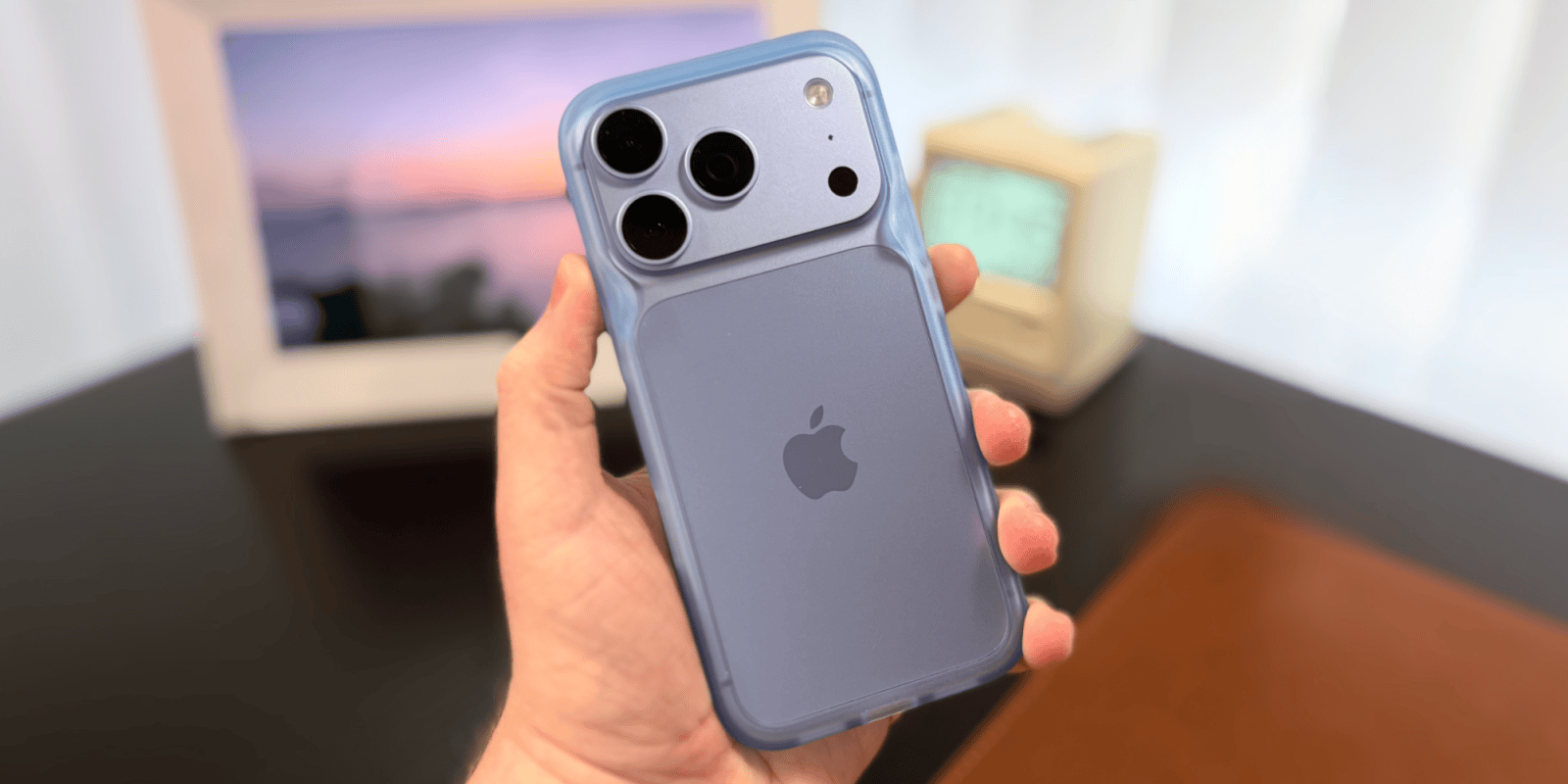
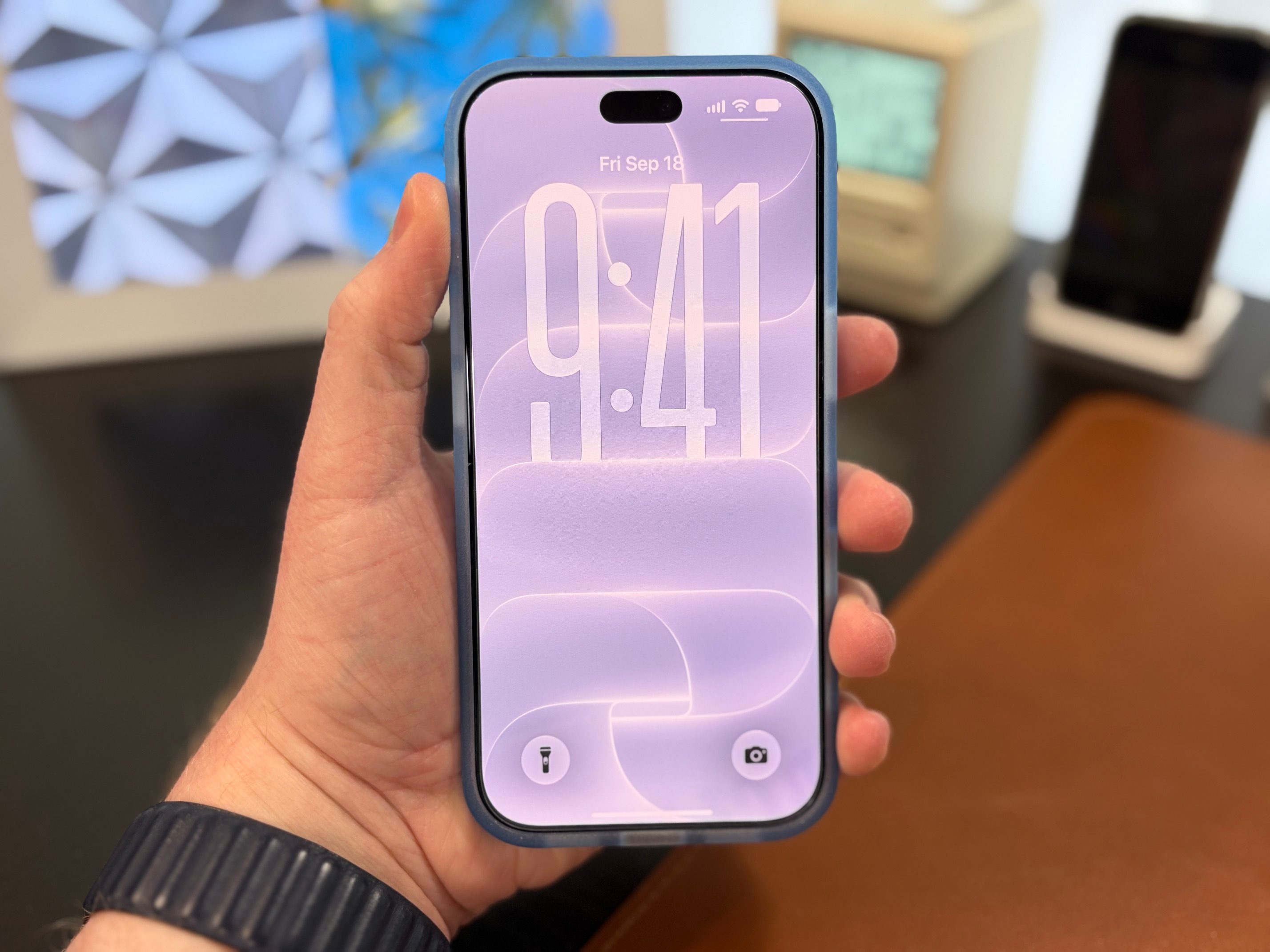
Enter Rhinoshield. Known for their modular, high-impact drop protection, the brand has introduced the Minimalist Impact Bumper Case tailored specifically for the iPhone 18 Pro. This case attempts to walk a tightrope: offering the illusion of a naked phone while mitigating the structural risks associated with modern aluminum chassis designs. But does it succeed, or does the compromise on materials and button tactility outweigh its minimalist charm?
This comprehensive review explores the design, functional trade-offs, material composition, and ultimate verdict on whether the Rhinoshield Impact Bumper is worthy of protecting your next-generation flagship.
Detailed Chronology and Product Evolution
The Return of the Bumper
The history of smartphone protection is a constant tug-of-war between aesthetics and security. When Apple introduced the bumper form factor in 2010, it revolutionized how users protected devices without masking the industrial design they paid top dollar to enjoy. For over a decade, third-party manufacturers kept the dream alive, though quality varied wildly.
When Apple launched its official bumper line for the iPhone Air, it signaled a potential renaissance for minimalist accessories. Yet, the absence of a matching Apple-branded bumper for the iPhone 18 Pro created a glaring market gap.
Rhinoshield’s Intervention
Filling this void, Rhinoshield deployed its Minimalist Impact Bumper for the iPhone 18 Pro. Available primarily through the manufacturer’s direct-to-consumer web store—with occasional third-party storefront listings—the case arrives at a price point hovering around $30 (scaling closer to $39 once shipping is factored in). This places it squarely in direct competition with official Apple accessories.
Upon unboxing, the case reveals its lineage. It utilizes a single-material hard plastic construction rather than the soft, tacky rubber of older legacy bumpers. This choice dictates nearly every aspect of the user experience, from how the case hugs the device to how it handles everyday wear and tear.
Supporting Context, Metrics, and Design Analysis
Fit, Finish, and Materiality
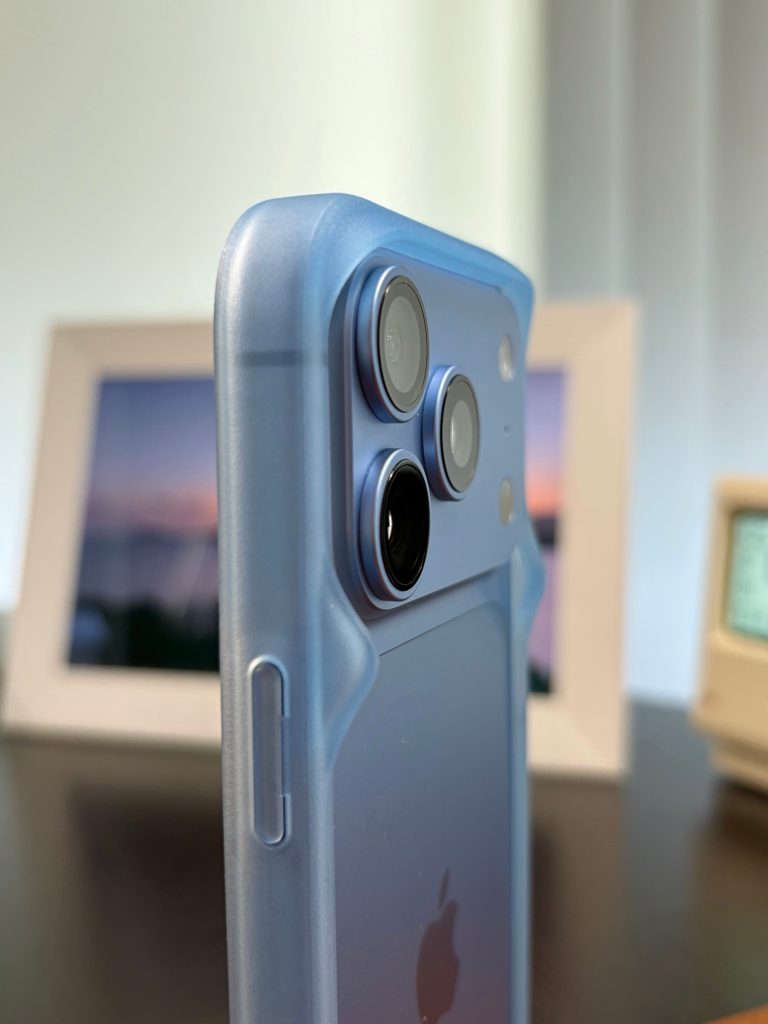
One of the most immediate observations regarding the Rhinoshield Minimalist Impact Bumper is its physical fit. Unlike precision-molded elastomer cases that clamp down with rigid tension, this hard-plastic iteration exhibits a noticeable looseness. The edges can be easily flexed and pulled outward away from the phone’s chassis.
While this might initially spark anxiety regarding structural integrity during a high-velocity drop, real-world handling (and unintended gravity tests) suggests that the phone remains securely nested within the frame. Nevertheless, long-term durability raises questions; one wonders if the hard plastic will stretch, warp, or lose its spring over months of removal and re-installation.
Furthermore, the single-material philosophy means the case is 100% recyclable—a massive win for eco-conscious consumers. However, this material choice introduces a tactile double-edged sword. The hard plastic feels distinctly less luxurious than Apple’s official elastomer formulations. It also acts as a magnet for pocket lint, dust, and micro-debris, requiring frequent cleaning along the perimeter where the plastic meets the glass back.
Color-Matching Realities
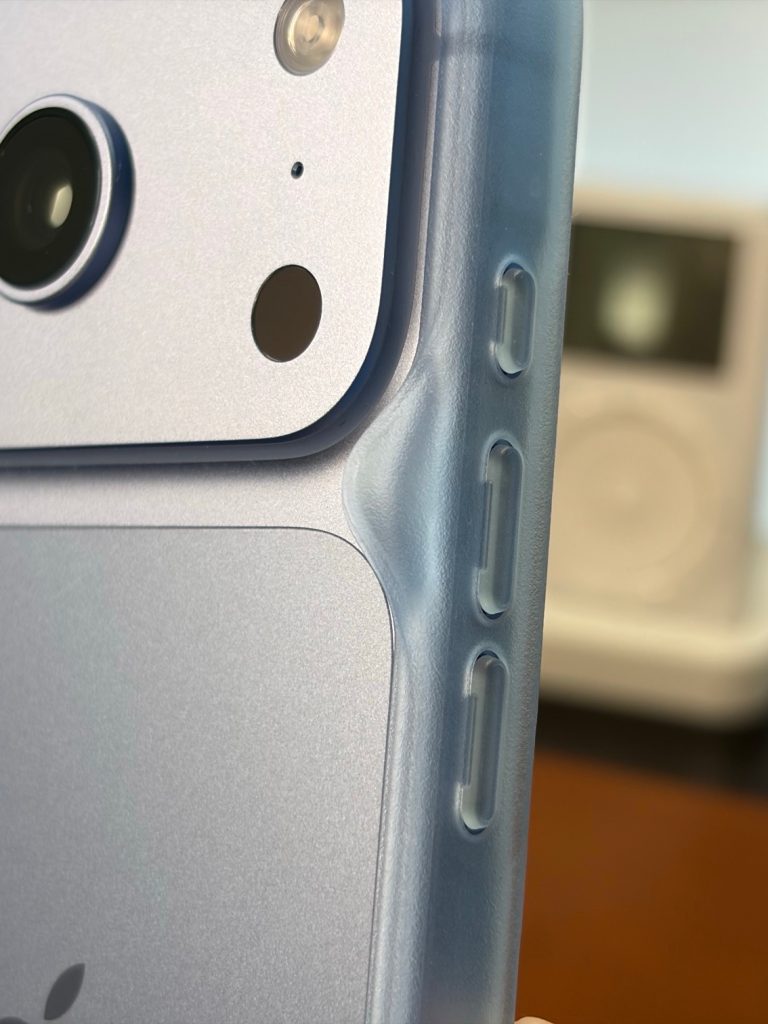
Rhinoshield offers the bumper in three distinct shades meticulously designed to complement the iPhone 18 Pro’s palette: white, blue, and black. Fans of flashier finishes, such as the elusive Burgundy variants, are left out in the cold.
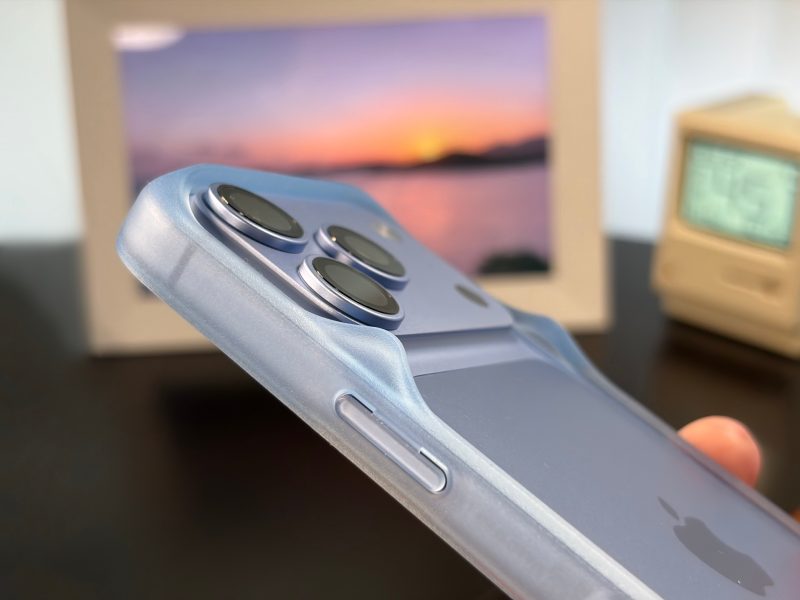
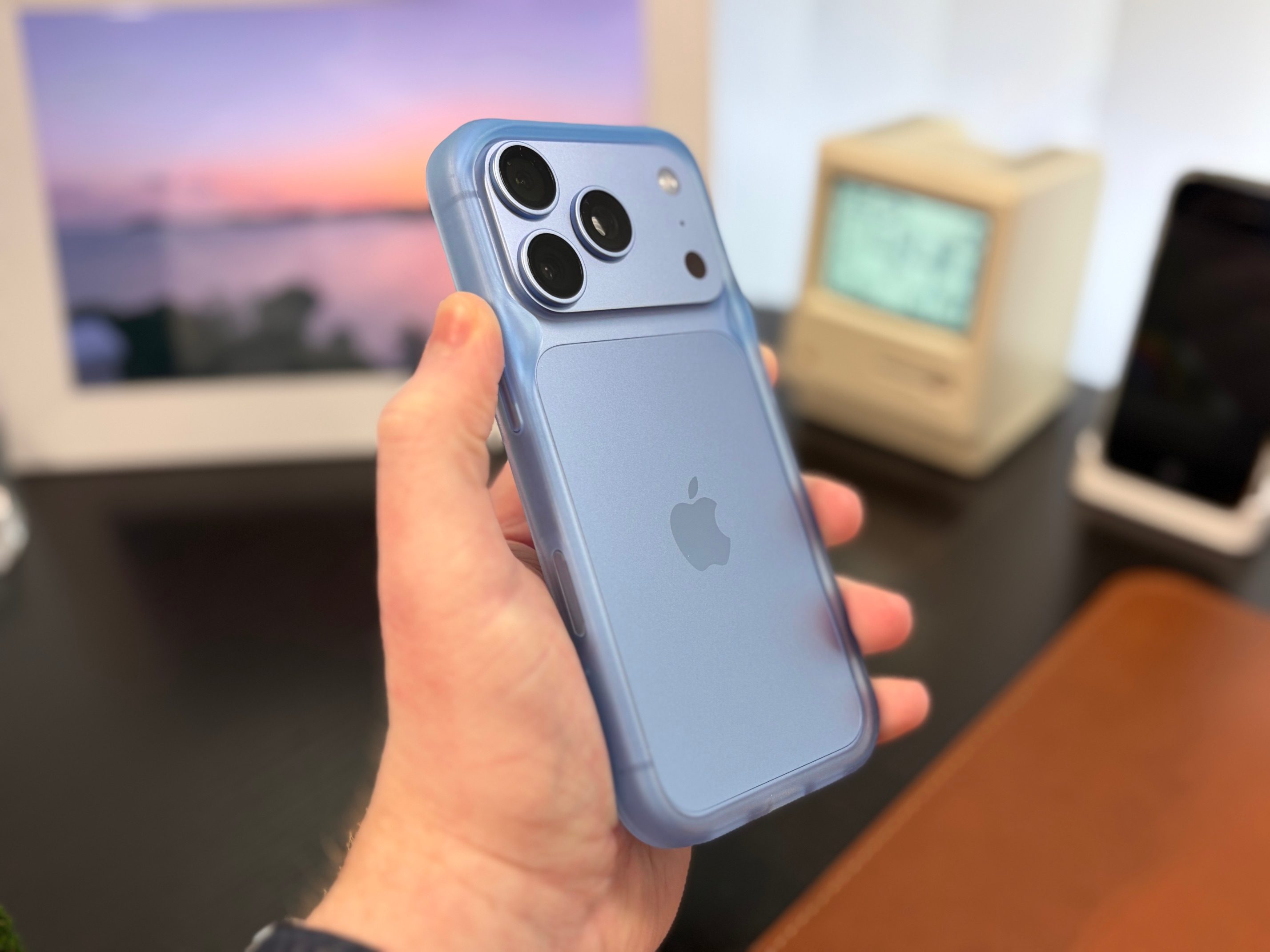
For owners of the blue iPhone 18 Pro, the color match is close—resembling a variant of Apple’s Glacier finish—but falls just short of seamless factory perfection. In certain lighting conditions, the divergence between the anodized aluminum of the phone and the molded polymer of the bumper becomes apparent.
Solving the Wobble: Camera Protection and Ergonomics
Modern iPhones are plagued by a notorious design flaw: the massive camera plateau. When placed flat on a table, naked phones rock uncontrollably, rendering typing or swiping frustratingly unstable.
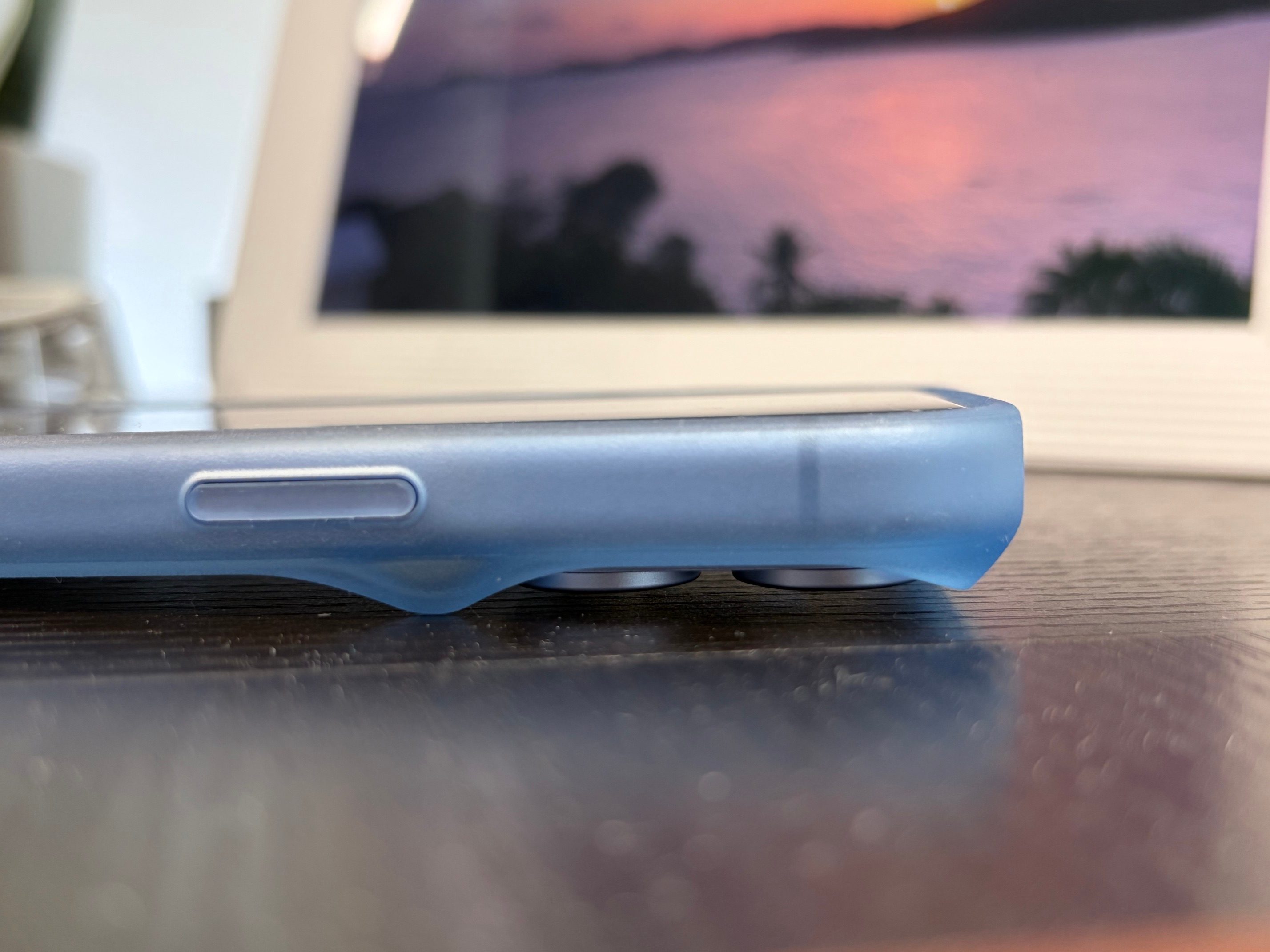
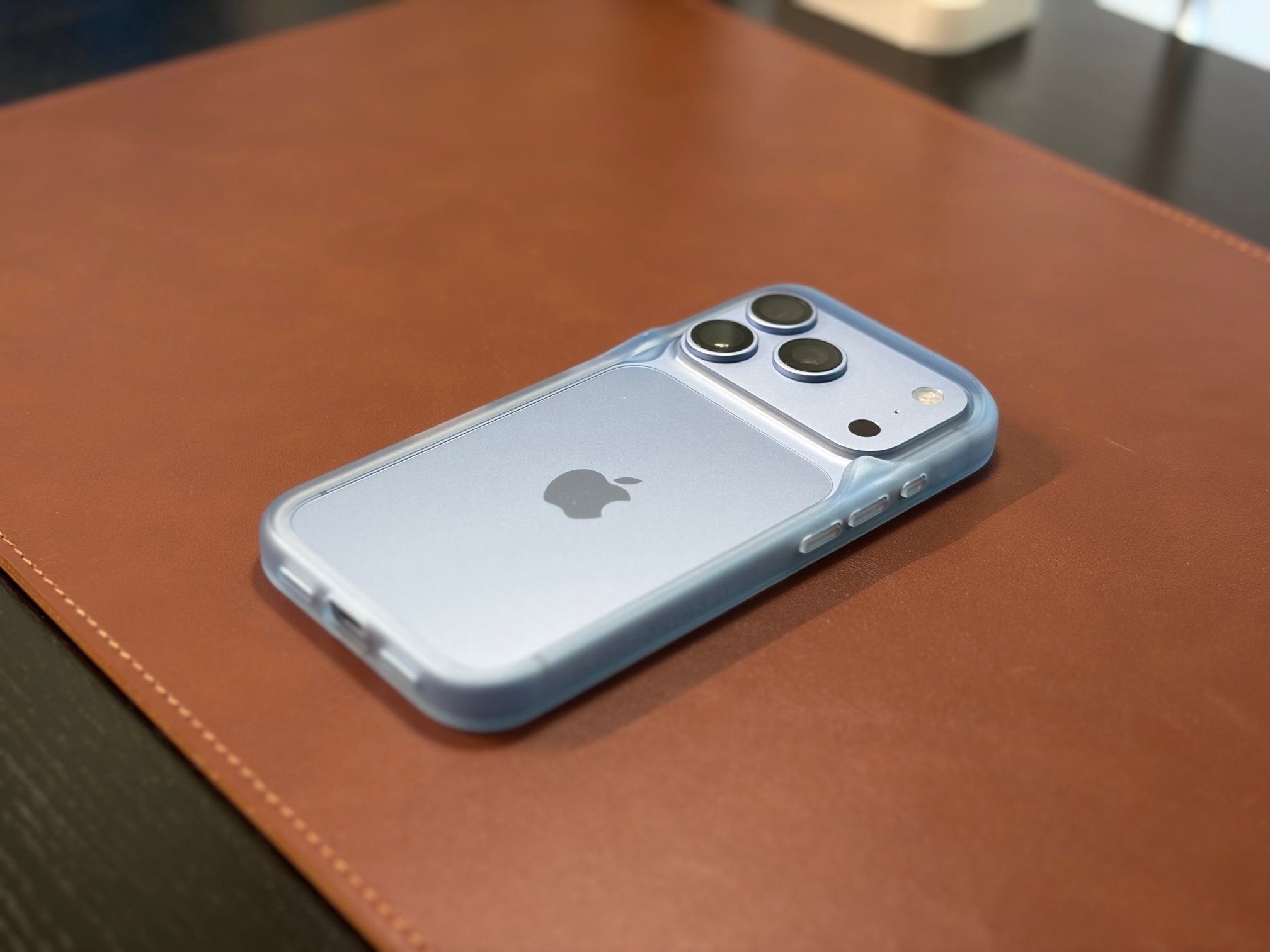
Rhinoshield addressed this engineering hurdle brilliantly. The Impact Bumper incorporates specialized raised supports along the rear perimeter that elevate both the camera plateau and the individual lenses completely off flat surfaces. This engineering choice eliminates table wobble entirely. More importantly, it provides critical protection for the vulnerable aluminum frames of the iPhone 17 Pro and iPhone 18 Pro generations, which are notoriously susceptible to cosmetic scratching, chipping, and denting when laid flat.
The Button and Strap Conundrum
Despite its clever camera elevation system, the Rhinoshield bumper stumbles in two critical functional categories:
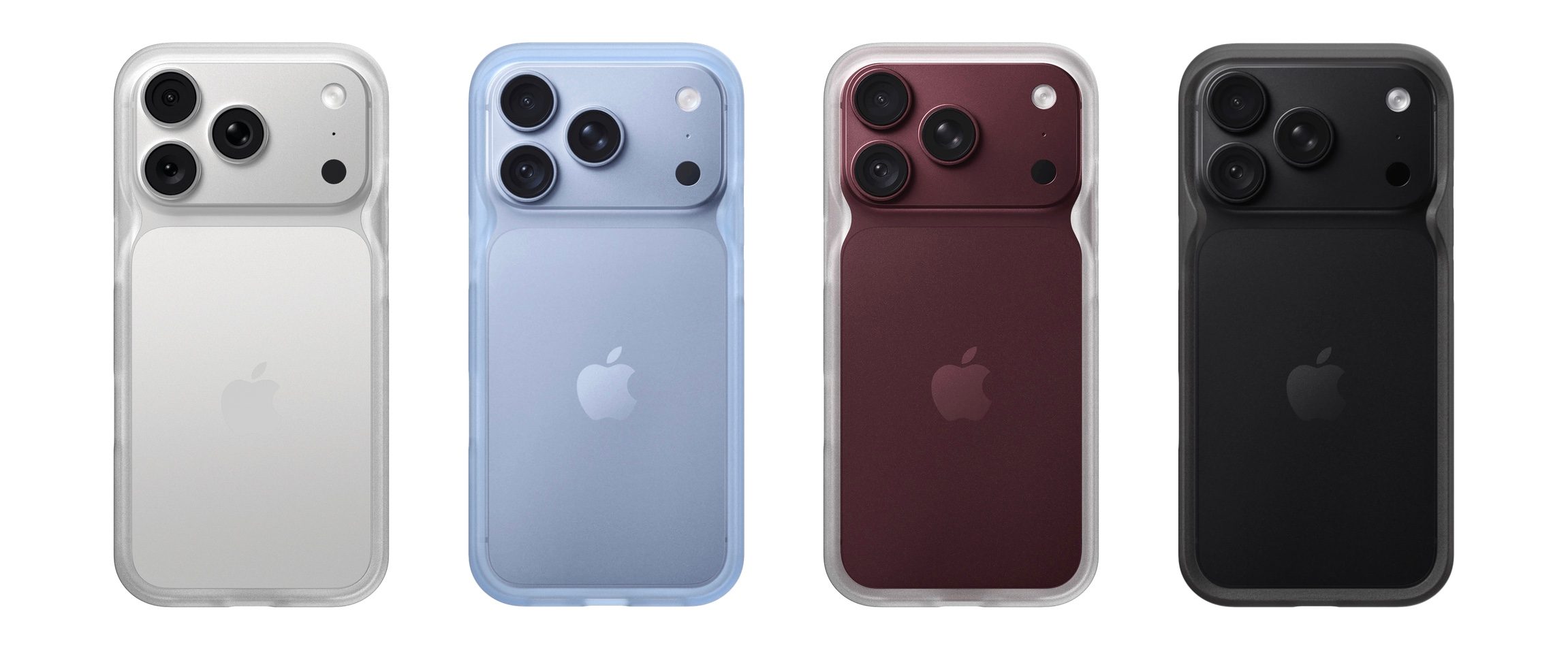
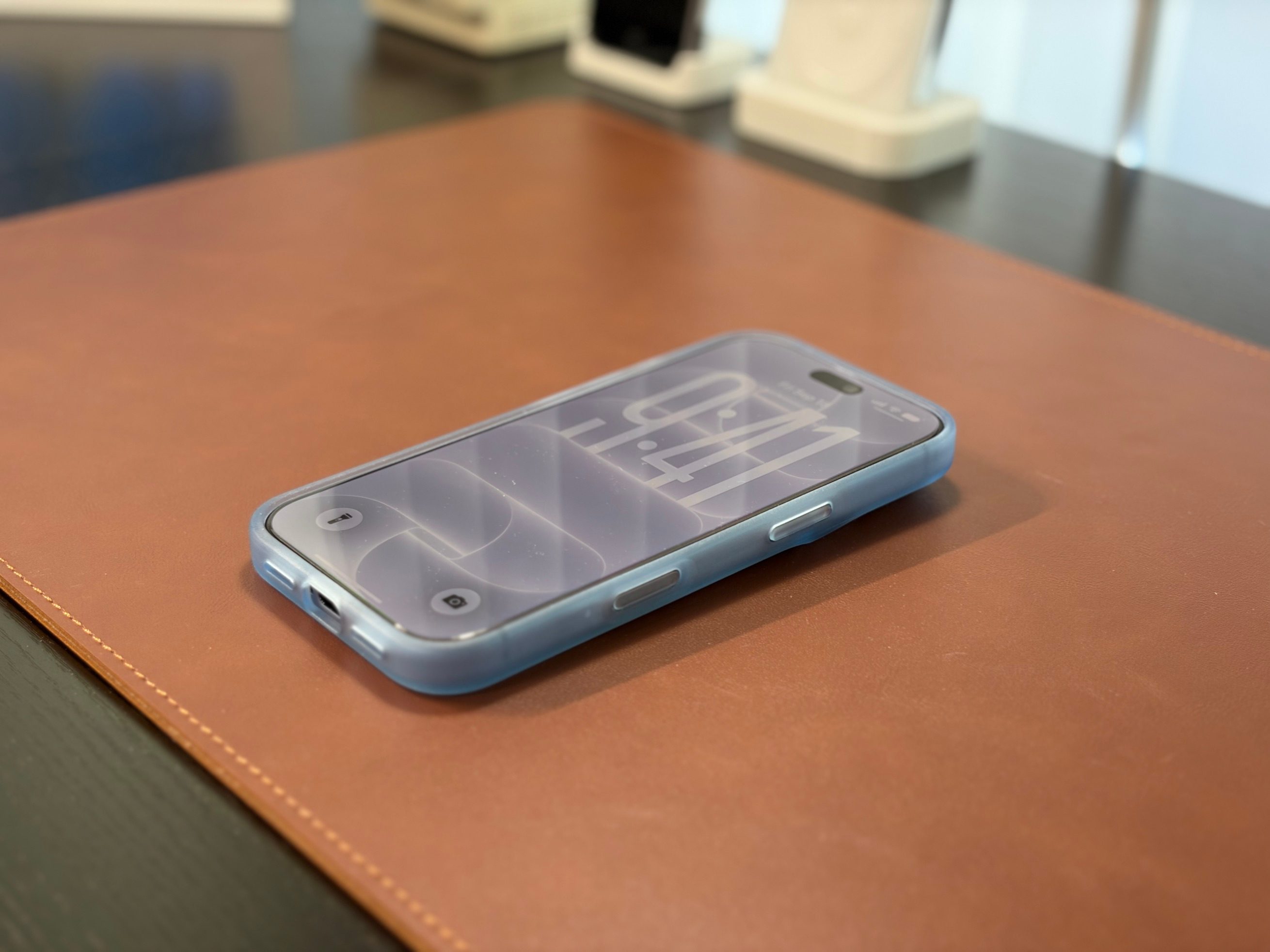
- Tactile Button Response: For reasons best known to the industrial design team, Rhinoshield opted for a nearly flush button profile. Combined with the rigid hard-plastic material, this results in buttons that feel noticeably mushy and require deliberate, heavy force to actuate. It strips away the crisp, satisfying click that users expect from a premium flagship accessory.
- Accessory Incompatibility: If you are a devotee of Apple’s ecosystem of carrying accessories—such as the official Wrist Strap or Crossbody Strap—you will need to look elsewhere. The Rhinoshield bumper completely omits the necessary reinforced loop connection points required to anchor these lanyards.
Official Statements and Industry Perspective
While Apple has remained tight-lipped regarding why its bumper accessories were restricted to the iPhone Air rather than proliferating to the Pro lineup, industry insiders point toward shifting structural priorities. With titanium and advanced aluminum alloys defining recent generations, Apple has prioritized full-coverage cases, MagSafe integration, and fineWoven or silicone materials to drive accessory revenue.
Rhinoshield, conversely, positions its Impact Bumper as an engineering marvel of minimalist defense. In promotional and technical documentation, the company emphasizes its proprietary single-material mono-polymer structure. By avoiding multi-material bonding (which often utilizes glues or complex multi-injection molding), Rhinoshield ensures that the case can be effortlessly broken down and recycled at the end of its lifecycle, aligning with global corporate sustainability mandates without sacrificing baseline impact dissipation.
Future Outlook
The market for minimalist smartphone protection occupies a fascinating niche. As smartphones continue to balloon in weight, thickness, and camera protrusion, the desire to strip away bulk grows stronger among power users. Yet, the high cost of flagship repairs makes going entirely naked a perilous financial gamble.
The Rhinoshield Minimalist Impact Bumper for the iPhone 18 Pro proves that the form factor still has a pulse, even if it is not without flaws. Its loose initial fit, mushy button response, and lack of lanyard anchor points demonstrate that perfecting a skeletonized case is harder than ever.
However, for a specific breed of user—those willing to trade button tactility for the euphoric, weightless sensation of a nearly naked phone, all while shielding their fragile aluminum edges and camera lenses from desk scratches—the compromises are tolerable.
As we look toward future iPhone iterations, whether Apple will reconsider a broader rollout of official bumpers remains to be seen. Until then, third-party innovators like Rhinoshield remain the primary custodians of the minimalist dream, continually refining the balance between exposure and protection.