Executive Overview
As the autumn product cycle reaches its culmination, the renowned hardware dissecting specialists at iFixit have released their comprehensive teardown analyses for Apple’s latest wearable flagships: the Apple Watch Series 12 and the rugged Apple Watch Ultra 4. Completing the teardown sequence for Apple’s expansive September hardware lineup, these latest explorations offer a microscopic look at the engineering, internal component layouts, and architectural refinements that dictate how these devices function—and, crucially, how easily they can be repaired.
For years, the intersection of sleek industrial design, waterproof integrity, and consumer right-to-repair has been a battleground for Apple. The Apple Watch has historically remained one of the most notoriously difficult consumer electronics to service independently, primarily due to its compact spatial constraints and the heavy reliance on industrial adhesives required to maintain robust water-resistance ratings.
The new iFixit teardowns, led by hardware expert Shahram Mokhtari, reveal a fascinating narrative of minor evolutionary adjustments. While the Apple Watch Ultra 4 largely mirrors the repairability hurdles of its predecessor—clinching a modest 4 out of 10 score—the mainline Apple Watch Series 12 manages a slight, albeit hard-fought, improvement, creeping up to a 4/10 as well (representing a modest one-point bump compared to historical baselines for standard Apple Watches).
However, when placed into the broader consumer electronics ecosystem—such as competing directly against Google’s Pixel Watch 5, which secured an impressive 9 out of 10—Apple’s ongoing reliance on glued displays and difficult entry points highlights a continuing philosophical divide between Cupertino’s closed ecosystem philosophy and the burgeoning global movement toward consumer repairability.
Detailed Chronology of the Dissections
The Apple Watch Ultra 4: Rugged Exterior, Familiar Internal Barriers
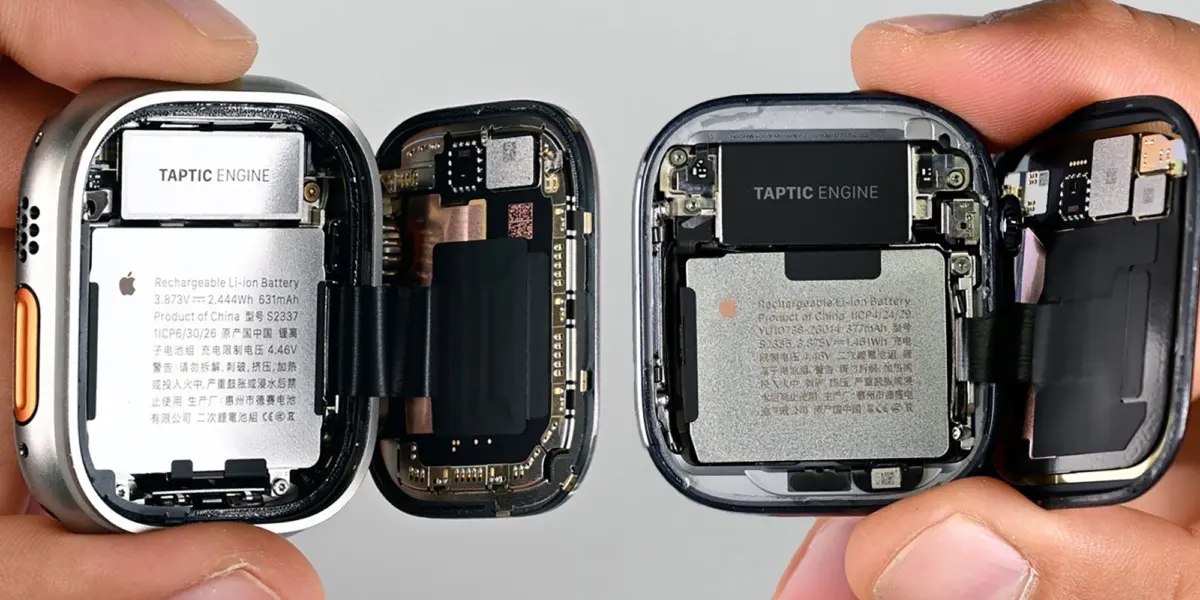
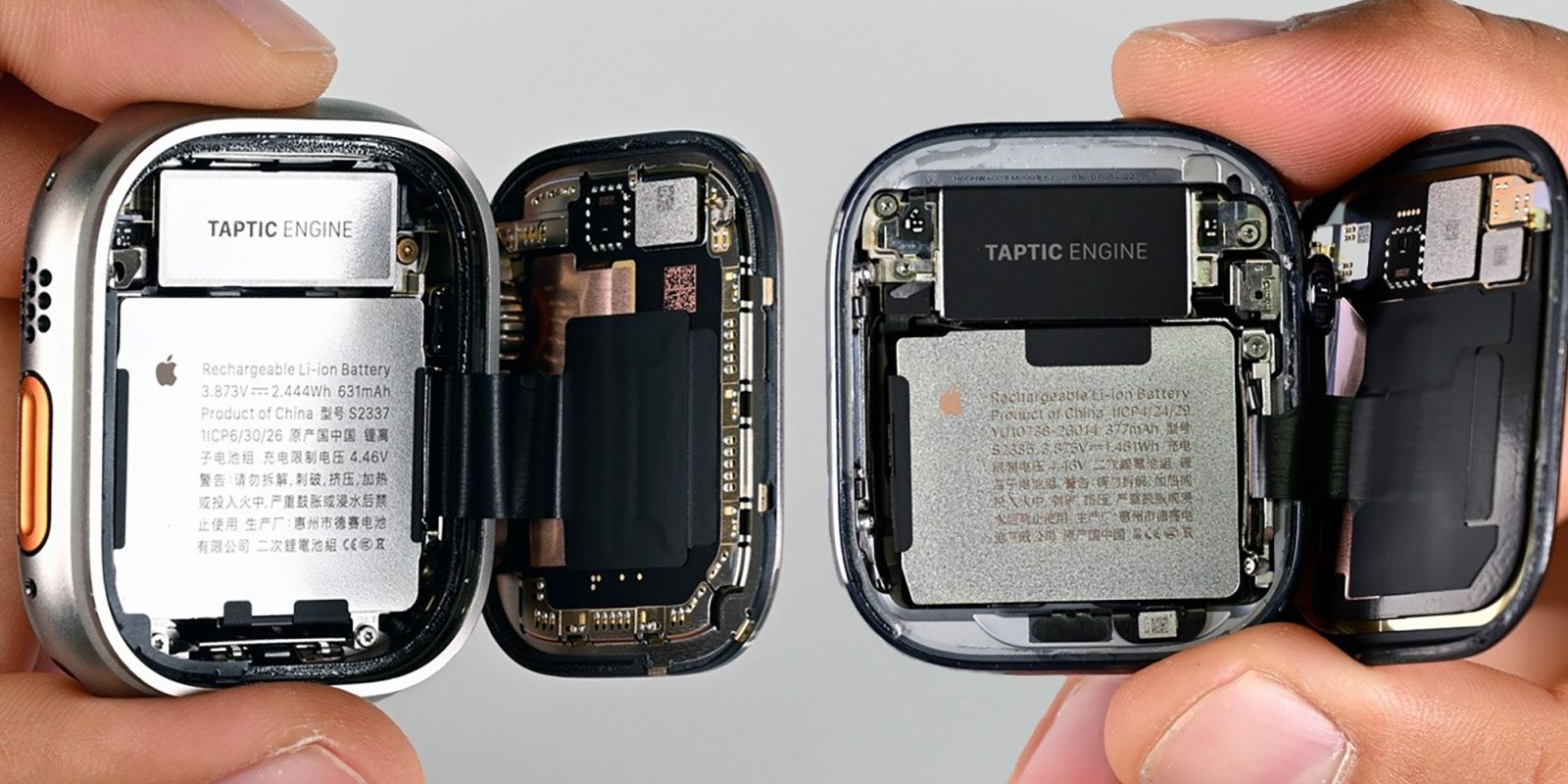
The teardown process for the Apple Watch Ultra 4 began, as it frequently does with modern smartwatches, under the application of targeted thermal heat. This step is necessary to soften the industrial-grade adhesive binding the flat sapphire front crystal to the titanium chassis. Utilizing a newly designed metal pick specifically manufactured by iFixit, Mokhtari carefully pried the display assembly open to expose the delicate interior components beneath, prominently featuring the newly upscaled battery and the finely tuned Taptic Engine.
A common misconception among consumers regarding the Apple Watch Ultra line is that the visible exterior screws on the bottom case offer a gateway to general internal maintenance. Mokhtari quickly dispelled this notion during the broadcast. Those four exterior screws grant access only to the specialized sensor assembly located on the underside of the back cover, alongside the foundational S11 system-in-package (SiP) chip embedded directly into the case framework.
Consequently, accessing the energy source of the device—the battery—still necessitates entering through the front display. The Ultra 4 features a slightly larger energy capacity, packing a 2.444 Wh power cell compared to the 2.313 Wh cell found inside the previous-generation Ultra 3.
Once the initial hurdle of ungluing the display is successfully navigated without severing the fragile, hair-thin flex cables running underneath, the process of disconnecting the display’s press connector and extracting the battery appears relatively straightforward. Yet, because the primary barrier to entry—thermal adhesive separation—remains entirely unchanged, the Apple Watch Ultra 4 ultimately yielded a familiar and somewhat disappointing repairability score of 4 out of 10, flatly mirroring its predecessor.
The Apple Watch Series 12: Incremental Tweaks and Tighter Tolerances
Turning their attention to the mainline consumer model, the iFixit team shifted focus to the Apple Watch Series 12. At first glance, the device exhibits slight structural improvements designed to streamline internal assembly and future maintenance procedures. Most notably, Apple integrated stretch-release adhesive paired with a dedicated pull tab underneath the power source, making the removal of the 1.461 Wh battery (a minor bump over the 1.403 Wh cell found in the 46mm Series 11) considerably smoother than in prior iterations.
Furthermore, Apple instituted a notable internal redesign regarding the display interface. Previous models relied on a complex Zero Insertion Force (ZIF) connector paired with securing tape to link the screen to the logic board. The Series 12 replaces this legacy system with a much simpler, cleaner press connector.
However, this architectural modification introduces a curious workflow paradox. Because of the way the internal components are layered, replacing the display now inherently requires the removal and replacement of the battery as well. As Mokhtari dryly observed during the teardown process: "If you’ve come this far, why wouldn’t you?"
Despite these clever internal adjustments, the Series 12 presents a daunting physical challenge during the opening phase. Mokhtari noted that the manufacturing tolerances engineered around the Series 12’s display are exceptionally tight—even more rigid and unforgiving than those observed on the larger Ultra 4. Prying open the casing demanded a concerning degree of physical force, raising immediate anxiety regarding the structural integrity of the delicate OLED glass panel during service procedures.
Ultimately, these mixed structural updates—combining easier battery extraction methods with perilous display-removal tolerances—culminated in a 4/10 repairability score for the Apple Watch Series 12. While it marks a modest one-point upward adjustment relative to older base models evaluated by the platform, it underscores just how steep the climb remains for mainstream smartwatches.
Supporting Context & Metrics
To fully comprehend the engineering choices made by Apple’s product design teams, it is vital to analyze the quantitative metrics, component shifts, and competitive benchmarks highlighted during the iFixit assessment.
Comparative Hardware Specifications
| Device Model | Battery Capacity (New) | Battery Capacity (Previous Gen) | iFixit Repairability Score | Primary Entry Method |
|---|---|---|---|---|
| Apple Watch Ultra 4 | 2.444 Wh | 2.313 Wh (Ultra 3) | 4 / 10 | Thermal Heat & Display Pry |
| Apple Watch Series 12 | 1.461 Wh | 1.403 Wh (46mm Series 11) | 4 / 10 | Thermal Heat & Display Pry (Tighter Tolerances) |
| Google Pixel Watch 5 (Ref) | Not Disclosed | Not Disclosed | 9 / 10 | Torx Screws & Gasket (No Adhesive) |
The Engineering Paradox of Wearable Technology
Smartwatch engineering represents one of the most punishing disciplines in consumer hardware development. Engineers are tasked with packing high-density batteries, intricate biometric sensor arrays (such as electrical heart sensors, optical blood oxygen monitors, and thermal sensors), cellular radios, localized processors, and robust haptic feedback mechanisms into a watertight chassis measuring only millimeters across.
Apple’s reliance on edge-to-edge structural adhesive is not merely an arbitrary choice designed to stymie independent repair shops; it is a fundamental defense mechanism against water ingress, pressure changes during aquatic sports, and daily environmental wear-and-tear. When a device is rated for high-depth diving or extreme atmospheric pressures, structural adhesives and compression gaskets form an interdependent ecosystem.

However, as consumer advocacy groups and right-to-repair legislation gain global momentum—particularly within the European Union and various North American jurisdictions—the pressure on manufacturers to design modular, service-friendly architectures has never been higher. Apple’s introduction of stretch-release pull tabs inside the Series 12 indicates that Cupertino’s engineers are actively exploring ways to satisfy internal service technicians and regulatory expectations, even if the exterior barriers remain fiercely protective.
The Competitive Landscape: Apple vs. Google
To contextualize Apple’s stagnant 4/10 scoring, iFixit routinely contrasts Apple’s wearable architecture against competing platforms in the industry. A prime point of comparison during this teardown cycle was Google’s Pixel Watch 5, which walked away with a stellar 9 out of 10 repairability rating.
The divergence in design philosophy is stark. Google engineered the Pixel Watch 5 to allow technicians to remove the display assembly utilizing a simple gasket and just two standard Torx screws. Furthermore, the internal battery within the Pixel ecosystem can be extracted directly without forcing the technician to navigate complex, high-risk adhesive seals or risking damage to interconnected display cables.
While Google’s hardware may not boast the same extreme depth-rating tolerances or aerospace-grade titanium framing as an Apple Watch Ultra, the staggering five-point disparity on iFixit’s scale illustrates a chasm between modularity-first design and Apple’s integrated, tightly sealed philosophy.
Official Statements and Industry Perspective
While Apple historically declines to comment directly on third-party teardown assessments, corporate communications regarding environmental sustainability and device longevity frequently address the underlying philosophy of product servicing.
Apple maintains that the safest, most reliable, and highest-quality repairs are those performed by certified technicians utilizing genuine OEM components, specialized calibration machinery, and factory-grade environmental sealing equipment. From Apple’s corporate perspective, designing a device with ultra-tight tolerances and heavy industrial adhesive is synonymous with ensuring long-term durability, dust resistance, and water resistance for millions of consumers who wear their devices in harsh environments, ranging from ocean depths to sweaty marathon tracks.
Conversely, independent repair advocates, including the technical analysts at iFixit, argue that durability and repairability do not have to be mutually exclusive design goals. Shahram Mokhtari’s commentary during the Series 12 and Ultra 4 broadcasts emphasized that while small wins—such as the adoption of stretch-release pull tabs and simplified press connectors—demonstrate an acknowledgment of internal servicing needs, the foundational barrier of entry remains unnecessarily punitive.
Independent repair shops worldwide continue to face steep economic and technical barriers when attempting to service standard consumer smartwatches. When a routine battery degradation issue—an inevitable biological reality for lithium-ion power cells over a two-to-three-year lifecycle—requires thermal gun separation of a glued sapphire glass screen, the risk profile of destroying a functional display panel remains artificially high. This dynamic frequently prices out independent repair options, steering consumers directly toward costly manufacturer-managed replacement programs.

Future Outlook: What Lies Ahead for Wearable Repairability?
As we look toward future hardware iterations—such as anticipated subsequent generations of the Apple Watch lineup—the insights gleaned from the Series 12 and Ultra 4 teardowns paint a picture of slow, incremental evolution rather than revolutionary redesign.
Regulatory Pressures Mount
Global regulatory frameworks are rapidly shifting. Laws concerning the "Right to Repair" are transitioning from theoretical policy debates into binding legal statutes across multiple major economic zones. Manufacturers are increasingly mandated to provide accessible spare parts, diagnostic tools, and modular repair documentation to both independent entities and everyday consumers.
For Apple, maintaining a stagnant 4/10 repairability score across its premier wearable product lines may soon become untenable under upcoming legislative enforcement. To stay ahead of compliance curves while preserving the sleek, waterproof aesthetics that define the Apple Watch brand, Cupertino’s industrial designers will likely be forced to innovate further in mechanical fastening systems, movable internal chassis frames, and alternative sealing technologies that replace chemical adhesives with reusable mechanical gaskets.
Engineering Horizons
The inclusion of stretch-release adhesive tabs inside the Series 12 serves as a pivotal signal. It proves that Apple can modify its internal assembly lines to accommodate safer, cleaner battery extractions without sacrificing volumetric efficiency. The challenge for future engineering cycles will be scaling these accessibility improvements outward—bringing them to the rugged, heavy-duty Ultra lineup and, most importantly, redesigning the primary entry vector so that screen replacements do not carry an inherent risk of catastrophic display failure.
Until such a paradigm shift occurs, consumers and independent technicians must continue to approach the Apple Watch Series 12 and Ultra 4 with immense caution. These devices remain marvels of modern microminiaturization and computational engineering—glorious feats of wearable technology on the outside, yet stubbornly resistant organisms when opened up on the repair bench.