Executive Overview
In a landmark transaction that underscores the meteoric rise of physical artificial intelligence and robotics, Genesis AI has announced a massive $500 million Series A funding round at a staggering $3.5 billion valuation. The capital injection
was co-led by an influential triumvirate of institutional and venture capital heavyweights: Premji Invest, Khosla Ventures, and Eclipse.
This oversized round brings Genesis AI’s total disclosed funding to $605 million since its formal inception in early 2024. The company previously secured a $105 million financing milestone announced in July 2025.
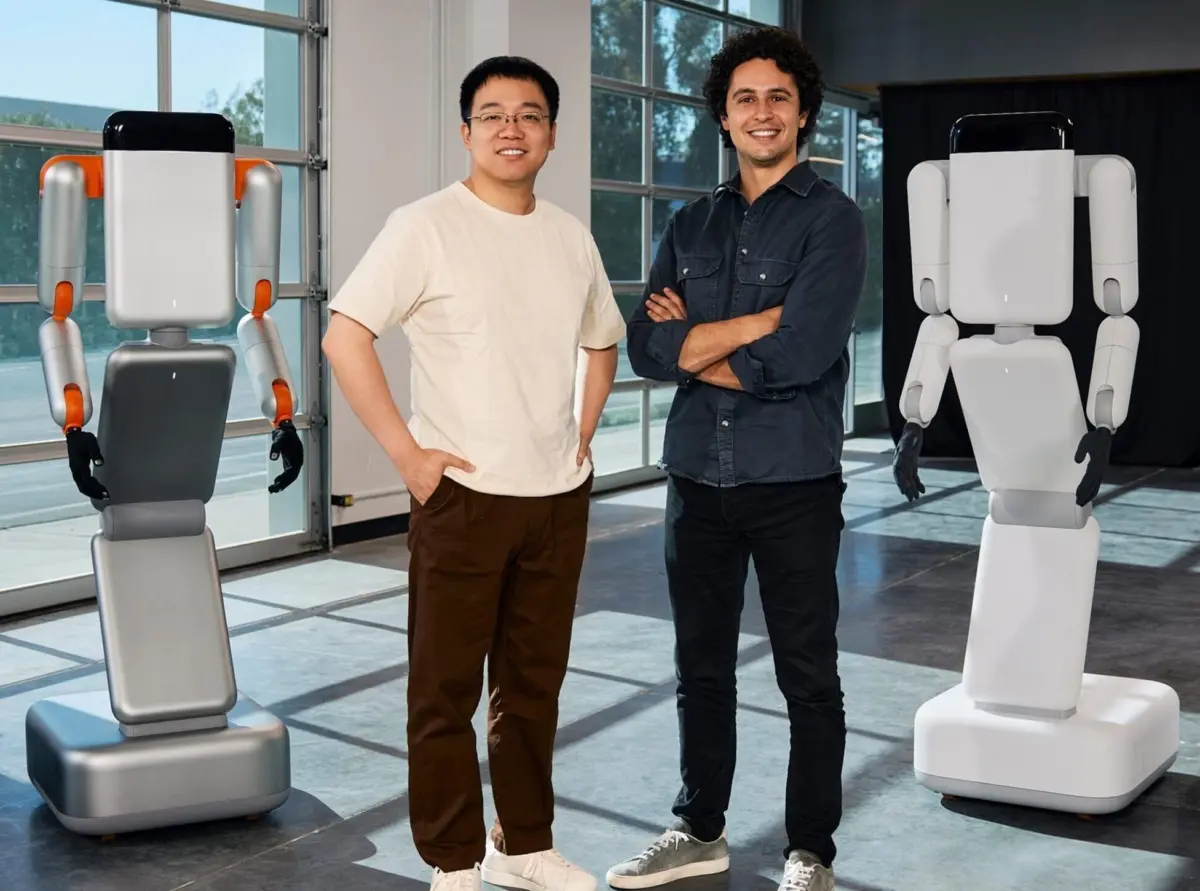
What sets Genesis AI apart in an increasingly crowded robotics ecosystem is its comprehensive, full-stack approach. Rather than focusing solely on hardware manufacturing or isolated software algorithms, the startup is concurrently building advanced humanoid and functional robots, proprietary AI models, and hyper-realistic simulation environments. Its flagship product, Eno, is engineered to tackle complex, dexterous physical labor across manufacturing facilities, bustling logistics warehouses, and sensitive laboratory environments.
The latest funding round attracted an extraordinary roster of strategic corporate investors and high-profile individual backers, including NVIDIA, AMD Ventures, T. Rowe Price Associates, Durable Capital Partners, Bpifrance, HSG, Samsung Next, Zoom, and Ericsson. Prominent tech visionaries and leaders—such as former Google CEO Eric Schmidt, Zoom founder Eric Yuan, Yahoo co-founder Jerry Yang, Iliad Group founder Xavier Niel, and former Tesla CFO Zach Kirkhorn—also participated.
Genesis AI plans to channel these fresh funds into expanding its underlying computing infrastructure, scaling up production lines for the Eno robot, and aggressively expanding its global talent pool. Currently operating with roughly 100 employees split between its headquarters in Paris, France, and secondary offices in San Carlos, California, the startup is poised to transition from an elite academic research project into an industrial-scale commercial enterprise.
Detailed Chronology: From Academic Research to a Multi-Billion-Dollar Startup
The foundational roots of Genesis AI trace back to 2022, long before the company had a commercial office or a venture-backed balance sheet. At the time, co-founder and CEO Zhou Xian was pursuing a Ph.D. in robotics at Carnegie Mellon University (CMU). During his doctoral research, Xian encountered a formidable bottleneck that has historically plagued the robotics industry: the acute scarcity of high-quality, diverse training data required to teach machines how to interact seamlessly with the physical world.
While large language models (LLMs) like GPT-4 or Claude could feast on vast tranches of digitized human text scraped from the internet, physical AI lacked an equivalent data repository. Robots cannot learn how to manipulate objects, gauge friction, apply calibrated pressure, or navigate three-dimensional spaces simply by reading text. They require rich, multi-modal kinematic and tactile datasets that capture the nuance of human motion.
To tackle this, Xian initiated an open-source academic research project—originally named Genesis—that united robotics labs across more than a dozen universities to develop advanced simulation frameworks.
Following the completion of his Ph.D. at the end of 2024, Xian joined forces with co-founder Theophile Gervet. Recognizing the convergence of breakthroughs in generative AI and hardware engineering, the duo officially incorporated the startup in early 2025.
- March 2025: Genesis AI formally launches, rapidly expanding its operational scope beyond simulation tools to encompass proprietary AI software development and industrial-grade robot hardware.
- July 2025: The company announces a $105 million foundational funding round, validating its early prototypes and catching the attention of top-tier Silicon Valley and global venture funds.
- October 2027 (Present): Genesis AI completes its watershed $500 million Series A round, vaulting its valuation to $3.5 billion and positioning itself as a dominant contender in the global physical AI race.
Supporting Context & Metrics: The Boom in Physical AI and Robotics
The timing of Genesis AI’s capital raise coincides with a historic investment surge within the robotics and physical AI sectors. According to comprehensive market data compiled by Crunchbase, venture capital funding directed toward robotics startups skyrocketed through the first three quarters of the year, driven primarily by aggressive deployment from U.S. and Chinese venture ecosystems.
Key Market Metrics:
- Global Robotics Funding (Q3): Global venture investments in robotics startups reached $9.9 billion in Q3 alone—more than double the $4.3 billion recorded during the same period in 2025.
- The Rise of Physical AI: Capital inflows into "physical AI"—the intersection where advanced machine learning models control physical actuators, vehicles, and robotic appendages—have shattered historical records throughout the year.
- Valuation Inflation: Early-stage rounds that previously commanded tens of millions are now routinely closing in the hundreds of millions as investors race to back category-defining foundational models for hardware.
Despite the macroeconomic uncertainties that have occasionally chilled software-only SaaS valuations, industrial automation and embodied AI are viewed by institutional investors as structural imperatives. Facing persistent labor shortages, aging populations in developed economies, and rising supply chain complexities, enterprises are heavily incentivized to adopt autonomous labor solutions.
Technological Innovation: How Genesis AI Teaches Robots
To overcome the data starvation problem that stymied earlier generations of robotics companies, Genesis AI developed an innovative, multi-pronged data collection and training architecture.
1. Human-Centric Data Capture
Rather than relying on tedious teleoperation—where human operators use joysticks or remote controllers to guide a robot through tasks—Genesis captures training data organically from human workers performing their regular jobs.

The company equips workers with specialized recording gloves and multi-angle camera arrays that meticulously record hand and finger movements, spatial trajectories, and tactile feedback. Because Genesis’s proprietary robotic hand is engineered to closely mirror the anatomical dimensions and articulation of the human hand (and the recording gloves), the captured data translates fluidly into robot motor commands.
2. The GENE AI Model
The recordings gathered from human workflows are fed into the company’s foundational AI model, dubbed GENE. This model processes multi-modal inputs—combining visual perception, joint angles, and touch sensor data—to generate policies that allow robots to execute complex, multi-step physical manipulation tasks autonomously.
3. Genesis World (Simulation Software)
Before deploying newly learned skills onto physical hardware, Genesis utilizes its proprietary simulation platform, Genesis World. Within this hyper-realistic virtual environment, the Eno robot can practice, fail, and refine its tasks millions of times over in mere hours. This virtual-to-real transfer learning significantly accelerates development cycles and safeguards physical machinery from costly trial-and-error accidents.
Official Statements and Industry Perspective
In an exclusive interview with Crunchbase News, co-founder and CEO Zhou Xian emphasized the strategic necessity of maintaining a unified, vertically integrated product ecosystem:
"We just want to bring something more elegant, more timeless. In the end, this is a very full-stack company… We have to build all different pieces across the entire stack to make sure we can tightly integrate our technology stack together, and hopefully build the most well-polished and reliable product."
Xian noted that separating the brain (AI software) from the body (hardware) often introduces latency, calibration errors, and integration friction. By designing the intelligence, hardware, simulation tools, and testing apparatus as a single, cohesive system, Genesis AI aims to deliver enterprise-grade reliability.
Investors have echoed this sentiment. Vedant Agrawal, a partner at Premji Invest, highlighted what drew his firm to lead the massive financing round:
"Completing full tasks in real time, not just short clips, is what turns a robot into something a business can rely on."
Rather than showcasing rehearsed, 10-second demo clips in controlled laboratory conditions, Genesis AI’s demonstrations feature robots successfully completing extended, unscripted workflows from start to finish—a critical threshold for industrial adoption.
Business Model & Future Outlook
Genesis AI is initially deploying its flagship robot, Eno, into high-demand industrial verticals where repetitive physical labor, precision handling, and stringent quality control are paramount. These early target markets include:
- Advanced Manufacturing: Assisting with assembly line logistics, parts handling, and quality assurance.
- Logistics & Warehousing: Sorting, packing, and palletizing goods in high-throughput distribution hubs.
- Laboratory Environments: Handling sensitive biological and chemical samples with high precision and zero contamination risk.
Commercial Strategy: Robotics-as-a-Service (RaaS)
To lower the capital expenditure barrier for prospective enterprise clients, Genesis AI is pioneering a flexible rental and subscription model. Instead of forcing businesses to purchase expensive robotic hardware upfront, customers can subscribe to the robot and its underlying AI software as a combined, managed service.
The company has already secured a strategic partnership with LG CNS and maintains an active pipeline of Fortune 500 prospective customers eager to pilot the technology. While CEO Zhou Xian declined to disclose specific revenue figures or exact paying customer counts, the caliber of the investor syndicate suggests strong commercial validation.
Long-Term Roadmap
Looking beyond industrial and logistics applications, Genesis AI has outlined an ambitious multi-phase expansion strategy. Over the coming years, the company plans to scale Eno production to address sectors such as:
- Hospitality and Healthcare: Assisting with eldercare, patient support, and hospitality logistics.
- Consumer and Outdoor Applications: Eventually expanding into domestic assistance and unstructured outdoor environments.
With $500 million in newly secured dry powder, a world-class team of engineers and researchers, and deep-pocketed strategic partners spanning semiconductors, cloud computing, and enterprise software, Genesis AI is uniquely positioned to define the next era of embodied artificial intelligence.