Executive Overview
The evolution of mobile device interaction has long been defined by how seamlessly technology can anticipate human intent. Since Apple first introduced Face ID and its underlying TrueDepth 3D camera system alongside the revolutionary iPhone X in 2017, biometric sensors have evolved from simple authentication gateways into sophisticated environmental monitors. These systems do not merely recognize who is looking at the screen; they understand how and when attention is being directed.
However, hardware segmentation has historically drawn a sharp line between traditional flagship iPhones equipped with dedicated sensor notches or Dynamic Islands and alternative form factors. Enter the iPhone Duo—a device category that has captured the imagination of consumers seeking modularity and dual-display utility. Up until now, users of the iPhone Duo faced a distinct trade-off, missing out on the nuanced, context-aware automations that TrueDepth-enabled handsets enjoyed.
That paradigm is officially shifting. With the rollout of the iOS 27.3 developer beta 2, Apple is bridging the functional gap between its standard flagship lineup and the iPhone Duo. By introducing the Unlock with Front Camera feature alongside system-wide Attention Aware features, Apple is proving that advanced machine learning and standard optical sensors can combine to deliver an elite user experience. No longer will alarms blare aggressively at users who are already staring directly at their device, nor will displays dim prematurely while a user is deep in thought.
This comprehensive report examines the technical mechanics of this update, its practical implications for everyday users, the underlying configuration settings, and what this signals for the future of Apple’s software-hardware integration roadmap.
Detailed Chronology: From iPhone X to iOS 27.3
To fully appreciate the significance of the iOS 27.3 developer beta 2 update for the iPhone Duo, it is essential to trace the historical lineage of Apple’s attention-sensing technology.

The 2017 Breakthrough: The iPhone X and TrueDepth
When Apple unveiled the iPhone X, the industry was transfixed by the removal of the physical Home button. Replacing it was Face ID, powered by a complex array of hardware components housed within the device’s notch: an infrared camera, a flood illuminator, and a dot projector. Beyond the undeniable security upgrade over Touch ID, Face ID quietly birthed a secondary suite of intelligence known as Attention Aware features.
For the first time, an operating system could dynamically alter its behavior based on human gaze. If a user received a notification, the device recognized whether they were looking at the screen before revealing the full preview. If an alarm sounded, the system detected user engagement and automatically attenuated the audio volume, sparing users from jarring, full-blast sirens.
The Hardware Divide: The Rise of the iPhone Duo
As Apple diversified its product lines to include specialized form factors like the iPhone Duo, engineering constraints necessitated design compromises. While the iPhone Duo offered versatile screen real estate—particularly its outer display—it historically relied on standard front-facing selfie cameras rather than the bulky, expensive TrueDepth 3D sensor array. Consequently, users accepted that convenience features tied to hardware-level depth mapping would remain exclusive to the Pro and standard flagship tiers.
November 2026: The iOS 27.3 Developer Beta 2 Paradigm Shift
The release of iOS 27.3 developer beta 2 marks a watershed moment for the iPhone Duo architecture. Without requiring a hardware overhaul, Apple’s software engineers have leveraged advanced neural processing and computer vision algorithms to replicate the core benefits of attention awareness utilizing only the standard front camera.
- Phase 1: Introduction of Face Unlock via Front Camera. The beta initially dropped hints by allowing users to bypass traditional passcode entries using optical face recognition on the outer display.
- Phase 2: Integration of Attention Aware Capabilities. Shortly after, Apple expanded the feature set to include the full spectrum of attention-based environmental adjustments—bringing parity to devices that previously lacked TrueDepth hardware.
Technical Mechanics: How Attention Awareness Works Without TrueDepth
The most compelling aspect of the iOS 27.3 update for the iPhone Duo is how Apple achieved TrueDepth-level functionality using conventional camera hardware. Historically, skepticism surrounded optical-only face unlock methods on smartphones due to perceived vulnerabilities in depth perception and security spoofing (such as bypassing locks with printed photographs).

Software-Driven Computer Vision
Apple’s neural engine and machine learning frameworks have advanced to a point where high-precision optical analysis can approximate gaze detection and spatial orientation. When a user interacts with the iPhone Duo’s outer display, the front-facing camera initiates a rapid, low-power scan to evaluate two distinct parameters:
- Facial Presence and Alignment: Verifying that a human face is positioned in front of the device.
- Gaze Vectors: Determining whether the user’s eyes are actively directed toward the plane of the screen.
Unlike the complex infrared dot projection of traditional Face ID, this software-driven implementation relies on sophisticated ambient light adaptation and frame-to-frame optical tracking. It operates efficiently in the background, consuming minimal battery resources while drastically elevating user comfort.
Operational Boundaries and System Logic
Apple has implemented specific operational rules to ensure this feature behaves predictably on the iPhone Duo:
- Display Dependency: The new face unlock and Attention Aware features function exclusively when the user is interacting with the outer display.
- Decoupled Configuration: Users do not need to enable the primary Face Recognition unlock feature for the Attention Aware capabilities to function. This granular control allows privacy-conscious users to utilize automated audio-lowering and display-dimming without storing facial authentication data for device unlocking.
User Experience & Practical Implications
The transition from disruptive alerts to intuitive notifications fundamentally changes how owners interact with their iPhone Duo throughout the day. Here is a breakdown of how these features manifest in daily use:
1. Intelligent Audio Attenuation for Alarms, Timers, and Calls
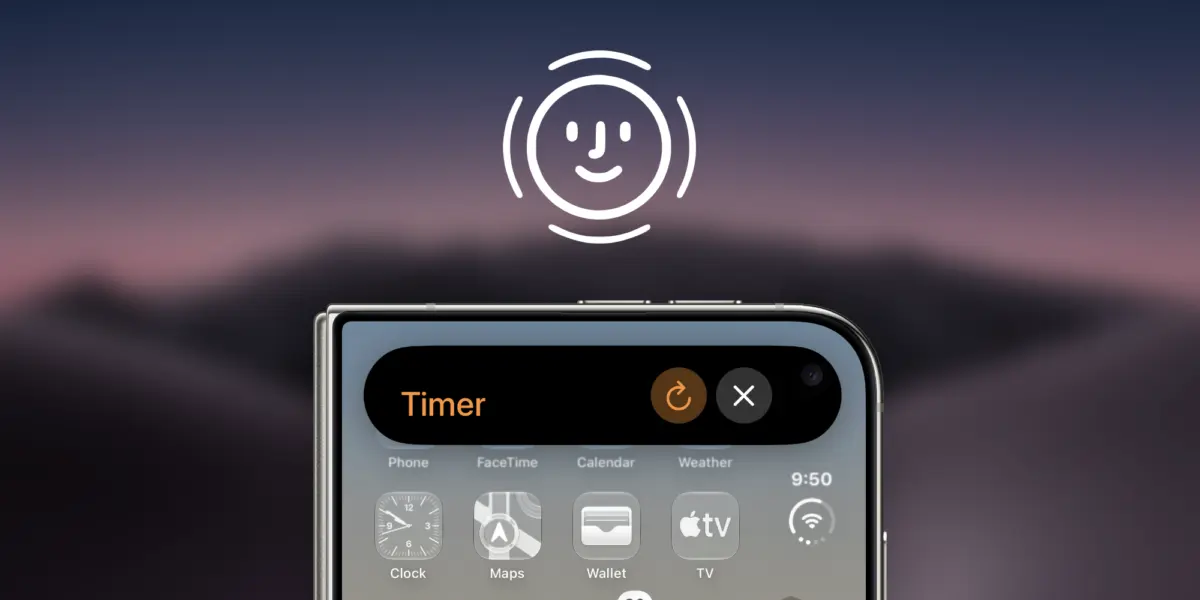
We have all experienced the jarring sensation of an alarm blaring across a quiet room, forcing a frantic scramble to silence it. On an iPhone Duo running iOS 27.3, the device recognizes when you are already awake and looking at the screen. The moment your gaze registers, the system automatically lowers the volume of incoming phone calls, active timers, and morning alarms. It is a subtle adjustment that removes daily friction points.

2. Adaptive Screen Timeout Management
Preventing the display from dimming while reading an article or checking a recipe has traditionally required physical screen touches. With Attention Aware features active on the iPhone Duo, the front camera continually monitors for active engagement. If your eyes remain fixed on the text, the phone stays awake—dimming or locking only the moment you look away or set the device down.
3. Contextual Lock Screen Notifications
Privacy on mobile devices is paramount. When locked, the iPhone Duo now suppresses sensitive notification previews by default. However, once the system recognizes your face via the front camera, it instantly expands the notification content, allowing you to read incoming messages seamlessly without performing an explicit authentication gesture.
Configuration and Customization
For early adopters running the iOS 27.3 developer beta 2, enabling and fine-tuning these features is straightforward. Apple has integrated the controls deep within the iOS accessibility and security architecture.
How to Manage Attention Aware Features on iPhone Duo:
- Open the Settings application on your iPhone Duo.
- Navigate to Accessibility.
- Tap on Face Recognition & Attention.
- Toggle the master switches to enable or disable Attention Aware Features according to your preference.
- Within this same menu, users can activate Haptic on Successful Unlock—providing a tactile vibration confirmation similar to traditional Face ID-enabled iPhones when an unlock sequence completes successfully.
Note: After updating to iOS 27.3, these features are generally enabled by default, ensuring an out-of-the-box intelligent experience.
Future Outlook & Industry Significance
The rollout of Attention Aware features to the iPhone Duo via the iOS 27.3 beta carries profound implications for the broader smartphone landscape.

Software Innovation Over Hardware Obsolescence
For years, consumer electronics manufacturers have relied on hardware iteration—forcing users to upgrade their physical devices—to access new software capabilities. Apple’s decision to democratize attention-aware intelligence to devices utilizing standard front-facing cameras demonstrates a masterclass in software engineering. By extracting advanced capabilities from existing hardware, Apple extends the lifecycle and utility of form factors like the iPhone Duo.
What This Means for Future iOS Releases
As machine learning models become leaner and more efficient, we can expect to see an expansion of cognitive operating system features across an even wider array of Apple hardware. The boundary between premium flagship tiers and alternative device categories is blurring, driven by neural processing rather than optical hardware counts.
As iOS 27.3 progresses through its developer and public beta cycles ahead of its official public launch, early feedback suggests that software-driven attention awareness is not merely a compromise—it is a viable, highly effective evolution of mobile interaction. For iPhone Duo owners, the days of disruptive alarms and premature screen lockouts are officially coming to an end.