RIYADH — In a landmark move designed to cement its status as a global powerhouse for artificial intelligence and cloud computing, Saudi Arabia’s National Infrastructure Fund (Infra) and technology firm HUMAIN have officially inked two transformative financing agreements. Valued at up to SAR 2.5 billion (approximately US$667 million or £505.3 million), the deal marks the inaugural deployment under Infra’s ambitious AI Data Center Financing Program.
Announced on November 9, 2026—just a day after the formal signing ceremony on November 8—the dual-facility arrangement bridges an immediate need for advanced graphics processing units (GPUs) with long-term, utility-scale power infrastructure development. Crucially, the blueprint reveals a strategic forward-looking approach: while the initial GPU financing covers a 25MW IT load, the concurrent electrical grid enhancements are deliberately engineered to support a staggering 40 times that capacity, laying the foundational groundwork for a gigawatt-scale digital economy.
Executive Overview: Bridging Silicon and Subscriptions
The rapid evolution of generative AI has transformed data centers from passive real estate assets into intensely power-hungry computing engines. Saudi Arabia, navigating its post-oil economic transformation under the banner of Vision 2030, is acutely aware that leadership in the digital era requires more than just capital—it requires an unbroken chain of advanced hardware, high-speed fiber connectivity, and, above all, reliable, scalable electricity.
The newly announced SAR 2.5 billion package is split into two distinct, highly strategic tranches:
- The GPU Facility (SAR 1.1 billion): Dedicated to directly financing high-performance graphics processing units representing approximately 25MW of initial IT load.
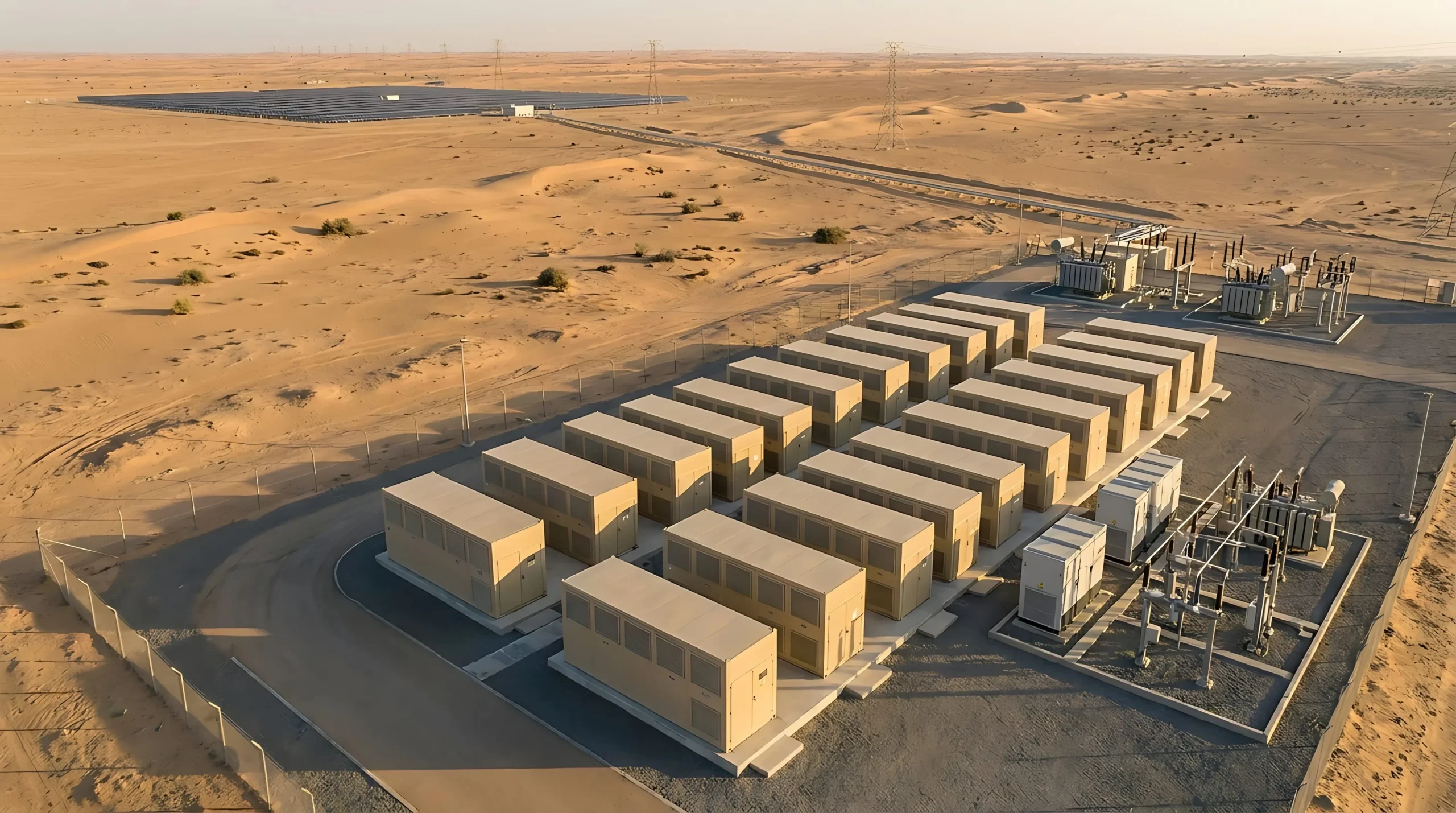
- The Power Infrastructure Facility (SAR 1.4 billion): Aimed at constructing the heavy electrical architecture—including substations, transmission lines, and grid connections—required to feed HUMAIN’s expanding data center footprint, ultimately scaling up to 1GW of future IT capacity.
This stark contrast in scale highlights a core operational reality of modern AI development: physical infrastructure must be aggressively pre-built years in advance to avoid the crippling power bottlenecks currently throttling data center growth in mature Western markets.
Detailed Chronology: From Davos Frameworks to Execution
The path to the November 2026 agreements has been meticulously orchestrated over the course of the year, tracking alongside major shifts in corporate ownership and international partnerships.

- January 2026 (World Economic Forum, Davos): Infra and HUMAIN first signaled their alignment by unveiling a non-binding financing framework. At the time, the scope was envisioned at up to SAR 4.5 billion to support a cumulative 250MW of AI data center capacity.
- November 2026 (Corporate Realignment): The operational landscape shifted significantly when state oil giant Saudi Aramco acquired a strategic 49% stake in HUMAIN. Backed by a US$2.6 billion injection of cash and complementary assets—while the Public Investment Fund (PIF) retained a controlling 51% stake—HUMAIN emerged with unprecedented financial backing and cross-sector synergy.
- November 8, 2026 (Formal Signing): Building upon the Davos framework and bolstered by Aramco’s investment, Infra and HUMAIN finalized the definitive SAR 2.5 billion agreements, marking the formal rollout of Infra’s specialized AI funding vehicle.
Supporting Context & Metrics: The Mechanics of a Gigawatt Ambition
To fully understand the gravity of Infra and HUMAIN’s partnership, one must examine the staggering macroeconomic and technical metrics underpinning Saudi Arabia’s digital blueprint.
Powering the Grid of Tomorrow
The allocation of SAR 1.4 billion purely toward electrical infrastructure underscores an undeniable truth: power availability is the ultimate bottleneck for artificial intelligence. According to data from National Grid SA, the kingdom’s transmission network already spans an impressive 104,633 circuit-kilometres, anchored by 1,315 substations serving roughly 13,000 population centers.
However, the sheer density of AI workloads necessitates an unprecedented expansion. Driven concurrently by Vision 2030’s green energy targets—which mandate that 50% of the kingdom’s electricity originate from renewable sources by the end of the decade—Saudi Energy projects its transmission network will expand to approximately 160,000 circuit-kilometres and 1,650 substations by 2030.
Data Center Density and Efficiency Standards
Infra’s AI Data Center Financing Program does not disburse capital indiscriminately. To qualify for funding, projects must adhere to stringent technical and commercial benchmarks designed to future-proof the nation’s digital infrastructure:
- Geographic Placement: Facilities must reside within designated national AI data center hubs, ensuring neutral, high-speed access to international subsea cable landings and the national fiber network.
- Tiering and Efficiency: Data centers are expected to meet strict Tier III standards or higher, while pursuing an aggressive Power Usage Effectiveness (PUE) target of 1.4 or below on a best-efforts basis.
- Commercial Viability: Developers must demonstrate that at least 50% of the facility’s capacity is either contractually committed or locked in advanced negotiations by the time financial close is reached.
- Scale Thresholds: A minimum project size of 10MW of IT load is generally enforced, ensuring that only institutional-grade, highly scalable facilities tap into state-backed funds.
Expanding Horizons: Beyond 2030
While the immediate agreements target a 25MW GPU deployment and lay the grid framework for 1GW, HUMAIN’s long-range strategic research paints an even grander picture. Internal projections target an astonishing 3GW of cumulative AI data center capacity by 2030, scaling past 6GW by 2034. These expansions are slated to be built on the back of sprawling technology partnerships with global heavyweights such as Nvidia, Amazon Web Services (AWS), and xAI, integrating Saudi Arabia deeply into the global supply chain of artificial intelligence.
Official Statements and Industry Perspectives
The leadership behind the initiative has emphasized that the primary goal of state-backed financing is to crowd in—rather than crowd out—private and international institutional capital.

Esmail bin Mohammed Alsallom, CEO of Infra, articulated this vision clearly following the signing ceremony:
"Through these agreements, we aim to unlock investment well beyond Infra’s own commitment," Alsallom stated. "Supporting HUMAIN’s computing deployment alongside essential power infrastructure helps prepare a broader pipeline of data center projects for investment. Our role is to strengthen project readiness and bankability, with commercial viability and economic value guiding how we deploy our capital."
Industry analysts point out that by funding the high-risk, capital-intensive phases of utility connection and heavy substation construction, Infra is effectively derisking the digital real estate market for foreign hyperscalers and private equity funds. This public-private synergy is viewed as a masterclass in engineering an investable asset class out of greenfield technology infrastructure.
Future Outlook: Navigating the Road to Digital Sovereignty
Saudi Arabia’s aggressive pivot toward artificial intelligence is deeply rooted in the concept of digital sovereignty—the imperative to control domestic data, secure local computing infrastructure, and foster home-grown technological capabilities. Enforced by robust legal frameworks like the Personal Data Protection Law, which mandates strict data localization for sensitive information, demand for domestic enterprise cloud and AI nodes is guaranteed to surge.
Yet, significant challenges remain on the horizon. The kingdom’s strategic geopolitical positioning—bridging Western technology ecosystems and Asian manufacturing supply chains—exposes it to the complex crosswinds of international export controls and semiconductor restrictions. Furthermore, translating planned grid capacity and multi-billion-dollar financing frameworks into fully operational, humming server halls will require flawless execution, unbroken supply chains for specialized cooling and silicon hardware, and a massive influx of specialized engineering talent.
For Infra and HUMAIN, the successful execution of this SAR 2.5 billion package serves as the ultimate litmus test. If they can successfully transform these initial commitments into active, revenue-generating, highly efficient AI data hubs, Saudi Arabia will have successfully written the playbook for how a resource-based economy pivots to become a sovereign titan of the artificial intelligence age.