Executive Overview
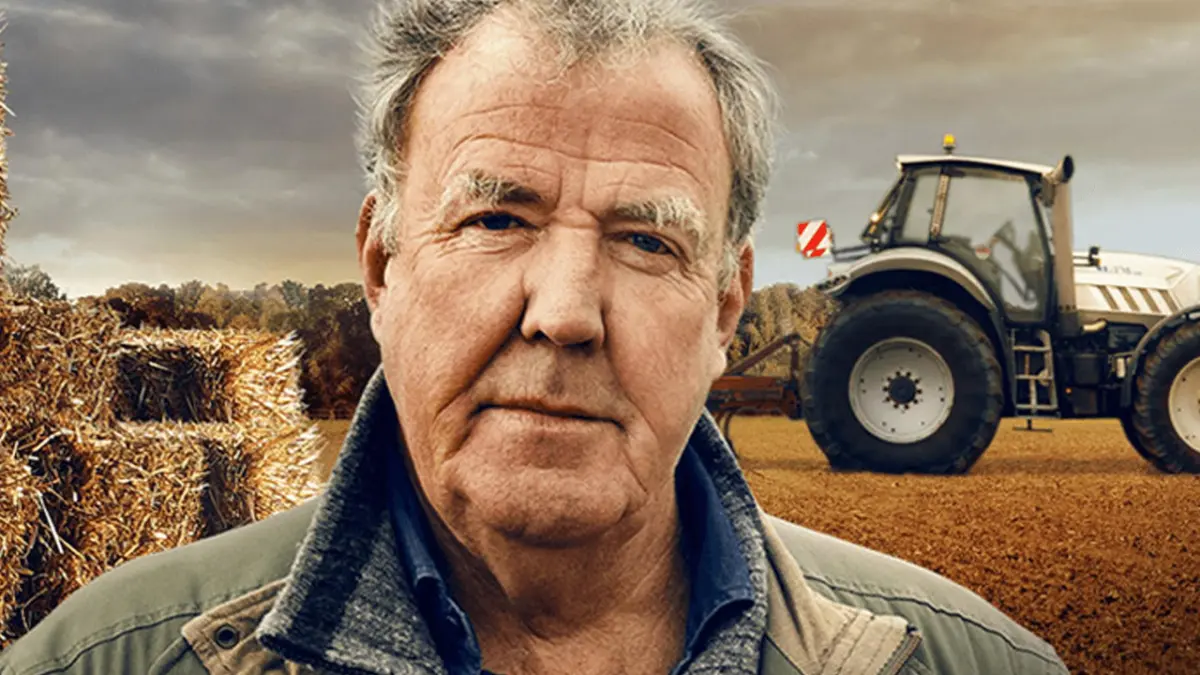
Prime Video has officially greenlit a standalone, one-off special that promises to bridge the seemingly disparate worlds of high-octane motoring and rustic, British agriculture. The upcoming broadcast, titled Jeremy Grows a Car: A Clarkson’s Farm Special, will see the indefatigable Jeremy Clarkson temporarily dust off his petrol-head credentials—suspending, for a moment, the relentless trials of British farming life—to return to the automotive presentation roots that defined his decades-long career on Top Gear and, more recently, The Grand Tour.
Slated for a worldwide release in 2027, the ambitious project proposes a world-first experiment: Clarkson will attempt to cultivate, harvest, and manufacture an entirely farm-grown automobile. Utilizing his 1,000-acre Diddly Squat Farm in Oxfordshire as both the testing ground and the supply chain, the enterprise aims to construct a functional, road-worthy vehicle fashioned predominantly from the raw materials grown and produced on his own land.
Far from being a simple publicity stunt or a whimsical lark, the project brings together heavyweights from British automotive design and sustainable materials engineering. Clarkson will be directly aided by legendary automotive designer Ian Callum CBE—the visionary pen behind the original Jaguar F-Type, the Aston Martin Vanquish, and numerous other automotive icons. Together, they plan to take a donor Jaguar F-Type V6S and rebuild it using homegrown leather, bespoke wool carpets harvested from Diddly Squat’s livestock, and an experimental, high-performance flax-composite material cultivated directly in the Oxfordshire soil.
This executive overview outlines the genesis of a project that marries the planetary anxieties of modern sustainable manufacturing with the signature chaos, humor, and engineering audacity that has followed Jeremy Clarkson across television screens for nearly thirty years.
Detailed Chronology: From ‘One for the Road’ to Diddly Squat’s Next Evolution
The End of an Era and the Birth of a New Format
To understand the significance of Jeremy Grows a Car, one must first contextualize the shifting landscape of Jeremy Clarkson’s television career. In September 2024, the motoring world tuned in for the final emotional chapter of The Grand Tour, titled One for the Road. Alongside long-time co-hosts Richard Hammond and James May, Clarkson closed the book on a multi-decade journey of international automotive escapades that had begun on BBC’s Top Gear in the early 2000s.
With The Grand Tour riding off into the sunset, many fans assumed Clarkson’s relationship with the automotive industry would be relegated to nostalgic memories and occasional gripes in his newspaper columns. Instead, Clarkson’s Farm—documenting the brutal, bureaucratic, and often hilarious realities of managing Diddly Squat Farm—became a runaway global phenomenon for Prime Video.
Yet, the DNA of a car show has never truly left Clarkson. Throughout the first several seasons of Clarkson’s Farm, viewers have watched him grapple with heavy machinery, lambast tractors that are too wide for British country lanes, and occasionally express deep affection for specialized farm trucks. The announcement of this 2027 special represents the ultimate convergence of Clarkson’s two great television vocations: large-scale farming and high-performance engineering.
The Blueprint: Sourcing the Impossible
According to production outlines released by Prime Video, the conceptual framework for Jeremy Grows a Car began taking shape as a half-serious thought experiment during the filming of the upcoming agricultural series. Clarkson, frustrated by the economic instability of selling raw grain and livestock at traditional market prices, reportedly mused on how to add extreme value to farm-grown commodities.
The baseline of the project centers on a donor car: a Jaguar F-Type V6S. Chosen for its quintessential British sports car heritage and its structural aluminum architecture, the F-Type will undergo a radical transformation. Rather than relying on synthetic interiors, petrochemical-derived plastics, and imported carbon fiber weaves from industrial manufacturing hubs, Clarkson’s build will replace these components with localized, organic alternatives:
- Diddly Squat Leather: The vehicle’s cabin will be lined with leather sourced directly from livestock reared on the farm, tanned and treated through specialized artisan processes.
- Farm-Grown Wool Carpets: Interior flooring and sound-deadening mats will be crafted from raw wool shorn from the farm’s sheep population, showcasing the natural durability and luxury of British wool.
- The Flax-Composite Breakthrough: The most scientifically demanding aspect of the project involves cultivating a dedicated crop of flax fiber. This crop will be processed and woven into a sustainable flax-composite material—an emerging green alternative to traditional carbon fiber that is already capturing the attention of major research and development divisions across the global automotive sector.
Supporting Context & Metrics: Sustainable Materials & Engineering Pedigree
The Science of Flax-Composite Materials
While the premise sounds like a classic Clarkson misadventure, the underlying technology taps into a very real and pressing industrial revolution within the automotive sector. As global environmental regulations tighten and life-cycle carbon assessments become mandatory for new vehicle registrations, car manufacturers are scrambling to find biodegradable or renewable composite materials.
Traditional carbon fiber, while exceptionally strong and lightweight, is notoriously energy-intensive to manufacture and practically impossible to recycle economically. Enter flax fiber composites.
- Mechanical Properties: High-grade flax fibers exhibit specific stiffness and strength-to-weight ratios that rival glass fiber and, in certain structural applications, lower-grade carbon fibers.
- Acoustic and Vibration Damping: Natural plant-based fibers possess superior natural damping characteristics compared to synthetic carbon weaves, reducing unwanted cabin noise and harshness.
- Carbon Sequestration: Unlike petrochemical polymers, the raw materials capture carbon dioxide directly from the atmosphere during their growth cycle, significantly lowering the overall cradle-to-gate carbon footprint of the component.
By attempting to grow his own structural composite on an English farm, Clarkson is thrusting himself into the bleeding edge of sustainable biomaterials research—albeit likely while wearing muddy wellingtons and shouting at a tractor.
The Design Mastermind: Ian Callum CBE
No matter how innovative the agricultural inputs may be, building a safe, high-performance automobile requires world-class design and engineering oversight. To ensure the project does not end up as a heap of rusting scrap metal in an Oxfordshire ditch, Prime Video has secured the involvement of legendary automotive designer Ian Callum CBE.
Callum’s resume reads as a definitive ledger of modern automotive royalty:
- Jaguar: Designed the original F-Type, the Jaguar XK, and the breathtaking C-X75 supercar concept.
- Aston Martin: Penman behind the iconic Vanquish, the DB7, and the DB9—silhouettes that defined British GT design for a generation.
- Ford & Nissan: Key design contributions to the legendary Ford RS200 rally homologation special and the Nissan R390 GT1 endurance racer.
Callum’s presence guarantees that Jeremy Grows a Car will maintain a standard of aesthetic credibility. His expertise will be critical in guiding how organic, unconventional materials like flax-composite panels and raw-tanned leather interact with the complex structural geometry of an ultra-high-performance sports car.
Official Statements & Industry Reception
The announcement has sent ripples through both the agricultural community and the international motoring press. While full transcripts of the participating figures remain tightly embargoed ahead of the 2027 rollout, early statements provided by Prime Video executive teams underscore the groundbreaking nature of the crossover special.
"We are constantly looking for ways to push the boundaries of what factual-entertainment television can achieve," noted a senior Prime Video production spokesperson regarding the greenlight. "Jeremy Clarkson has spent his life critiquing what other people build. Now, he is attempting to pull an entire performance automobile straight out of the British mud. With Ian Callum lending his peerless design genius to the endeavor, this special will test the limits of agronomy, engineering, and common sense."
Industry analysts have similarly weighed in on the economic implications for Diddly Squat Farm. Agricultural economists point out that while growing flax for composite manufacturing is still in its infancy commercially, high-profile media exposure could accelerate consumer awareness and industrial investment into natural fiber supply chains across the United Kingdom.
Meanwhile, fan communities across social media platforms have reacted with overwhelming enthusiasm. The pairing of Clarkson’s chaotic trial-and-error ethos with Ian Callum’s meticulous design discipline is being widely hailed as the dream collaborative ticket for petrolheads orphaned by the conclusion of The Grand Tour.
Future Outlook: What to Expect Leading Up to 2027
As production ramps up across Oxfordshire and design studios in the UK, the timeline leading to the premiere of Jeremy Grows a Car: A Clarkson’s Farm Special is set to be closely watched by automotive enthusiasts and environmental scientists alike.
Anticipated Milestones:
- The Sowing Season (Spring 2025 – Autumn 2025): Documentation of the initial soil preparation, seed selection, and cultivation of the farm’s experimental flax crop under unpredictable British weather conditions.
- The Engineering Phase (2026): Collaboration sessions between Jeremy Clarkson and Ian Callum, charting out how to strip down the donor Jaguar F-Type V6S and integrate organic interior and exterior panels without compromising structural safety or dynamic handling.
- The Global Premiere (2027): The worldwide release exclusively on Prime Video, culminating in a high-speed track test to determine whether a car grown in a field can actually handle the tarmac.
Whether the vehicle ultimately shatters engineering paradigms or disintegrates spectacularly during its maiden test drive remains to be seen. However, one thing is certain: when Jeremy Grows a Car premieres in 2027, it will deliver a masterclass in eccentric British engineering that only Jeremy Clarkson could conceive—and only Ian Callum could hope to make functional.