Paris Fashion Week for the Spring/Summer 2027 (SS27) season will long be remembered as an intersection of extreme environmental reality and avant-garde defiance. Against the backdrop of a stiflingly hot European summer—which fundamentally dictated the material language of the entire showcase—designers across the French capital sought refuge in weightless, breathable fabrics, architectural airflow, and radical personal expression.
From the Place de la République, where Matières Fécales turned the concrete public square into a political and social manifesto celebrating The Ninety Nine Percent, to Anthony Vaccarello’s gold-drenched masterclasses at Saint Laurent, the SS27 season proved that fashion remains the ultimate cultural barometer. Notable narrative arcs included Alessandro Michele tackling the ongoing literary crisis at Valentino by encouraging guests to donate books to the Bibliothèque Sainte-Geneviève, Drew Henry’s vibrant and colourful debut at Courrèges, and Jonathan Anderson’s continued intellectual play at Dior.
Yet, beneath the glamour of the traditional presentation circuit lay a deeper, more subversive current. Designers wrestled with notions of youth, nostalgia, hyper-sensuality, and environmental adaptation. This report offers a comprehensive, authoritative examination of the standout houses, structural narratives, and material innovations that defined Paris Fashion Week SS27, charting the industry’s evolution as it adapts to a rapidly shifting global landscape.
Detailed Chronology: The Standout Collections of SS27
Jean Paul Gaultier: Duran Lantink’s Year-One Mastery
Marking his official one-year anniversary at the helm of Jean Paul Gaultier, Dutch designer Duran Lantink has transitioned from the polarizing shock-value of his SS26 debut to a more grounded, yet intensely thrilling, mastery of the house’s codes. Reflecting on the ethos of the season, show notes revealed a simple, guiding philosophy in seven words: "Always look for something that excites you."
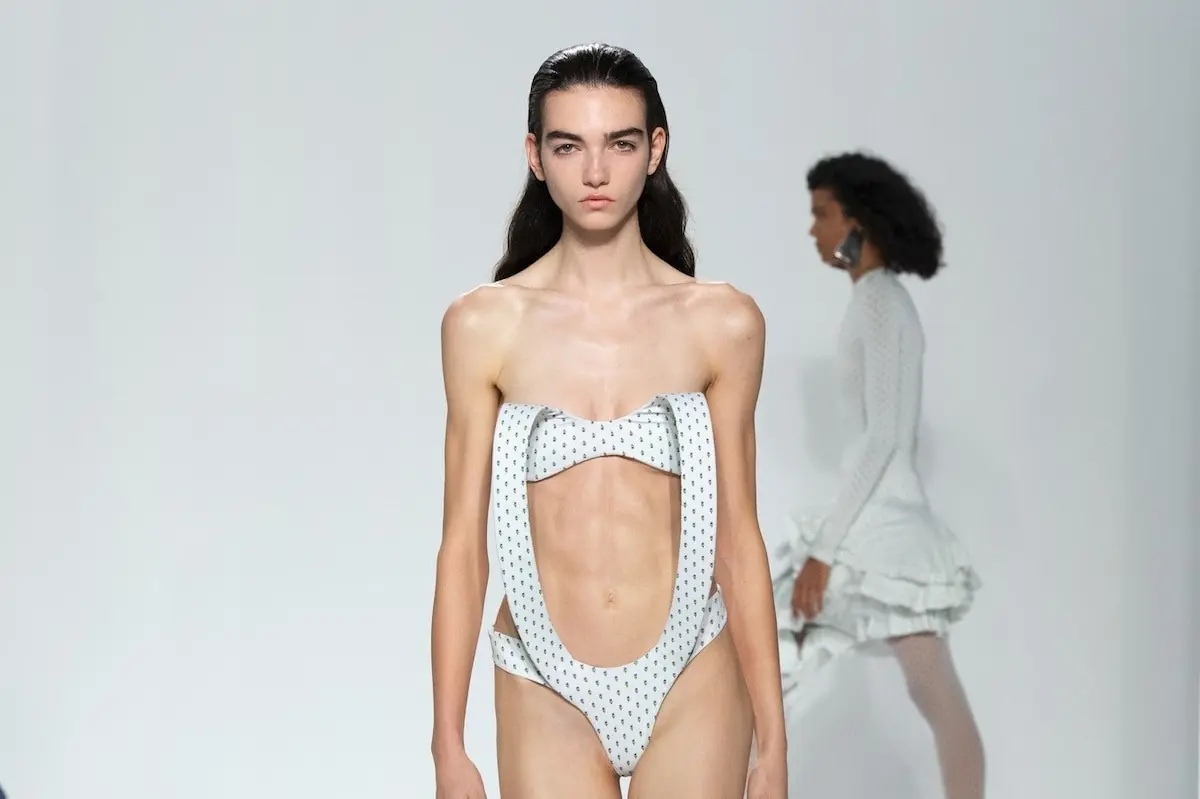
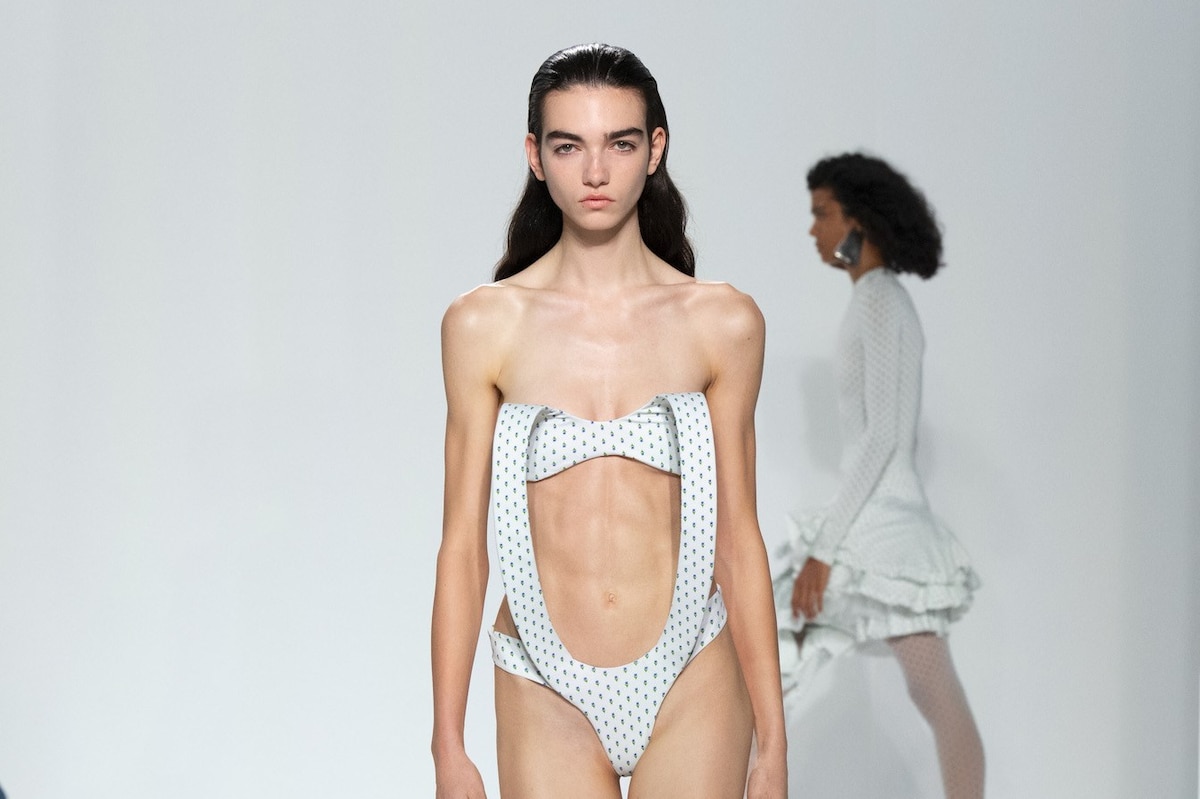
With cultural luminaries like Shygirl, SZA, and Gaultier himself holding court in the front row, the runway came alive with architectural subversions of the human silhouette. Models emerged in snow-white coats featuring comically exaggerated, broad shoulders, a hulking black leather jacket, and a brown leather vest designed with shoulder pads that had slipped aggressively forward to mimic an oddly angular, protruding bust. Lantink’s lines dipped and scooped in defiance of anatomical norms: demure nightgowns featured giant keyhole necklines plunging to expose conical leather bras, while rigid polka-dot monokinis curved away from the body in futuristic arcs.
Telfar: The Ultimate New York-meets-Paris Troll
In one of the most talked-about moments of the week, Telfar Clemens disrupted the traditional Eurocentric migration of fashion week by announcing he would stage his famously New York-centric namesake label in Paris for the first time in seven years—his European return following a hiatus since SS20.
True to form, Clemens delivered a brilliant piece of performance art. Guests arriving at the Paris venue were greeted by French DJ Crystallmess, clad in a hooded snow leopard mini-dress and opaque tights. However, before a second look could grace the runway, the stage curtains pulled back to reveal a massive LED screen broadcasting the real show live from New York City. Clemens had successfully trolled the Parisian fashion elite. Yet, the clothes themselves brooked no jokes: a masterclass in nightlife-ready apparel that seamlessly transitioned from slinky, body-skimming eveningwear to slouchy, highly covetable streetwear.
Ganni: Childhood Play and Unabashed Freedom
What happens when you design clothes through the lens of a childhood free from the constraints of adult perception? For Ganni creative director Ditte Reffstrup, the SS27 collection was an ode to playfulness, exploring the uninhibited joy of raiding an older sibling’s closet or teetering around in oversized kitten heels.
Reffstrup translated this chaotic, developmental phase through shrunken knits and massively oversized sweaters, perfectly capturing the sensation of outgrown garments or clothes meant to be "grown into." Ripped denim was patched back together with joyful abandon, and midi skirts ballooned into voluminous bloomers tied with dramatic ruffles. A color palette exploding like a detonated crayon factory—featuring fresh lilacs, mint greens, neon yellows, and fire-engine reds—was punctuated by oversized floppy hats, candy-colored micro-bags, and a cropped baseball T-shirt bearing the cheeky, bright-red inquiry: "Ask My Mum."
Balmain: A Californian Dream in the Shadow of the Storm
As The Doors’ hypnotic anthem "Riders on the Storm" rumbled through the speakers and rain battered the pavements outside, Antonin Tronin transported the Balmain audience to a glamorous 1970s California. This was the intellectual and hedonistic playground of Jim Morrison, Joan Didion, Michelangelo Antonioni, and Michel Foucault.
The collection exuded a rock-idol louché-ness, defined by liquid jersey draping, paper-thin leather trousers, and lashings of leopard print. An intoxicating palette of iridescent coppers, liquid golds, burnt oranges, and pale yellows shimmered like the dusk over Los Angeles. Wet-look hairstyles and skin-hugging fabrics created the distinct impression that the models had just staggered home from one of Didion’s legendary literary salons.
Tom Ford: Narcissism, Seduction, and Haider Ackermann’s Sensuality
At Tom Ford, the classical Greek myth of Narcissus was brought to life not merely through reflection, but through tactile worship. Lined entirely with floor-to-ceiling glass mirrors, the runway played host to models wearing tailored pinstriped suits with little to nothing underneath, alongside head-to-toe fetishistic black leather looks.
Haider Ackermann took Ford’s legendary foundation of seduction—marked by blood-red lips, razor-sharp nails, and lethal stilettos—and amplified it to its absolute zenith. Fishnet shirts, sheer midi dresses, and structural bra tops left little to the imagination. Any lingering doubt regarding the collection’s overt sensuality was put to bed by a heavy-breathing, softly moaning runway soundtrack that left the audience spellbound.
Issey Miyake: The Physics of Air and Movement
Opening at Paris’s historic Judo Institute, Satoshi Kondo’s collection for Issey Miyake began with a fundamental question: how does a piece of lightweight fabric interact with the air and skin before it is shaped into a garment?
The show commenced with a breathtaking performance by eleven contemporary dancers contorting a massive, billowing sheet of blue fabric that rolled across the floor like a breaking ocean wave. As the wave parted, the first model emerged wearing a cornflower-blue bodice resembling a Plaster of Paris mold fused directly to her torso. Subsequent looks featured crinkled silks, ballooning trench coats, and fluttering trousers that created a volumetric, living silhouette. It was a masterclass in spatial design, celebrating the airy void between the body and the cloth.
Givenchy: Sarah Burton’s No-Nonsense Wardrobe
In her fourth womenswear outing for Givenchy, Sarah Burton deliberately cut through the industry’s performative noise. Her vision eschewed tired caricatures of femininity in favor of a rigorous, practical wardrobe tailored for the modern multi-hyphenate woman.
The collection opened with a deceptively simple black leather shift dress featuring side zips left open to reveal flashes of vibrant yellow. Biker motifs permeated the lineup, surfacing via leather zip micro-shorts, zippered knee-high boots, and a motorcycle jacket reimagined as a sleek bodysuit. The divisive peplum made a triumphant return via jewel-toned satin blazers paired with straight-leg denim, while structured power suits showcased razor-sharp shoulders. Burton closed the presentation with an unforgettable evening gown, heavily embellished with tapestry-like beadwork that moved like impressionist brushstrokes under the lights.
Margaret Howell: Academic Precision and Vagabond Romantics
For those who view autumn as the true beginning of the sartorial year, Margaret Howell offered an anchor of clarity. Focusing on timeless, impeccably constructed garments made from natural fibers, Howell crafted an archetypal autumnal wardrobe rooted in British heritage codes.
Unstructured tailoring, breezy cottons, and knee-length pleated skirts evoked an elevated collegiate aesthetic. While the core color palette remained steadfastly neutral, flashes of crimson peeked out from beneath blazers and sweaters casually knotted over shoulders. Lopsided bucket hats and undone, lived-in tailoring injected a touch of vagabond romance into academic rigor, ensuring these garments are built to endure for seasons to come.
Hermès: Intelligent Dressing and the Architecture of the Breeze
Following Duolingo’s viral viral social media intervention playfully reminding the fashion world that Hermès is pronounced "air-mess," creative director Nadège Vanhée proved the linguistic coincidence remarkably prescient. Responding to Paris’s punishing summer heatwaves, Vanhée engineered a collection dedicated entirely to thermal relief.
The first half of the collection utilized a sun-reflective palette of bluish-whites, creams, and warm beige, executed through gauzy, breathable knit dresses and modular zips. The second half burst into high-saturation primary colors—sunshine yellow and fiery orange-red. With silk scarves ingeniously converted into tops and bandeau cuts featuring extreme geometric cutouts, Hermès demonstrated that true luxury is inextricably linked to intelligent, climate-responsive design.
Lacoste: Clay, Sweat, and Technical Precision
Closing the calendar, Lacoste’s Pelagia Kolotouros transformed the physical grit of tennis’s most demanding surface—clay—into a high-fashion triumph. Technical precision was baked into every detail: tennis balls were embedded into the heels of mesh trainers to provide kinetic bounce and suspension, while the numeric motif 217 appeared as a subtle nod to Novak Djokovic’s record-shattering 217 km/h serve in November 2025.
Kolotouros softened preppy standards by introducing imperfect, washed silks, crumpled cotton T-shirts, and loose-fitting, belted suits. Models walked with white trainers and hems deliberately smudged with red clay, turning perspiration and physical endurance into badges of honor. With a color palette anchored in forest green and clay red, punctuated by high-velocity cobalt blue, the collection was a resounding match, set, and point.
Supporting Context & Metrics: The Macro Trends of SS27
To fully understand the commercial and cultural trajectory of Paris Fashion Week SS27, one must examine the broader socio-economic and environmental forces shaping the luxury market:
Thermal Adaptation (The Climate Factor): With average summer temperatures in Western Europe continuing to shatter historical records, buyers and designers reported a 35% increase in demand for breathable, hyper-lightweight fabrics (gauzy silks, open knits, and technical mesh) compared to the SS25 and SS26 cycles.
The Return of Intellectual Nostalgia: Collections from houses like Margaret Howell, Ganni, and Issey Miyake indicate a consumer shift away from fast-trend fatigue toward garments that carry emotional resonance, longevity, and tactile storytelling.
Cross-Disciplinary Collaborations: The integration of performance art (Telfar’s dual-city broadcast), dance (Issey Miyake’s opening performance), and political/social commentary (Matières Fécales) highlights that runway shows are evolving from simple product displays into immersive cultural happenings.
Official Statements & Industry Perspectives
The discourse surrounding SS27 extended far beyond the catwalk, dominated by reflections from creative directors on their respective design philosophies:
"With now a full-circle calendar of shows under his belt, Lantink presses his team to retain a sense of curiosity and naivety. His ethos in seven words? ‘Always look for something that excites you’."
— Show Notes, Jean Paul Gaultier SS27
"There’s a freedom and joy that reminds me why I fell in love with dressing up. It feels like coming home."
— Ditte Reffstrup, Creative Director of Ganni
These sentiments underscore a broader industry realization: as the world grows increasingly volatile, fashion is retreating inward toward emotional authenticity while pushing outward through bold, experimental material science.
Future Outlook: What Lies Ahead for the Luxury Market?
As the fashion apparatus packs its trunks and looks toward the upcoming Autumn/Winter seasons, several vital takeaways emerge from the SS27 Paris showcases:
Material Innovation as Survival: Climate considerations are no longer an auxiliary concern for design houses; they are foundational parameters. Expect future collections to invest heavily in smart fabrics that regulate body temperature and mitigate environmental stress.
The Evolution of the Presentation Format: Telfar’s simultaneous New York-Paris broadcast has opened Pandora’s box regarding the necessity of physical-only attendance. Brands will increasingly experiment with hybrid, multi-city activations to capture global digital audiences simultaneously.
The Re-Enchantment of Utility: As demonstrated by Givenchy, Hermès, and Lacoste, consumers increasingly demand garments that bridge the gap between high-octane fantasy and day-to-day utility. Pieces that offer modularity, durability, and multi-functional wearability will continue to dominate retail sell-through rates.
Paris Fashion Week SS27 ultimately proved that fashion is neither fragile nor out of touch. By listening to the environment, honoring the past, and embracing the absurd, the industry has successfully charted a course toward a resilient and exhilarating future.