Executive Overview
The debate surrounding capital punishment in the United States has long wrestled with a paradoxical challenge: how to reconcile the state-sanctioned termination of human life with constitutional prohibitions against "cruel and unusual punishment." For decades, the preferred mechanism for achieving this grim objective has been lethal injection—a method deliberately designed to project an aura of clinical detachment, sterile modernity, and surgical precision.
However, recent catastrophic failures within execution chambers are systematically stripping away this veneer of civilized sanitation. The botched execution of death row inmate Christa Pike in Tennessee has once again thrust the inherent brutality of capital punishment into the national spotlight. Pike’s agonizing, failed attempt at execution highlights a terrifying reality that medical professionals have warned about for years: lethal injection is far from peaceful, and when it fails, it plunges the condemned into a protracted, agonizing purgatory.
As states desperately scramble for alternatives in the wake of pharmaceutical shortages and legal challenges—experimenting with everything from nitrogen hypoxia to renewed proposals for the firing squad—experts, spiritual advisors, and legal advocates are confronting a deeply unsettling question: Would you rather die by lethal injection or a firing squad? While the answer forces a visceral recoil, exploring it exposes the profound cruelty of an institutional apparatus that attempts to sanitize state-sponsored killing.
Detailed Chronology: The Botched Execution of Christa Pike
The systemic frailties of the American death penalty apparatus were laid bare on September 30, during the state of Tennessee’s botched attempt to execute Christa Pike.
Months prior to the scheduled date, Pike’s legal team retained Dr. Joel Zivot, an intensive care physician and outspoken critic of capital punishment methods, to evaluate her medical viability for lethal injection. Zivot issued explicit, urgent warnings to state officials: Pike possessed exceptionally small veins and a pre-existing blood condition that rendered standard intravenous cannulation perilous and unpredictable. He cautioned that forcing lethal chemicals into compromised vasculature would likely result in a visceral, painful, and deeply botched execution.
State officials proceeded regardless. On September 30, the execution protocol was initiated, but the process immediately veered off course. Rather than entering her bloodstream, the administered doses of the powerful sedative pentobarbital reportedly infiltrated Pike’s surrounding arm tissue.
Instead of slipping into a swift, medically induced death, Pike was plunged into a hellish middle ground of neurological distress and physical trauma. She survived the initial administration, prompting prison officials to halt the procedure and transport her in critical condition to an external hospital. There, medical staff intubated her and placed her on mechanical life support.
Following days of intensive medical intervention, Pike regained consciousness. She now exists in a grimly ironic state: tethered to a hospital bed, heavily guarded, and legally slated to face execution once more, all while recovering from the very medical trauma inflicted by the state’s faulty apparatus.
Supporting Context & Metrics: The Illusion of Clinical Cleanliness
The public revulsion surrounding a botched execution like Christa Pike’s often obscures a more fundamental truth highlighted by medical experts: even a lethal injection that proceeds "according to plan" is inherently gruesome and violent.
Dr. Zivot has repeatedly argued that the clinical framing of lethal injection—complete with IV poles, sterile gowns, and medicalized language—is an elaborate theatrical illusion designed to comfort the public conscience.
- The Autopsy Reality: Post-mortem examinations and autopsy analyses of individuals executed via lethal injection frequently reveal internal trauma that contradicts the peaceful exterior witnessed by execution observers. Research indicates that certain lethal drug protocols can cause pulmonary edema, effectively causing the prisoner to slowly drown in their own blood while chemically paralyzed and unable to gasp for air or signal distress.
- The Professional Facade: The inclusion of individuals with healthcare training or clinical backgrounds lends the procedure a sheen of technological advancement. Yet, this medicalization violates medical ethics and serves primarily to hide the raw, unadulterated cruelty of killing a human being behind sterile bureaucratic walls.
The Alternatives: Nitrogen Hypoxia and the Firing Squad
As traditional pharmaceutical suppliers restrict access to lethal injection drugs, states have cast about for alternative methods, widening the scope of debate over what constitutes a "humane" death.
In June, an episode of Slate’s What Next podcast explored these grim options through an interview between host Mary Harris and the Rev. Jeff Hood, a Catholic priest and founder of the Execution Intervention Project. Having witnessed nearly a dozen executions across various states, Rev. Hood offered a harrowing firsthand perspective on the mechanical realities of modern methods, specifically contrasting lethal injection with nitrogen hypoxia.
Describing executions involving nitrogen gas—which requires the inmate to wear a tight-fitting mask covering the face from hairline to chin—Rev. Hood painted a picture of visceral horror:
"The mask extends from the hairline to underneath the chin. It’s filled with nitrogen until the person practically suffocates to death. And so as fluids come out of the mouth and the nose, and boogers and saliva and eye gunk and all this kind of stuff is coming out, it’s catching at the front of the mask and drizzling down like a waterfall."
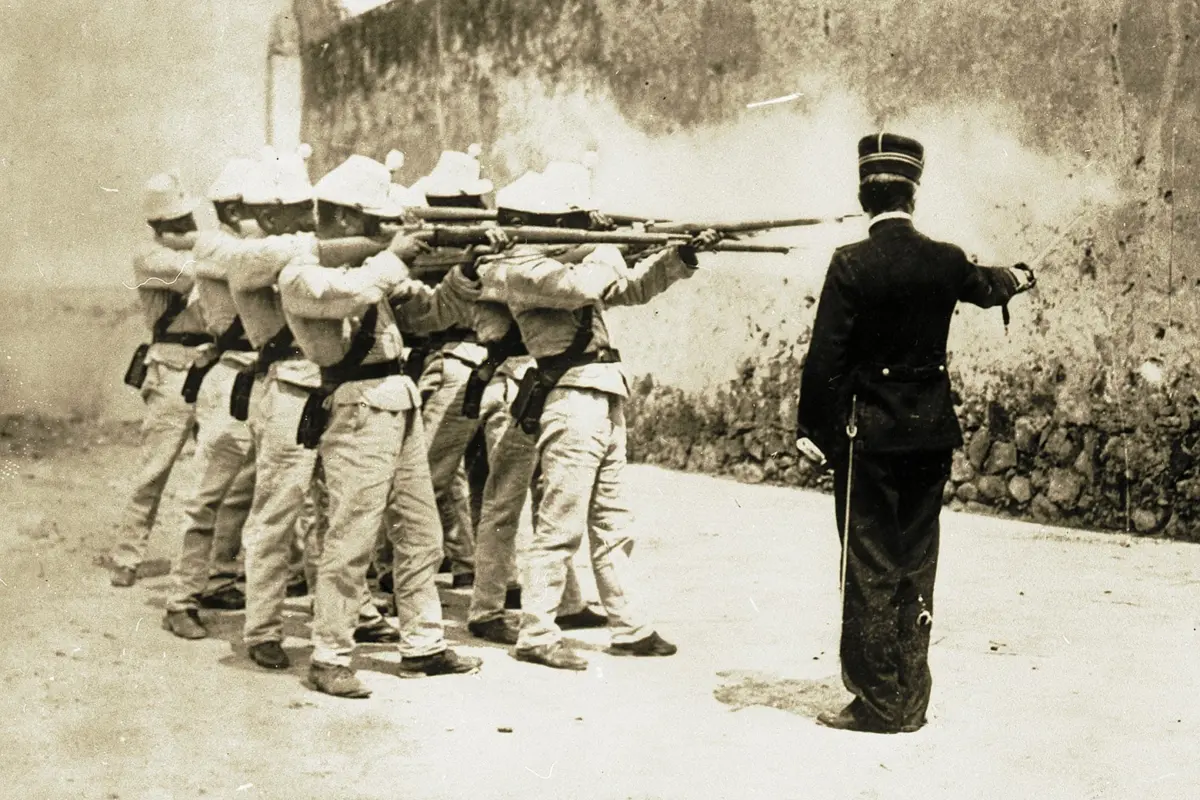
Faced with such mechanical nightmares, the conversation invariably turns toward older, more kinetic forms of execution, such as the firing squad. Though currently authorized in only a tiny fraction of death-penalty states, the firing squad is increasingly viewed by some legal analysts—and paradoxically, by some death row inmates—as preferable to the prolonged uncertainty of lethal injection or the suffocating horror of nitrogen gas.
Official Statements & Expert Perspectives
The discourse surrounding execution methods forces observers to confront the raw mechanics of state killing without the comfort of euphemisms.
When asked whether he had ever witnessed a "good execution," Rev. Jeff Hood offered a stark assessment:
"Well, none of them are good, but there are some that function certainly more systematically than others. I’ve seen, at this point, nine lethal injections and two nitrogen executions. And the nine lethal injections look like, you know, going to recess, in comparison to the nitrogen executions, which involve a gas chamber and a mask."
When pressed on how an execution could be conceptualized as humane, Hood made a startling declaration regarding the comparative mechanics of death:
"If I had to choose between a nitrogen execution and firing squad, I would choose a firing squad every day of the week. If I had to choose between a lethal injection and a firing squad, I would choose a firing squad every day of the week… It’s a lot quicker. I think it’s a lot more humane, to be quite frank."
However, Hood was quick to contextualize why the firing squad appears more humane to some: it strips away the clinical deception. A firing squad forces witnesses, executioners, and the public at large to confront the brutal physical reality of state violence.
"I think what it says is that executions are horrible no matter how they’re carried out. It forces everyone to see, to hear, to feel the execution in a way that other methods don’t."
This transparency, however, creates a unique institutional hurdle for states. It exposes the moral and logistical burden placed upon the executioners themselves. As Hood noted:
"Of course, this brings up a very interesting juxtaposition in that it depends on how far states are willing to go. And what I mean by that is it depends on how dirty they’re interested in getting their hands. Are they going to have people who are willing to volunteer to be the shooters? Are they going to be willing to create these environments that are necessary to carry out a firing-squad execution? But I can tell you that of all of the guys that I work with, if given the opportunity, I think a lot of them would be most interested in a firing squad."
Future Outlook: The Inescapable Horror of Capital Punishment
The case of Christa Pike serves as a cautionary and catalytic moment for the American judicial system. As she recovers in a secure hospital bed under armed guard, legal scholars are left to ponder the constitutional and moral implications of subjecting an individual to a failed execution and then attempting the process a second time.
Looking forward, the legal landscape surrounding execution methods remains intensely volatile:
- Proliferation of Alternative Methods: As pharmaceutical companies continue to block the sale of drugs used in lethal injections, states determined to maintain capital punishment will likely continue exploring and legally defending alternative protocols, including nitrogen hypoxia and electrocution.
- Renewed Litigation on "Cruel and Unusual" Standards: Botched procedures like Pike’s provide defense attorneys with substantial empirical evidence to challenge specific execution protocols as violations of the Eighth Amendment, arguing that the state’s incompetence inflicts gratuitous physical and psychological pain.
- The Transparency Dilemma: The debate over methods like the firing squad highlights an ongoing philosophical tension. While proponents of the death penalty have historically favored methods that mask the violence to maintain public support, the push for transparency by abolitionists and certain inmates forces a direct confrontation with the physical realities of killing.
Ultimately, as Rev. Hood observed, the method chosen matters very little in the grand moral calculus of capital punishment: “It doesn’t matter what method we choose. It’s going to be horrible.”
Whether via the concealed drowning of a flawed lethal injection, the mechanical suffocation of a nitrogen mask, or the kinetic impact of a firing squad, the state-sanctioned termination of life remains an exercise in institutional violence. The ongoing nightmare of Christa Pike’s case underscores that so long as the death penalty persists, society will continually be forced to confront the grim, unvarnished mechanics of how the state kills its citizens.