In an era dominated by curated digital personas and hyper-individualized pursuits, a quiet sociological counter-revolution is unfolding on the sun-bleached asphalt and azure coastlines of Marseille, France. Here, far from the algorithmic echo chambers of social media feeds, a tight-knit collective of young men—Ismael (known as Bako), Fares, Mohamed, and Sheri—is living out a reality that most people only ever passively consume through smartphone screens.
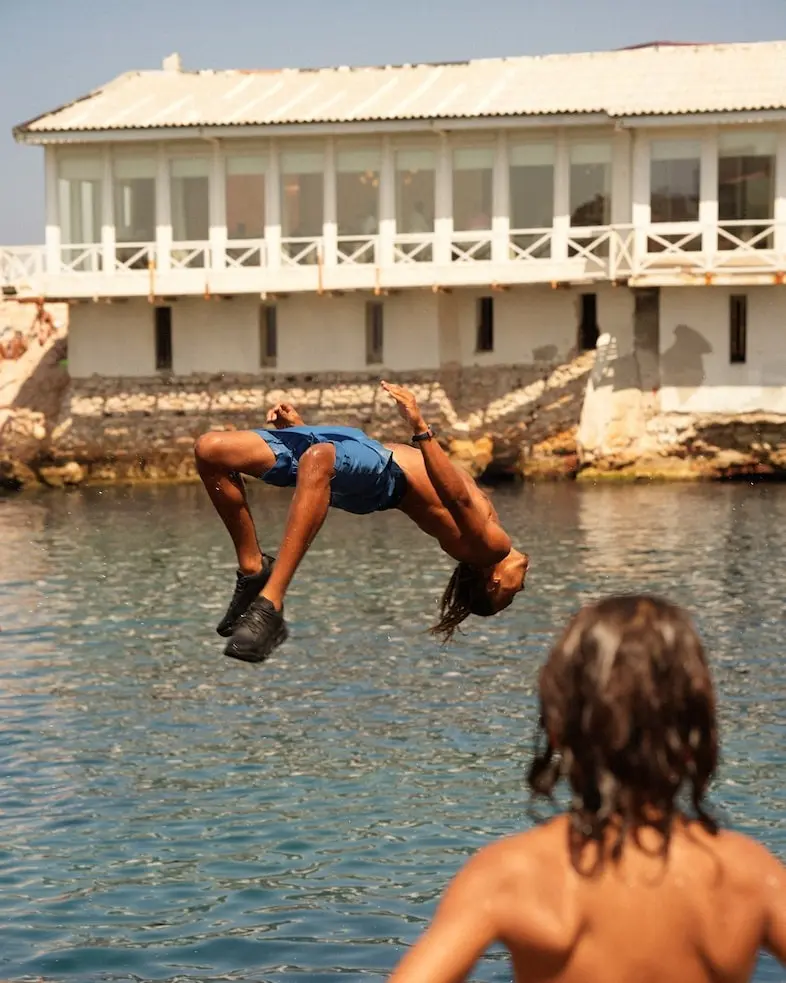
Revving green dirt bikes down sun-drenched coastal avenues, hurtling skateboards toward the Mediterranean Sea, and launching spontaneous backflips into glittering waves, this group embodies an authentic vibrancy that feels increasingly rare in the modern metropolis. Yet, what makes their story compelling to cultural anthropologists and lifestyle journalists alike is not merely the aesthetic appeal of their sun-soaked days. Rather, it is the profound, unyielding architecture of their bond—a brotherhood forged not by shared blood, socioeconomic pedigree, or institutional affiliation, but by radical empathy, geographical convergence, and an unshakeable adherence to a collective moral code.
This feature explores the genesis, mechanics, and philosophical underpinnings of Bako and his friends. Part of Under Armour’s ongoing Rest Less initiative—a storytelling platform celebrating grassroots collectives manifesting restless, real-world energy—this case study examines how modern youth are actively constructing alternative family structures. By rejecting hyper-competition in favor of an abundance mindset, these young men demonstrate that the antidote to contemporary alienation is not digital connectivity, but radical, ground-level solidarity.
Detailed Chronology: The Evolution of a Modern Brotherhood
The Genesis: Chance Encounters on the Margins
Every profound human connection begins with the friction of the unpredictable. For Bako, Fares, Mohamed, and Sheri, the initial phases of their relationship were entirely spontaneous. Hailing from vastly different social, economic, and cultural backgrounds that might under normal urban conditions have kept them permanently siloed, their paths crossed by pure serendipity.
The formative nodes of this convergence were the physical spaces of the city: the grit of the concrete skate park, the chaotic energy of the local neighborhood, and the open expanse of the Marseille coastline. In these public commons, social hierarchies dissolve. A shared kickflip, a nod of acknowledgment over a broken skateboard axle, or a shared afternoon escaping the Mediterranean heat served as the catalysts.
Gradually, through repeated casual interactions, these strangers transitioned into acquaintances, then peers, and finally, something indistinguishable from blood relatives. As Bako notes, the architecture of their family has nothing to do with genetics or social status. It is an intentional construct built in real time.
The Crucible: Testing the Bonds of Kinship
True community is rarely defined by how a group behaves during halcyon summer days; it is revealed in how they weather systemic shocks and personal crises. For this Marseille collective, the ultimate test arrived when Bako faced a series of severe health complications.
In an age where interpersonal relationships often fracture under the weight of inconvenience, the response from Fares, Mohamed, and Sheri was immediate and absolute. Rather than retreating into self-preservation, the group mobilized around their friend, embedding themselves in his reality throughout his recovery.
"They never stopped being there for me throughout that difficult time," Bako reflects, looking back on the ordeal with palpable gratitude. This crisis transformed their dynamic from a lifestyle collective into a legitimate safety net. It proved that their connection extended far beyond the aesthetic pleasures of motorcycle rides and ocean swims—it was an ironclad pact of mutual preservation.
Supporting Context & Metrics: The Sociological Landscape of Marseille
To understand the weight of what Bako’s collective has built, one must examine the socio-economic topography of Marseille itself. As France’s oldest city and its primary maritime gateway, Marseille has historically functioned as a cultural melting pot. It is a dense, pulsating urban ecosystem characterized by striking economic disparities, waves of immigration, and vibrant counter-cultural movements.
Urban sociologists often categorize Marseille as a city of contrasts—simultaneously celebrated for its multicultural dynamism and scrutinized for economic stratification across its quartiers. In such an environment, social fragmentation is a persistent risk. Youth from different ethnic and socio-economic backgrounds often inhabit parallel realities, separated by invisible geographic and cultural boundaries.
Within this macro-landscape, the city acts as what Bako describes as a "checkpoint"—a neutral zone where diverse trajectories intersect.
Urban Density as a Connector: Rather than driving communities apart, Marseille’s public spaces force encounters.
The Neighborhood Commons: Skate parks, beaches, and coastal streets serve as non-hierarchical social laboratories.
The Counter-Narrative: Against national narratives of social division, grassroots collectives in cities like Marseille are engineering micro-societies rooted in radical inclusivity.
Official Statements & Core Philosophy: Bako’s Rules for Community
The philosophy sustaining this Marseille collective is neither naive nor accidental; it is codified through explicit principles that govern how they interact with one another and the world. Below is the framework articulated by Bako and his peers for maintaining a community that functions as a true family.
1. Never Lie
"We’re a family, and we trust each other. As we say: ‘A lie takes the elevator, and the truth takes the stairs.’"
Transparency is treated as the foundational load-bearing wall of the collective. In an environment where external pressures are high, internal deception is viewed as a structural threat to collective survival.
2. Always Stick Together
"Despite the ups and downs, we stay in the same car, and nobody jumps out while we’re on the road."
Abandonment during periods of hardship is structurally prohibited. The commitment is longitudinal, designed to weather economic precarity, personal failure, and emotional distress.
3. Laughter as a Baseline
"Honestly, when we’re together, we do not even have to try."
Joy is not treated as a luxury, but as an essential nutrient. The ability to find collective levity amidst life’s pressures serves as an emotional reset button for the group.
4. Move Forward Together
"For us, we like to lift each other up so that we can move forward together and see each other grow."
This principle explicitly rejects zero-sum individualism. Personal achievement is reframed as a collective asset; if one member ascends, the gravitational pull of the group ensures others rise with them.
5. Sharing (The "5-5 Mentality")
"This is the most important one. The 5-5 mentality. It means that if I have something and you don’t, we have it. If you have something and I don’t, we have it. And if neither of us has it, we figure it out. In our family, when one person eats, everyone eats. And it applies to everything. We make sure that nobody is missing anything."
The zenith of their philosophy is economic and emotional communism on a micro-scale. The "5-5 mentality" eradicates scarcity thinking, replacing it with an absolute redistribution of resources based on immediate need.
Future Outlook: Reclaiming Real-World Momentum
The narrative of Bako, Fares, Mohamed, and Sheri resonates far beyond the borders of southern France because it touches a collective nerve in the global psyche. As populations become increasingly isolated behind digital interfaces, the hunger for authentic, visceral, physical community has reached a fever pitch.
Initiatives like Under Armour’s Rest Less series tap into this cultural zeitgeist, shifting the cultural spotlight away from hollow digital metrics and toward tangible human agency. For this Marseille crew, the future is not about scaling an audience or monetizing their lifestyle. It is about preservation—protecting the sanctuary they have built against the encroaching pressures of modern cynicism.
By demonstrating that an abundance mindset can triumph over urban isolation, these young men offer a blueprint for contemporary living. They remind us that the most radical act one can commit in the 21st century is to look the person next to you in the eye, drop the algorithmic pretense, and decide quite simply: when one person eats, everyone eats.