Executive Overview
In the sprawling, fast-paced urban landscape of Berlin, the modern endurance athlete is rarely defined by rigid stereotypes of ascetic deprivation and pre-dawn suffering. Gone are the days when marathon training required an uncompromising lifestyle of relentless mileage, monastic isolation, and the avoidance of all earthly pleasures. A compelling paradigm shift is underway, championed by everyday athletes who refuse to sacrifice their quality of life for a race medal.
At the vanguard of this movement is Hong, a Berlin-based graphic designer, international flight attendant, and veteran endurance runner currently preparing for her seventh marathon. Hong’s journey challenges the traditional, often intimidating narrative of long-distance running. Once a self-proclaimed non-runner, she has transformed her relationship with physical fitness by centering her training around a radical yet simple philosophy: comfort and consistency are not mutually exclusive.
This in-depth feature explores Hong’s weekly training regimen, dissecting how she successfully harmonizes a demanding, high-travel career with a rigorous athletic schedule. By prioritizing holistic wellness—integrating strength training, yoga, physiotherapy, and ample rest—alongside community engagement and mental wellbeing, Hong offers a masterclass in modern endurance training. Her story is not merely about logging miles; it is an investigative look into the psychology of sustainable fitness, proving that peak physical performance and personal comfort can coexist harmoniously in the life of a busy urban professional.
Detailed Chronology: Inside a Marathoner’s Weekly Blueprint
To understand how Hong manages to train for a full-length marathon while maintaining a vibrant social life and a dual-career workload, one must examine her weekly schedule. Far from a linear progression of daily runs, her routine is a carefully curated mosaic of movement, recovery, and lifestyle integration designed to prevent burnout and mitigate injury risks.
Monday: The Rhythm of the Start and the Power of the Playlist
The week begins with the dual pressures of returning to a desk job as a designer while managing the unpredictable schedule of an airline crew. Mondays can easily induce lethargy, particularly for someone who openly admits to a deep affection for the snooze button and a reliance on morning coffee to jumpstart cognitive function.
To combat early-week sluggishness, Hong relies on a psychological anchor: her running playlist. Curated with an energetic mix of house, techno, and disco, the music serves as an auditory lifeline during low-energy phases. However, Hong’s approach to pacing is remarkably intuitive rather than rigidly algorithmic. When fatigue sets in mid-run, rather than forcing her body past its breaking point or quitting altogether, she employs a unique self-regulation technique: she starts singing.
"If I lose my breath, I scale back my pace and begin to sing," Hong explains. "It forces me to slow down and regain control of my breathing. It completely transforms the run, and there is an added joy in watching passersby smile when they hear someone singing down the sidewalk."
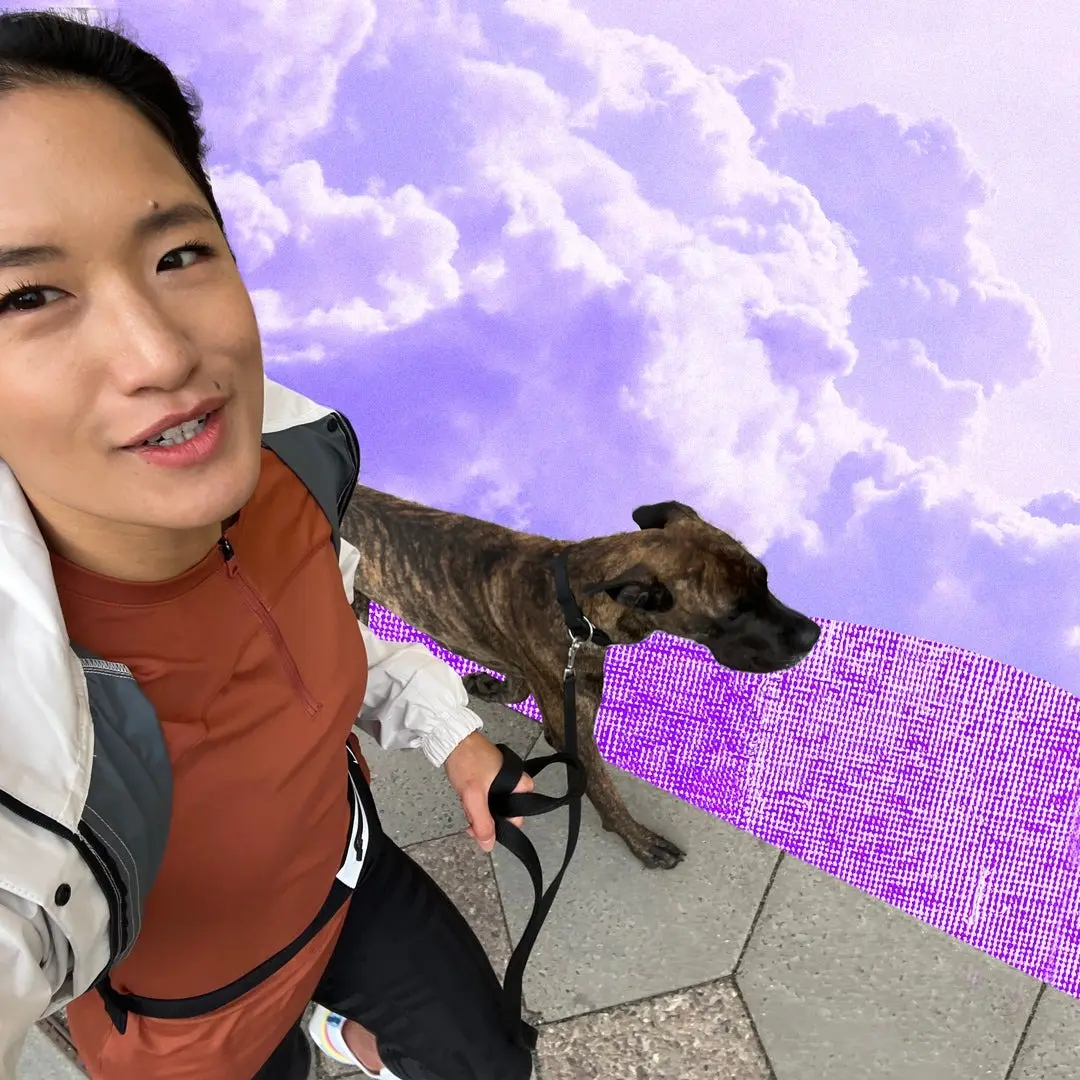
Adding a touch of social unpredictability to her Monday routine, Hong frequently borrows a friend’s dog, Mia. With boundless energy and an infectious enthusiasm for movement, Mia acts as both pacer and companion. "At the beginning of the run, she pulls me; by the end, I pull her," Hong notes. While the canine companion may hold the edge in raw speed, Hong’s superior human endurance ultimately dictates the rhythm of the outing.
Tuesday: Cross-Training and the Prevention Paradigm
True to modern athletic science, Hong understands that running a marathon requires more than just running. Tuesday is deliberately designated as a non-running day, dedicated instead to yoga, targeted strength training, and physiotherapy sessions.
This multi-disciplinary approach is not optional; it is the structural foundation that allows Hong to push her physiological boundaries safely. Strength training builds the muscular armor necessary to withstand the repetitive impact forces of high-mileage training, while yoga enhances mobility and myofascial release. Physiotherapy acts as an early-detection system, addressing minor imbalances before they manifest into debilitating injuries.
By investing time in this holistic preparation, Hong ensures that when she does push into high-intensity zones later in the week, her body possesses a resilient baseline. Consequently, she avoids the debilitating post-workout exhaustion that plagues many novice endurance athletes, leaving her physically primed for the next training cycle after a mandatory rest period.
Wednesday: Professional Travel and Cultural Intermissions
As an international flight attendant, Hong’s geographical coordinates are subject to change on short notice. When she is grounded in Berlin, however, she deliberately uses mid-week interludes to nourish her social and cultural life.
Wednesday is structured as an intentional recovery and social day. Rather than forcing a suboptimal workout into a packed schedule, Hong pauses the training metrics to explore Berlin’s vibrant art scene, visiting local exhibitions and catching up with friends. This deliberate decoupling of self-worth from daily athletic output is a crucial psychological buffer, preventing the obsessive burnout that frequently derails amateur runners.
Thursday: Pushing Limits and Track-Day Precision
If Monday is about finding rhythm and Tuesday is about structural integrity, Thursday is where raw performance is tested. Many outsiders harbor the misconception that successful marathoners spring out of bed at 5:00 AM with a joyous craving for twenty-kilometer speed sessions. Hong is quick to debunk this myth, admitting that she, too, requires deliberate motivational scaffolding.
On Thursday, she tackles a high-intensity track workout designed to challenge her lactate threshold and assess her pacing capabilities. Because these sessions demand maximum output, equipment choice becomes paramount. Hong relies on footwear designed for responsive energy return and impact protection, noting that shoes like the Nike Invincible 3 provide the psychological and physical security needed to navigate high speeds across varied urban surfaces.
"I love competitions and challenging myself," Hong reflects. "The track workout is where I test how fast I can push and how long I can sustain that velocity. Having gear that feels bouncy and secure underfoot makes all the difference."
Friday: Active Recovery and Urban Reintegration
The physiological toll of Thursday’s threshold work requires an immediate and respectful counter-response. Friday is marked by physical stillness, save for a gentle restorative yoga session.
Capitalizing on her frequent absences due to flight schedules, Hong uses her time in Berlin to reconnect with the city’s social fabric. Whether visiting another gallery opening or enjoying a quiet evening with friends, Friday serves as a psychological palate cleanser, ensuring that her athletic endeavors enrich rather than isolate her personal life.
Saturday: The Meditative Standard Route along the Landwehrkanal
Weekends in Berlin offer the luxury of extended training blocks, and Saturday belongs to Hong’s signature long-run route along the scenic Landwehrkanal. This path provides a changing tapestry of terrain—oscillating between hard asphalt, soft grass, and unpredictable patches of mud—which naturally engages stabilizing muscles in the ankles and core.
Saturdays are designed for mental decompression. Equipped with an engaging podcast or simply tuned in to the ambient acoustic landscape of the city, Hong uses this time to disconnect from digital stressors. Running past crowds of weekend strollers, she absorbs the collective energy of Berlin before executing her favorite post-run ritual: a freshly brewed coffee and a savory treat from a local market stall in Kreuzberg.
Sunday: Community Synergy and the Long-Run Finale
The apex of Hong’s training week occurs on Sunday, anchored by her participation in the Joy Run Collective, a local running community that has provided both accountability and deep social connection.
Sunday’s agenda typically features a long-distance endurance run through the expansive landscapes of the Tiergarten. Because these efforts involve extended time under tension—often in biting weather conditions—preparation is meticulous. Hong layers technical apparel thoughtfully to manage core temperature before embarking on the mileage alongside her peers.
The culmination of the Sunday run is as much a social celebration as it is an athletic achievement. The collective gathers post-run for a communal brunch, featuring rotating culinary highlights. "This week, our host made homemade dumplings," Hong smiles. "I spent the entire final miles of the run looking forward to those dumplings."
Supporting Context & Metrics: The Evolution of Modern Endurance
To contextualize Hong’s journey, one must examine the broader demographic shifts occurring within the global running community. According to recent sports industry analytics, participation in endurance events has experienced a significant generational evolution. The stereotypical profile of the hyper-competitive, male-dominated marathon demographic has expanded rapidly to include a diverse cohort of women, creative professionals, and lifestyle-driven athletes who refuse to compromise their holistic wellbeing for athletic accolades.
| Metric / Parameter | Traditional Marathon Model | The Modern Holistic Model (Hong’s Approach) |
|---|---|---|
| Primary Motivation | Podium placement, strict personal records | Mental wellbeing, sustainability, life balance |
| Training Philosophy | High mileage at all costs ("No pain, no gain") | Periodized volume, cross-training, active recovery |
| Social Structure | Solitary suffering, strict isolation | Community integration (e.g., Joy Run Collective) |
| Post-Run Routine | Immediate solitary stretching | Cultural engagement, social brunch, culinary treats |
| View on Comfort | Perceived as a weakness or lack of grit | Integrated as an essential tool for longevity |
Data from sports medicine institutions consistently indicates that runners who incorporate cross-training, structured rest, and mental health strategies experience a 40% lower rate of overuse injuries compared to those who rely exclusively on linear mileage accumulation. By embracing this evidence-based approach, Hong—who began running just four years ago—has achieved a remarkable physiological milestone: at age 30, she reports feeling healthier, stronger, and more energetically vital than she did throughout her entire twenties.
Official Statements and Expert Perspectives
The philosophy championed by athletes like Hong is increasingly validated by sports scientists, coaches, and industry leaders who recognize that the future of endurance sports lies in accessibility, enjoyment, and sustainable longevity.
Dr. Elena Vance, a leading sports psychologist specializing in endurance athletics, notes a profound psychological shift in how athletes approach heavy training blocks:
"For decades, endurance sports were framed as an endurance test of human suffering. Athletes felt compelled to prove their toughness through self-denial. What we are seeing now—exemplified by athletes who balance demanding careers with marathon preparation—is a healthier, more nuanced paradigm. When athletes allow themselves to feel comfortable, when they integrate community, music, and culinary rewards into their routine, cortisol levels drop, psychological resilience improves, and the risk of catastrophic burnout plummets. Comfort is not the enemy of performance; it is its sustaining engine."
Furthermore, athletic footwear and apparel brands are responding to this cultural evolution. The design focus has pivoted away from ultra-spartan, uncompromising racing flats toward highly cushioned, technologically advanced platforms—such as the Nike Invincible series utilized by Hong—that prioritize joint protection, energy return, and immediate step-in comfort for everyday runners.
Future Outlook: The Road to the Seventh Marathon and Beyond
As Hong shifts her gaze toward the horizon of her seventh marathon start line, her journey serves as a powerful blueprint for the modern urban athlete. She has successfully dismantled the false dichotomy that suggests one must choose between an ambitious athletic goal and a rich, multi-dimensional personal life.
Her trajectory highlights several key takeaways for aspiring endurance runners:
- Consistency Trumps Intensity: Showing up consistently, even when motivation wanes, yields far better long-term results than sporadic bursts of overzealous training.
- Holistic Care is Mandatory: Integrating strength work, mobility, yoga, and mental rest protects the body against the rigors of high-mileage training.
- Community is an Anchor: Surrounding oneself with a supportive running collective transforms solitary suffering into shared celebration.
- Joy is Fuel: Whether through a curated playlist, a singing break during a difficult mile, or a post-run plate of dumplings, finding pleasure in the process ensures long-term sustainability.
Hong’s three golden rules for running longevity—wearing comfortable and supportive footwear, curating a vibrant auditory landscape, and anchoring runs with beautiful routes and rewarding post-run snacks—are deceptively simple yet profoundly effective.
As she laces up her shoes for the next training cycle on the paths of Berlin, Hong proves definitively that the marathon is no longer an exclusive club for the suffering. It is an open invitation for anyone willing to balance ambition with self-care, one comfortable, joyful mile at a time. Next stop: the seventh start line.