Executive Overview
For years, the smart home market has felt like a patchwork quilt of competing protocols, fragmented ecosystems, and well-intentioned yet frustratingly limited voice assistants. While competitors like Amazon with its Echo Show series and Google with its Nest Hub devices carved out early territory, Apple’s presence in the stationary smart display sector remained conspicuously absent. Consumers heavily invested in the Apple ecosystem were forced to rely on third-party integrations, iPads propped up on kitchen counters, or Apple TVs tethered to living room televisions to manage their connected domiciles.
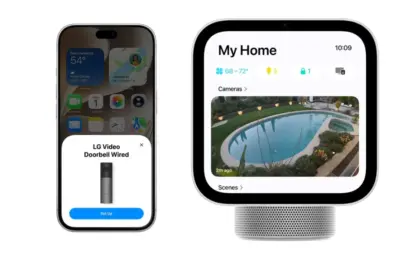
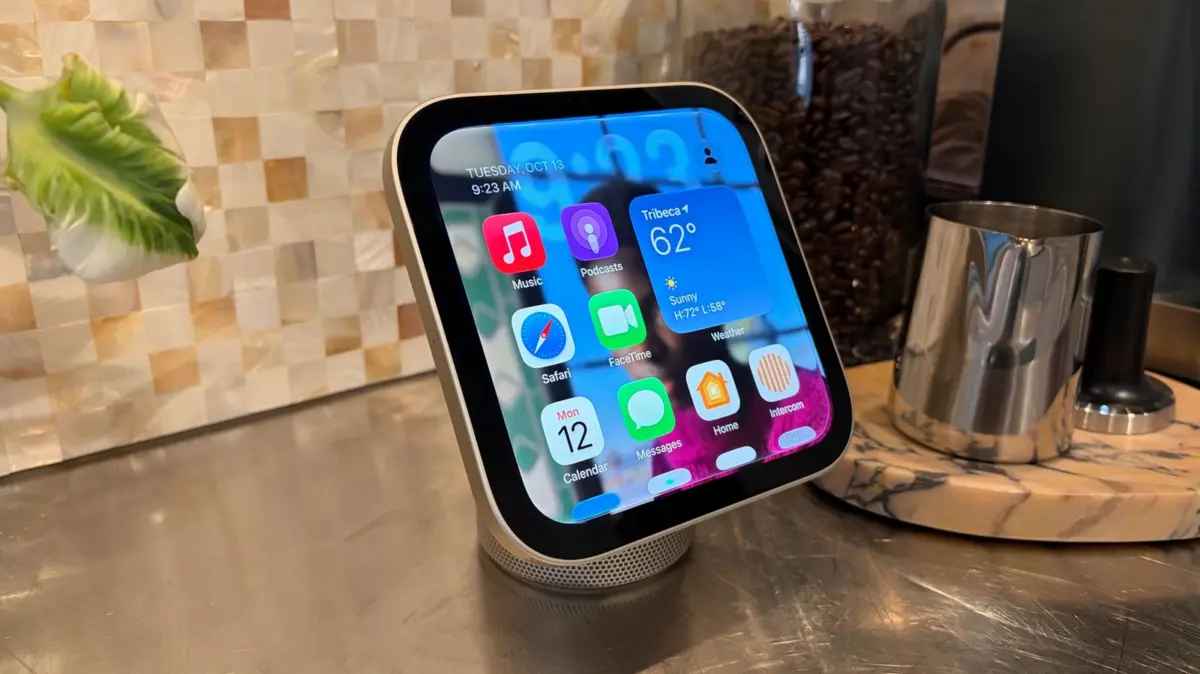
That era of waiting has officially come to an end. In a sweeping product rollout that signals Apple’s most aggressive home strategy to date, the tech giant has pulled back the curtain on the Apple HomeView. More than just an oversized Apple Watch or a repurposed tablet, the HomeView is a dedicated, purpose-built smart display and high-fidelity speaker hybrid engineered from the ground up to serve as the definitive nervous system of the modern connected home.
Anchored by the newly integrated capabilities of Siri AI, the HomeView seamlessly bridges the gap between personal mobile computing and stationary domestic automation. It pulls contextual awareness straight from your iPhone and iPad, integrates deeply with the Apple Home ecosystem, and introduces thoughtful, productivity-boosting features like automated Safari recipe formatting and seamless device hand-offs.
Following the official morning announcement, we spent hands-on time with the HomeView, evaluating its interface fluidity, exploring its multi-device smart home integrations with brands like LG and Schneider Electric, and testing the conversational prowess of Siri AI. Far from a simple novelty, the HomeView positions itself as a proactive, deeply personalized digital roommate designed to anticipate your needs, secure your property, and simplify daily domestic choreography.
Detailed Chronology: A Morning of Major Home Announcements
The path to the HomeView’s debut was marked by months of rampant industry speculation. Analysts and enthusiasts alike whispered about Apple developing a dedicated desktop and wall-mountable command center, a device codenamed internally and discussed extensively across tech forums. The speculation finally materialized during a landmark morning press event that redefined Apple’s hardware roadmap for the smart home.
The Morning Reveal
The keynote began with a comprehensive overview of Apple’s renewed hardware and software push into the domestic space. Alongside the announcement of the HomePod Mini 2, executives introduced the cornerstone of the entire initiative: the Apple HomeView.
The presentation framed the device not merely as an accessory, but as a paradigm shift in how users interact with their living spaces. By blending ambient display technology with advanced machine learning via Siri AI, Apple aims to solve the fatigue associated with managing fragmented smart home apps.
Hands-On Impressions: First Encounters With the Interface
Immediately following the keynote, media and industry analysts were granted exclusive access to hands-on demo areas designed to mimic real-world living spaces—complete with smart locks, connected kitchen appliances, and automated lighting arrays.
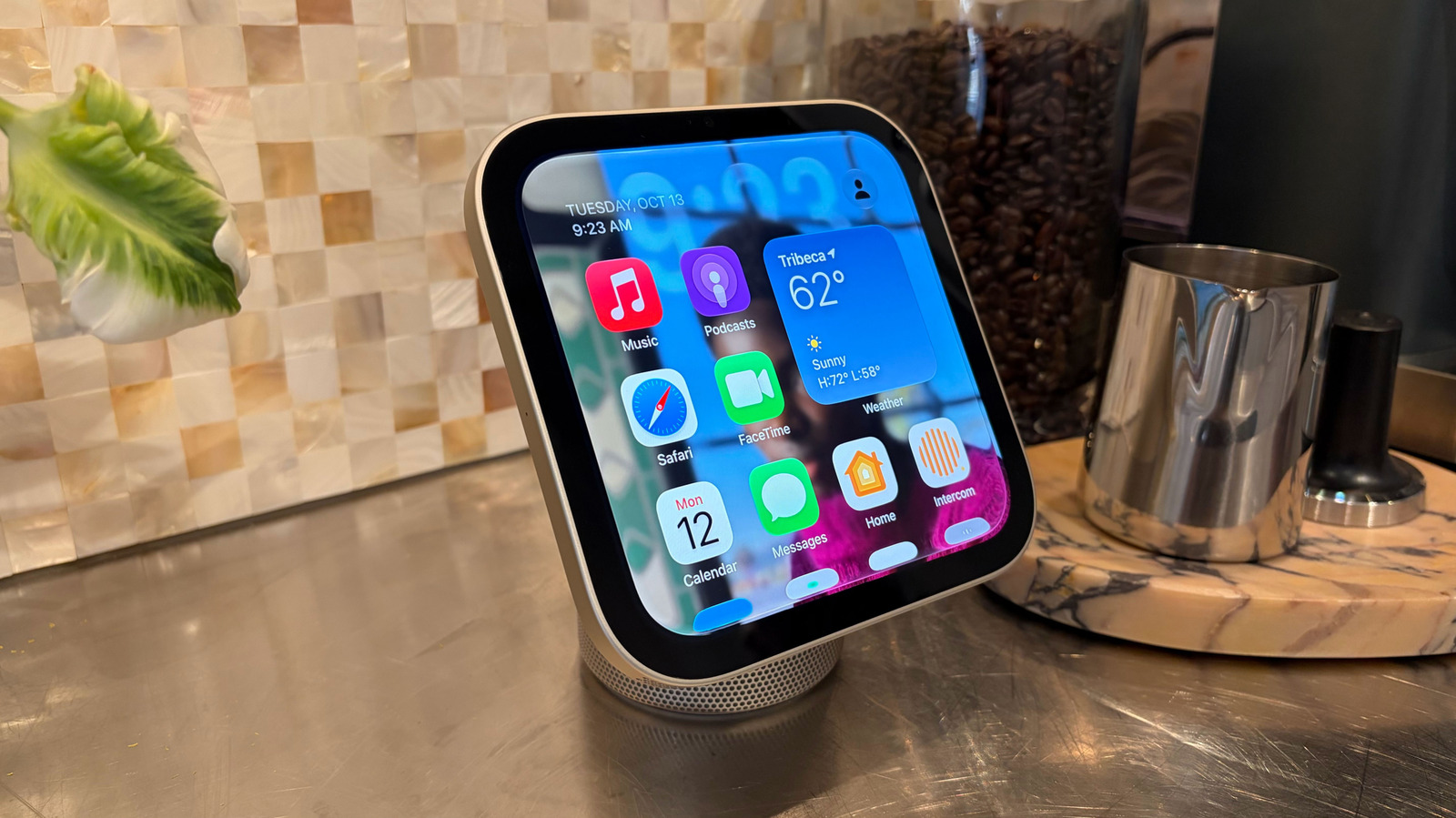
Upon first approach, it is easy to draw visual comparisons to an enlarged Apple Watch. The circular or rectangular framing cues, smooth typography, and vibrant iconography bear the unmistakable design DNA of watchOS. However, the moment one begins interacting with the hardware, those surface-level similarities dissolve. The HomeView is an expansive, purpose-driven control hub.
During our time with the device, we tested its responsiveness across various menus. Swiping through widgets, pulling up live camera feeds, and toggling connected hardware yielded instantaneous results. There was no discernible latency, no stuttering frame rates, and no frustrating loading screens. The device effortlessly pulled recently used applications from a nearby iPhone and iPad, mirroring context without requiring manual reconfiguration.
We also observed live demonstrations of Siri AI operating in a multi-user household environment. When prompted to execute complex, context-heavy commands—such as playing media referenced in a recent text message—Siri processed the request with remarkable speed and accuracy.
The session concluded with a walkthrough of the HomeView’s innovative Safari recipe integration, showcasing how digital workflows can transition effortlessly from a handheld mobile device to a stationary kitchen display.
Supporting Context & Metrics: Under the Hood of the HomeView Ecosystem
To truly understand the significance of the HomeView, one must examine the underlying hardware capabilities, software integrations, and industry partnerships that make its seamless performance possible.
Hardware-Software Synergy
While Apple has not yet released the complete spec sheet detailing processor architectures or exact audio driver specifications, the user experience speaks volumes about the computing power packed into the chassis. The HomeView functions as both an ambient smart screen and a robust speaker system, drawing design cues from both the iPad and the HomePod lineups.
Key technical and functional pillars include:
- Ecosystem Continuity: The device actively syncs with recently used apps on your iPhone or iPad, ensuring that the content and shortcuts you need are always one tap away.
- Smart Home Centralization: Operating as the physical anchor for the Apple Home app, the HomeView offers instant, dashboard-level oversight of connected domestic accessories.
- Cross-Brand Compatibility: Out of the box, the HomeView supports an expanding roster of certified hardware partners. Initial launch demonstrations highlighted integrations with advanced home security cameras, smart door locks, and high-end thermostats from industry leaders such as LG and Schneider Electric.
- Proximity Handoff: Utilizing ultra-wideband (UWB) and localized proximity sensors, users can seamlessly pass content—such as active web pages, streaming media, and recipes—from an iPhone to the HomeView with a simple gesture of holding the phone near the device.
The Siri AI Advantage
For years, voice assistants have suffered from a lack of genuine contextual awareness. Asking a smart speaker to play a song mentioned in a text message typically resulted in a blank stare or a confused web search. Siri AI changes this dynamic fundamentally.
By securely drawing contextual metadata from your synced iOS devices, Siri on the HomeView acts less like a rigid command line interface and more like an intuitive human assistant. During our demos, asking Siri to "play that song Jeff texted me about" was met with immediate comprehension and playback execution. This deep integration transforms the smart display from a passive information screen into an active, intelligent household participant.
Culinary Integration: The Safari Recipe Mode
One of the most practical, real-world applications showcased during the hands-on session is the HomeView’s deeply integrated Safari recipe mode.
Navigating cooking instructions on a standard smartphone or tablet has long been fraught with annoyance: screens go to sleep, fingers get messy, and endless scrolling through life stories appended to food blogs wastes precious time. Apple’s solution leverages open standards, specifically formatting recipes that adhere to Google’s structured data standards.
When a compatible recipe is detected in Safari on an iOS device and handed off to the HomeView, the display undergoes an automatic UI transformation:
- Streamlined Formatting: Ingredients lists and step-by-step directions are parsed and reformatted into a clean, distraction-free, highly legible layout optimized for stationary reading from across a kitchen island.
- Inline Timer Shortcuts: Rather than forcing the user to switch apps to set countdowns, recipes feature embedded timer shortcuts. A single tap on a specific step—such as "simmer for 15 minutes"—instantly initializes a dedicated timer on the display.
- Frictionless Handoff: Transferring a recipe from an iPhone to the HomeView requires nothing more than bringing the phone close to the display, replicating the effortless audio handoff experience popularized by the HomePod.
Official Statements and Industry Perspective
Apple’s executive team has positioned the HomeView not merely as a new gadget to add to the consumer electronics pile, but as the foundational brick of a broader domestic strategy.
In statements released alongside the morning announcement, company representatives emphasized privacy, local processing power, and user-centric design as the core tenets of the HomeView architecture. "We wanted to create a device that respects your home, your privacy, and your time," noted a senior product manager during the briefing. "The HomeView is designed to fade into the background when you don’t need it, and spring into instant action when you do."
Industry analysts have already begun weighing in on the potential market disruption. For years, Amazon and Google dominated the affordable smart display tier, relying heavily on data collection and subsidized hardware pricing. Apple, by contrast, enters the market with a premium-tier philosophy, betting that consumers will pay for superior build quality, unmatched ecosystem continuity, and robust, on-device privacy protections backed by Siri AI.
Initial reactions from hardware partners like LG and Schneider Electric have been equally enthusiastic. By ensuring day-one compatibility with essential home infrastructure—such as smart climate control and secure entry points—Apple has mitigated the fragmentation anxiety that typically plagues first-generation hardware rollouts.
Future Outlook: What’s Next for the Apple Home Ecosystem?
As the Developing… tag on initial reports suggests, our first look at the Apple HomeView is merely the opening chapter of a much larger story.
As we move closer to the official consumer launch and prepare to put a review unit through rigorous, real-world domestic testing, several critical questions remain:
- Long-Term Performance: How will Siri AI handle complex, multi-step routines over weeks of continuous use in a busy household with multiple family members?
- Third-Party Developer Adoption: Will the Safari recipe formatting standard be enthusiastically embraced by major culinary publishers, or will users encounter friction with non-standard blogs?
- Hardware Expansion: Will Apple introduce larger wall-mounted variants or modular mounting accessories to accommodate diverse home layouts?
What is clear, however, is that Apple has firmly planted its flag in the smart home arena. The HomeView successfully transcends the limitations of an oversized watch or a repurposed tablet, offering a cohesive, lightning-fast, and deeply intelligent command center. For households already deeply integrated into the Apple ecosystem, the HomeView promises to transform the chaotic management of connected living into a fluid, intuitive experience.
Stay tuned as we continue our comprehensive coverage, testing every feature, poking at every edge case, and delivering our definitive verdict once the HomeView officially hits the market.