Executive Overview
For decades, the smart home market has suffered from a fundamental disconnect: the engineers and early adopters building the ecosystem have entirely different tolerances for friction than the mainstream consumers targeted for mass adoption. While tech enthusiasts often view complicated configuration processes, third-party companion apps, and manual network troubleshooting as acceptable hurdles, the average consumer sees them as dealbreakers.
Enter the newly unveiled Apple Home Collection—developed in close collaboration with industry heavyweights like LG and Schneider Electric. Tech purists have been quick to criticize the collection, pointing out that its devices command a noticeable price premium while failing to introduce entirely novel hardware categories. To the tech bubble, it looks like an expensive exercise in branding.
However, this critique misses the forest for the trees. The Apple Home Collection is not about hardware innovation; it is about experience innovation. By stripping away the friction of setup through a paradigm modeled after the effortless pairing of AirPods, Apple is poised to solve the user-experience bottleneck that has kept smart homes firmly in the domain of hobbyists for over a decade. This analysis examines the evolution of the connected home, the structural failures of previous interoperability standards, the game-changing nature of Apple’s latest ecosystem push, and what this means for the broader market trajectory.
Detailed Chronology: The Long, Bumpy Road to Home Automation
To understand why the Apple Home Collection represents a watershed moment, we must first look back at how the smart home industry evolved from a niche tinkering hobby into a fragmented multi-billion-dollar market.
The Pioneer Era: Soldering, Wiring, and X10 (1970s–2000s)
In its infancy, home automation was the exclusive purview of electrical engineers, programmers, and hardcore hobbyists. Technologies like X10—introduced in the 1970s—utilized existing household electrical wiring to send digital data signals between devices. Setting up even a rudimentary automated lighting system required a deep understanding of electrical circuits, physical wiring, and manual configuration. It was expensive, fragile, and entirely inaccessible to the general public.
The Wireless Dawn and Fragmentation (2010s)
The widespread adoption of smartphones and the maturation of Wi-Fi and Zigbee protocols marked the first major paradigm shift. Suddenly, hardware could be controlled wirelessly via mobile apps. Yet, this era introduced a new kind of headache: fragmentation.
Every manufacturer—from lighting brands to thermostat makers—insisted on releasing their own proprietary mobile app. A consumer trying to build a cohesive smart home found themselves jumping between four or five different applications, creating accounts for each ecosystem, and dealing with a dizzying array of incompatible hubs and bridges.
The HomeKit Promise and Its Realities
Sensing the chaos, Apple introduced HomeKit in 2014. The platform was designed to unify smart home accessories under a single software umbrella, guaranteeing local security, end-to-end encryption, and centralized control through the native iOS Home app, alongside hands-free management via Siri.
On paper, HomeKit was revolutionary. In practice, it faced severe growing pains:
- The Third-Party App Trap: Many early HomeKit-compatible accessories still required users to download the manufacturer’s proprietary app first, create an account, update firmware, and then bridge the device into the Apple Home app.
- Network Engineering Woes: Setting up smart home bridges, managing 2.4GHz versus 5GHz Wi-Fi band steering, and troubleshooting dropped HomeKit hubs often made users feel like unpaid system administrators.
- Market Share Realities: Due to strict hardware certification processes and security requirements, fewer manufacturers initially adopted HomeKit compared to the more permissive environments fostered by Amazon Alexa and Google Home.
The Matter and Thread Breakthrough
In an attempt to end ecosystem wars, the Connectivity Standards Alliance (CSA) introduced Matter alongside the low-power mesh networking standard Thread. Backed by Apple, Google, Amazon, and hundreds of other companies, Matter promised true interoperability. Manufacturers no longer needed to build separate hardware lines for each ecosystem; a single device supporting Matter could work seamlessly across Apple Home, Google Home, and Amazon Alexa.
While Matter significantly streamlined manufacturing and lowered barriers to cross-platform compatibility, it did not entirely eradicate setup friction. Consumers still faced onboarding quirks, network routing issues, and the occasional need to consult forums to diagnose persistent offline states. The software layer had improved, but the initial handshake between device and phone remained unpolished for the average user.
Supporting Context & Metrics: The Chasm Between Geeks and "Normies"
The fundamental flaw in modern tech commentary is the assumption that if a technology works well for a tech journalist or software developer, it will naturally appeal to the mainstream consumer. Market research consistently shows a stark divide between tech enthusiasts and the broader population regarding smart home adoption barriers.
- The Setup Barrier: According to consumer electronics usability studies, over 40% of consumers who purchase a smart home device report frustration during the initial installation phase. More than a quarter of buyers have abandoned or returned a smart home gadget simply because the configuration process was too convoluted.
- The App Fatigue Phenomenon: The average smartphone user already manages dozens of applications daily. Asking a non-technical user to download a dedicated manufacturer app just to configure a smart light bulb or video doorbell introduces cognitive friction that halts adoption.
- The Price-to-Value Perception: Tech enthusiasts often analyze smart home accessories strictly through a spec-sheet lens—comparing lumens, sensor types, and API openness against hardware costs. Mainstream consumers, however, evaluate technology based on time saved and peace of mind. If a slightly more expensive device guarantees zero setup frustration and rock-solid reliability, the premium is viewed not as an overcharge, but as an insurance policy against headaches.
Official Statements and Industry Reception
The announcement of the Apple Home Collection—featuring co-developed hardware accessories from trusted household names like LG and Schneider Electric—has polarized online forums while exciting retail analysts.
Writing for CNET, tech journalist Ajay Kumar captured the core magic of the new lineup during a hands-on demonstration:

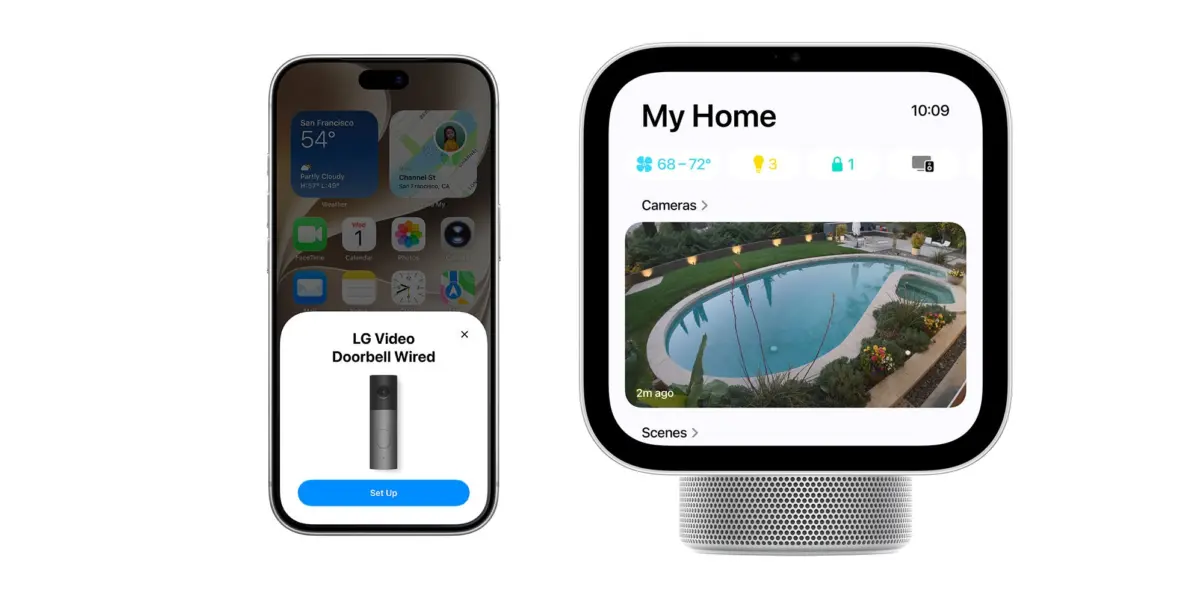
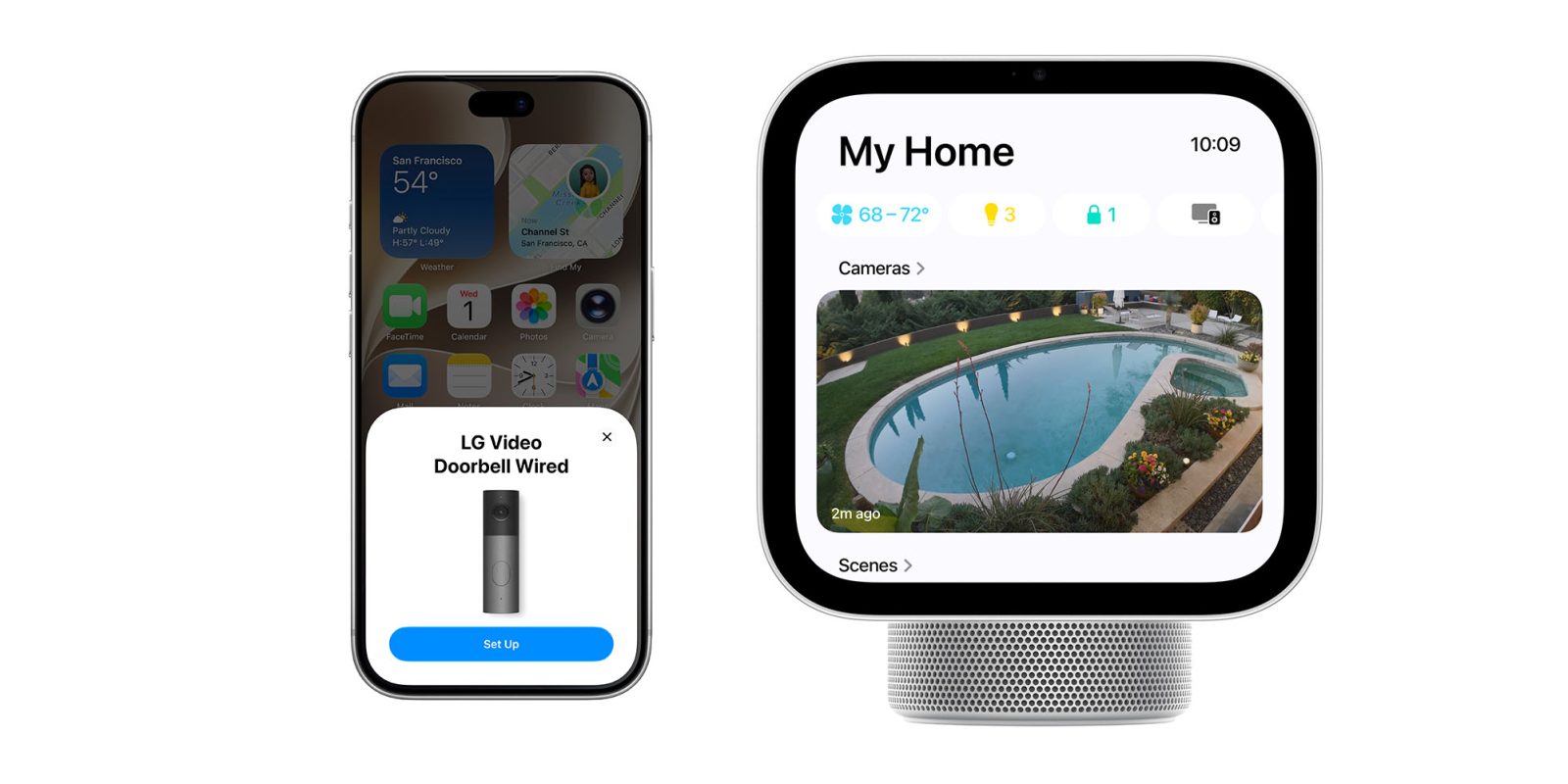
"I watched an Apple representative instantly find, pair and register a new smart home device on both her phone and the HomeView as she casual conversed with me, not missing a beat. Everything was managed through the Apple Home app. It seemed to work like pairing new AirPods or a HomePod. I didn’t have time to dig into the process before being shepherded to the next demo, but what I saw was one of the most compelling things I’ve seen in the smart home world: an easy, intuitive setup."
This near-instantaneous, proximity-based provisioning represents a structural leap forward. By embedding secure cryptographic onboarding chips and leveraging ultra-wideband (UWB) and Bluetooth proximity technologies, Apple has managed to reduce smart home setup from a multi-step configuration wizard into a single tap on a prompt—the exact same psychological comfort zone familiar to hundreds of millions of AirPods and Apple Watch owners worldwide.
Industry analysts note that partnering with legacy home infrastructure giants like Schneider Electric and consumer electronics leaders like LG bridges a vital credibility gap. Consumers who might hesitate to buy smart home gear from an unknown Silicon Valley startup or an opaque direct-to-consumer brand feel entirely comfortable purchasing reliable hardware bearing trusted heritage names, backed by Apple’s airtight privacy and security architecture.
Future Outlook: Accelerating Mass Market Adoption
As we look toward the remainder of the decade, the Apple Home Collection serves as a clear indicator of where the smart home industry must go to escape its plateau.
- The Death of the Companion App: As proximity-based, zero-touch provisioning becomes the baseline expectation, manufacturers relying on clunky third-party apps for onboarding will find themselves increasingly marginalized in the retail market.
- Mainstream Trust and Penetration: Just as the iPhone did not invent the smartphone, but rather perfected the consumer experience to unlock mass adoption, Apple is doing the same for home automation. By removing the network engineering hurdles, the "normie" demographic can finally invest in connected living spaces without fear.
- Ecosystem Consolidation: With Matter and Thread providing the plumbing, and Apple’s ecosystem providing the frictionless front-end interface, the barrier to entry has never been lower. Premium pricing for guaranteed ease of use will likely become a successful template replicated by other major tech titans.
Conclusion
It is easy for those of us immersed in technology to scoff at hardware that costs slightly more while offering identical underlying specifications on paper. But convenience has a tangible market value, and eliminating frustration is the holy grail of consumer tech. The Apple Home Collection is not designed for the programmer who enjoys tinkering with Home Assistant scripts on a Raspberry Pi; it is designed for everyone else. And in the grand trajectory of consumer technology, it is everyone else who ultimately decides which innovations change the world.