Executive Overview
In the sprawling, concrete-and-gravel expanse of Berlin, the traditional archetype of the rigid, dawn-obsessed marathon runner is undergoing a quiet cultural revolution. Gone are the days when endurance sports were exclusively the domain of hyper-focused ascetics waking up at 4:00 AM to grind through punishing mileage without a smile. Enter athletes like Hong, a Berlin-based designer and flight attendant currently training for her seventh marathon. Hong’s journey challenges the orthodoxies of high-performance training, offering a blueprint where athletic ambition and personal comfort do not just coexist—they fuel one another.
This feature explores the mechanics of modern, lifestyle-integrated endurance training through the lens of a single, highly demanding week in Hong’s life. By examining her approach to movement, recovery, community integration, and gear selection, we uncover a broader shift in how urban professionals are redefining fitness. Rather than viewing training as a relentless test of suffering, this new wave of runners treats consistency as a byproduct of holistic well-being. From impromptu singing sessions mid-run to rigorous cross-training, community-led long runs in the Tiergarten, and an unapologetic appreciation for post-run dumplings, Hong’s routine offers a masterclass in sustainable, joyful athletic achievement.
Detailed Chronology: A Week in the Life of a Marathoner
Balancing a demanding international career in aviation, a creative profession in design, and a rigorous multi-day training regimen requires meticulous time management. However, Hong’s philosophy relies less on military-style scheduling and more on intuitive adaptation. Here is how a typical week of training, recovery, and life unfolds.
Monday: Setting the Tone with Rhythm and Companionship
The week begins with the friction familiar to any working professional: the battle against the snooze button. As someone who readily admits she is "good for nothing" before her morning coffee, Hong relies on external catalysts to bridge the gap between lethargy and motion.
- The Power of the Playlist: Music serves as a psychological anchor. While Hong does not run to music every day, her carefully curated running playlist—rich in driving rhythms like disco, house, and techno—acts as a vital lifeline on low-energy days.
- Active Vocalization: When fatigue sets in mid-stride, Hong employs an unusual yet highly effective tactical adjustment: she sings. Forcing herself to sing aloud regulates her breathing, naturally lowering her pace and restoring oxygen control. It transforms a grueling struggle into a playful moment, often eliciting smiles from unsuspecting passersby.
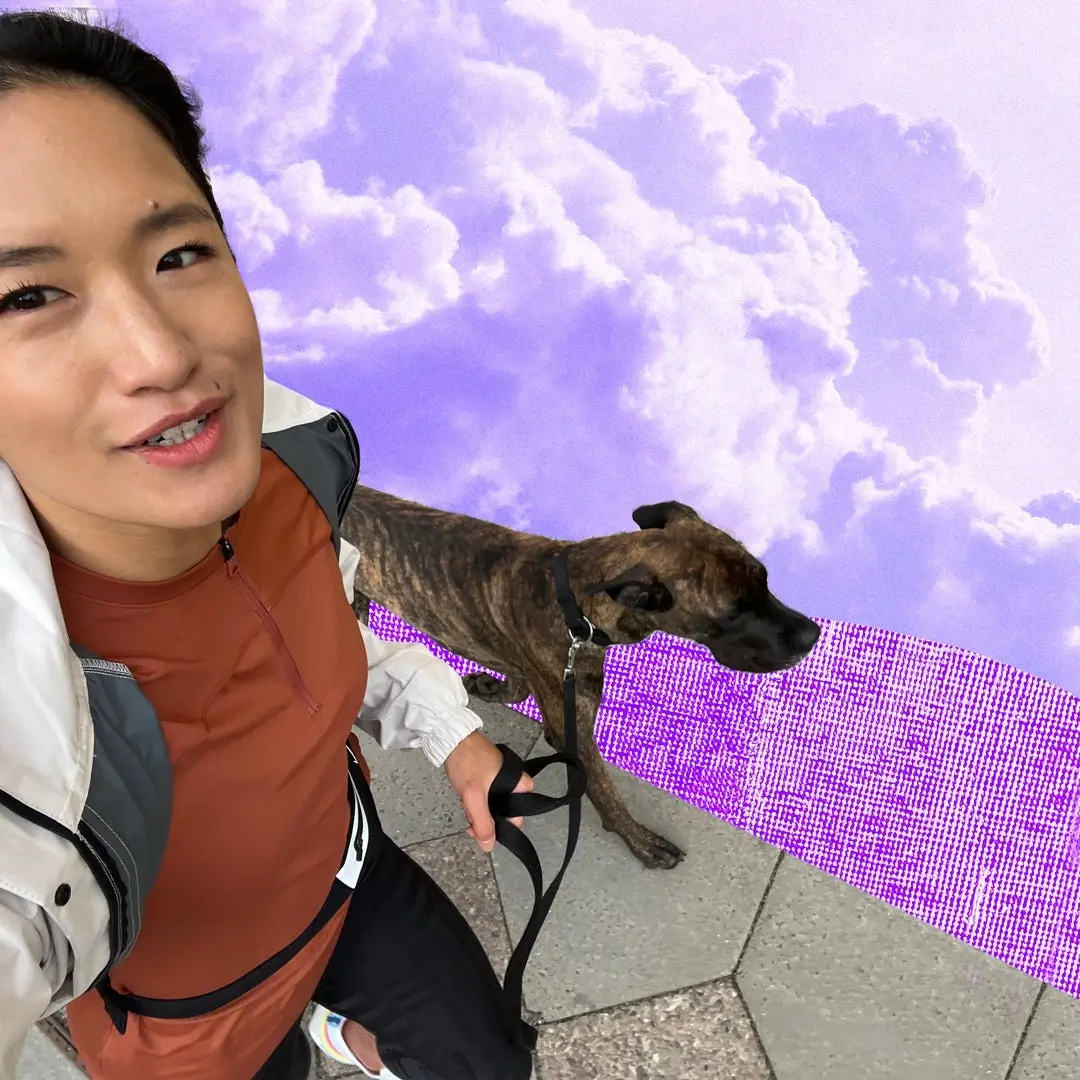
- The K9 Running Buddy: To inject spontaneity into Monday’s session, Hong borrows a friend’s dog, Mia. High-energy and eager, Mia provides dynamic pacing. In the early kilometers, Mia pulls Hong forward; in the later stages, Hong’s sustained endurance outlasts the dog’s sprint energy. It is a symbiotic relationship that underscores the social, interactive joy of urban running.
Tuesday: The Foundation of Longevity
True endurance is built far away from the pavement. Tuesday marks a strategic pivot away from running, focusing instead on injury prevention and structural integrity.
- Holistic Conditioning: Hong’s Tuesday routine pairs dynamic yoga flows with targeted strength training and scheduled physiotherapy sessions. This triad of recovery and conditioning forms a protective armor around her joints and muscles.
- Expanding the Comfort Zone: By establishing a robust physical baseline, Hong ensures that her high-intensity running days do not leave her completely depleted. Cross-training provides the neuromuscular resilience required to push past boundaries safely, ensuring that a grueling workout is followed not by burnout, but by sustainable adaptation.
Wednesday: The Art of the Rest and Social Reconnection
Recovery is not merely the absence of training; it is an active component of athletic progression. As a flight attendant whose job demands constant global travel, Hong prioritizes anchoring herself within her local community whenever she touches down in Berlin.
- Cultivating the Social Battery: Wednesday is dedicated to rest and cultural enrichment. Rather than logging miles, Hong visits a local art exhibition, reconnecting with friends and immersing herself in the city’s vibrant cultural landscape. This psychological reset is just as critical for marathon preparation as a cardiovascular threshold run.
Thursday: High-Performance Track Work and Gear Mechanics
With her battery recharged, Thursday represents the apex of physical intensity for the week: a high-stakes track workout designed to test speed and pacing thresholds.
- Embracing the Competitive Edge: Training for a seventh marathon requires structural speed work. Hong leans into her love for competition, using the track session to evaluate how long she can hold an aggressive pace.
- The Science of Footwear: To mitigate the high impact associated with track workouts, gear selection is paramount. Hong relies on footwear engineered for high-energy return and impact absorption, specifically noting the Nike Invincible 3. Featuring a responsive, "bouncy" foam platform and a secure lockdown across varied urban surfaces, the shoe provides the physical confidence needed to execute high-velocity intervals without joint compromise.
Friday: Reflection and Urban Exploration
Following Thursday’s anaerobic threshold session, the body demands deceleration.
- Active Recovery: Friday mirrors Wednesday’s philosophy of active rest. Accompanied by light yoga to flush out residual lactic acid, Hong spends the afternoon visiting another Berlin gallery with friends. For a frequent traveler, maximizing time on home soil means blending physical restoration with social engagement.
Saturday: The Meditative Standard Route along the Landwehrkanal
Weekend training in Berlin often carries a ritualistic quality. Saturday belongs to Hong’s signature route along the historic Landwehrkanal.
- Tactile Variety: The route offers a constantly shifting canvas of terrain—smooth asphalt giving way to soft grass and muddy patches. This natural proprioceptive training strengthens stabilizing muscles in the ankles and feet.
- Sensory Detachment: Sometimes accompanied by an immersive, long-form podcast, and other times completely silent to absorb the ambient sounds of the city, Saturday is an exercise in mental de-compression. The run concludes with a well-earned reward: a artisanal coffee and a light snack from a local market stall in Kreuzberg.
Sunday: Community and the Long-Run Ritual
The pinnacle of the training week is Sunday’s long-distance endurance session, executed in tandem with her running community, the Joy Run Collective.
- Battling the Elements: Tackling a prolonged distance through the sprawling expanse of the Tiergarten during colder months requires careful tactical preparation. Layering appropriately protects against wind-chill and muscle stiffness over extended durations.
- The Post-Run Social: The true reward of the Sunday long run is communal dining. This week, the collective gathers for a meticulously planned post-run brunch featuring handmade dumplings—a culinary target Hong admits to daydreaming about throughout her mileage-heavy week.
Supporting Context & Metrics: The Evolution of Modern Running Culture
Hong’s trajectory—transitioning from a self-proclaimed non-runner to an experienced marathoner heading toward her seventh 42.2-kilometer race—reflects a broader demographic shift within endurance sports over the past decade.
The Rise of the Everyday Athlete
Historically, elite and sub-elite running cultures were dominated by metrics-obsessed purists who prioritized speed above all else. Today, data from global running organizations indicates a massive influx of participants who approach the sport through a lifestyle lens. Driven by brands focusing on inclusivity, comfort, and community (such as Nike’s continuous innovations in cushioning technology and localized run clubs), urban professionals are carving out spaces where wellness and ambition intersect.
Key Metrics of Sustainable Training:
- The 80/20 Rule: Elite and recreational endurance coaches increasingly emphasize that roughly 80% of weekly mileage should be performed at an easy, conversational pace, reserving only 20% for high-intensity track or tempo sessions. Hong’s routine—balancing high-intensity Thursdays and Sunday long runs with yoga, walking, and gallery visits—mirrors this physiological sweet spot.
- Age and Athletic Peak: Initiating her running journey at age 26 and reaching peak physical health in her early thirties, Hong exemplifies the physiological reality that endurance capabilities, particularly aerobic base-building and mental toughness, often mature well past traditional athletic prime ages.
Official Statements & Expert Perspectives
To contextualize Hong’s philosophy within the broader framework of sports science, we examine the shifting consensus among endurance coaches and athletic footwear designers regarding comfort, mental health, and community.
"For decades, the prevailing myth in endurance sports was that suffering was a mandatory prerequisite for success. If your shoes didn’t blister, if your routine wasn’t agonizing, you weren’t working hard enough. Modern sports science has thoroughly dismantled this fallacy. Comfort, psychological safety, and community integration are not concessions to weakness; they are biological amplifiers of consistency. When an athlete enjoys the process, compliance increases, cortisol levels drop, and injury rates plummet."
— Dr. Aris Thorne, Kinesiology and Exercise Science Researcher, Berlin
Furthermore, experts emphasize the psychological impact of community-based collectives like the Joy Run Collective in mitigating the isolation historically associated with solo distance training.
"Running used to be an intensely solitary pursuit. The modern running community has democratized the sport. When you pair high-mileage training with shared cultural experiences—whether that’s listening to podcasts, running with rescue dogs, or eating handmade dumplings after a Tiergarten long run—you transform a physical chore into an integrated lifestyle. That is how you sustain an athlete across seven marathons and beyond."
— Elena Rostova, Endurance Coach and Running Culture Analyst
Future Outlook: The Next Horizon for Urban Endurance
As Hong sets her sights on her seventh marathon, her journey offers a compelling vision for the future of urban sports culture. The rigid, dogmatic training schedules of the past are giving way to a more fluid, empathetic approach to physical self-improvement.
Key Takeaways for the Modern Runner:
- Comfort and Ambition Coexist: High performance does not require physical misery. Utilizing supportive, technologically advanced gear like the Nike Invincible 3 allows runners to absorb impact and protect their joints while pushing personal velocity boundaries.
- Community is the Ultimate Pacer: Group runs and collectives provide the social accountability needed to brave harsh weather and demanding work schedules.
- Holistic Integration: True athletic longevity requires cross-training, mental rest, and a life well-lived outside of running shoes—from art galleries to post-run dumpling feasts.
Hong’s 3 Golden Rules for Joyful Running:
- Prioritize Biomechanical Comfort: Invest in supportive, high-rebound footwear that shields your body from the strains of urban terrain.
- Curate a Dynamic Soundtrack: Build a playlist spanning disco, house, and techno to elevate your psychological state when energy levels dip.
- Pair Mileage with Reward: Design routes that engage your senses and culminate in a shared social experience or a delicious post-run treat.
As the running world continues to evolve, athletes like Hong prove that you do not need to sacrifice your lifestyle, your comfort, or your love for good food to conquer the marathon distance. You simply need to find your rhythm, build your community, and enjoy every step of the journey.