Executive Overview
In a milestone announcement for the modern developer ecosystem, Vercel and Amazon Web Services (AWS) have officially rolled out native Amazon S3 integration across the Vercel Marketplace and v0, Vercel’s generative UI tool. This strategic alignment bridges the gap between Vercel’s world-class front-end deployment pipeline and AWS’s industry-standard back-end storage infrastructure.
For millions of developers building web applications, enterprise platforms, and artificial intelligence models, the friction of cloud provisioning has historically meant context-switching. Developers previously had to abandon their front-end workflows, log into the AWS Management Console, meticulously configure identity and access management (IAM) policies, establish security credentials, and manually wire up environment variables.
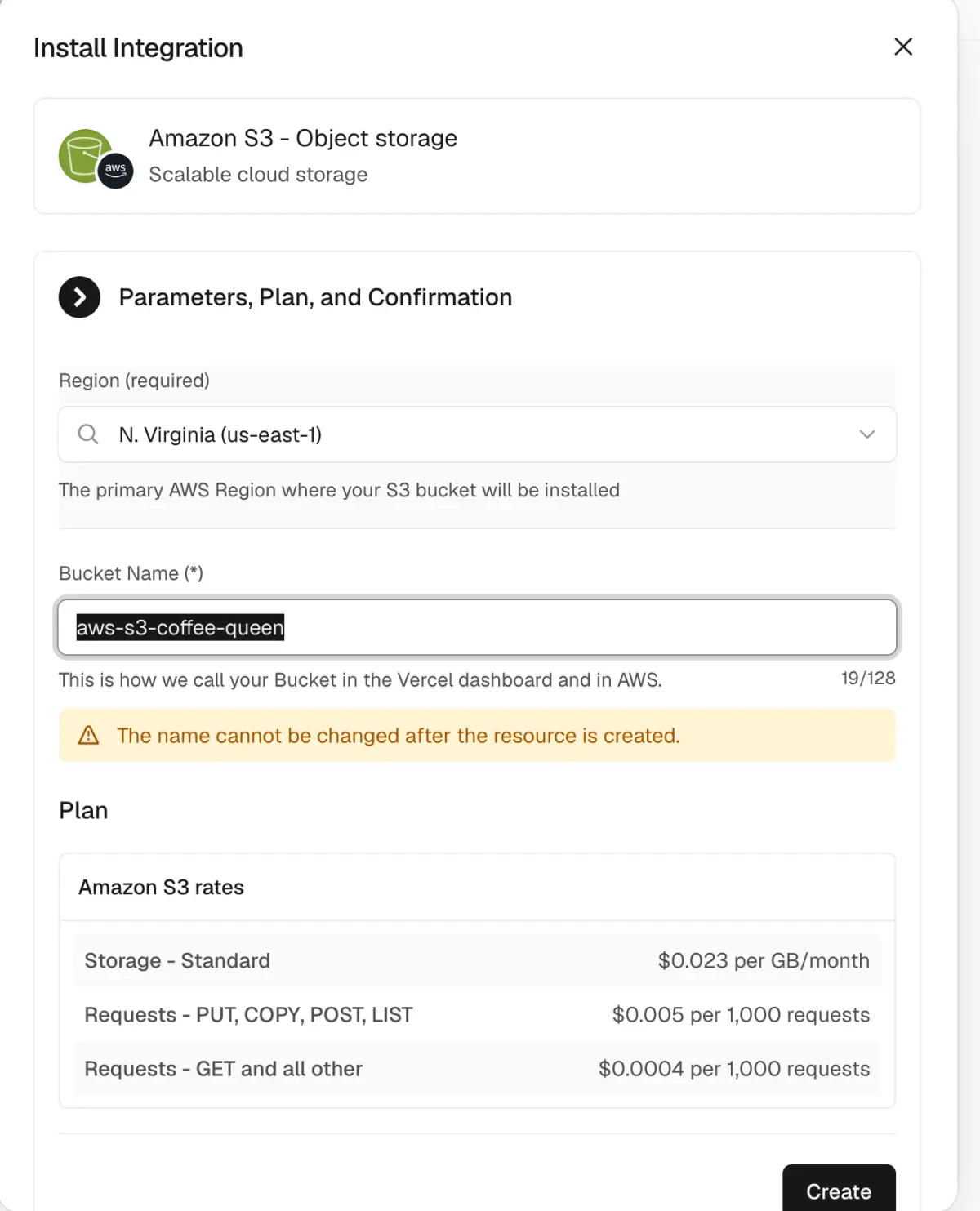
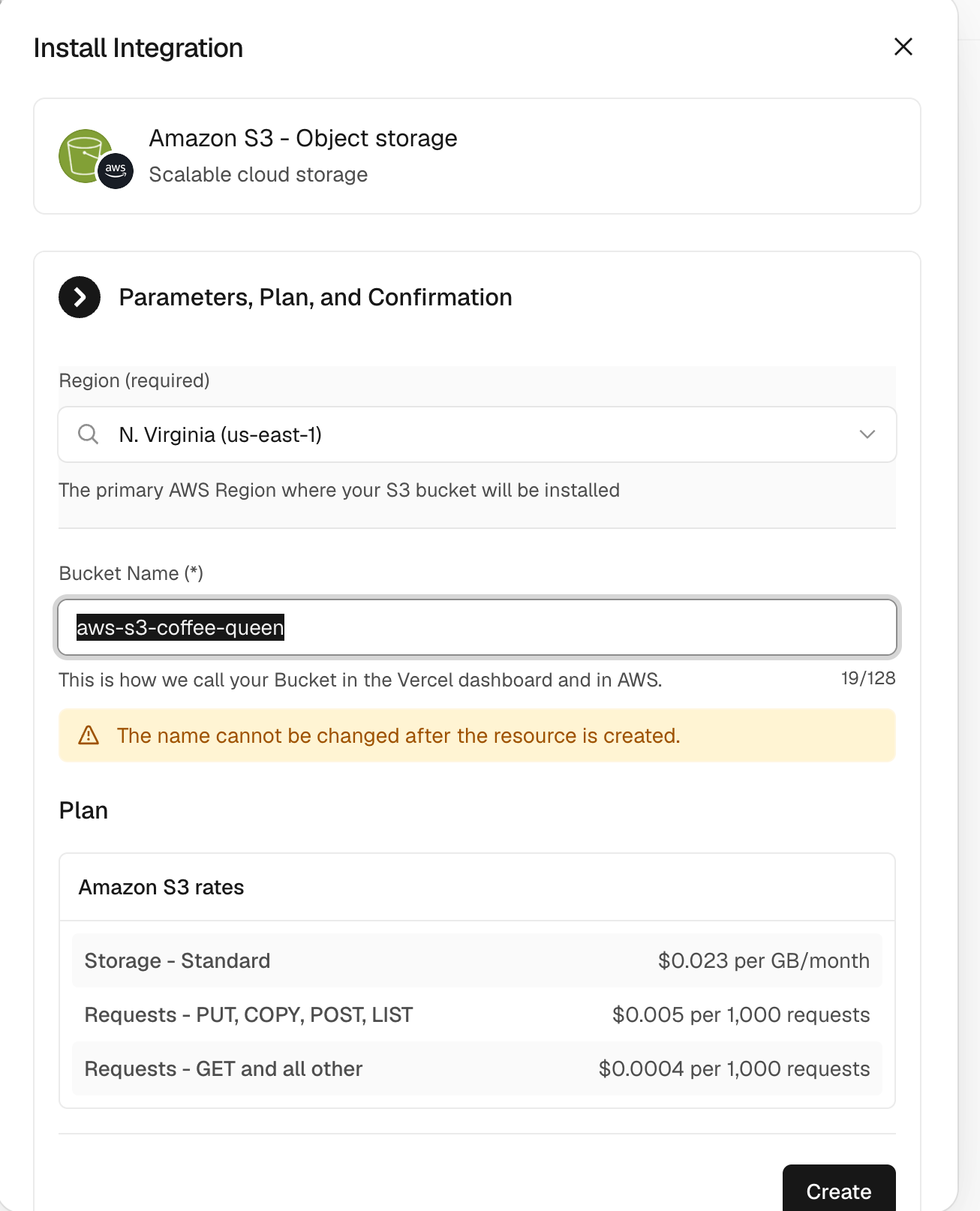
Today, that operational overhead vanishes. Developers can now provision, configure, and connect enterprise-grade Amazon Simple Storage Service (Amazon S3) resources—including specialized tiers like Amazon S3 Tables and Amazon S3 Vectors—directly from the Vercel dashboard and the v0 interface.
By tying object storage, high-performance analytics tables, and vector embeddings directly into Vercel’s architecture, this integration completes a unified application stack. Alongside existing integrations for Amazon Aurora, Amazon DynamoDB, and Amazon OpenSearch Serverless, developers can now run an entire cloud-native, full-stack application within a single billing structure and security boundary. Complete with secure, token-based authentication via OpenID Connect (OIDC), zero static keys, and turnkey multi-workload capabilities, this release marks a paradigm shift in how frontend-heavy deployment platforms interact with deep cloud infrastructure.
Detailed Chronology and Technical Architecture
The journey toward a unified developer experience between Vercel and AWS has evolved through successive iterations of cloud tooling, API abstractions, and identity federation.
The Evolution of Cloud-Native Workflows
Historically, edge-focused deployment platforms and hyperscale cloud providers operated in distinct silos. Vercel optimized the delivery of Next.js applications, serverless functions, and static assets with lightning-fast global distribution. Meanwhile, AWS housed the persistent data layers, robust databases, and massive object stores. While powerful, connecting the two required custom boilerplate code, manual key rotations, and complex infrastructure-as-code (IaC) templates.
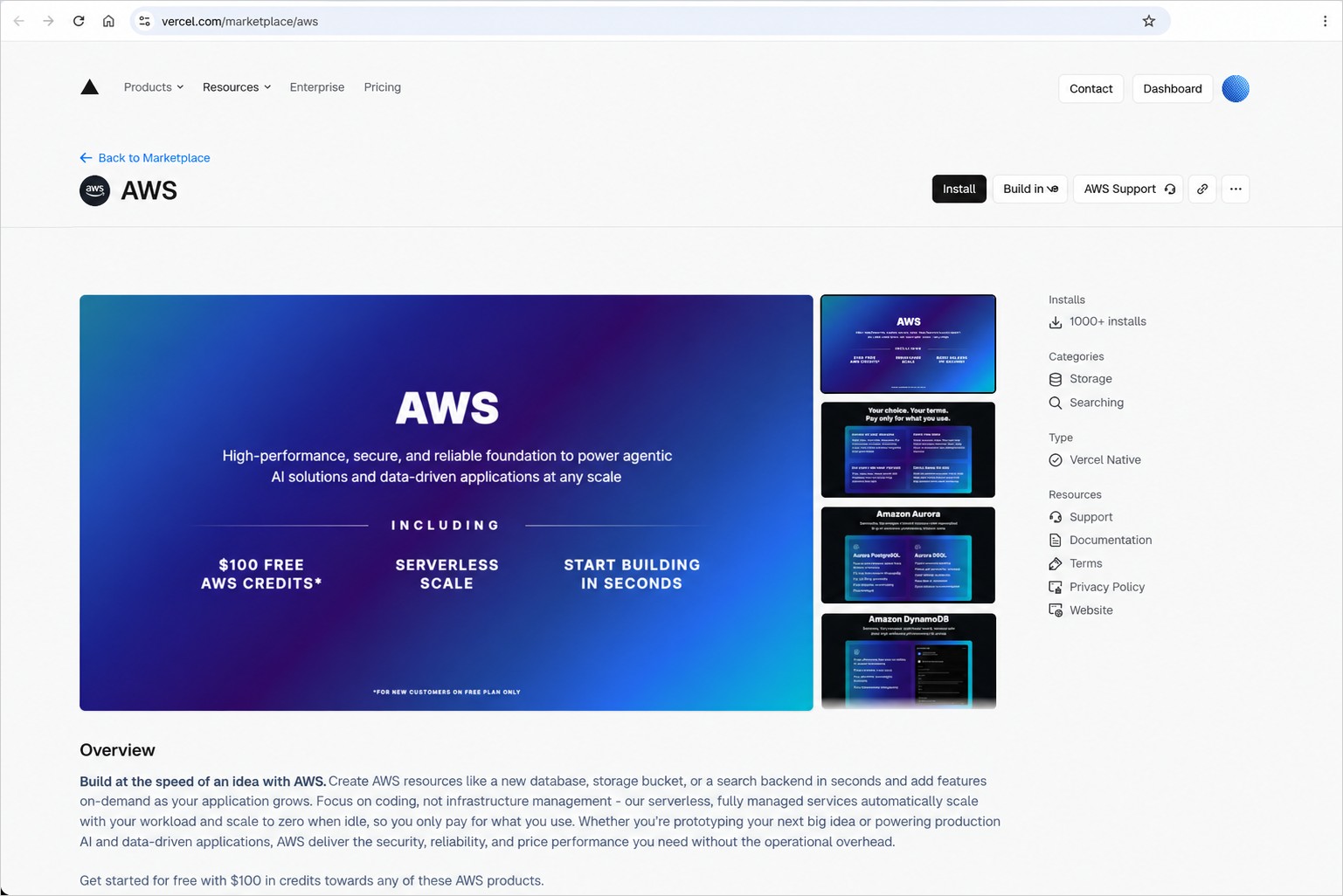
Recognizing the bottlenecks in developer velocity, AWS and Vercel began systematically tearing down these barriers. The collaboration started with managed database integrations, allowing developers to spin up Amazon Aurora, DynamoDB, and OpenSearch Serverless instances without leaving the Vercel ecosystem.
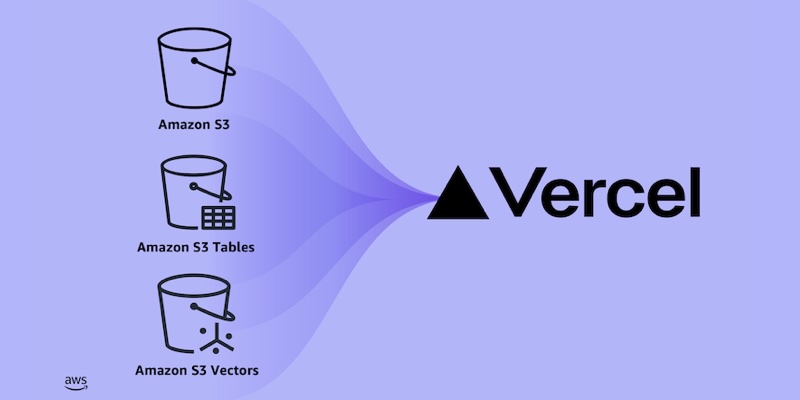
The missing puzzle piece was scalable, resilient, and intelligent storage. On October 15, 2026, that gap was officially bridged when Amazon S3—spanning general-purpose buckets, S3 Tables, and S3 Vectors—was natively integrated into the Vercel Marketplace and v0.
Under the Hood: Secure OIDC Provisioning
Security is often the primary casualty of rapid provisioning workflows. To prevent developers from hardcoding static AWS access keys into client-side or server-side codebases, the Vercel-AWS S3 integration abandons long-lived credentials entirely in favor of token-based authentication.
When a developer initializes an S3 resource within the Vercel dashboard or prompts v0 to build a storage-backed feature, the platform automates the provisioning sequence:
- Resource Generation: A designated S3 bucket (General Purpose, Table, or Vector) is spun up within the user’s designated AWS account and region.
- Environment Injection: The integration automatically injects standardized environment variables into the Vercel project settings, including
AWS_REGION,AWS_ROLE_ARN,AWS_RESOURCE_ARN, and resource-specific specifiers likeS3_BUCKET_NAME. - Runtime Token Exchange: At runtime, Vercel’s proprietary
awsCredentialsProviderfrom@vercel/functions/oidcexecutes an automated security handshake. It exchanges a short-lived OpenID Connect (OIDC) token with the AWS Security Token Service (AWS STS) to acquire temporary, highly scoped IAM credentials.
This architecture ensures that even if application code is compromised, static keys do not exist to be leaked, matching the highest standards of zero-trust enterprise security.
Code Implementation Across Workloads
The native integration translates into clean, idiomatic code across three distinct application paradigms:

1. Everyday Object Storage (Next.js Integration)
For standard asset management, such as user uploads, document repositories, and image galleries, developers leverage the standard AWS SDK for JavaScript alongside Vercel’s OIDC credential provider.
import  S3Client, PutObjectCommand  from "@aws-sdk/client-s3";
import  awsCredentialsProvider  from "@vercel/functions/oidc";

const s3 = new S3Client(
  region: process.env.AWS_REGION,
  credentials: awsCredentialsProvider(
    roleArn: process.env.AWS_ROLE_ARN,
  ),
);

export async function POST(request)
  const formData = await request.formData();
  const file = formData.get("file");

  await s3.send(new PutObjectCommand(
    Bucket: process.env.S3_BUCKET_NAME,
    Key: file.name,
    Body: Buffer.from(await file.arrayBuffer()),
    ContentType: file.type,
  ));

  return Response.json( success: true );
2. Analytics with S3 Tables and DuckDB
For analytics workloads, S3 Tables provide fully managed Apache Iceberg tables with automated compaction and maintenance. Developers can execute fast, lightweight queries directly inside Vercel Serverless Functions using DuckDB:
import  DuckDBInstance  from "@duckdb/node-api";
import  awsCredentialsProvider  from "@vercel/functions/oidc";

const creds = await awsCredentialsProvider(
  roleArn: process.env.AWS_ROLE_ARN,
)();

const db = await DuckDBInstance.create();
const conn = await db.connect();

await conn.run("INSTALL aws; LOAD aws; INSTALL httpfs; LOAD httpfs; INSTALL iceberg; LOAD iceberg;");

await conn.run(`
  CREATE SECRET s3cred (
    TYPE s3,
    KEY_ID '$creds.accessKeyId',
    SECRET '$creds.secretAccessKey',
    SESSION_TOKEN '$creds.sessionToken',
    REGION '$process.env.AWS_REGION'
  );
`);

await conn.run(`
  ATTACH '$process.env.AWS_RESOURCE_ARN' AS s3tables (
    TYPE iceberg,
    ENDPOINT_TYPE s3_tables
  );
`);

const rows = await (await conn.run(`
  SELECT town_city, AVG(median_price) AS avg_price
  FROM s3tables."$process.env.S3_TABLES_NAMESPACE".town_monthly
  GROUP BY town_city
  ORDER BY avg_price DESC
  LIMIT 10
`)).getRowObjects();
3. Vector Search for AI Agents
With the explosive growth of Retrieval-Augmented Generation (RAG) and semantic search architectures, S3 Vectors deliver specialized vector storage natively inside object storage. Developers can seamlessly query vector indices without managing a separate standalone vector database:
import  S3VectorsClient, QueryVectorsCommand  from "@aws-sdk/client-s3vectors";
import  awsCredentialsProvider  from "@vercel/functions/oidc";

const vectors = new S3VectorsClient(
  region: process.env.AWS_REGION,
  credentials: awsCredentialsProvider(
    roleArn: process.env.AWS_ROLE_ARN,
  ),
);

export async function POST(request)
  const  embedding  = await request.json();

  const result = await vectors.send(new QueryVectorsCommand(
    vectorBucketName: process.env.S3_VECTOR_BUCKET_NAME,
    indexName: "documents",
    queryVector:  float32: embedding ,
    topK: 5,
    returnMetadata: true,
  ));

  return Response.json( matches: result.vectors );
Supporting Context and Metrics
To truly grasp the significance of this integration, one must examine the developer friction it eliminates. Industry data consistently shows that configuration overhead and context switching account for up to 30% of engineering waste in fast-paced software teams.
Bridging Generative UI and Enterprise Cloud
The integration with v0 by Vercel marks a qualitative leap forward in generative development. Rather than treating AI-generated code as isolated UI mockups, v0 can now reason about underlying data architectures.
When a developer prompts v0 with natural language phrases such as:
- "Build a photo gallery where users can upload images using AWS" — v0 provisions a General Purpose S3 bucket.
- "Create a support bot that answers questions from my corporate PDFs" — v0 provisions S3 Vectors.
- "Set up an executive analytics dashboard for real-time clickstream data" — v0 provisions S3 Tables.
The AI assistant automatically writes the front-end components, structures the back-end API routes, configures the necessary environment variables, and visualizes the working application in the Preview panel.
Economic and Account Architecture
Flexibility remains a cornerstone of the Vercel-AWS partnership. Developers and organizations have two primary pathways to onboard:
- New Account Creation: Users can spin up a dedicated AWS account directly through the Vercel onboarding flow. To encourage experimentation, new accounts created via this method receive $100 in AWS credits valid for six months.
- Existing Account Linking: Enterprise teams can link their pre-existing AWS accounts, maintaining their enterprise discount programs, existing security governance models, and centralized billing structures.
Crucially, all provisioned S3 resources reside directly within the user’s own AWS account. This guarantees that engineering teams retain full ownership of their data, native AWS tooling access, and granular compliance audits, all while managing resources via a unified dashboard and receiving a single, consolidated bill.
Official Statements and Industry Perspective
The convergence of frontend agility and enterprise cloud storage has drawn praise from industry leaders who view the partnership as a blueprint for the future of software engineering.
"Developers want to focus on shipping user experiences and intelligent features, not wrestling with cloud configuration consoles, IAM policies, and static key rotations," noted engineering leadership close to the Vercel ecosystem. "By bringing Amazon S3, S3 Tables, and S3 Vectors natively into Vercel and v0, we are delivering the holy grail of cloud architecture: enterprise durability and scalability combined with consumer-grade developer simplicity."
AWS architects have similarly emphasized the power of the unified stack. By combining Amazon Aurora for relational data, Amazon DynamoDB for NoSQL workloads, Amazon OpenSearch Serverless for search capabilities, and now Amazon S3 for object, analytical, and vector storage, developers can build virtually any modern application architecture without ever leaving the Vercel interface.
Furthermore, technical support and discovery have been streamlined for AI-driven development. Developers can interact with APIs, search comprehensive documentation, verify regional availability, and troubleshoot edge cases using the newly launched AWS MCP Server and associated plugins within their preferred AI-assisted development environments.
Future Outlook
The launch of native Amazon S3 support on Vercel signals a broader, irreversible trend in software development: the boundary between application hosting and cloud infrastructure is dissolving.
As AI agents, multimodal applications, and real-time analytical dashboards become standard requirements for modern web products, the demand for frictionless data plumbing will only intensify. The integration of S3 Vectors and S3 Tables anticipates a future where unstructured data, vector embeddings for LLMs, and high-velocity analytics tables are treated as core primitives of web development, rather than esoteric back-end database concerns.
For enterprises, this means faster time-to-market, tighter security postures through OIDC token exchange, and simplified infrastructure management. For indie hackers and startup teams, it means harnessing the infinite scalability of AWS without requiring a dedicated cloud infrastructure engineer.
Getting Started
Amazon S3, S3 Tables, and S3 Vectors are available starting today across all commercial AWS regions supported by Vercel. There are no additional platform charges for the integration itself; users pay standard Amazon S3 rates for resource consumption.
To begin building, developers can navigate to the Storage tab in their Vercel dashboard, select AWS, or visit v0.app to generate storage-backed applications using natural language prompts. Community feedback, technical discussions, and troubleshooting guides are actively supported via the AWS re:Post for Amazon S3 community forum.