
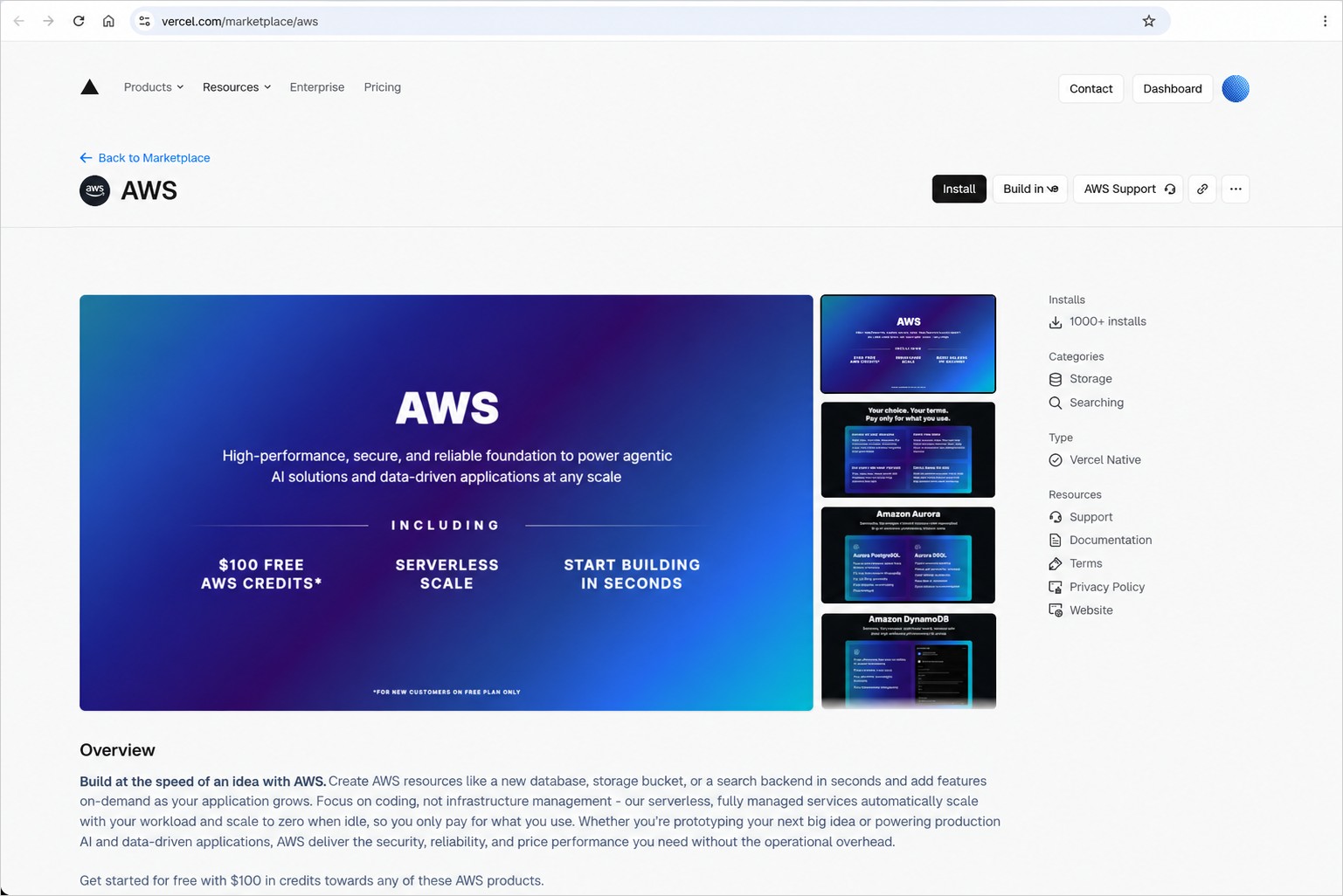
In a significant leap forward for modern cloud architecture, Vercel and Amazon Web Services (AWS) have announced a powerful native integration that bridges the gap between high-performance frontend application development and enterprise-grade cloud storage. Developers building web applications and artificial intelligence (AI) systems on Vercel can now provision and manage Amazon Simple Storage Service (Amazon S3)—including Amazon S3 Tables and Amazon S3 Vectors—directly from the Vercel Marketplace and the generative UI tool, v0 by Vercel.
This technological alignment fundamentally simplifies how engineering teams handle workloads spanning everyday object storage, real-time analytics, and advanced AI retrieval-augmented generation (RAG). Historically, bridging Vercel’s agile developer workflow with AWS’s robust storage infrastructure required manual intervention: developers had to pivot away from their deployment pipelines, navigate the complex AWS Management Console, hand-configure IAM policies, and manage static security credentials.
The new integration automates this friction-heavy lifecycle. By combining Vercel’s streamlined provisioning workflow with AWS’s unmatched durability, scalability, and performance, developers now have access to a complete application stack—spanning databases, caches, object stores, vector indices, and open table formats—all managed through a single platform, anchored to a single AWS account, and consolidated under a single bill.
Detailed Chronology & Technical Integration
The path toward this unified cloud-development experience represents years of iterative improvements in serverless authentication, identity federation, and marketplace ecosystems.
The Evolution of Cloud Provisioning
For over a decade, frontend-focused developer platforms and backend cloud infrastructure providers operated in distinct silos. While Vercel revolutionized how developers ship Jamstack and Next.js applications with zero-config deployments, AWS remained the undisputed gold standard for scalable data persistence. Connecting the two often resulted in fragmented administrative tasks, particularly around secure credential management.
With the launch of this native integration, the provisioning timeline has been condensed into seconds:
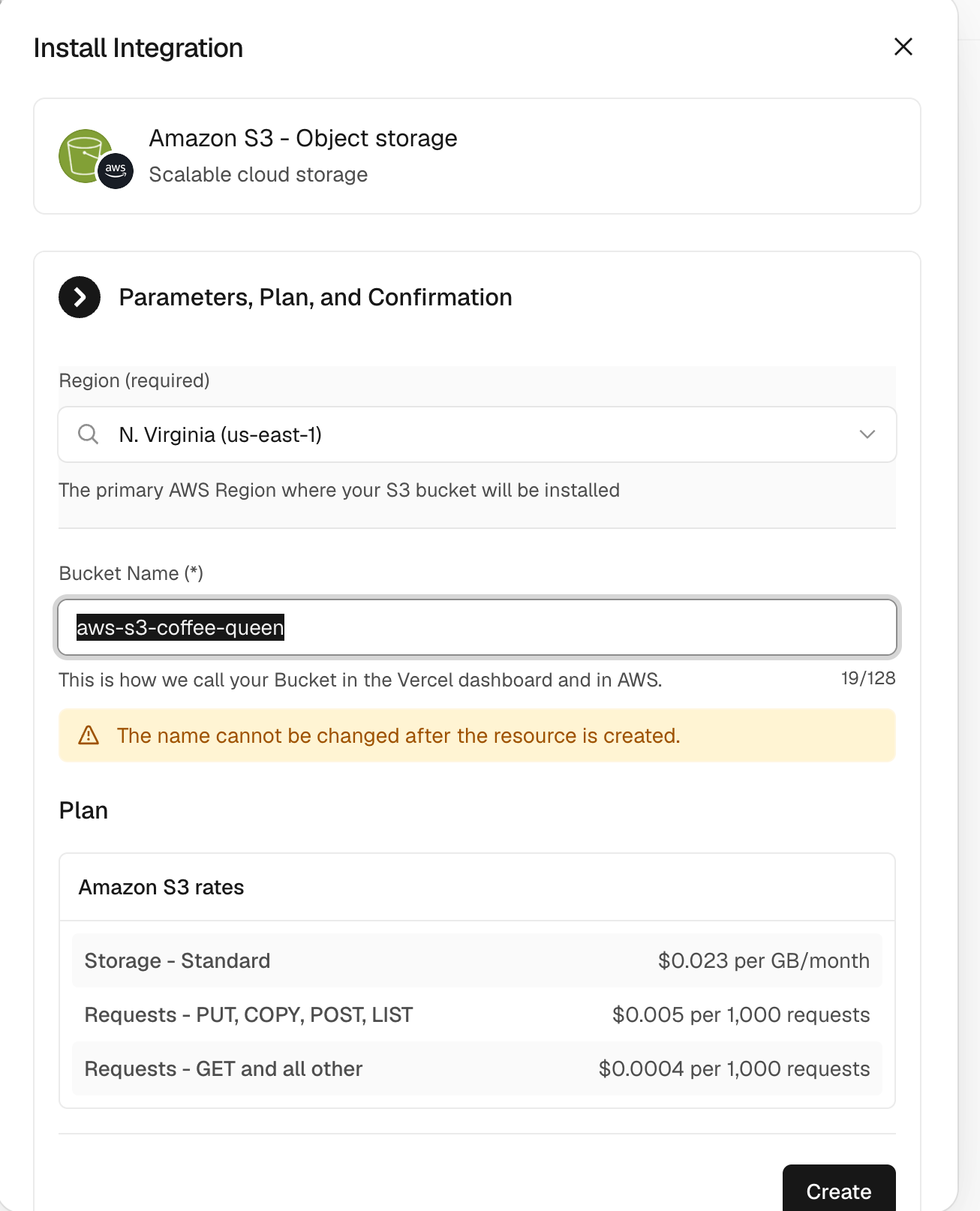
- Discovery & Selection: From the Vercel dashboard, engineers navigate to the Storage tab, select AWS, and choose their desired S3 bucket category (general purpose, table bucket, or vector bucket).
- Automated Configuration: Users designate a preferred AWS Region and a unique bucket name. Vercel automatically handles the underlying resource creation.
- Linkage & Environment Injection: Utilizing the Vercel Command Line Interface (CLI), developers run
vercel linkandvercel env pull .env.localto securely sync runtime environment variables such asAWS_REGION,AWS_ROLE_ARN,AWS_RESOURCE_ARN, and bucket-specific identifiers.
Zero Static Keys via OIDC and AWS STS
Security is a cornerstone of this integration. Eschewing the insecure practice of hardcoding static IAM access keys and secret keys into environment variables, Vercel utilizes OpenID Connect (OIDC) federation.
At runtime, the awsCredentialsProvider function—imported from @vercel/functions/oidc—exchanges a short-lived OIDC token with the AWS Security Token Service (AWS STS). This generates temporary, highly scoped credentials tailored specifically to the execution context of the Vercel Function. As a result, no long-lived cryptographic secrets are ever stored at rest, significantly reducing the blast radius of potential security vulnerabilities.

Technical Deep Dive: Workloads in Action
The integration addresses three distinct operational pillars required by modern web and AI applications:
1. Everyday Object Storage (Amazon S3)
Developers can seamlessly manage unstructured data—such as user-uploaded media, high-resolution imagery, and document repositories. Utilizing the standard AWS SDK for JavaScript (@aws-sdk/client-s3), Next.js server actions and API routes can write, read, and list objects natively.
import  S3Client, PutObjectCommand  from "@aws-sdk/client-s3";
import  awsCredentialsProvider  from "@vercel/functions/oidc";

const s3 = new S3Client(
  region: process.env.AWS_REGION,
  credentials: awsCredentialsProvider(
    roleArn: process.env.AWS_ROLE_ARN,
  ),
);

export async function POST(request)
  const formData = await request.formData();
  const file = formData.get("file");

  await s3.send(new PutObjectCommand(
    Bucket: process.env.S3_BUCKET_NAME,
    Key: file.name,
    Body: Buffer.from(await file.arrayBuffer()),
    ContentType: file.type,
  ));

  return Response.json( success: true );
2. Analytics via Amazon S3 Tables
S3 Tables provide purpose-built storage optimized for analytical workloads, featuring fully managed Apache Iceberg tables with automated table maintenance, compaction, and performance optimization as data volumes scale. Developers can execute high-speed analytical queries directly inside serverless Vercel Functions using DuckDB paired with the S3 Tables REST Catalog.
import  DuckDBInstance  from "@duckdb/node-api";
import  awsCredentialsProvider  from "@vercel/functions/oidc";

const creds = await awsCredentialsProvider(
  roleArn: process.env.AWS_ROLE_ARN,
)();

const db = await DuckDBInstance.create();
const conn = await db.connect();

await conn.run("INSTALL aws; LOAD aws; INSTALL httpfs; LOAD httpfs; INSTALL iceberg; LOAD iceberg;");

await conn.run(`
  CREATE SECRET s3cred (
    TYPE s3,
    KEY_ID '$creds.accessKeyId',
    SECRET '$creds.secretAccessKey',
    SESSION_TOKEN '$creds.sessionToken',
    REGION '$process.env.AWS_REGION'
  );
`);

await conn.run(`
  ATTACH '$process.env.AWS_RESOURCE_ARN' AS s3tables (
    TYPE iceberg,
    ENDPOINT_TYPE s3_tables
  );
`);

const rows = await (await conn.run(`
  SELECT town_city, AVG(median_price) AS avg_price
  FROM s3tables."$process.env.S3_TABLES_NAMESPACE".town_monthly
  GROUP BY town_city
  ORDER BY avg_price DESC
  LIMIT 10
`)).getRowObjects();
3. Vector Search via Amazon S3 Vectors
For artificial intelligence applications, semantic search, and AI agents, Amazon S3 Vectors delivers cost-optimized vector storage natively inside S3. Without the overhead of maintaining a separate dedicated vector database, developers can query embedded vector indices directly via the @aws-sdk/client-s3vectors client library.
import  S3VectorsClient, QueryVectorsCommand  from "@aws-sdk/client-s3vectors";
import  awsCredentialsProvider  from "@vercel/functions/oidc";

const vectors = new S3VectorsClient(
  region: process.env.AWS_REGION,
  credentials: awsCredentialsProvider(
    roleArn: process.env.AWS_ROLE_ARN,
  ),
);

export async function POST(request)
  const  embedding  = await request.json();

  const result = await vectors.send(new QueryVectorsCommand(
    vectorBucketName: process.env.S3_VECTOR_BUCKET_NAME,
    indexName: "documents",
    queryVector:  float32: embedding ,
    topK: 5,
    returnMetadata: true,
  ));

  return Response.json( matches: result.vectors );
Supporting Context & Metrics
To appreciate the gravity of this collaboration, one must examine the operational bottlenecks it resolves for millions of developers.
- Ecosystem Synergy: Vercel already maintains mature integrations with premier AWS data services, including Amazon Aurora, Amazon DynamoDB, and Amazon OpenSearch Serverless. The introduction of S3 completes the data layer, allowing teams to store relational metadata in Aurora, NoSQL documents in DynamoDB, clickstream analytics in S3 Tables, and vector embeddings in S3 Vectors—all within a cohesive architectural envelope.
- Natural Language Provisioning via v0: The integration extends beyond traditional dashboards into generative UI development. By utilizing v0 by Vercel, developers can converse in plain English to scaffold complex applications. Prompts such as "build a photo gallery where users upload images using AWS", "create a support bot that answers questions from my PDFs utilizing S3 Vectors", or "generate an analytics dashboard for clickstream data using S3 Tables" automatically prompt v0 to provision the necessary cloud resources, wire up backend connections, and output production-ready frontend and backend code.
- Flexible Billing and Account Management: Engineering teams are given total architectural freedom. They can choose to spin up a brand-new, isolated AWS account directly through the Vercel interface—complete with $100 in AWS promotional credits valid for six months—or seamlessly link an existing enterprise AWS account to preserve corporate billing structures. Regardless of the route chosen, all underlying S3 buckets reside directly within the customer’s AWS account, ensuring full adherence to enterprise compliance, governance, and AWS-native tooling standards.
Official Statements & Industry Impact
Industry observers have hailed the collaboration as a masterclass in developer experience (DevEx) optimization, reducing the cognitive load required to build full-stack, cloud-native AI applications.
"Storage has historically been the invisible anchor of web architecture—essential for application performance, yet frustratingly disconnected from the rapid iteration cycles of frontend development," noted a leading cloud systems architect. "By bringing Amazon S3, S3 Tables, and S3 Vectors directly into Vercel and v0, AWS and Vercel have effectively erased the artificial boundary between client-facing interfaces and hyperscale cloud infrastructure."
Furthermore, AWS engineering leadership has emphasized that this integration democratizes advanced analytical and AI capabilities. By exposing complex technologies like Apache Iceberg open table formats and native vector search through streamlined marketplace workflows, smaller engineering teams can now deploy enterprise-grade data architectures with minimal operational overhead.
Developers looking to troubleshoot or explore regional availability can leverage cutting-edge tools like the AWS Model Context Protocol (MCP) Server and associated plugins to query documentation and APIs programmatically through their preferred AI assistants. Community feedback is actively being gathered through official channels such as AWS re:Post for Amazon S3.
Future Outlook
As web development continues its aggressive evolution toward AI-driven interfaces and real-time data processing, the alliance between Vercel and AWS sets a new benchmark for cloud interoperability.
The convergence of serverless frontend deployment with hyperscale cloud primitives signifies that future applications will no longer be designed around the boundaries of disparate tools. Instead, developers will increasingly rely on intelligent, intent-driven platforms—such as v0—to provision backend storage, vector indexes, and analytical pipelines instantly via natural language commands.
For enterprises and solo developers alike, the message is clear: the friction of cloud infrastructure management is rapidly dissolving. With Amazon S3 natively embedded into the Vercel ecosystem, building secure, scalable, and intelligent applications has never been faster or more accessible.