Executive Overview
Facepunch Studios, the celebrated developer behind the global phenomenon Garry’s Mod and the hyper-successful survival sandbox Rust, is executing a major strategic pivot for its ambitious next-generation creation platform, s&box. Following its rocky commercial debut in April—which was marred by an influx of low-effort user-generated content, an overwhelming interface, and a rapid decline in active player engagement—studio founder Garry Newman has announced sweeping changes to rescue the platform.
The radical course correction includes the abandonment of a passive curation model in favor of a strict greenlight system, the implementation of manual quality control measures to purge low-quality assets and "AI slop," an accelerated timeline to make the platform completely free-to-play by late 2026, and the retirement of the iconic, neckless sausage character model colloquially known as "Terry."
This comprehensive restructuring signals a fundamental shift in Facepunch’s operational philosophy. Having previously prioritized backend engine architecture and developer empowerment, Newman and his team are recalibrating to center the end-user experience. By transitioning from an engine-first mindset to a player-first product strategy, Facepunch aims to steer s&box away from the perils of content saturation and recapture the chaotic, creative magic that defined the original Garry’s Mod two decades ago.
Detailed Chronology of the Crisis and Response
The April Launch and Immediate Backlash
When s&box officially rolled out its early access build in April, expectations within the PC gaming community were exceptionally high. As the spiritual and technical successor to Garry’s Mod—a titan of user-generated sandbox gameplay that defined an entire era of PC gaming—s&box was positioned as a cutting-edge platform powered by advanced engine technology. Facepunch intended to provide creators with robust tools to build entirely new experiences.
However, the launch quickly unraveled. Early adopters were greeted not by a curated showcase of inventive gameplay, but by a sprawling digital storefront drowning in poorly optimized custom maps, low-effort user interfaces, clickers, idler titles, and what the community rapidly categorized as "AI slop." The platform’s discovery mechanisms buckled under the weight of unstructured uploads. Players reported that trying out a new game was an exhausting loop of lengthy download times followed almost immediately by deeply underwhelming, unpolished experiences.
Consequently, user reviews plummeted, active player counts dropped sharply from their initial peaks, and community sentiment curdled. Critics and players alike voiced concern that s&box felt less like the spiritual heir to Garry’s Mod and more like a sterile, over-commercialized clone of modern Roblox-style ecosystem bloat.
Garry Newman’s Initial Stance Versus Reality
In the immediate aftermath of the April launch, Garry Newman adopted a laissez-faire attitude toward the influx of low-quality content, publicly asserting that market forces would naturally sort out the ecosystem. His prevailing theory was simple: "Eventually, the slop will just fall to the bottom."
By the summer, however, internal metrics and community feedback forced a dramatic reassessment. The passive marketplace model was failing. Rather than sinking to the bottom, uninspired and automated content was actively clogging the discovery channels, burying genuine developer ingenuity and frustrating newcomers who lacked the patience to sift through dozens of broken projects.
The Course Correction: Summer and Fall Announcements
Recognizing that the platform’s trajectory threatened its long-term viability, Newman took to the official s&box development channels to issue a transparent mea culpa.
"Our focus has been on the engine and the development experience. That’s what we love, that’s what turns us on—but we’re not selling an engine, we’re selling a game," Newman wrote. "So we need to do much much better on the game, we need to shift our focus to what players are experiencing, not developers."
This realization catalyzed a wave of immediate policy revisions. Facepunch discontinued its hands-off curation approach, introducing human-led oversight to manually sweep away substandard projects. Furthermore, the studio announced a complete restructuring of its developer financial incentive programs and a definitive roadmap toward a free-to-play model, ensuring that the barriers to entry for players would be permanently lowered.
Supporting Context & Metrics: The Economics of s&box
The Play Fund and Developer Incentives
One of the most innovative aspects of s&box’s development has been Facepunch’s commitment to sustaining its creator ecosystem financially. Moving away from traditional ad-supported models or restrictive revenue splits, Facepunch established the Play Fund pool to reward creators directly based on player engagement. To date, the studio has funneled over $500,000 into the pockets of community developers, proving that Facepunch’s financial model is both robust and capable of supporting independent creators without resorting to massive corporate layoffs.
However, the distribution of these funds previously relied heavily on automated metrics, inadvertently incentivizing quantity over quality. Developers could game the system by flooding the platform with maps, repetitive idlers, and click-bait titles designed purely to farm player counts.
Under the newly announced greenlight and application-based system, participating in the Play Fund pool will require explicit approval. Facepunch’s revised policy explicitly targets clickers, idlers, AI-generated slop, and UI-heavy utility games, raising the qualitative bar required for financial compensation. By intentionally pruning the developer pool, Facepunch is working to ensure that sustainable funding is funneled exclusively to creators investing genuine effort into gameplay innovation.
The Failure of the "Netflix for Games" Paradigm
Newman’s candid reflections on user psychology shed light on a broader systemic issue facing modern content platforms. His initial design philosophy relied on a "Netflix for games" model—presenting users with a vast, open menu of dozens of experiences and trusting them to explore freely.
User data proved this approach fundamentally flawed in the context of interactive software. Unlike passive media where browsing a thumbnail library carries minimal friction, launching a user-generated game requires downloads, loading screens, and an investment of attention. When a user rolls the dice on an unvetted title three times in a row and encounters substandard software, abandonment rates spike. Newman acknowledged this structural failure directly:
"The player is overwhelmed by choice. They choose a game, it takes a while to download, and it’s immediately shit. How many times will they try games until they find one they like? You can’t land people on a menu of 60 games and say, ‘have fun’."
Official Statements and Cultural Shifts
Shifting the Burden from Players to Curators
The pivot represents a philosophical departure from the libertarian tech ethos that often governs user-generated content platforms. Rather than hiding behind the excuse of pure decentralization, Facepunch is embracing the responsibilities of traditional publishing—establishing baseline quality standards, actively moderating the storefront, and protecting the user from decision fatigue.
This shift has also manifested in granular design choices. Beyond macro-level storefront adjustments, Facepunch is overhauling the native sandbox experience itself. Players had long complained that the default sandbox mode lacked structural depth. Newman conceded these criticisms, pledging a concerted push to populate the core sandbox mode with richer non-player characters (NPCs), versatile vehicles, and deeper customization suites to ensure that even players who never touch community creations have a compelling playground right out of the box.
The Demise of "Terry" and the Humanization of Assets
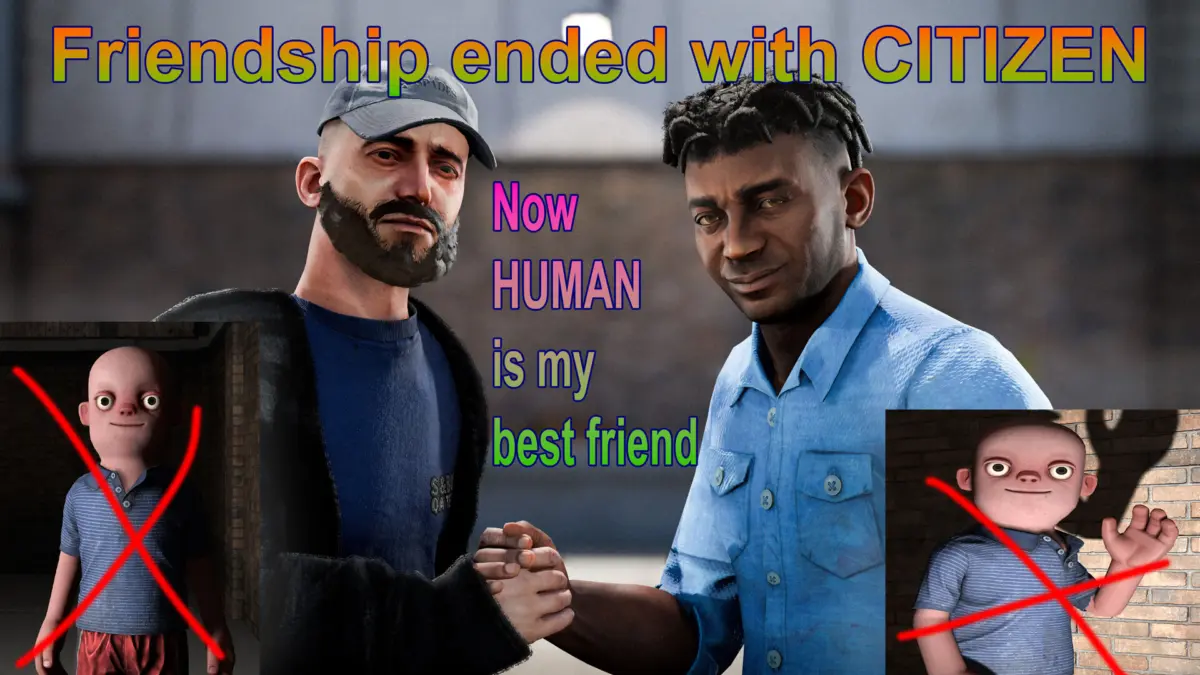
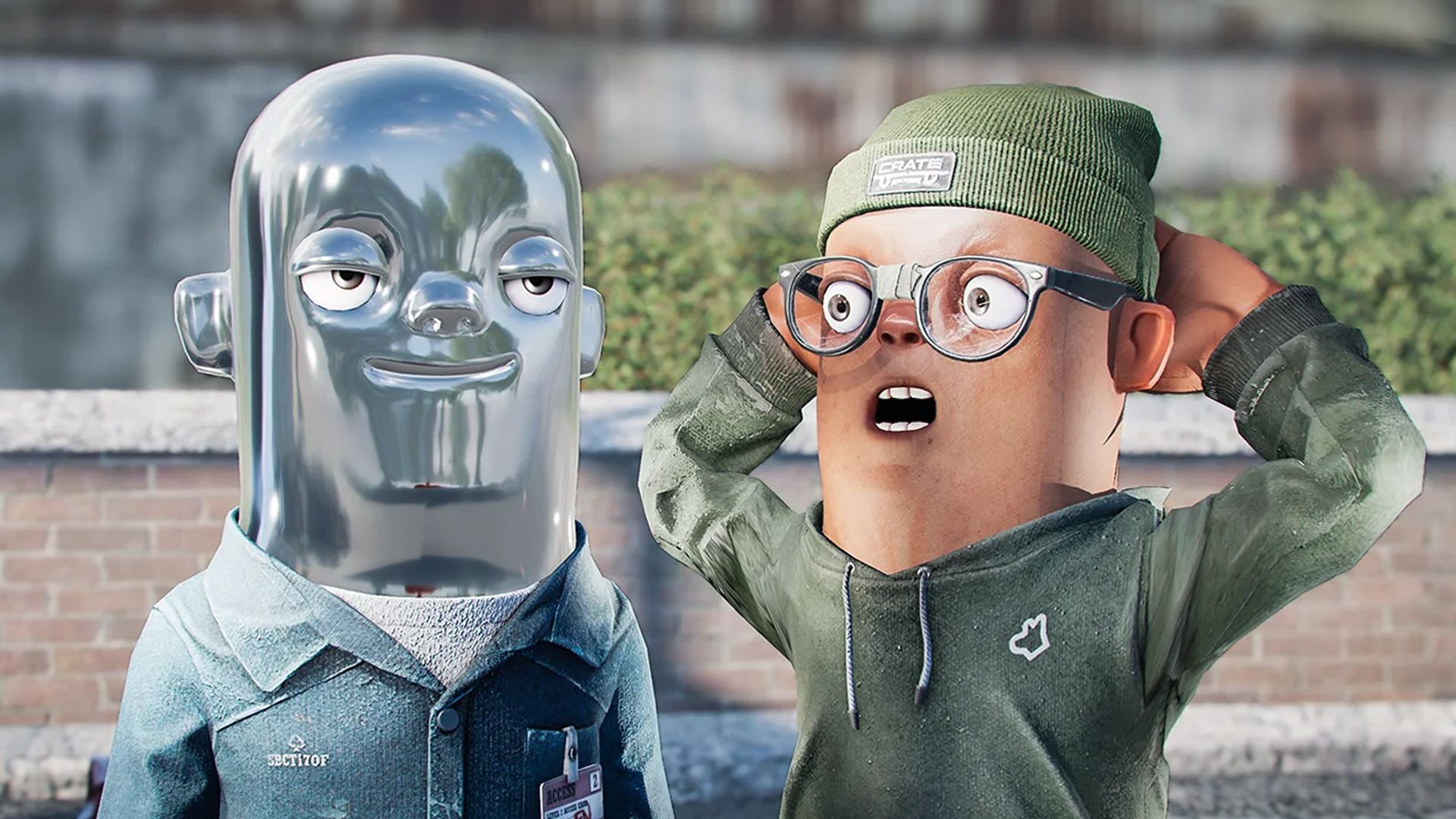
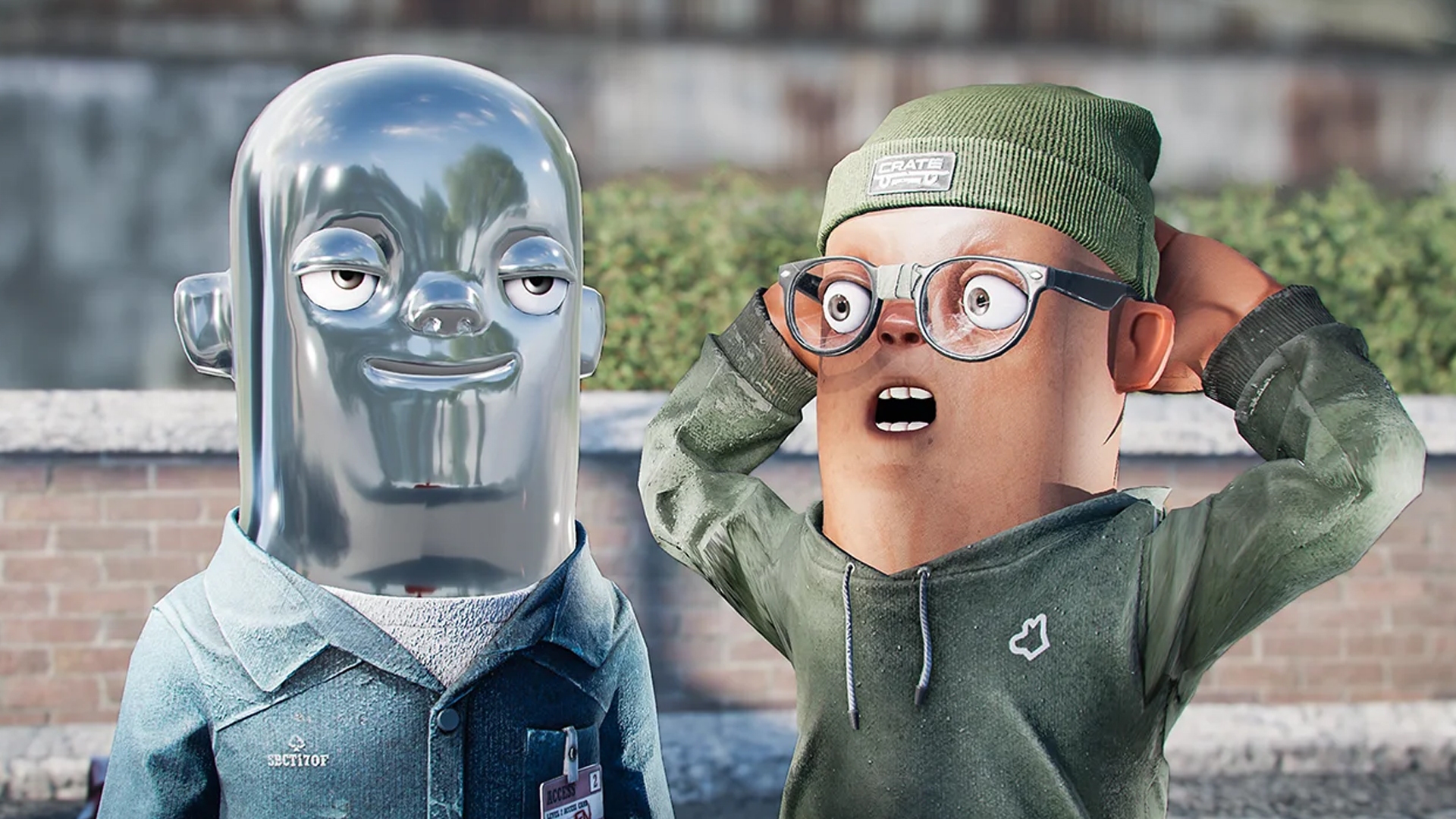
In a move that surprised and amused the community, Facepunch has officially retired "The Citizen"—affectionately known to fans as "Terry." This rigid, neckless sausage-like character model had become an ironic mascot for s&box, frequently appearing in promotional material and early user creations.
However, the lack of anatomical flexibility—compounded by endless community memes regarding the character’s missing neck—became emblematic of the platform’s early asset limitations. While Terry will remain baked into existing community maps and games that utilize him, he has been quietly scrubbed from default menus, the avatar editor, and promotional imagery in favor of more expressive, generic human character models.
This cosmetic purge is paired with practical enhancements, such as Garry Newman’s humorous yet vital decision to finally grant characters functional necks—a direct response to an overwhelming volume of negative user reviews highlighting the aesthetic uncanny valley of the original models.
Future Outlook: Can s&box Reclaim the Legacy of Garry’s Mod?
The Road to Free-to-Play by 2026
Perhaps the most significant commercial announcement tied to this restructuring is the confirmation that s&box will transition to a free-to-play business model before the end of 2026.
For early adopters who purchased the platform during its early access phase at price points ranging from $10 to $20, Facepunch is implementing an exclusive compensation package. Early supporters will automatically receive a curated bundle of rare Steam inventory items, tiered dynamically based on their initial purchase price, serving as a token of gratitude for bearing the brunt of the early access teething pains.
Transitioning to free-to-play is widely viewed by market analysts as a mandatory step for multiplayer-dependent creation platforms. By lowering the barrier to entry to zero, Facepunch can flood the ecosystem with a critical mass of users, which in turn fuels the network effects required to make user-generated multiplayer games viable.
Final Assessment
The challenges facing s&box are formidable, but Facepunch Studios has demonstrated a rare willingness to swallow its pride, listen to its community, and dismantle flawed systems before they become fatal.
By substituting automated laissez-faire content aggregation with rigorous, human-guided curation, enriching the core sandbox experience, phasing out low-effort algorithmic slop, and setting a clear horizon for free-to-play accessibility, s&box is positioning itself to shed its early stumbles. Whether these aggressive reforms will fully restore the anarchic, boundary-pushing spirit of the original Garry’s Mod remains to be seen, but Facepunch has firmly grabbed the steering wheel, steering its ambitious creation platform back toward safer and far more promising waters.