Executive Overview
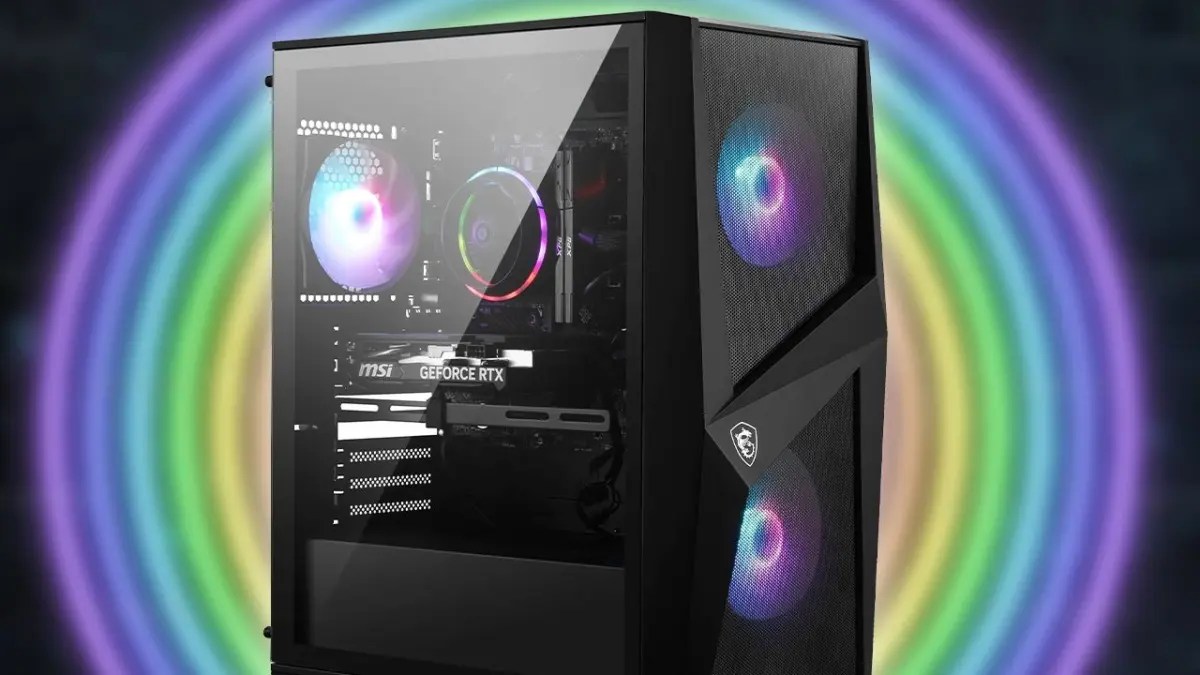
The modern PC gaming landscape is characterized by a relentless pursuit of performance efficiency, graphical fidelity, and hardware value. For enthusiasts seeking a plug-and-play solution capable of handling high-refresh-rate 1080p and 1440p gaming without the meticulous labor of custom building, prebuilt desktop systems serve as the ultimate gateway. In a notable market development, retail giant Walmart has introduced a compelling promotional discount on a high-performance prebuilt rig: the MSI Codex R2, equipped with bleeding-edge components including an Nvidia GeForce RTX 5070 graphics card and an Intel Core Ultra 7 processor.
Priced at $1,449 with complimentary shipping, this configuration represents a strategic sweet spot for consumers looking to adopt next-generation hardware architectures without absorbing the inflated costs typically associated with day-one adoption. Crucially, the system is sold and shipped directly by Walmart rather than a third-party marketplace vendor, offering buyers added layers of purchasing security, dependable customer service, and straightforward return policies.
This comprehensive report examines the structural anatomy of the MSI Codex R2, evaluating its internal component matrix, architectural capabilities, market positioning, and the broader economic implications of purchasing a prebuilt system featuring Nvidia’s latest 50-series graphics technology.
Detailed Chronology of the Deal and Market Positioning
The Evolution of Mid-to-High-Tier Prebuilt Pricing
Historically, acquiring a prebuilt desktop that combined top-tier processing power with a brand-new generation graphics architecture required an investment well north of $1,600 to $2,000. System integrators (SIs) and major hardware manufacturers often price their pre-assembled units at a premium to account for assembly labor, comprehensive stress testing, system warranties, and bundled operating systems.
However, fluctuating supply chains, competitive pressures in the component sector, and strategic retail partnerships have catalyzed a shift. Walmart’s recent listing of the MSI Codex R2 at $1,449 reflects an aggressive pricing strategy aimed at capturing the critical segment of gamers transitioning away from aging Pascal, Turing, and early Ampere architectures.
Direct-from-Retailer Security vs. Marketplace Uncertainties
When navigating online retail platforms for high-value electronics, the distinction between direct-party fulfillment and third-party marketplace vendors is paramount. The current promotion for the MSI Codex R2 is fulfilled directly by Walmart. This operational detail mitigates several common consumer anxieties:
- Inventory Authenticity: Direct-from-retailer stock virtually eliminates the risks associated with counterfeit hardware, open-box items masquerading as brand new, or unauthorized component substitution—a historical issue within fragmented online marketplaces.
- Warranty Integrity: Because the unit originates straight from Walmart’s supply chain in partnership with MSI, the manufacturer’s warranty remains fully intact from the moment of purchase, covering all integrated components, chassis elements, and power delivery systems.
- Logistics and Support: Free shipping handled through Walmart’s robust logistics network ensures predictable transit times, while standard retail return policies provide a safety net should the hardware fail to meet performance expectations out of the box.
Technical Deep Dive: Inside the MSI Codex R2
To truly understand the value proposition of the $1,449 MSI Codex R2, one must look beneath the chassis panels and examine the hardware ecosystem powering the machine.
+------------------------------------------------------------+
       MSI Codex R2 System Specifications Matrix
+--------------------+---------------------------------------+
| Component          | Hardware Specification                |
+--------------------+---------------------------------------+
| Central Processing | Intel Core Ultra 7 265F (20 Cores,    |
| Unit (CPU)         | up to 5.3GHz Max Boost, Air-cooled)   |
+--------------------+---------------------------------------+
| Graphics Processing| Nvidia GeForce RTX 5070 (12GB VRAM,   |
| Unit (GPU)         | Architecture: Blackwell-derived)      |
+--------------------+---------------------------------------+
| System Memory      | 16GB DDR5 RAM                         |
+--------------------+---------------------------------------+
| Primary Storage    | 1TB M.2 NVMe SSD                      |
+--------------------+---------------------------------------+
| Power Supply (PSU) | 750W 80-Plus Rated Power Supply       |
+--------------------+---------------------------------------+
| Operating System   | Windows 11 Home                       |
+--------------------+---------------------------------------+
The CPU: Intel Core Ultra 7 265F
At the heart of the system sits the Intel Core Ultra 7 265F, a formidable 20-core processor engineered to balance high-frequency gaming execution with multi-threaded productivity workloads. Featuring a maximum boost clock of 5.3GHz, this processor utilizes Intel’s advanced architectural design, optimizing power efficiency while maintaining blistering speeds during compute-heavy tasks.
Unlike older multi-core iterations that suffered from thermal throttling in compact or mid-tower prebuilt chassis, the Core Ultra 7 265F in the Codex R2 is managed by a reliable air-cooling solution designed to dissipate heat effectively under sustained loads. Whether a user is rendering 4K video, running simultaneous background applications while streaming, or diving into sprawling open-world RPGs, the processor ensures zero system bottlenecking.
The GPU: Nvidia GeForce RTX 5070 (12GB)
The crown jewel of this prebuilt system is the Nvidia GeForce RTX 5070, equipped with 12GB of high-speed VRAM. As a standalone component, the RTX 5070 commands an individual retail baseline of approximately $600—though market realities and high demand frequently drive street prices higher.
Designed explicitly to dominate the 1080p and 1440p gaming spheres, the RTX 5070 bridges the gap between mainstream affordability and enthusiast-grade performance. When stacked against previous-generation hardware, the RTX 5070 delivers a measurable uplift over the widely praised RTX 4070 Super.
DLSS 4.5 and Multi-Frame Generation
A major performance multiplier for the RTX 5070 ecosystem is its native support for advanced scaling technologies, most notably DLSS 4.5. While traditional rasterization benchmarks show steady generational improvements, the inclusion of DLSS 4.5—featuring sophisticated multi-frame generation algorithms—unlocks exponential frame-rate gains in compatible titles. This technology ensures that even heavily ray-traced environments maintain ultra-smooth refresh rates, future-proofing the system against increasingly demanding game engines.
Memory, Storage, and Power Delivery
- Memory: The system features 16GB of DDR5 RAM. While some power users might eventually wish to expand this to 32GB for hyper-intensive production workloads, 16GB of modern DDR5 bandwidth is more than sufficient for virtually all current gaming software, ensuring rapid data transfer rates and minimal latency.
- Storage: A spacious 1TB M.2 NVMe SSD provides rapid boot times, near-instantaneous level loads, and ample baseline capacity for several modern AAA titles, which frequently exceed 100GB each.
- Power Supply: Driving the entire assembly is a robust 750W power supply unit (PSU). A 750W rating not only provides secure, stable electrical current to the Core Ultra 7 and RTX 5070 under peak gaming loads, but it also leaves ample headroom for future component upgrades.
Supporting Context & Metrics: Evaluating the 1440p Sweet Spot
Why 1440p Remains the Enthusiast Standard
For years, tech evangelists debated whether 4K resolution was the ultimate destination for PC gaming. While 4K offers stunning pixel density, it imposes an extraordinarily heavy tax on hardware, often forcing gamers to compromise on graphical settings or rely aggressively on upscaling technologies to maintain playable frame rates. Furthermore, high-refresh-rate 4K monitors remain considerably more expensive than their 1440p counterparts.

Consequently, 1440p (QHD) has cemented itself as the gold standard for PC gaming. It strikes an optimal balance:
- Visual Clarity: At normal viewing distances on standard 27-inch to 32-inch desktop monitors, 1440p offers a massive jump in pixel density and sharpness over traditional 1080p, effectively eliminating jagged edges without requiring super-sampled rendering resolutions.
- Refresh Rate Synergy: Paired with the RTX 5070, 1440p gaming routinely yields frame rates exceeding 120Hz to 240Hz, satisfying competitive esports players and cinematic immersion seekers alike.
Comparative Value Analysis: Prebuilt vs. DIY
When analyzing a prebuilt PC deal like the MSI Codex R2 at $1,449, financial analysts and system builders frequently run a component-cost breakdown to determine if the convenience fee of a prebuilt is justified.
- Estimated Component Valuation:
- Intel Core Ultra 7 265F: ~$300–$350
- Nvidia GeForce RTX 5070 (12GB): ~$600–$650
- Motherboard (Z-series or B-series equivalent): ~$150
- 16GB DDR5 RAM Kit: ~$60–$80
- 1TB NVMe M.2 SSD: ~$70–$90
- 750W 80+ Power Supply: ~$80–$100
- Chassis, Air Cooling, Windows 11 License, Assembly & Testing: ~$150–$200
When summing these estimated retail values, assembling an equivalent system independently yields a total cost hovering remarkably close to—or occasionally exceeding—the $1,449 retail price point. When factoring in the included Windows 11 operating system license, professional wiring, system stability testing, and out-of-the-box warranty protection, Walmart’s offering eliminates the financial discrepancy entirely, positioning the deal as an economically sound acquisition.
Official Industry Perspectives and Expert Analysis
Industry analysts tracking the retail desktop sector have noted a distinct consumer trend toward mid-to-high-tier prebuilts that bypass the entry-level bottleneck. Eric Song, commerce manager and hardware deals expert, emphasizes the practical utility of systems built around this specific tier of hardware:
"The GeForce RTX 5070 is arguably the most sensible investment for gamers who refuse to compromise on visual fidelity at 1440p, yet want to avoid the exorbitant financial barrier of top-tier 4K enthusiast cards. Finding this GPU paired with a modern 20-core Intel Core Ultra processor in a clean, retail-backed prebuilt for under $1,500 represents a rare convergence of specs and savings."
Furthermore, system integrator representatives have highlighted that chassis design within the MSI Codex series has evolved to address historical thermal criticisms. Improved front-panel mesh ventilation, optimized internal airflow channels, and tool-less maintenance bays ensure that users can clean, upgrade, and maintain their systems without specialized technical training.
Future Outlook: The Longevity of the MSI Codex R2
Purchasing a gaming desktop is inherently an investment in future digital entertainment. As game developers adopt advanced graphics pipelines, real-time path tracing, and complex physics engines driven by AI, hardware requirements will inevitably escalate. How does the MSI Codex R2 position its owner for the years ahead?
1. Architectural Longevity
By anchoring the system with an Nvidia 50-series GPU and an Intel Core Ultra processor, buyers are tapping into the bleeding edge of current silicon architecture. The inclusion of 12GB of VRAM on the RTX 5070 is particularly crucial; modern game ports frequently demand expansive framebuffer capacities to stream high-resolution textures without stuttering. A 12GB allocation ensures that upcoming AAA releases slated for 2026, 2027, and beyond will run smoothly without running into memory walls.
2. Upgrade Pathways
While the system is extraordinarily capable out of the box, a quality prebuilt must offer room to grow. The 750W power supply provides ample electrical headroom should the user decide to drop in a more powerful secondary storage drive, expand the DDR5 memory modules up to 64GB, or eventually transition to next-generation cooling systems.
3. Market Sustainability
Promotional pricing events on current-generation prebuilts are inherently time-sensitive. As component allocations fluctuate and retail inventories normalize following initial launch waves, deals matching the value proposition of the Walmart MSI Codex R2 listing tend to experience rapid depletion. For consumers monitoring the hardware market for an optimal entry point, this $1,449 offering serves as an ideal benchmark for high-performance computing value.
Conclusion
The modern PC gaming market demands a careful balancing act between financial pragmatism and raw computational muscle. Walmart’s limited-time promotion on the MSI Codex R2 RTX 5070 Gaming PC cuts through the market noise, offering a meticulously balanced configuration of an Intel Core Ultra 7 processor, 16GB of DDR5 RAM, a 1TB NVMe SSD, and Nvidia’s formidable RTX 5070 graphics engine for $1,449 with free shipping.
Backed by direct-from-retailer fulfillment and equipped to dominate 1080p and 1440p environments with advanced features like DLSS 4.5 multi-frame generation, this prebuilt desktop stands out as one of the premier hardware investments currently available for gamers seeking uncompromising performance without building from scratch.