Executive Overview
In the wake of Apple’s sweeping 2027 ecosystem software rollouts, the WebKit team has published an exhaustive, highly anticipated technical brief detailing the structural and functional evolution of Safari 27.0. Representing one of the most substantial browser overhaul cycles in recent memory, Safari 27.0 introduces ground-breaking features tailored for modern artificial intelligence workflows, spatial computing, and next-generation web multimedia.
At the center of this release is the pioneering Safari Model Context Protocol (MCP) server, an unprecedented tool designed to bridge the gap between autonomous coding agents and the browser environment. By giving AI assistants like Claude Code and Codex direct inspection, debugging, and visualization capabilities within the DOM, Apple is redefining how developers build, test, and ship web applications.
Beyond AI orchestration, Safari 27.0 targets core developer pain points with massive performance enhancements, resolving nearly 850 individual bugs and performance bottlenecks—surpassing initial projections shared earlier this summer at WWDC. Furthermore, the introduction of native immersive environment hooks for visionOS, the expansion of the HTML <model> element across iOS, iPadOS, and macOS, and user-centric quality-of-life updates like advanced Scroll Anchoring signal that Safari 27.0 is not merely a maintenance update, but a foundational platform evolution for the spatial and AI-driven web era.
Detailed Chronology: From WWDC Promises to the Safari 27.0 Release
The journey toward Safari 27.0 began months prior during Apple’s Worldwide Developers Conference (WWDC), where the company first teased a robust slate of WebKit improvements, projecting roughly 525 bug fixes and performance enhancements. However, as the final release candidate phases matured through the summer of 2027, the engineering scope expanded dramatically.
By the time the official rollout hit user devices alongside Apple’s late-2027 operating system updates, the total count of resolved and optimized issues surged to nearly 850 distinct patches. This aggressive engineering sprint reflects Apple’s renewed commitment to browser parity, web standards compliance, and developer enablement.
The rollout has been systematically documented through the WebKit open-source project blog, culminating in the comprehensive deep-dive resource published in September 2027. Developers updating their toolchains immediately encountered a transformed Web Inspector, overhauled layout rendering engines, and an entirely new tier of automation controls that fundamentally alter day-to-day coding paradigms.
Supporting Context & Metrics: Under the Hood of Safari 27.0
Safari 27.0 introduces architectural changes that affect almost every layer of the browser stack, from low-level graphics processing to high-level layout stability.
The Safari MCP Server: AI Agents Meet the Browser
The headline feature of Safari 27.0 is unquestionably the integration of an MCP server. For years, web developers have relied on manual terminal prompts, context-switching between code editors and browser windows, and manually capturing and dropping screenshots to communicate rendering errors to AI coding assistants.
Safari 27.0 eliminates this friction. By initializing the local MCP server, developers can grant AI agents—such as Claude Code, Codex, or custom-configured alternatives—direct, secure access to the browser window.
How It Works: Setup and Architecture
To enable the Safari MCP server, developers must navigate through a strict sequence of configuration toggles designed to safeguard user privacy:
- Open Safari > Settings > Advanced and check "Show features for web developers."
- Access Safari > Settings > Developer and check "Allow remote automation and external agents."
Once activated, the MCP server establishes a direct pipeline between the AI assistant and the active Safari instance. Critically, Apple has architected this feature with strict local-first privacy parameters:
- Zero Cloud Telemetry: The MCP server runs entirely on the user’s local machine and makes no network calls of its own.
- Data Isolation: The agent cannot access personal browsing data, saved passwords, or history within Safari.
- Direct Pipeline: Any captured data (DOM states, network request logs, console outputs, and visual screenshots) travels strictly and securely between the local browser instance and the locally running coding agent, bypassing Apple servers entirely.
Massive Bug Resolution and Engine Refinements
The scope of bug fixing in Safari 27.0 is unprecedented for a single-point version release. The jump from 525 planned fixes at WWDC to nearly 850 resolved issues at launch highlights an intensive debugging cycle across critical web technologies:
- Accessibility: Enhanced ARIA attribute interpretation, screen reader navigation pathways, and keyboard focus trapping resolutions.
- CSS & Layout Engines: Advanced support for complex cascading style sheet rules, layout grid stability, and the introduction of long-awaited Scroll Anchoring. This feature prevents catastrophic layout shifts—where pages dynamically jump out of view when a late-loading image or ad resource renders above the viewport.
- Encoding, Fonts, and Forms: Improved typographic rendering pipelines, strict compliance with modern form validation states, and robust international character encoding handling.
- Mathml and WebRTC: Upgraded mathematical markup rendering alongside optimized peer-to-peer real-time communication stacks for video conferencing and interactive web audio/video applications.
Spatial Computing and 3D Web Integration
Safari 27.0 solidifies Apple’s vision for spatial computing by bringing immersive environments directly to web developers building for visionOS. Creators can now serve rich, context-aware spatial backgrounds and environments straight through web applications.
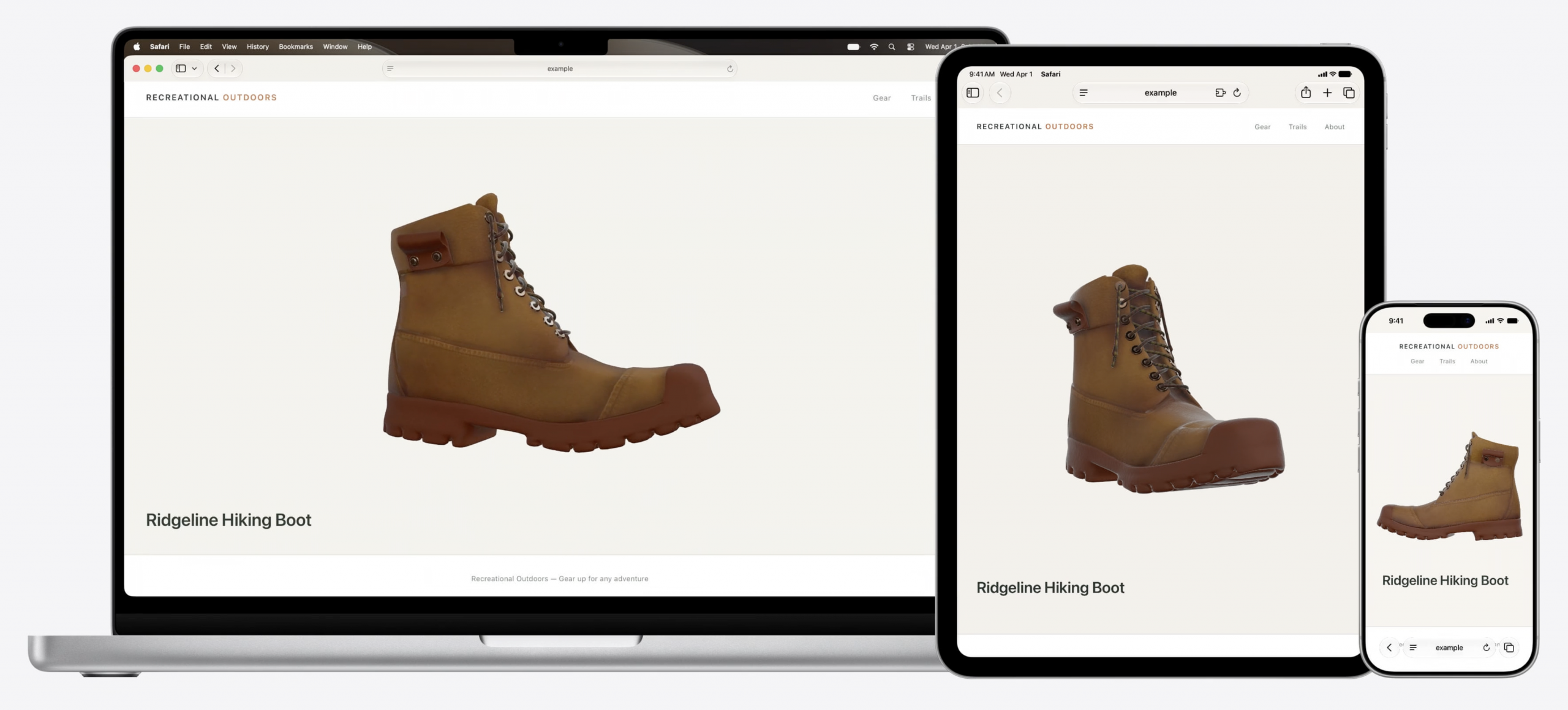
Simultaneously, the HTML <model> element—previously restricted or experimental—has been formally expanded across iOS, iPadOS, and macOS. This allows websites to embed interactive, manipulable 3D models directly into the standard document flow with the same simplicity and lightweight performance traditionally reserved for standard images or compressed video formats.
Web Inspector and Performance Subsystems
The Web Inspector has received a sweeping upgrade package, introducing:

- Inline Color-Contrast Information: Instant accessibility metrics displayed directly within the style inspector.
- Redirect-Chain Visibility: Clearer telemetry regarding network request pathways and HTTP redirection flows.
- Advanced Layout Debugging: Deep inspection tools for complex flexbox and grid containers.
Furthermore, updates span across WebAssembly, WebGPU, JavaScript execution engines, Web Extensions, WKWebView embedding containers, and background Service Workers.
Official Statements and Developer Guidance
In its official WebKit release communication, Apple’s engineering team directly addressed the modern web developer demographic, emphasizing efficiency and workflow streamlining:
"Are you developing websites using coding agents? The Safari MCP server, now available in Safari 27.0, will make your workflow faster and more powerful. Give Claude Code, Codex, or the agent of your choice control over the browser window so it can see how your code renders. Safari MCP provides access to the DOM, network requests, screenshots, and console output. Your agent can do more on its own while you do less hopping between windows, less dropping screenshots in your terminal, and less typing prompts to describe what’s not working."
Apple has also published comprehensive connection command strings within the WebKit developer documentation, guiding engineers step-by-step through linking popular terminal-based coding agents to the new browser endpoints. The corporation has actively solicited developer telemetry, feedback, and feature requests to iterate on the MCP architecture in subsequent minor updates.
Future Outlook: The Dawn of AI-Native Web Development
Safari 27.0 marks a definitive turning point in browser evolution. For decades, browsers have acted as passive rendering engines—displaying markup generated by humans. By embedding native MCP server capabilities directly into the browser architecture, Apple is transforming Safari into an active, programmable development workspace.

As autonomous coding agents become standard fixtures in software engineering, browsers that fail to offer secure, programmatic hooks for AI will inevitably bottleneck developer productivity. With Safari 27.0, Apple has established an aggressive benchmark.
Looking forward, we can expect competitor browser engines to explore similar local automation protocols, paving the way for a fully integrated, AI-assisted web development lifecycle. For Mac, iPad, iPhone, and Vision Pro developers, Safari 27.0 is not merely an upgrade; it is the foundation of a faster, smarter, and infinitely more immersive digital frontier.